


Magic Pak Filter Size
In industrial and commercial HVAC management, particularly within systems utilizing all-in-one heating and cooling units, the precision of the filter interface is a critical factor for both air quality and equipment longevity. Identifying the correct magic pak filter size is not merely a matter of routine maintenance; it is a technical requirement that ensures the integrity of the pressure boundary and the efficiency of the heat exchange surfaces. For engineers and facility managers, understanding the nuances of filter dimensions, material composition, and filtration grades is essential to prevent bypass and optimize system performance.
While standard residential filters often allow for some margin of error, industrial-grade applications demand exact tolerances. This guide examines the technical specifications surrounding filter sizing and the broader application of high-performance Filter Discs & Packs in demanding environments.
Determining the Correct Magic Pak Filter Size for System Performance
Selecting the appropriate filter size begins with distinguishing between nominal and actual dimensions. In the filtration industry, the nominal size is a rounded label used for easy identification (e.g., 16" x 25" x 1"), whereas the actual size represents the precise physical measurements of the filter frame.
For Magic Pak units, which are often installed in tight utility closets or integrated into building envelopes, the filter rack is designed with specific tolerances. If a filter is too small, contaminated air will take the path of least resistance, bypassing the media entirely. This leads to dust accumulation on the evaporator coils, reducing heat transfer efficiency and increasing energy consumption. Conversely, a filter that is slightly too large may buckle during installation, creating gaps and compromising the structural integrity of the pleats.
Engineers should use high-precision calipers to measure the internal dimensions of the filter track if the OEM part number is unavailable. Common sizes for these units often include 16x25x1, 20x25x1, or 24x24x1, but customized industrial variations may require specific thickness adjustments to accommodate high-capacity media or reinforced metal frames.
Material Engineering in Industrial Filter Discs & Packs
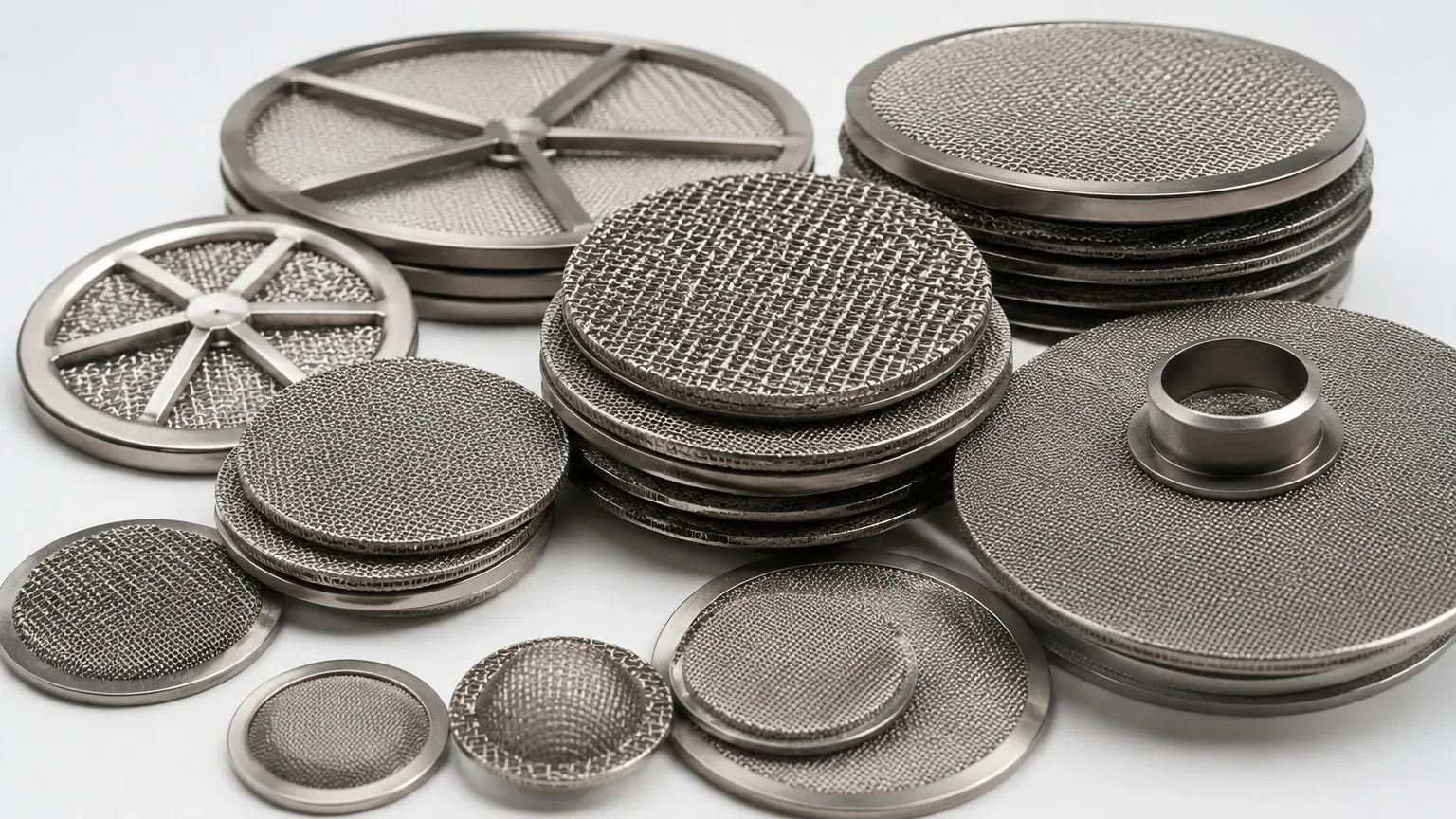
Beyond standard HVAC applications, filtration requirements in chemical processing, pharmaceuticals, and hydraulic systems often necessitate the move from synthetic fibers to metallic media. In these sectors, the concept of a "pack" or "disc" refers to multi-layered stainless steel wire mesh designed to withstand extreme conditions.
Industrial Filter Discs & Packs are engineered using various weave patterns, such as plain weave, twill weave, or Dutch weave. Each weave offers distinct advantages regarding flow rate and particle retention. For instance, a plain Dutch weave provides a compact, firm mesh with high mechanical strength, making it ideal for high-pressure applications where a standard magic pak filter size would fail under the mechanical load.
Stainless steel (SUS304, SUS316, or SUS316L) is the preferred material for these components due to its corrosion resistance and ability to maintain structural integrity at high temperatures. In specialized industrial units, these metal packs can be retrofitted or custom-designed to match the footprint of standard filters while providing significantly higher durability and cleanability.
Performance Metrics: Micron Rating and Flow Resistance
The efficacy of a filter is measured by its ability to capture particles of a specific size, often referred to as the micron rating. In standard air filtration, this is categorized by MERV (Minimum Efficiency Reporting Value) ratings. However, in technical B2B environments, engineers must look closer at the relationship between the micron rating and the pressure drop (initial resistance).
When specifying a magic pak filter size for a high-efficiency application, increasing the filtration density (e.g., moving from a MERV 8 to a MERV 13) inherently increases the resistance to airflow. If the system's blower motor is not rated for the higher static pressure, the airflow will drop, potentially causing the system to freeze or overheat.
In industrial liquid or gas filtration, the use of multi-layer sintered mesh packs allows for a high degree of filtration (down to 1-5 microns) while maintaining a relatively large open area. This engineering balance ensures that the system achieves the required purity levels without necessitating frequent pump or fan upgrades. When evaluating these components, it is vital to request a pressure drop curve from the manufacturer to ensure compatibility with existing system curves.
Customization Options for Specialized Filtration Requirements
One of the primary challenges for purchasing teams is sourcing filters for legacy equipment or specialized industrial modules where standard sizes are no longer available. Customization becomes a necessity rather than an option. Manufacturing capabilities now allow for the production of filter discs and packs in virtually any geometry, including circular, rectangular, or complex polygonal shapes.
Customization involves more than just dimensions. It includes:
* Layer Configuration: Combining different mesh counts to create a gradient filtration effect, where coarser outer layers protect finer inner layers.
* Edge Binding: Using aluminum, stainless steel, or copper rims to provide a rigid seal and prevent fraying of the wire mesh.
* Spot Welding: Ensuring that multi-layer packs remain bonded under high-flow velocities or back-pulsing cleaning cycles.
By working with a manufacturer that provides OEM services, engineers can specify the exact magic pak filter size and material properties required for their unique environmental conditions, whether that involves exposure to caustic chemicals or high-vibration settings.
Evaluating the Durability of Stainless Steel Filter Components
In many B2B applications, the total cost of ownership (TCO) is a more important metric than the initial purchase price. Disposable filters, while inexpensive upfront, require frequent replacement and generate significant waste. In contrast, stainless steel filter discs and packs offer a permanent or semi-permanent solution.
The durability of these components is rooted in their metallurgical properties. For example, 316L stainless steel contains molybdenum, which enhances resistance to pitting in chloride-rich environments. This makes it an excellent choice for filtration systems located in coastal areas or chemical plants. Furthermore, metal filters do not shed fibers, which is a critical requirement in food and beverage or pharmaceutical production where product contamination must be avoided at all costs.
When selecting a durable alternative to standard magic pak filter sizes, engineers should verify the welding quality and the consistency of the mesh aperture. A well-constructed metal filter pack can be cleaned and reused for several years, providing a much higher return on investment compared to synthetic alternatives.
Maintenance and Cleaning Protocols for Reusable Packs
To maintain the performance of high-quality filtration components, a structured maintenance schedule is required. Unlike disposable filters that are discarded when the pressure drop reaches a certain threshold, industrial metal packs are designed for regeneration.
Common cleaning methods for stainless steel filter discs include:
1. Ultrasonic Cleaning: Using high-frequency sound waves in a solvent bath to dislodge fine particles trapped deep within the mesh layers.
2. Backwashing: Reversing the flow of the fluid to push contaminants out of the filter media.
3. Chemical Cleaning: Utilizing specific acids or alkalis to dissolve organic or inorganic scaling, provided the filter material is compatible with the cleaning agent.
For systems using a standard magic pak filter size, maintenance usually involves a simple visual inspection and replacement every 30 to 90 days. However, for industrial packs, monitoring the differential pressure across the filter is the most accurate way to determine cleaning cycles. Implementing a digital differential pressure gauge allows for predictive maintenance, reducing the risk of unexpected system downtime.
Engineering Selection and Purchasing Considerations
Before finalizing a purchase order for filtration components, technical teams should confirm several key data points with their supplier. This ensures that the product delivered meets the operational demands of the facility.
* Exact Dimensions: Confirm actual vs. nominal measurements to ensure a zero-bypass fit.
* Material Certification: Request mill test reports (MTRs) to verify the grade of stainless steel used, especially for regulated industries.
* Flow Rate Specifications: Ensure the filter can handle the maximum CFM (cubic feet per minute) or GPM (gallons per minute) of the system without excessive pressure loss.
* Compatibility: Check that the frame material and gaskets (if any) are compatible with the operating temperature and any chemicals present in the air or fluid stream.
By focusing on these technical boundaries, purchasing agents can avoid the common pitfalls of selecting substandard filtration products that lead to increased energy costs and potential equipment failure. Whether sourcing a standard magic pak filter size for building HVAC or a complex set of Filter Discs & Packs for an industrial process, the priority must always be on precision engineering and material quality.
