


Micropore Tape or Synthetic Filter Discs
In the realm of industrial filtration and controlled gas exchange, selecting the appropriate media is a critical engineering decision that impacts sterility, flow rates, and operational longevity. Two common solutions often compared for low-pressure gas exchange and contaminant exclusion are micropore tape and synthetic filter discs. While both serve to allow air passage while blocking particulate matter or biological contaminants, their performance characteristics, material compositions, and industrial suitabilities differ significantly.
For engineers and procurement specialists, understanding the technical nuances between micropore tape or synthetic filter discs is essential for optimizing system design. Furthermore, as applications scale in complexity and environmental rigor, the transition from these lightweight media to robust Filter Discs & Packs becomes a necessary step for maintaining structural integrity and filtration precision.
Characteristics of Micropore Tape in Filtration
Micropore tape, originally designed for medical applications, is a paper-based adhesive tape characterized by its breathability. In filtration contexts, it is frequently used as a rudimentary barrier for gas exchange ports.
Material Composition and Structure
Micropore tape is typically constructed from non-woven rayon fibers coated with a pressure-sensitive acrylate adhesive. The "micropores" are not engineered to a specific micron rating but are rather the natural interstices between the non-woven fibers. This lack of a defined pore size makes it difficult to validate for high-precision industrial processes.
Performance Limitations
1. Adhesive Failure: The primary weakness of micropore tape in industrial settings is the adhesive. Exposure to high humidity, fluctuating temperatures, or chemical vapors can cause the adhesive to degrade, leading to bypass or total failure of the filter barrier.
2. Inconsistent Pore Size: Because the fiber distribution is random, the filtration efficiency is not uniform. While it may block large spores or dust, it cannot be relied upon for consistent sub-micron filtration.
3. Sterilization Constraints: While some micropore tapes can withstand a single autoclave cycle, repeated sterilization often renders the paper brittle and the adhesive ineffective.
Synthetic Filter Discs: Precision and Performance
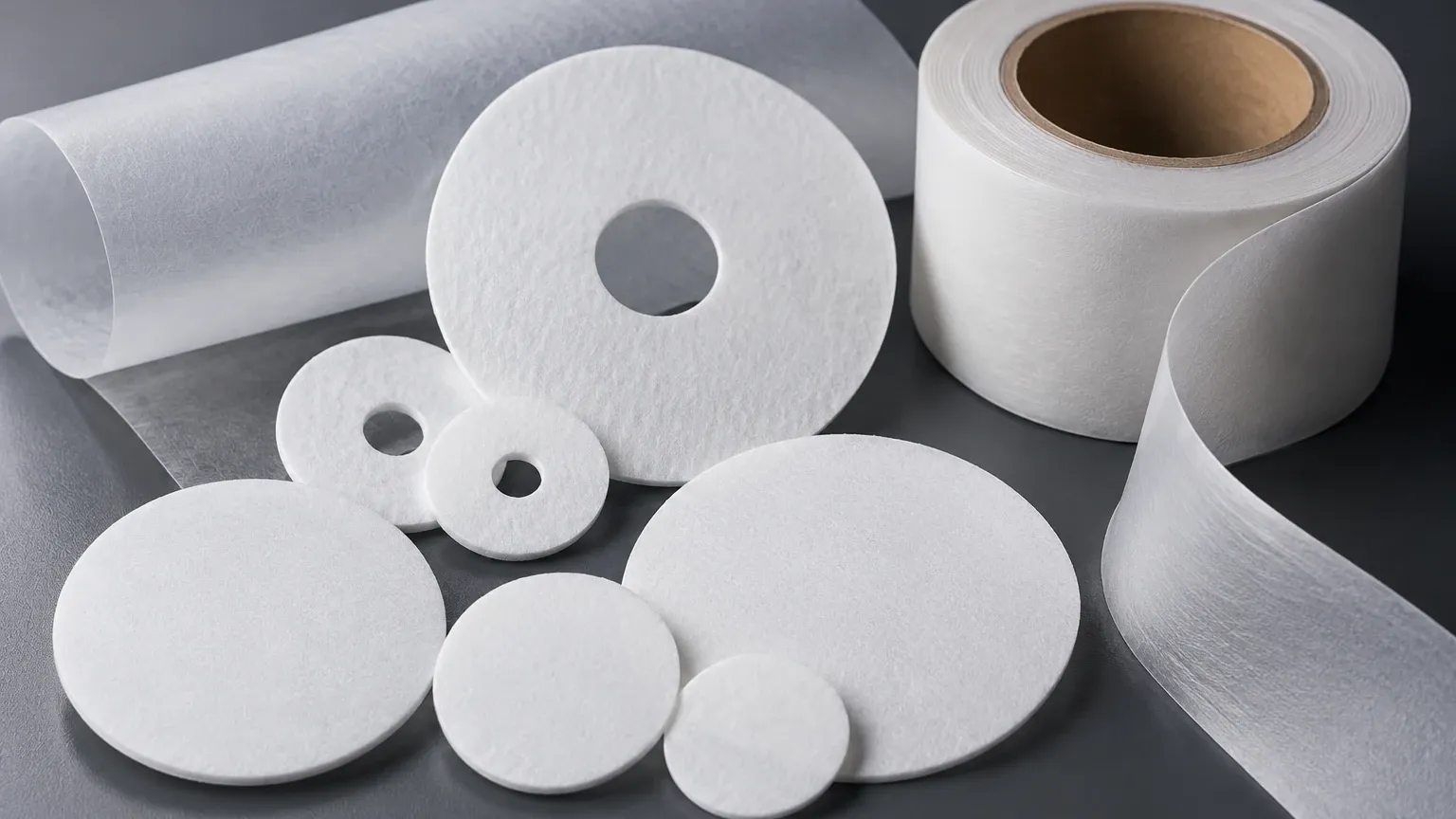
Synthetic filter discs represent a significant upgrade in engineering control. These discs are typically manufactured from polymers such as Polytetrafluoroethylene (PTFE), Polypropylene (PP), or Polyethersulfone (PES).
Engineered Pore Geometry
Unlike tape, synthetic discs are manufactured with specific micron ratings, commonly ranging from 0.22 μm to 5.0 μm. This allows engineers to calculate exact filtration efficiency and flow resistance. In gas exchange applications, 0.22-micron PTFE discs are the industry standard for ensuring biological sterility.
Hydrophobic Properties
One of the most critical advantages of synthetic discs, particularly those made of PTFE, is hydrophobicity. In environments with high humidity or potential liquid contact, a hydrophobic disc will resist "wetting out." Wetting occurs when moisture clogs the pores of a filter, drastically increasing the pressure drop and halting gas exchange. Micropore tape, being paper-based, is highly susceptible to wetting, whereas synthetic discs maintain airflow even in saturated conditions.
Durability and Reusability
Synthetic discs are designed for longevity. They are often housed in rigid plastic or metal housings, protecting the delicate membrane from mechanical damage. They can typically withstand multiple sterilization cycles (autoclave or gamma radiation) without losing structural integrity or filtration efficacy.
Technical Comparison: Micropore Tape vs. Synthetic Discs
When evaluating micropore tape or synthetic filter discs, engineers must consider the following technical parameters:
| Feature | Micropore Tape | Synthetic Filter Discs (PTFE/PP) |
| :— | :— | :— |
| Micron Rating | Not rated (Nominal/Variable) | Defined (0.22 μm – 5.0 μm) |
| Material | Rayon/Paper with Adhesive | PTFE, Polypropylene, PES |
| Hydrophobicity | Low (Absorbent) | High (Water Repellent) |
| Temperature Limit | Low (Adhesive fails >80°C) | High (Up to 150°C+ depending on polymer) |
| Chemical Resistance | Poor | Excellent (Especially PTFE) |
| Attachment Method | Integrated Adhesive | Mechanical Clamping or Welding |
Industrial Limitations and the Role of Filter Discs & Packs
While synthetic discs offer superior performance over tape, many industrial applications involve pressures, temperatures, or mechanical stresses that exceed the capabilities of thin polymer membranes. In chemical processing, hydraulic systems, and high-pressure gas filtration, the industry relies on multi-layer Filter Discs & Packs.
Structural Reinforcement
In high-pressure environments, a standalone synthetic disc may rupture. Industrial filter packs solve this by sandwiching the filtration media (which may be fine stainless steel wire mesh or synthetic membranes) between layers of coarser support mesh. This "pack" configuration ensures that the media remains flat and intact under significant differential pressure (ΔP).
Stainless Steel Wire Mesh vs. Synthetics
For the most demanding applications, stainless steel wire mesh is preferred over synthetic polymers. Metal filter discs offer:
* Extreme Thermal Stability: Capable of operating in temperatures exceeding 500°C.
* Mechanical Strength: High resistance to pressure surges and mechanical abrasion.
* Cleanability: Unlike micropore tape or most synthetic discs, stainless steel Filter Discs & Packs can be cleaned via ultrasonic baths or back-pulsing, significantly reducing the total cost of ownership over the equipment's lifecycle.
Engineering Selection Criteria for Gas Exchange Filtration
When choosing between micropore tape or synthetic filter discs—or moving toward industrial metal filter packs—engineers should confirm the following data points:
1. Required Flow Rate and Pressure Drop
Every filter medium introduces resistance. Engineers must calculate the required gas flow rate (e.g., Liters per minute) and ensure the chosen disc has sufficient surface area to minimize the pressure drop. If the ΔP is too high, it can lead to pump strain or inadequate gas exchange in passive systems.
2. Environmental Compatibility
Consider the presence of volatile organic compounds (VOCs) or corrosive gases. While PTFE synthetic discs have broad chemical compatibility, the adhesives in micropore tape can dissolve or off-gas when exposed to certain industrial solvents, potentially contaminating the process.
3. Sterilization Protocols
If the process requires sterility, the media must be compatible with the intended sterilization method. While synthetic discs are often autoclave-ready, the number of cycles they can withstand is finite. In contrast, stainless steel filter components offer virtually unlimited sterilization cycles, making them the preferred choice for pharmaceutical and food-grade applications.
4. Mounting and Sealing
A filter is only as effective as its seal. Micropore tape relies on its own adhesive, which is prone to channeling (air bypassing the filter through small gaps in the adhesive). Synthetic discs require a mechanical seal, such as an O-ring or a welded flange. For industrial-scale operations, custom-designed Filter Discs & Packs are often engineered with specific edging (e.g., aluminum or stainless steel rims) to ensure a leak-proof fit within the housing.
Maintenance and Longevity in Industrial Systems
In a B2B procurement context, the "cheaper" option often carries higher long-term costs. Micropore tape is inexpensive per roll but requires frequent manual application, lacks validation, and has a high failure rate. Synthetic filter discs offer better reliability but are still largely considered consumables.
For optimized industrial performance, moving toward permanent or semi-permanent filtration solutions is often the most cost-effective strategy. High-quality metal filtration components allow for:
* Reduced Downtime: Less frequent replacements compared to tape or thin synthetics.
* Predictable Performance: Precision-woven wire mesh provides consistent pore sizes that do not shift or stretch over time.
* Sustainability: Washable metal filters reduce the waste stream associated with single-use synthetic discs.
Conclusion: Making the Informed Choice
The choice between micropore tape or synthetic filter discs depends largely on the scale and criticality of the application. For laboratory-scale prototyping or low-stakes gas exchange, micropore tape may provide a temporary solution. However, for any process requiring validation, chemical resistance, or biological security, synthetic filter discs are the minimum technical requirement.
As processes scale into industrial production, the limitations of polymer-based media often necessitate a transition to professional Filter Discs & Packs. By utilizing advanced materials like stainless steel wire mesh, manufacturers can achieve the precision of synthetic discs with the durability required for heavy-duty industrial environments. When selecting filtration components, engineers should prioritize media that offers a balance of filtration accuracy, mechanical strength, and long-term operational stability.
