


Oskar Filter Pack 8
In the demanding landscape of industrial filtration, the efficiency of a production line often hinges on the precision of its smallest components. Specialized filtration assemblies, such as the oskar filter pack 8, represent a critical intersection of metallurgy and fluid dynamics. These multi-layer configurations are engineered to withstand extreme pressures and temperatures while maintaining a consistent micron rating. For engineers and procurement specialists in sectors like polymer extrusion, chemical processing, and hydraulic systems, understanding the technical nuances of these filter packs is essential for optimizing throughput and protecting downstream equipment.
Industrial filtration is rarely a one-size-fits-all solution. The transition from standard single-layer mesh to complex multi-layer Filter Discs & Packs is driven by the need for greater mechanical strength and finer particulate removal. The "pack 8" designation typically refers to a specific structural configuration—often involving eight distinct layers of stainless steel wire mesh—designed to provide graduated filtration and structural integrity under high-load conditions.
Technical Architecture of Multi-Layer Filter Packs
The construction of an oskar filter pack 8 is a precise engineering feat. Unlike simple screens, these packs utilize a combination of different mesh weaves and wire diameters to achieve a specific performance profile. The typical architecture involves several functional zones:
1. The Support Layer: Usually a coarse, heavy-duty mesh that provides the mechanical backbone for the entire pack. This layer prevents the finer meshes from deforming under high differential pressure.
2. The Drainage Layer: Positioned between the support and filtration layers, this ensures an even flow of the medium across the entire surface area of the disc, preventing localized clogging.
3. The Filtration Media: The core of the pack, often consisting of fine Dutch weave or twilled weave mesh. In an 8-layer configuration, multiple filtration layers may be used to create a depth-filtration effect, capturing particles of varying sizes as the fluid passes through.
4. The Protective Layer: A final coarse mesh on the upstream side that protects the delicate filtration layers from large debris or mechanical damage during installation.
By utilizing Filter Discs & Packs with this multi-layer approach, manufacturers can achieve a balance between fine filtration and high flow rates that a single-layer screen simply cannot match.
Material Selection for Demanding Industrial Environments
The performance of an oskar filter pack 8 is heavily dependent on the alloys used in its construction. Stainless steel is the industry standard due to its corrosion resistance and thermal stability. However, the specific grade of stainless steel must be chosen based on the chemical compatibility of the medium being filtered.
* Stainless Steel 304: This is the most common material for general industrial applications. It offers excellent strength and good corrosion resistance for water-based fluids, oils, and some mild chemicals.
* Stainless Steel 316L: For applications involving acidic environments, high salinity, or pharmaceutical-grade requirements, 316L is preferred. The addition of molybdenum enhances its resistance to pitting and crevice corrosion, while the "L" (low carbon) designation improves weldability and prevents intergranular corrosion.
* Specialty Alloys: In extreme cases, such as high-temperature polymer processing or highly corrosive chemical synthesis, alloys like Inconel or Monel may be used. These materials ensure that the filter pack maintains its structural integrity at temperatures exceeding 500°C.
When selecting Filter Discs & Packs, engineers must verify that the material grade matches the operational environment to prevent premature failure due to oxidation or chemical degradation.
Engineering Considerations for Polymer and Fiber Extrusion
The oskar filter pack 8 is frequently utilized in the plastic and synthetic fiber industries. In these applications, the filter is placed within the breaker plate of an extruder to remove impurities from the molten polymer. This process, known as melt filtration, is vital for preventing defects in the final product, such as "nibs" in plastic film or breakage in synthetic fibers.
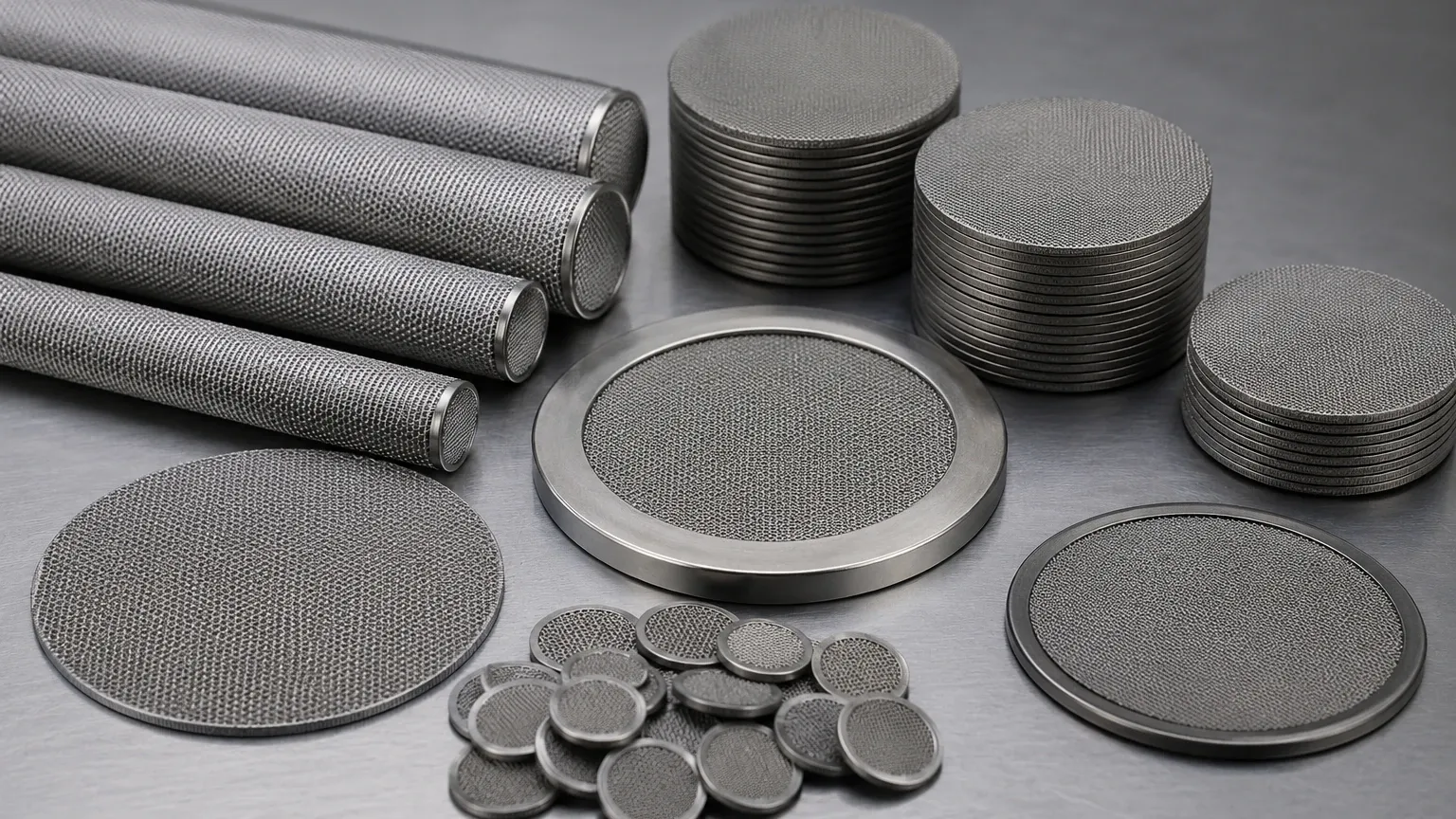
The challenge in melt filtration is the high viscosity of the medium. The filter pack must be able to withstand significant pressure drops (often several hundred PSI) without the mesh shifting or the layers separating. Manufacturers often use spot welding or aluminum/stainless steel rims to bind the layers of the Filter Discs & Packs into a single, rigid unit. This "rimmed" design ensures that the edges of the mesh do not fray and that the pack fits securely within the machine's housing, preventing bypass.
Evaluating Performance: Micron Rating and Pressure Differential
When specifying an oskar filter pack 8, two primary metrics define its success: the micron rating and the clean pressure drop.
Micron Rating (Filtration Accuracy)
Industrial filter packs are rated by the size of the smallest particle they can reliably capture. This can be expressed as a "nominal" rating (representing a percentage of particles captured) or an "absolute" rating (representing the largest particle that can pass through). For high-precision applications like hydraulic systems or fine chemical production, absolute ratings are critical to ensure that no damaging contaminants reach sensitive components.
Pressure Differential (ΔP)
The pressure drop across the filter is a measure of its resistance to flow. A well-designed 8-layer pack will maximize the effective filtration area to keep the initial pressure drop low. As the filter captures contaminants, the ΔP will naturally increase. Engineers must establish a "terminal pressure drop"—the point at which the filter is considered blinded and must be replaced to prevent pump strain or reduced flow.
By choosing high-quality Filter Discs & Packs, operators can extend the time between these replacement cycles, directly impacting the total cost of ownership and machine uptime.
Customization and OEM Integration
While standard sizes exist, many industrial machines require customized filtration solutions. The oskar filter pack 8 may need to be tailored in terms of diameter, thickness, or layer sequence to meet the specific needs of a particular piece of equipment.
Customization options often include:
* Shape Variations: While discs are standard, some systems require rectangular, oval, or kidney-shaped packs.
* Layer Sequencing: Depending on the contaminant load, an engineer might specify a "graded density" pack where the micron rating becomes progressively finer from the outer to the inner layers.
* Edge Treatment: Beyond simple spot welding, packs can be bound with copper, aluminum, or stainless steel frames to provide a leak-proof seal within the filter housing.
Working with a manufacturer that understands these engineering nuances allows purchasing teams to procure Filter Discs & Packs that are drop-in replacements for OEM parts but optimized for the specific realities of their production floor.
Maintenance, Replacement, and Total Cost Considerations
A common question among maintenance teams is how to determine the optimal replacement cycle for an oskar filter pack 8. Because these are often used in continuous processes, unplanned downtime for a filter change can be incredibly costly.
Monitoring the pressure differential is the most reliable method for determining when a pack has reached its capacity. However, visual inspection of the filtered medium can also reveal signs of "breakthrough," where the pressure has caused the mesh to deform, allowing larger particles to pass.
When evaluating the cost of Filter Discs & Packs, it is a mistake to look only at the unit price. The true cost includes:
* The cost of downtime during the replacement process.
* The risk of equipment damage if a low-quality filter fails.
* The impact on product quality and the potential for rejected batches.
Investing in precision-manufactured packs ensures that the filtration performance is predictable, which is the foundation of any robust industrial process.
Conclusion: Selecting the Right Filtration Partner
The oskar filter pack 8 is more than just a piece of wire mesh; it is a critical component that ensures the purity of industrial outputs and the longevity of expensive machinery. Whether used in the high-heat environment of a plastic extruder or the high-pressure lines of a hydraulic system, these packs must perform without fail.
For engineers and technical professionals, the key to successful filtration lies in the details—material grade, layer configuration, and manufacturing precision. By focusing on these factual engineering boundaries and selecting high-performance Filter Discs & Packs, industrial operations can achieve the reliability and efficiency required in today’s competitive B2B landscape. When sourcing these components, confirming technical specifications such as wire diameter, weave type, and bonding method is the final step toward ensuring a seamless and effective filtration solution.
