


Percolator Filter Discs
In the landscape of industrial filtration, the term "percolation" refers to the movement and filtering of fluids through porous materials to extract specific components or ensure high-purity output. While the term is often associated with consumer beverage brewing, industrial-grade percolator filter discs are sophisticated engineering components designed for rigorous chemical, pharmaceutical, and food processing applications. These discs must withstand high temperatures, corrosive environments, and significant pressure differentials while maintaining precise filtration accuracy.
As a specialized manufacturer, Kaifil provides high-performance Filter Discs & Packs that serve as the critical barrier in these systems. Understanding the technical nuances of material selection, mesh configuration, and structural design is essential for engineers and procurement teams looking to optimize their filtration processes and reduce total cost of ownership.
The Industrial Context of Percolation and Filtration
Industrial percolation is a fundamental process in sectors such as botanical extraction, chemical leaching, and specialized laboratory testing. In these environments, percolator filter discs are used to support a bed of solid material while allowing a solvent or liquid to pass through, capturing fine particulates that would otherwise contaminate the final extract.
Unlike standard circular filters, industrial percolator discs are often subjected to mechanical stress from the weight of the media bed and the hydraulic pressure of the solvent flow. Therefore, the selection of these discs goes beyond simple particle size retention; it involves evaluating mechanical strength, chemical compatibility, and the ability to be cleaned and reused in a production cycle. For technical professionals, the goal is to find a balance between high flow rates and the stringent retention requirements of the specific application.
Material Selection for Percolator Filter Discs
The performance of any filtration component begins with its metallurgy. In industrial settings, stainless steel is the gold standard due to its durability and resistance to oxidation. Kaifil typically utilizes two primary grades for these applications:
304 Stainless Steel
Grade 304 is the most common choice for general industrial applications. It offers excellent corrosion resistance in most atmospheric environments and is highly cost-effective. For food and beverage applications where acidity is moderate, 304 stainless steel provides the necessary hygiene and structural integrity required for repeated use.
316L Stainless Steel
For more demanding environments, such as pharmaceutical processing or chemical extraction involving chlorides and high temperatures, 316L stainless steel is preferred. The "L" stands for low carbon, which improves weldability and prevents intergranular corrosion. The addition of molybdenum in 316L provides superior resistance to pitting and crevice corrosion, making it the ideal choice for percolator filter discs used with aggressive solvents or in high-salinity environments.
Beyond stainless steel, specialized alloys such as Hastelloy or Monel may be used for extreme chemical resistance, though stainless steel remains the most versatile and widely implemented material for standard industrial filtration packs.
Structural Integrity: Single-Layer vs. Multilayer Filter Discs & Packs
When designing a filtration system, engineers must decide between a single layer of wire mesh or a multilayered assembly. This decision is largely driven by the required filtration fineness and the physical pressure the disc will encounter.
Single-Layer Discs
Single-layer percolator filter discs are stamped from a single sheet of precision-woven wire mesh. These are ideal for applications where the pressure drop is low and the primary goal is the removal of relatively large particulates. They are easy to clean and offer the highest possible open area for maximum flow.
Multilayer Filter Discs & Packs
In high-pressure environments or applications requiring sub-micron filtration, Filter Discs & Packs are the superior choice. These packs consist of multiple layers of wire mesh, often including:
* A Filtration Layer: The middle layer with the specific micron rating required for the process.
* Support Layers: Coarser mesh layers on either side that provide mechanical strength and prevent the fine filtration mesh from deforming under pressure.
* Drainage Layers: Optimized to ensure fluid flows evenly across the entire surface of the disc.
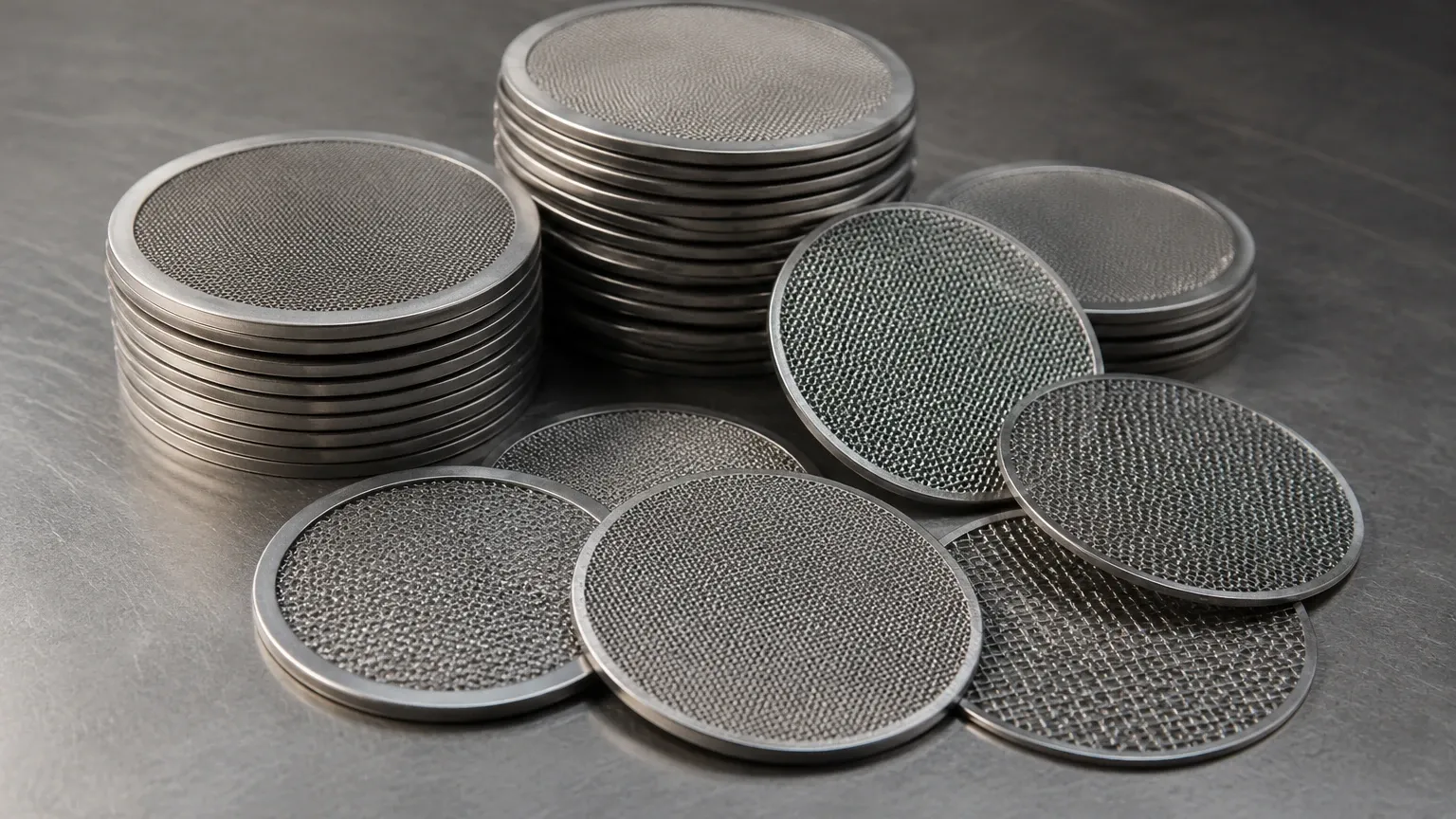
These layers can be spot-welded at the edges or bound with a metal rim (often aluminum or stainless steel) to create a rigid, leak-proof component. For the most demanding applications, sintered multilayer discs are used, where the layers are diffusion-bonded together in a high-temperature vacuum furnace, creating a single, incredibly strong porous plate that cannot delaminate.
Key Performance Indicators for Engineering Teams
To select the correct percolator filter discs, engineering teams must evaluate several technical metrics that define how the filter will behave under operational conditions.
Micron Rating: Absolute vs. Nominal
It is critical to distinguish between nominal and absolute micron ratings. A nominal rating refers to the ability of the mesh to retain a certain percentage of particles of a given size. An absolute rating, common in precision stainless steel mesh, indicates that no particle larger than the specified micron size can pass through the pore openings. For pharmaceutical and high-purity chemical processes, absolute-rated discs are usually required to ensure consistency.
Flow Rate and Pressure Drop (ΔP)
The "open area" of the mesh determines the flow rate. A higher mesh count (more wires per inch) generally results in a smaller pore size but a higher resistance to flow. If the pressure drop across the disc is too high, it can lead to pump strain or reduced throughput. Engineers must calculate the expected ΔP based on fluid viscosity and flow velocity to ensure the system remains efficient.
Mechanical Stability
Percolator discs must resist "blinding" (clogging) and deformation. If a disc bows under pressure, the pore geometry can change, leading to a loss of filtration accuracy. Using reinforced packs or thicker wire diameters in the support mesh can mitigate these risks.
Customization and Precision Manufacturing
Industrial filtration is rarely a one-size-fits-all solution. Customization is often necessary to fit specific housing dimensions or to meet unique process requirements. Kaifil’s manufacturing capabilities allow for a high degree of precision in the following areas:
* Shape and Dimension: While circular discs are standard, percolator filters can be produced in oval, rectangular, or ring shapes. Precision stamping ensures that the edges are clean and the dimensions are within tight tolerances (often +/- 0.1mm) to prevent bypass leakage.
* Edge Treatments: For discs used in high-vibration environments, edge binding is essential. A metal rim or "frame" not only protects the edges of the wire mesh from fraying but also provides a flat sealing surface for gaskets.
* Weave Types: Different weave patterns—such as Plain Weave, Twilled Weave, or Plain Dutch Weave—offer different characteristics. Dutch weaves, for instance, provide a much higher density and are better for fine filtration under high pressure compared to standard square weaves.
Operational Longevity and Maintenance Strategies
One of the primary advantages of stainless steel percolator filter discs over disposable alternatives is their longevity. However, maintaining this performance requires a structured approach to cleaning and inspection.
Cleaning Protocols
Depending on the contaminants, metal discs can be cleaned using several methods:
* Ultrasonic Cleaning: High-frequency sound waves create cavitation bubbles that dislodge fine particles trapped deep within the mesh layers.
* Backwashing: Reversing the flow of fluid through the filter to push out trapped solids.
* Chemical Cleaning: Using compatible solvents or mild acids to dissolve organic or mineral buildup without damaging the stainless steel substrate.
Replacement Cycles
While durable, these discs are not permanent. Signs that a disc requires replacement include permanent deformation, broken wires at the edges, or a "permanent" increase in baseline pressure drop that cannot be resolved through cleaning. For critical processes, establishing a preventative replacement schedule based on the number of cycles or total volume processed is recommended to avoid unexpected downtime.
Procurement Considerations for Industrial Filtration
When sourcing Filter Discs & Packs, procurement teams should work closely with engineers to confirm technical specifications before placing an order. Key information to verify includes:
1. Chemical Environment: Will the disc be exposed to chlorides, strong acids, or high-temperature steam sterilization?
2. Pressure Profile: What is the maximum operating pressure and the maximum allowable pressure drop before cleaning is required?
3. Particle Characteristics: Are the particles being filtered hard/abrasive or soft/deformable? This affects mesh wear and blinding potential.
4. Regulatory Compliance: For food and pharmaceutical applications, does the material meet FDA or relevant international hygiene standards?
By addressing these factors during the design and procurement phase, companies can ensure they receive a filtration solution that provides the necessary precision while minimizing maintenance intervals and replacement costs. Kaifil’s expertise in custom manufacturing ensures that every percolator filter disc is engineered to meet these exact industrial demands, providing reliable performance in the most challenging filtration environments.
