


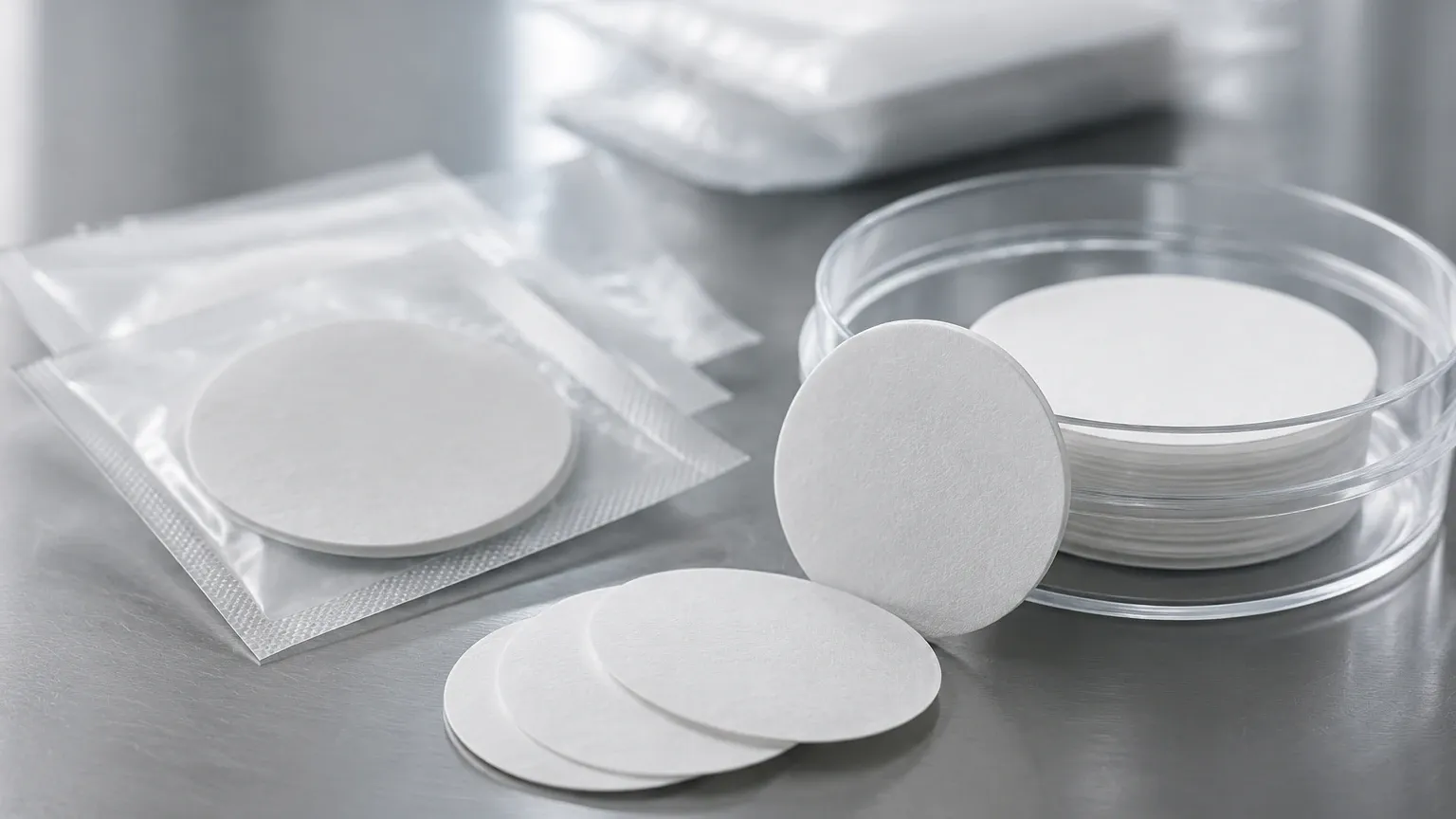
Sterile Filter Paper Discs
In industrial and laboratory filtration, the selection of media is a critical decision that impacts the integrity of the final product, the accuracy of analytical results, and the efficiency of the overall process. Sterile filter paper discs represent a fundamental component in microbiology, pharmaceutical quality control, and food safety testing. While these single-use components are essential for small-scale validation and diagnostic work, they often serve as the precursor to larger-scale industrial filtration systems. Understanding the technical specifications, material properties, and application boundaries of these discs is vital for engineers and procurement teams who must eventually scale these processes into robust production environments utilizing industrial Filter Discs & Packs.
Technical Specifications and Material Composition
Sterile filter paper discs are engineered from high-purity materials, typically cellulose fibers, glass fibers, or synthetic polymers. The choice of material determines the disc’s chemical compatibility, thermal stability, and mechanical strength.
Cellulose-Based Discs
Cellulose is the most common material for standard filtration. In sterile applications, these discs are often used for gravimetric analysis or as a substrate for microbial growth. They are naturally hydrophilic, making them suitable for aqueous solutions. However, engineers must account for the potential of fiber shedding, which can be a concern in high-precision pharmaceutical applications. High-alpha cellulose content is preferred to ensure minimal extractables.
Glass Fiber Discs
For applications involving high temperatures or aggressive solvents, glass fiber discs offer superior performance. They provide a high loading capacity and are often used as pre-filters to protect more expensive downstream membranes. Their depth-loading characteristics allow them to capture a high volume of particulates without immediate clogging, though they require careful handling to prevent the release of fine glass fragments.
Synthetic Membrane Discs
When absolute retention is required, synthetic membranes such as PES (Polyethersulfone), PTFE (Polytetrafluoroethylene), or Nylon are utilized. These materials offer defined pore sizes, often ranging from 0.22 μm to 0.45 μm, which are standard for achieving sterility. PTFE is particularly valued in chemical processing for its near-universal chemical resistance and hydrophobic nature, making it ideal for air and gas filtration.
The Role of Sterility in Industrial Filtration
Sterility in filter paper discs is not merely a marketing term; it refers to the validated absence of viable microorganisms. This is achieved through various sterilization protocols, each chosen based on the material’s tolerance.
1. Gamma Irradiation: This is a common method for pre-packaged, single-use discs. It provides deep penetration and does not involve heat, making it suitable for most polymers. However, it can cause degradation in certain materials over time.
2. Ethylene Oxide (EtO): Used for materials that are heat or moisture-sensitive. While effective, it requires a degassing period to ensure no residual gas remains, which could interfere with biological assays.
3. Autoclaving (Steam Sterilization): Many laboratory-grade filter discs are designed to be autoclavable. This is cost-effective for in-house sterilization but requires materials that can withstand high pressure and temperatures (typically 121°C).
In industrial settings, maintaining sterility often involves the use of stainless steel housings and Filter Discs & Packs that can be sterilized in place (SIP). The transition from laboratory-scale sterile paper to industrial-scale metal filtration requires a thorough understanding of how these sterilization cycles affect the structural integrity of the filter media.
Engineering Considerations for Selection
When selecting sterile filter paper discs, engineers must evaluate several performance metrics to ensure the media meets the specific needs of the application. These considerations directly inform the eventual transition to permanent metal filtration solutions.
Pore Size and Retention Efficiency
Retention efficiency is the ability of the filter to remove particles of a specific size. For sterile filtration, a 0.22 μm pore size is generally considered the standard for removing bacteria. However, pore size in paper and depth media is often expressed as a "nominal" rating, meaning it captures a percentage of particles at that size. In contrast, membrane filters and high-precision metal meshes provide "absolute" ratings. Engineers must confirm whether their process requires the safety margin of an absolute rating or if a nominal rating is sufficient.
Flow Rate and Throughput
The flow rate is determined by the porosity and thickness of the disc. A higher flow rate reduces processing time but can sometimes lead to lower retention efficiency if the velocity forces particles through the matrix. Throughput refers to the total volume that can be filtered before the disc reaches its terminal pressure drop. In pilot testing, measuring the throughput of sterile filter paper discs helps in sizing larger Filter Discs & Packs for full-scale production.
Chemical Compatibility and Extractables
It is essential to ensure that the filter media does not react with the fluid or leach any substances (extractables) into the filtrate. This is particularly critical in the pharmaceutical and food and beverage industries. Engineers should consult compatibility charts that detail the resistance of cellulose, glass, and various polymers to acids, bases, and organic solvents.
Transitioning from Paper to Industrial Metal Filters
While sterile filter paper discs are indispensable for R&D and quality control, they are often not feasible for high-volume industrial production due to their fragile nature and the waste generated by single-use components. This is where stainless steel Filter Discs & Packs become the preferred solution.
Durability and Reusability
Stainless steel filters, often made from 304 or 316L wire mesh, offer extreme durability. Unlike paper discs, they can withstand high differential pressures and mechanical stresses without tearing. Furthermore, they are cleanable and reusable, which significantly reduces the total cost of ownership in the long term. For processes requiring sterility, stainless steel components are ideal because they can undergo repeated SIP or CIP (Clean-in-Place) cycles without degradation.
Precision Engineering
Industrial metal filter packs can be customized with multiple layers of wire mesh to achieve specific filtration goals. For example, a fine inner layer provides the required micron rating, while coarser outer layers provide structural support and pre-filtration. This multi-layer construction allows for a level of precision and customization that is not possible with standard filter paper.
Scaling the Process
The data gathered using sterile filter paper discs—such as the nature of the contaminants, the required flow rates, and the pressure limits—serves as the engineering baseline for designing custom metal filtration components. By matching the performance characteristics of the paper disc in a more robust metal format, manufacturers like Kaifil help ensure that the transition from the lab to the factory floor is seamless and predictable.
Performance Evaluation and Quality Control
To ensure reliable performance, both sterile paper discs and industrial metal filters must undergo rigorous testing. For engineers, understanding these tests is key to verifying supplier claims.
* Bubble Point Test: This is a non-destructive test used to determine the pore size of a filter. It measures the pressure required to force air through a liquid-saturated filter. A lower bubble point than specified indicates a potential defect or a larger-than-expected pore size.
* Microbial Challenge Testing: For sterile applications, filters are challenged with a specific concentration of a standard organism (such as *Brevundimonas diminuta*) to verify their ability to produce a sterile filtrate.
* Pressure Drop Analysis: Monitoring the pressure differential across the filter (ΔP) is essential for determining when a filter is reaching the end of its life or needs cleaning. In industrial systems, this is often automated to prevent system downtime.
Common Risks and Mitigation Strategies
Using sterile filter paper discs involves several risks that must be managed through proper engineering practices:
1. Bypass and Leakage: If the disc is not seated correctly in its holder, fluid will bypass the filter media. This is a common failure point in lab settings. In industrial systems, precision-engineered Filter Discs & Packs are designed with specific edge treatments (such as aluminum or stainless steel rims) to ensure a perfect seal within the housing.
2. Media Migration: As mentioned, cellulose and glass fibers can sometimes shed into the filtrate. If this is unacceptable, engineers should opt for membrane filters or sintered metal fiber media, which are designed to be non-shedding.
3. Saturation and Clogging: In high-solids applications, paper discs can clog rapidly. Implementing a multi-stage filtration strategy, where a coarser pre-filter protects the sterile disc, can extend the life of the primary filter and improve overall process efficiency.
Conclusion
Sterile filter paper discs are a vital tool for ensuring the safety and quality of products across the chemical, pharmaceutical, and food industries. However, they represent just one part of the filtration landscape. For technical professionals, the goal is to use these tools to define the parameters of their process and then implement robust, scalable solutions. By understanding the technical nuances of filter media and the benefits of transitioning to high-performance Filter Discs & Packs, engineers can optimize their filtration performance, ensure sterility, and achieve a more cost-effective production cycle. Whether you are conducting small-scale sterility tests or designing a large-scale industrial filtration system, the principles of material compatibility, retention efficiency, and structural integrity remains the foundation of successful engineering.
