


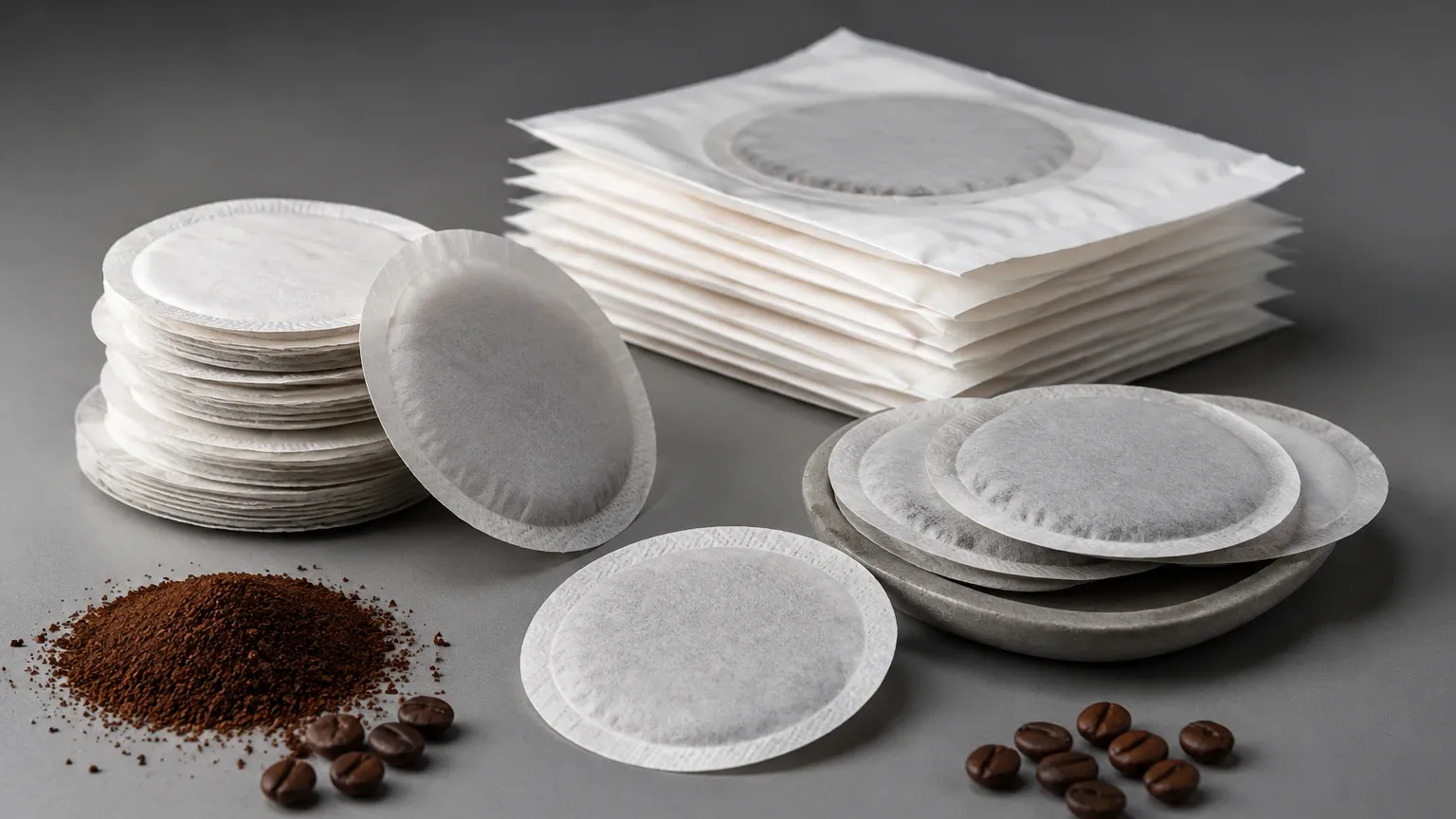
Pre Measured Coffee Filter Packs
In the commercial and industrial coffee processing industry, the consistency of extraction is the primary metric for quality control. Achieving this consistency requires more than just high-quality beans and precise water temperature; it demands a rigorous approach to filtration hardware. While many small-scale operations rely on disposable paper media, large-scale commercial brewing, cold brew extraction, and industrial coffee concentrate production increasingly utilize precision-engineered stainless steel components.
When engineers and procurement teams evaluate filtration systems, the term "pre measured" often arises. In a B2B context, this refers to the precision tolerances and standardized dimensions of the filtration media. Whether you are designing a high-volume brewing system or a specialized extraction vessel, the integration of high-performance Filter Discs & Packs ensures that every batch meets the required flavor profile and clarity standards.
The Role of Stainless Steel in Industrial Coffee Filtration
Stainless steel has become the material of choice for industrial coffee filtration due to its inherent durability and resistance to the acidic nature of coffee oils. Unlike paper, which can absorb essential oils and alter the flavor profile, stainless steel wire mesh allows for a full-bodied extraction while effectively capturing sediment and fines.
For industrial applications, the choice of material typically falls between Grade 304 and Grade 316 stainless steel.
* 304 Stainless Steel: This is the standard food-grade material used in most brewing environments. It offers excellent corrosion resistance and mechanical strength, making it suitable for standard temperature and pressure brewing cycles.
* 316 Stainless Steel: In environments where the filtration system is exposed to aggressive cleaning chemicals or high-salinity water, 316 stainless steel is preferred. The addition of molybdenum enhances its resistance to pitting and crevice corrosion, ensuring a longer service life in demanding industrial settings.
By utilizing metal mesh, manufacturers can produce pre measured coffee filter packs that are reusable, reducing the long-term operational costs and environmental impact associated with single-use consumables.
Understanding Filter Discs & Packs for Commercial Brewing
In industrial filtration, a "pack" or "disc" is rarely a single layer of mesh. Instead, it is a sophisticated assembly designed to balance flow rate, filtration accuracy, and structural integrity. These assemblies are critical in systems that use pre measured coffee filter packs, as the hardware must accommodate specific volumes of coffee grounds while maintaining uniform pressure distribution.
Multi-Layer Construction
Most industrial filter discs are composed of multiple layers of wire mesh. A typical configuration includes:
1. Filtration Layer: The middle layer, which determines the micron rating. This is usually a fine Dutch weave or a square mesh designed to trap specific particle sizes.
2. Support Layer: A coarser mesh that provides mechanical strength to the filtration layer, preventing it from deforming under the pressure of the water flow.
3. Drainage Layer: An additional layer that assists in the even distribution of liquid across the entire surface of the filter, preventing "channeling" where water bypasses the coffee grounds.
Sintered vs. Bound Edges
For high-pressure applications, sintered mesh discs are often used. Sintering fuses the layers of mesh together at their contact points through a heat-treatment process, creating a rigid, porous plate that will not delaminate. For standard brewing, spot-welded or aluminum/stainless steel rimmed edges are common, providing a secure seal within the brewing chamber.
Engineering Considerations for Pre Measured Filtration Components
When specifying filtration components for a new brewing system, engineers must look beyond simple dimensions. The "pre measured" nature of these components refers to their ability to fit perfectly into a housing with zero bypass.
Micron Rating and Sediment Control
Coffee filtration typically requires a micron rating between 10μm and 100μm, depending on the grind size and the desired clarity of the final beverage. A finer mesh (lower micron) will produce a cleaner cup but may increase the pressure drop across the filter, requiring more powerful pumps or longer extraction times. Conversely, a coarser mesh allows for faster flow but may permit "fines" to pass into the final product.
Pressure Drop and Flow Velocity
The pressure drop ($ΔP$) is a critical factor in system design. If the filter pack is too restrictive, it can lead to over-extraction and bitterness. If it is too open, the water may pass through too quickly, resulting in a weak, under-extracted brew. Engineering the mesh density to match the flow velocity of the system is essential for maintaining the integrity of pre measured coffee filter packs in a commercial setting.
Precision Manufacturing for Consistency
Consistency in industrial coffee production is achieved through precision manufacturing. When a facility orders thousands of filter discs, each one must be identical to the last. This is where advanced manufacturing capabilities, such as those provided by Kaifil, become vital.
Laser Cutting and Tooling
To ensure that every disc fits the brewing chamber perfectly, laser cutting or precision die-stamping is used. This prevents frayed edges and ensures that the outer diameter (OD) of the disc falls within strict tolerances (often +/- 0.1mm). In systems utilizing pre measured coffee filter packs, even a small gap between the filter and the housing can lead to "blow-by," where coffee grounds contaminate the finished extract.
Customization Options
Industrial applications often require customized designs. This may include:
* Center Holes: For mounting on a central spindle in large extraction columns.
* Reinforced Rims: To withstand frequent mechanical handling and cleaning cycles.
* Specific Weave Patterns: Such as Twill Dutch Weave for high-strength filtration of very fine particles.
Maintenance and Longevity of Industrial Metal Filters
One of the primary advantages of moving from paper to metal Filter Discs & Packs is the ability to clean and reuse the components. However, this requires a structured maintenance protocol to prevent the buildup of coffee oils and calcification.
Cleaning Protocols
In a B2B environment, cleaning is typically performed using one of three methods:
1. Backwashing: Reversing the flow of water through the filter to dislodge trapped particles.
2. Ultrasonic Cleaning: Using high-frequency sound waves in a cleaning solution to remove microscopic debris from the mesh intersections.
3. Chemical Cleaning: Using food-grade caustic or acidic cleaners to dissolve organic oils and mineral scale. It is vital to ensure the mesh material (e.g., 316 SS) is compatible with the chosen cleaning agents.
Replacement Cycles
While stainless steel filters are durable, they are not infinite. Over time, mechanical stress and repeated cleaning can lead to "wire blinding" or fatigue. Engineers should establish a replacement cycle based on the number of brew cycles or a measurable increase in baseline pressure drop. Monitoring these metrics ensures that the quality of the coffee remains consistent and that the system operates efficiently.
Comparing Metal Mesh to Disposable Media
For many procurement managers, the initial cost of stainless steel filter packs is a point of contention compared to the low unit price of paper. However, a total cost of ownership (TCO) analysis often favors the metal solution.
| Feature | Stainless Steel Mesh | Disposable Paper |
| :— | :— | :— |
| Initial Cost | Higher | Very Low |
| Lifespan | Years | Single Use |
| Environmental Impact | Low (Recyclable/Reusable) | High (Waste Generation) |
| Filtration Consistency | Fixed Micron Rating | Variable (depends on paper density) |
| Flavor Impact | Neutral | Absorbs Oils/May add "papery" taste |
| Durability | High (Pressure Resistant) | Low (Prone to Tearing) |
In high-volume commercial operations, the labor cost of managing waste and the recurring expense of purchasing paper can quickly exceed the one-time investment in precision-engineered metal filter discs.
Selecting the Right Partner for Filtration Solutions
Selecting the appropriate filtration hardware requires a deep understanding of both the material science and the specific application requirements. For companies involved in the production of commercial brewing equipment or industrial coffee extraction, partnering with a manufacturer that offers OEM and customized solutions is essential.
Kaifil specializes in the production of custom stainless steel filtration solutions, providing the technical expertise needed to develop high-performance components. From initial material selection to the final production of precision-cut discs, the focus remains on durability, accuracy, and reliability.
When evaluating your next project involving pre measured coffee filter packs or large-scale extraction systems, consider the following questions:
* What is the target micron rating for my specific grind size?
* What are the maximum pressure and temperature requirements of the system?
* How will the filters be cleaned, and is the material compatible with those methods?
* What are the required dimensional tolerances to ensure a bypass-free seal?
By addressing these engineering considerations early in the design phase, you can ensure a more efficient, cost-effective, and consistent filtration process. For detailed specifications and to explore the range of available configurations, you can review product options and application support for Filter Discs & Packs to find the ideal solution for your industrial filtration needs.
