


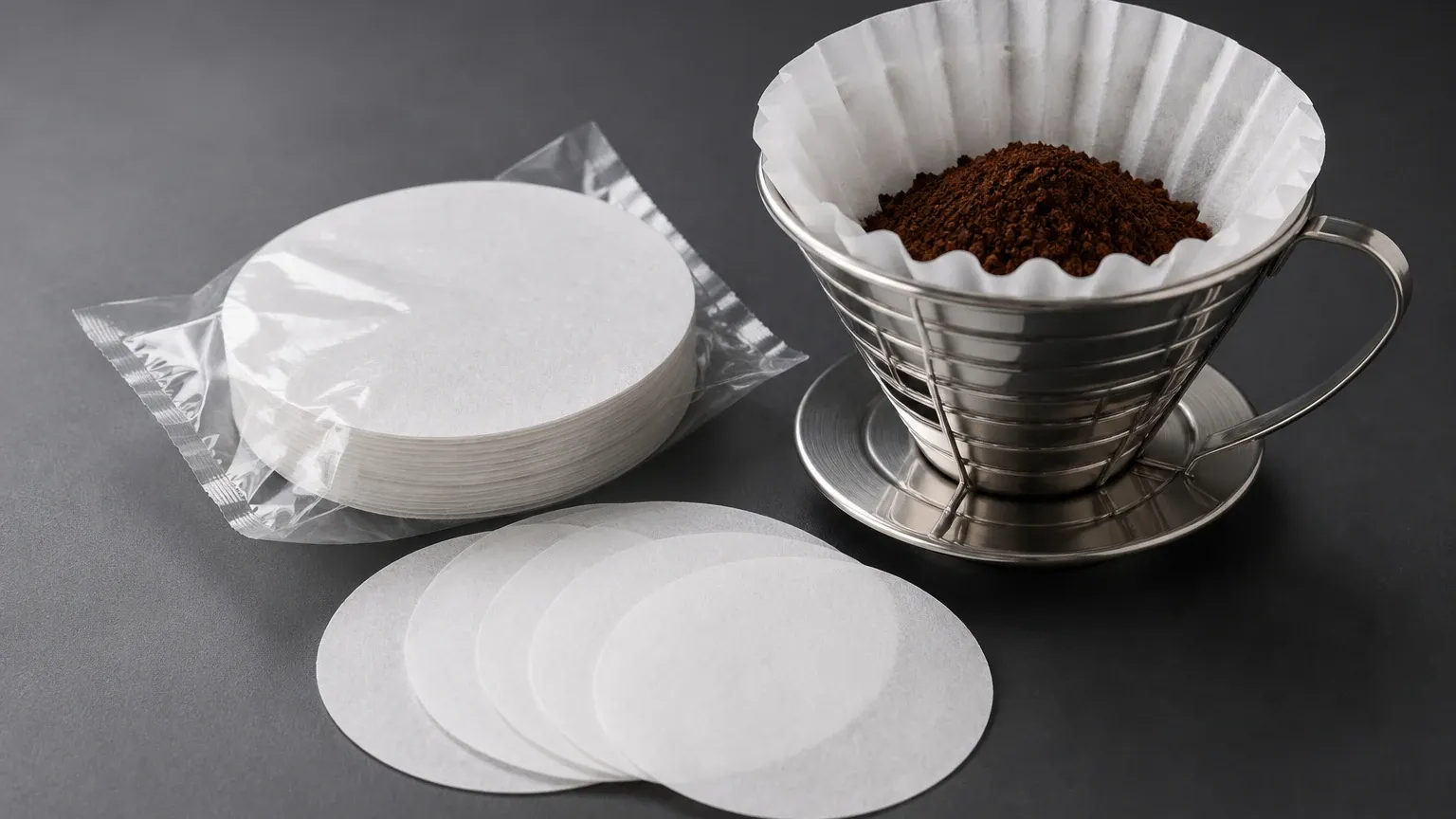
4 Cup Coffee Filter Packs
In the industrial food and beverage sector, precision filtration is a critical component of product consistency and equipment longevity. While the term "4 cup coffee filter packs" is frequently associated with consumer-grade paper disposables, the engineering reality behind commercial brewing and large-scale beverage extraction relies on sophisticated metal filtration components. For manufacturers of commercial brewing equipment and industrial food processing lines, the transition toward permanent, high-precision Filter Discs & Packs represents a significant shift in both operational efficiency and sustainability.
Industrial-grade filter packs are engineered to withstand the rigorous demands of continuous extraction processes, high temperatures, and chemical cleaning cycles. This guide explores the technical specifications, material considerations, and engineering advantages of utilizing stainless steel wire mesh solutions in the production and utilization of 4 cup coffee filter packs and similar beverage filtration systems.
Engineering Specifications of Industrial Filter Discs & Packs
The performance of any filtration system is dictated by the geometry and material properties of the filter media. In professional beverage applications, stainless steel wire mesh is the preferred material due to its mechanical strength and precise pore size distribution. When designing or procuring components for 4 cup coffee filter packs in an industrial context, several technical parameters must be evaluated.
Material Selection: 304 vs. 316L Stainless Steel
Most industrial filtration components are manufactured from austenitic stainless steels. Grade 304 is the standard for many food-grade applications, providing excellent corrosion resistance and durability. However, in environments involving high salinity or acidic cleaning agents, Grade 316L (low carbon) is often specified. The addition of molybdenum in 316L enhances resistance to pitting and crevice corrosion, ensuring the filter pack maintains its structural integrity over thousands of cycles.
Weave Types and Filtration Accuracy
The weave pattern of the wire mesh determines the flow characteristics and the particle retention capabilities. Common weave types include:
- Plain Weave: The most straightforward pattern where wires cross over and under each other. It offers high flow rates and is suitable for coarse to medium filtration.
- Twill Weave: Used for finer filtration, this pattern allows for heavier wire diameters in a given mesh count, increasing the physical strength of the disc.
- Dutch Weave: This design provides a tortuous path for the fluid, offering superior strength and very fine filtration ratings, often necessary for precision extraction where sediment control is paramount.
The Role of Stainless Steel in Commercial Extraction
Commercial brewing equipment designed for 4 cup coffee filter packs requires components that can handle repetitive mechanical stress. Unlike paper filters, which are prone to tearing and inconsistent flow, stainless steel filter discs provide a stable pressure drop across the media. This stability is essential for automated systems that rely on timed or pressure-dependent extraction cycles.
In industrial beverage production, the "pack" often refers to a multi-layered assembly. These multi-layer filter packs are constructed by sintering or spot-welding several layers of wire mesh together. A typical configuration might include a fine filtration layer protected by coarser support meshes on both sides. This construction prevents the fine mesh from deforming under high pump pressures and ensures that the 4 cup coffee filter packs maintain their shape and functionality throughout their service life.
Advantages of Metal Mesh over Disposable Media
For B2B procurement teams and plant engineers, the choice between disposable paper and permanent metal filtration involves a complex analysis of total cost of ownership (TCO) and process control.
Consistency and Repeatability
Paper filters can vary in thickness and porosity between batches, leading to fluctuations in extraction quality. Precision-engineered stainless steel Filter Discs & Packs provide a fixed micron rating. This ensures that every cycle, whether in a 4-cup commercial brewer or a large-scale extraction vessel, remains within the specified parameters. For brands focused on flavor profile consistency, this level of control is indispensable.
Environmental and Operational Impact
While the initial capital expenditure for stainless steel filter components is higher than that of paper, the long-term operational costs are significantly lower. Industrial metal filters eliminate the recurring waste stream associated with disposables. Furthermore, in high-volume environments, the logistics of storing and disposing of thousands of paper filter packs can be a hidden cost that metal solutions effectively eliminate.
Thermal and Chemical Stability
Beverage extraction often occurs at temperatures exceeding 90°C (194°F). Stainless steel maintains its mechanical properties at these temperatures, whereas organic fibers may soften or leach compounds into the filtrate. Additionally, metal filter packs can be subjected to Clean-in-Place (CIP) procedures using caustic or acidic solutions that would destroy non-metallic media.
Customization and OEM Manufacturing Capabilities
No two industrial filtration applications are identical. Manufacturers like Kaifil specialize in providing customized solutions that meet the exact dimensions and performance requirements of OEM equipment. When specifying 4 cup coffee filter packs for a new machine design, several customization options should be considered:
1. Edge Treatment: Filter discs can be supplied with raw edges, or they can be rimmed with stainless steel or aluminum frames. Rimming provides additional structural rigidity and ensures a leak-proof seal within the filter housing.
2. Layer Configuration: Depending on the viscosity of the fluid and the required clarity, engineers can specify the number of mesh layers and their respective micron ratings.
3. Shape and Geometry: While circular discs are standard for 4-cup systems, custom shapes including oval, rectangular, or pleated designs are available to optimize the surface area within a compact footprint.
4. Surface Treatments: Options such as electro-polishing can be applied to improve the hygienic properties of the mesh, making it easier to clean and reducing the risk of bacterial growth.
Selection Criteria for Purchasing and Engineering Teams
When evaluating suppliers for 4 cup coffee filter packs and industrial filter discs, technical professionals should focus on the following criteria to ensure long-term reliability:
Micron Rating and Flow Rate
It is vital to balance filtration fineness with the required flow rate. A mesh that is too fine will lead to excessive pressure drops and frequent clogging, while a mesh that is too coarse will fail to meet clarity standards. Engineers should request flow-pressure curves to understand how the filter will perform under actual operating conditions.
Mechanical Durability
In applications involving high-pressure pumps or mechanical scrapers, the filter pack must resist deformation. Multi-layer sintered mesh is often the best choice for these demanding environments, as the diffusion-bonding process creates a monolithic structure that cannot shift or fray.
Compliance and Certification
For the food and beverage industry, all materials must be FDA-compliant and meet relevant international standards for food contact. Suppliers should provide material mill certificates and declarations of conformity to ensure that the stainless steel used is of the specified grade and free from contaminants.
Maintenance and Cleaning of Permanent Filter Packs
To maximize the lifespan of stainless steel filter discs, a proper maintenance regimen is required. Unlike disposable 4 cup coffee filter packs, metal versions are designed for reuse, but their performance depends on effective cleaning.
- Ultrasonic Cleaning: This is the most effective method for removing fine particles trapped within the mesh pores. High-frequency sound waves create cavitation bubbles that dislodge debris without damaging the wire structure.
- Backwashing: In automated systems, reversing the flow of the fluid can help clear the surface of the filter. This is particularly effective for coarse mesh or when dealing with large particles.
- Chemical Cleaning: Periodic soaking in specialized detergents can remove oils and organic deposits that accumulate over time. It is crucial to ensure that the cleaning agents are compatible with the specific grade of stainless steel used in the filter pack.
Conclusion: Optimizing Industrial Filtration
The move toward high-performance, permanent filtration solutions in the beverage industry is driven by the need for precision, sustainability, and cost-efficiency. Whether you are designing commercial brewing equipment that utilizes 4 cup coffee filter packs or managing a large-scale food processing facility, selecting the right Filter Discs & Packs is a critical engineering decision.
By understanding the technical nuances of wire mesh selection, weave patterns, and customization options, procurement and engineering teams can implement filtration solutions that not only improve product quality but also enhance the overall reliability of their production lines. Kaifil’s expertise in manufacturing custom stainless steel filtration components provides the technical foundation necessary to meet these demanding industrial requirements, ensuring that every filter pack performs to the highest standards of the food and beverage industry.
