


Ptfe Adhesive Back Sintered Filter Discs
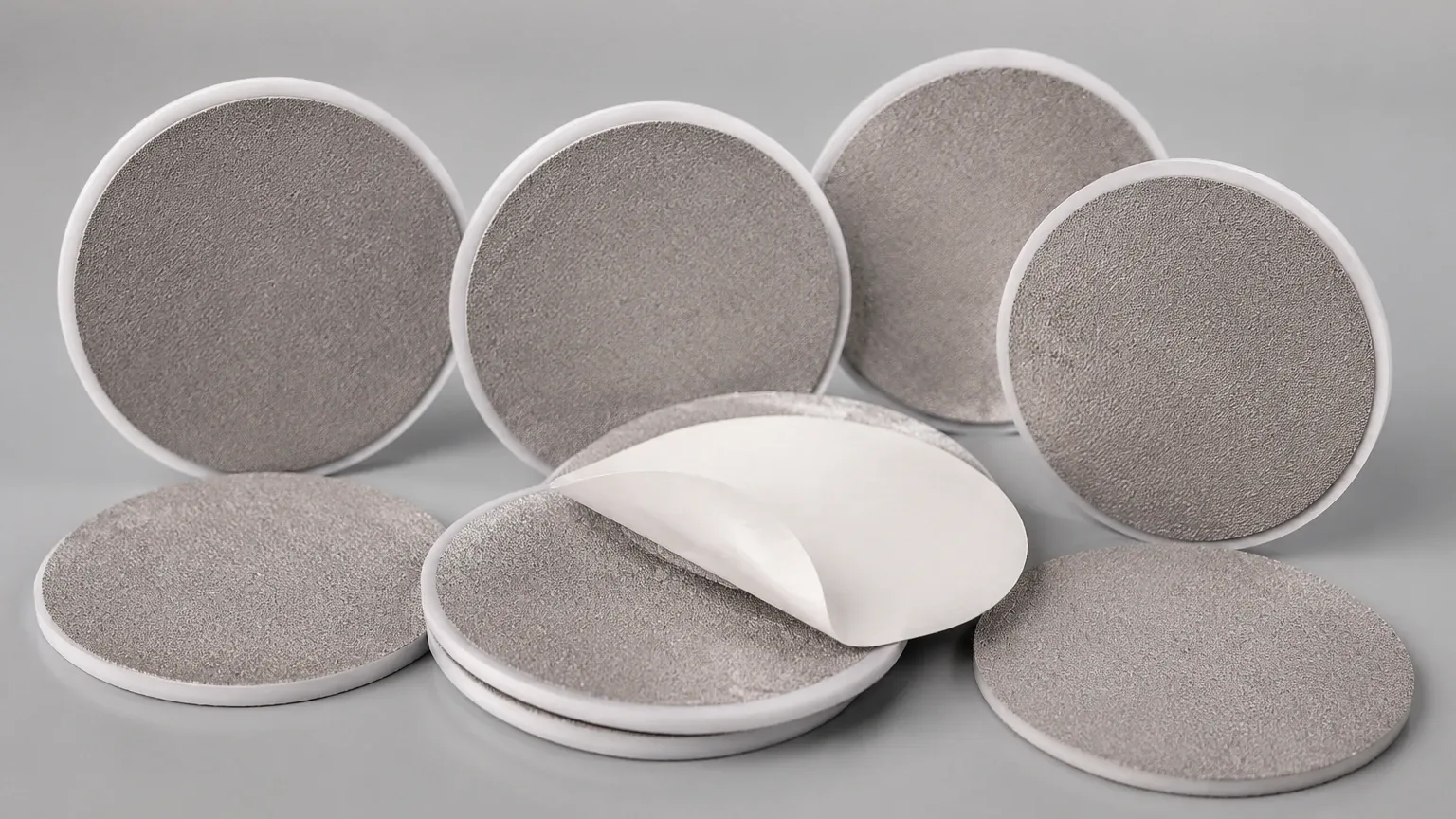
In industrial filtration and venting applications, the requirement for localized, high-performance filtration often necessitates specialized components that can be easily integrated into existing hardware. Ptfe adhesive back sintered filter discs represent a niche but critical solution within the broader category of Filter Discs & Packs. These components combine the exceptional chemical resistance and hydrophobic properties of Polytetrafluoroethylene (PTFE) with the structural stability of a sintered medium and the installation convenience of a pressure-sensitive adhesive.
For engineers and procurement professionals, selecting the right filter disc involves more than just picking a micron rating. It requires a deep dive into material compatibility, thermal limits, and the mechanical integrity of the bond between the filter and the substrate. This guide explores the technical nuances of PTFE sintered discs, their adhesive backing systems, and the engineering considerations necessary for successful deployment in demanding industrial environments.
The Engineering Behind Sintered PTFE Media
Sintering is a manufacturing process where powdered material is subjected to heat and pressure below its melting point. In the context of PTFE, this process fuses the particles together to create a porous, omni-directional structure. Unlike expanded PTFE (ePTFE) membranes, which are thin and often require a support layer, sintered PTFE is inherently rigid and self-supporting.
Structural Integrity and Porosity
The sintering process allows for precise control over the pore size distribution and the total volume of porosity. Because the particles are fused at their contact points, the resulting disc maintains its shape under vacuum or moderate pressure. This structural stability is essential when the filter must act as a physical barrier against particulates while allowing gas or liquid to pass through at a predictable flow rate.
Hydrophobic and Oleophobic Properties
PTFE is naturally hydrophobic, meaning it repels water. In venting applications, this allows the disc to block liquid water while permitting the passage of air or other gases. For more specialized applications, the sintered structure can be treated to be oleophobic (oil-repellent), which is critical in automotive or industrial sensor housings where exposure to oils and fuels is common.
Understanding Adhesive Backing Systems
The "adhesive back" component of these filter discs is what transforms a standard filtration medium into an easy-to-install industrial component. However, the adhesive layer is often the limiting factor in the assembly's overall performance, particularly regarding temperature and chemical exposure.
Types of Adhesives
Most industrial-grade PTFE filter discs utilize one of two primary adhesive chemistries:
1. Acrylic Adhesives: These offer excellent initial tack and perform well across a broad range of temperatures (typically up to 120°C to 150°C). They are resistant to UV light and many common solvents, making them suitable for outdoor or general industrial use.
2. Silicone Adhesives: For high-temperature applications, silicone-based adhesives are preferred. They can often withstand continuous exposure to temperatures exceeding 200°C. While they have lower initial tack than acrylics, they maintain their bond strength in extreme thermal environments.
Bond Strength and Surface Energy
PTFE is famous for its low surface energy, which makes it difficult for substances to stick to it. Manufacturers of ptfe adhesive back sintered filter discs use specialized surface treatments, such as plasma etching or chemical etching, on one side of the sintered disc to ensure the adhesive remains permanently bonded to the PTFE. When applying these discs to a substrate (such as a plastic housing or a metal manifold), the cleanliness and surface energy of that substrate are equally important for a reliable seal.
Key Applications for PTFE Sintered Discs
While Filter Discs & Packs are used across nearly every industrial sector, the specific combination of PTFE and adhesive backing is most prevalent in applications where chemical inertness and venting are paramount.
Industrial Venting and Pressure Equalization
Enclosures for electronics, sensors, and automotive components often experience internal pressure changes due to temperature fluctuations. A PTFE sintered disc allows the enclosure to "breathe," equalizing pressure while preventing the ingress of dust, water, and contaminants. The adhesive backing allows these discs to be applied directly over a vent hole in the housing, simplifying the assembly process.
Chemical Processing and Laboratory Equipment
In environments where aggressive chemicals or solvents are present, standard filter materials like nylon or polyester may degrade. Sintered PTFE is virtually inert to almost all chemicals, including strong acids and bases. These discs are frequently used in laboratory filtration setups, solvent venting, and as protective barriers for sensitive analytical instruments.
Medical and Pharmaceutical Filtration
PTFE's biocompatibility and resistance to sterilization processes (such as autoclaving or ethylene oxide treatment) make it an ideal candidate for medical device venting. Sintered discs provide a robust bacterial barrier in applications such as IV vent caps, urine bags, and surgical suction canisters.
Selection Criteria: Evaluating Performance Specs
When specifying ptfe adhesive back sintered filter discs for a project, engineers must evaluate several interconnected performance metrics. Overlooking a single variable can lead to premature filter failure or inadequate system performance.
Micron Rating and Filtration Efficiency
Filtration efficiency is determined by the pore size, often referred to as the micron rating. It is important to distinguish between "nominal" and "absolute" ratings. A nominal rating indicates the ability of the filter to retain the majority of particles of a certain size, whereas an absolute rating guarantees the retention of all particles above that size. For critical venting, a 0.2-micron absolute rating is standard for sterile or high-purity requirements.
Airflow and Water Entry Pressure (WEP)
In venting applications, the airflow rate (typically measured in L/min/cm² at a specific differential pressure) must be high enough to allow rapid pressure equalization. Conversely, the Water Entry Pressure (WEP) defines the minimum pressure required to force water through the hydrophobic pores. Higher WEP is generally desirable for outdoor equipment exposed to heavy rain or high-pressure washdowns.
Dimensional Tolerances
Because these discs are often automatically applied in high-volume manufacturing lines, dimensional consistency is vital. The outer diameter (OD) and the thickness of the sintered disc must be held to tight tolerances to ensure they fit within the designated mounting area and provide a consistent seal.
Comparison: Sintered PTFE vs. Stainless Steel Filter Discs
In many industrial scenarios, engineers must choose between polymer-based filters and metal-based filters. Both are available within the category of Filter Discs & Packs, but they serve different operational needs.
| Feature | Sintered PTFE Discs | Stainless Steel Filter Discs |
| :— | :— | :— |
| Chemical Resistance | Exceptional (Inert to most acids/bases) | High (Varies by grade, e.g., 316L) |
| Temperature Limit | Up to 260°C (Adhesive dependent) | Up to 500°C+ |
| Mechanical Strength | Moderate (Flexible/compressible) | Very High (Rigid/Durable) |
| Hydrophobicity | Inherently Hydrophobic | Naturally Hydrophilic (Requires coating) |
| Installation | Adhesive back or press-fit | Welding, brazing, or mechanical clamping |
For applications requiring extreme mechanical durability or very high-pressure differentials, stainless steel is usually the superior choice. However, for chemical inertness and ease of installation via adhesive, PTFE remains the industry standard.
Common Risks and Engineering Considerations
Implementing ptfe adhesive back sintered filter discs involves managing risks related to the environment and the installation process. Failure to account for these factors can result in the disc detaching or the filtration media becoming compromised.
Adhesive Outgassing and Contamination
In high-vacuum or high-purity gas applications, the adhesive layer can be a source of outgassing. Volatile organic compounds (VOCs) from the adhesive may contaminate the process stream or interfere with sensitive sensors. In such cases, low-outgassing adhesives or mechanical mounting (without adhesive) should be considered.
Chemical Incompatibility with Adhesives
While the PTFE disc itself is chemically inert, the adhesive backing is not. Exposure to certain solvent vapors can soften or dissolve the adhesive, causing the disc to shift or fall off. Engineers must verify that the chosen adhesive chemistry is compatible with the specific chemicals present in the operating environment.
Shelf Life and Storage
Adhesive-backed components have a finite shelf life. Factors such as humidity, temperature, and UV exposure during storage can degrade the adhesive's performance before the part is even installed. It is critical to confirm the manufacturer's storage recommendations and expiration dates to ensure maximum bond strength upon application.
Technical Confirmation Before Purchase
Before finalizing a purchase order for ptfe adhesive back sintered filter discs, the following technical data points should be confirmed with the manufacturer:
1. Operating Temperature Range: Does the limit refer to the PTFE media or the adhesive backing?
2. Differential Pressure Limits: What is the maximum pressure the disc can withstand before the adhesive bond fails or the media deforms?
3. Surface Preparation Requirements: Does the target substrate require specific cleaning (e.g., IPA wipe) or priming to achieve the rated bond strength?
4. Customization Options: Can the discs be supplied in custom shapes, or can they be laminated with a stainless steel mesh for added mechanical support?
By addressing these technical details early in the design phase, purchasing teams can ensure they receive a filtration solution that meets the specific demands of their industrial application. Whether for venting, chemical protection, or particulate filtration, the integration of sintered PTFE with reliable adhesive systems provides a versatile and efficient tool for modern engineering challenges.
