


Q Series Filter
In the landscape of industrial filtration, the Q series filter represents a critical component for systems requiring high-precision contaminant removal and structural integrity under demanding operational conditions. Typically integrated into complex machinery for chemical processing, plastic extrusion, and hydraulic power units, these filters are designed to maintain fluid purity while managing significant flow rates. For engineers and procurement specialists, understanding the technical nuances of these components—specifically how they relate to high-quality Filter Discs & Packs—is essential for optimizing system uptime and reducing long-term maintenance costs.
This guide examines the engineering principles, material considerations, and selection criteria for Q series filtration components, providing a technical framework for industrial decision-makers.
Engineering Fundamentals of Q Series Filtration Systems
The performance of a q series filter is primarily determined by its internal architecture and the media used to capture particulates. Unlike standard disposable filters, industrial-grade Q series components often utilize multi-layered stainless steel wire mesh or sintered metal fibers. This construction allows for a high degree of customization regarding filtration accuracy and mechanical strength.
Multi-Layer Design and Support Structures
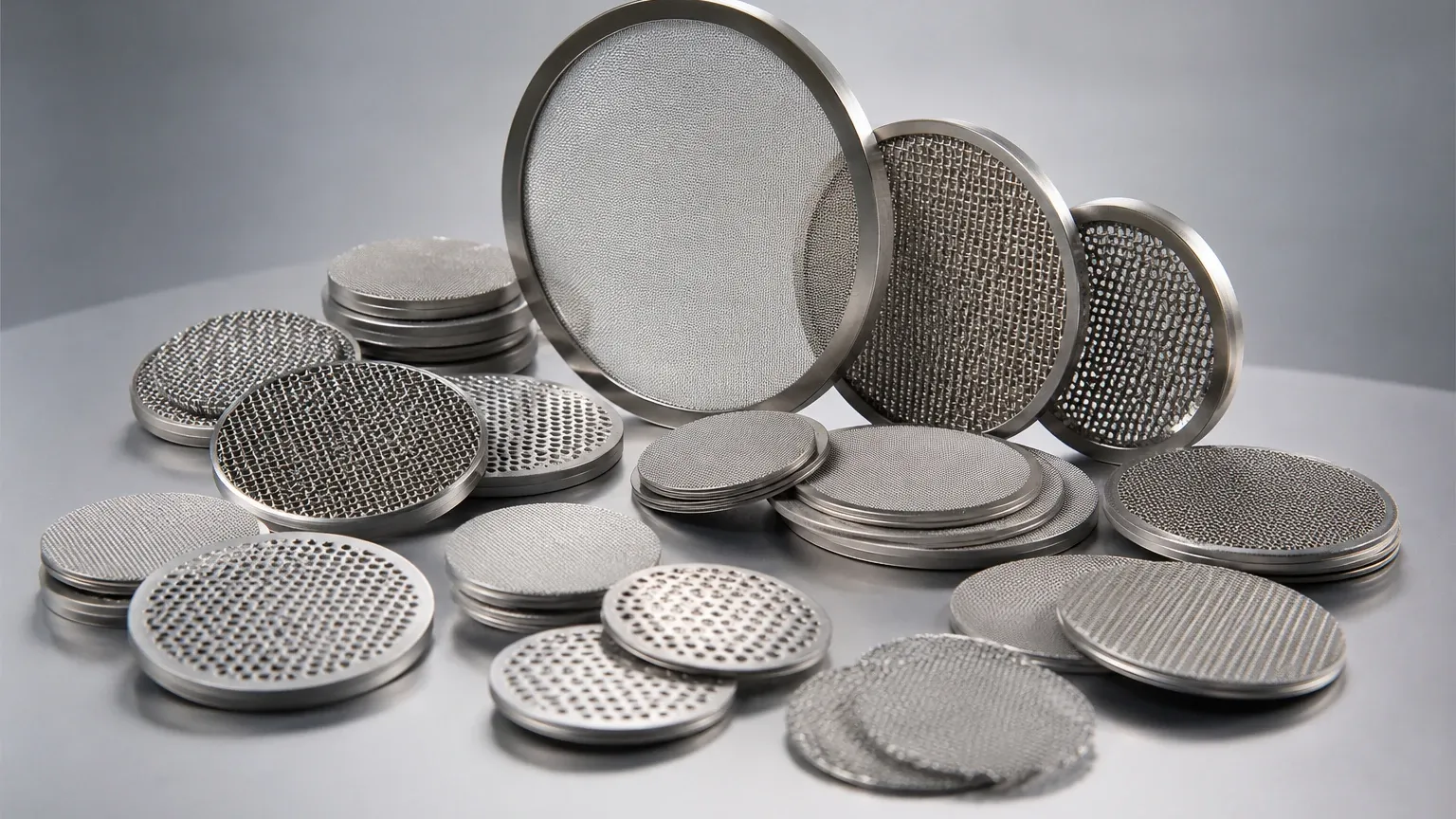
Most high-performance filter packs used in Q series applications consist of several layers of wire mesh. These layers are not identical; rather, they are engineered to serve specific functions:
1. Filtration Layer: The core layer that defines the micron rating. It is typically a fine-weave mesh (such as Dutch weave) designed to trap particles of a specific size.
2. Support Layers: Positioned on either side of the filtration layer, these coarser meshes provide the necessary rigidity to prevent the fine mesh from deforming under high pressure.
3. Drainage Layers: These facilitate the even distribution of fluid across the entire surface area of the filter, preventing localized clogging and ensuring a uniform pressure drop.
By combining these layers into integrated Filter Discs & Packs, manufacturers can create a q series filter that offers both high-precision filtration and the ability to withstand differential pressures that would collapse inferior products.
Material Selection for Demanding Industrial Environments
Material compatibility is a primary concern for engineers when specifying a q series filter. Industrial processes often involve corrosive chemicals, high temperatures, or high-pressure steam cleaning cycles. Stainless steel is the industry standard for these applications due to its inherent durability and resistance to oxidation.
Stainless Steel 304 vs. 316L
* Type 304 Stainless Steel: This is the most common material for general industrial use. It provides excellent strength and good corrosion resistance for standard water treatment and food-grade applications. However, it may be susceptible to pitting in high-chloride environments.
* Type 316L Stainless Steel: For more aggressive environments, such as chemical processing or pharmaceutical manufacturing, 316L is preferred. The addition of molybdenum enhances its resistance to corrosion and prevents intergranular corrosion after welding. Its low carbon content (the "L" in 316L) makes it ideal for components that require precision welding or sintering.
Beyond standard stainless steel, specialized applications may require exotic alloys like Hastelloy or Monel, particularly when dealing with extreme acidity or high-temperature gas filtration. Selecting the correct material ensures that the q series filter does not introduce contaminants into the process through material degradation.
Performance Metrics: Filtration Accuracy and Flow Dynamics
When evaluating a q series filter, engineers must balance filtration efficiency with the physical constraints of the system’s flow dynamics. The goal is to achieve the required fluid cleanliness without causing an excessive pressure drop that could strain pumps or reduce system throughput.
Micron Ratings and Capture Efficiency
Filtration accuracy is measured in microns (μm). It is important to distinguish between "nominal" and "absolute" ratings:
* Nominal Rating: An approximate value indicating the filter's ability to retain a majority of particles of a certain size (usually 60% to 90%).
* Absolute Rating: The diameter of the largest hard spherical particle that will pass through the filter under specified test conditions. For critical Q series applications, absolute ratings are typically required to ensure process consistency.
Pressure Drop (ΔP) Considerations
The initial pressure drop across a clean q series filter is a function of the fluid’s viscosity, the flow velocity, and the open area of the filter media. A well-designed filter pack maximizes the effective filtration area within a compact footprint. As contaminants accumulate, the pressure drop increases. Engineers must specify a terminal pressure drop—the point at which the filter must be cleaned or replaced to prevent system failure or media bypass.
Selection Criteria for Engineers and Purchasing Teams
Selecting the right Filter Discs & Packs for a q series filter housing requires a detailed understanding of the specific application. A one-size-fits-all approach often leads to premature clogging or insufficient filtration. Key factors to confirm before procurement include:
1. Geometric Configuration: Q series filters come in various shapes, including circular discs, rectangular packs, or cylindrical cartridges. Precise dimensions and tolerances are required to ensure a leak-proof seal within the filter housing.
2. Edge Treatment: To prevent media migration (where loose wires from the mesh enter the fluid stream), the edges of the filter packs are often hemmed, spot-welded, or encased in an aluminum or stainless steel rim. This is particularly important in the food, beverage, and pharmaceutical sectors.
3. Operating Temperature and Pressure: The filter must be rated for the maximum expected temperature and pressure, including potential surges or cleaning cycles (such as SIP/CIP processes).
4. Chemical Compatibility: Beyond the filter media itself, any gaskets, seals, or binding materials used in the q series filter must be compatible with the process fluid.
Maintenance, Replacement Cycles, and Total Cost of Ownership
One of the primary advantages of stainless steel Q series filters is their cleanability. Unlike polymer-based depth filters, metal mesh filters can often be restored to near-original performance through various cleaning methods, significantly lowering the total cost of ownership (TCO).
Cleaning Methodologies
* Ultrasonic Cleaning: Uses high-frequency sound waves to create cavitation bubbles that dislodge fine particulates from deep within the mesh layers.
* Chemical Cleaning: Involves soaking the filter in solvents, acids, or alkalis to dissolve specific contaminants (e.g., polymer buildup or organic matter).
* Backwashing: Reversing the flow of fluid through the filter to flush out surface-level contaminants. This is common in automated Q series systems.
* Burn-off/Pyrolysis: Used primarily in the polymer industry to remove hardened plastic resins by heating the filter in a controlled environment.
Determining Replacement Cycles
While cleanable, no filter lasts indefinitely. Over time, repeated cleaning cycles and mechanical stress can lead to "work hardening" of the metal or gradual deformation of the mesh pores. Engineers should monitor the time it takes for the filter to reach its terminal pressure drop after each cleaning. A significant shortening of the cycle time usually indicates that the media is permanently fouled or structurally compromised, necessitating a full replacement.
Quality Control and Testing Standards
To ensure the reliability of a q series filter, manufacturers must adhere to rigorous testing protocols. Purchasing teams should request documentation regarding the following standards:
* Bubble Point Test (ISO 2942): A non-destructive test used to determine the pore size and integrity of the filter media. It measures the pressure required to force air bubbles through a liquid-saturated filter.
* Dirt Holding Capacity (ISO 16889): Measures the total amount of a standard test dust the filter can retain before reaching a specified pressure drop. This is a key indicator of the filter's service life.
* Fabrication Integrity: Visual and dimensional inspections to ensure that the Filter Discs & Packs meet the exact specifications required for the Q series housing.
Applications in Specialized Industrial Sectors
The versatility of the q series filter makes it a staple in several high-stakes industries. In the chemical fiber industry, these filters are used in the spinning process to remove impurities from molten polymers, preventing spinneret clogging and ensuring fiber uniformity. In hydraulic systems, they protect sensitive valves and actuators from wear-causing particulates, extending the life of expensive machinery.
Furthermore, in the food and beverage sector, stainless steel Q series filters provide a hygienic solution for removing solids from liquids while withstanding the high-temperature steam sterilization required for food safety compliance.
Conclusion
The q series filter is more than a simple consumable; it is an engineered component vital to the efficiency and safety of industrial processes. By focusing on high-quality material selection, precise micron ratings, and robust construction—such as that found in professional Filter Discs & Packs—engineers can ensure their systems operate at peak performance. When selecting a filtration partner, technical expertise in customization and a deep understanding of fluid dynamics are the most important factors in achieving a reliable, cost-effective filtration solution.
