


Small Filter Discs
In the landscape of industrial filtration, the focus often gravitates toward large-scale pressure vessels and high-volume cartridge housings. However, the operational integrity of precision instrumentation, laboratory equipment, and localized fluid systems frequently depends on much smaller, more specialized components. Small filter discs represent a critical subset of the broader Filter Discs & Packs category, providing essential protection and separation in environments where space is limited and accuracy is paramount.
For engineers and technical procurement teams, selecting the right small filter discs involves a deep understanding of material science, fluid dynamics, and mechanical tolerances. These components are not merely scaled-down versions of larger filters; they are precision-engineered tools designed to maintain specific flow characteristics while withstanding the unique stresses of localized industrial applications.
Understanding the Construction of Small Filter Discs
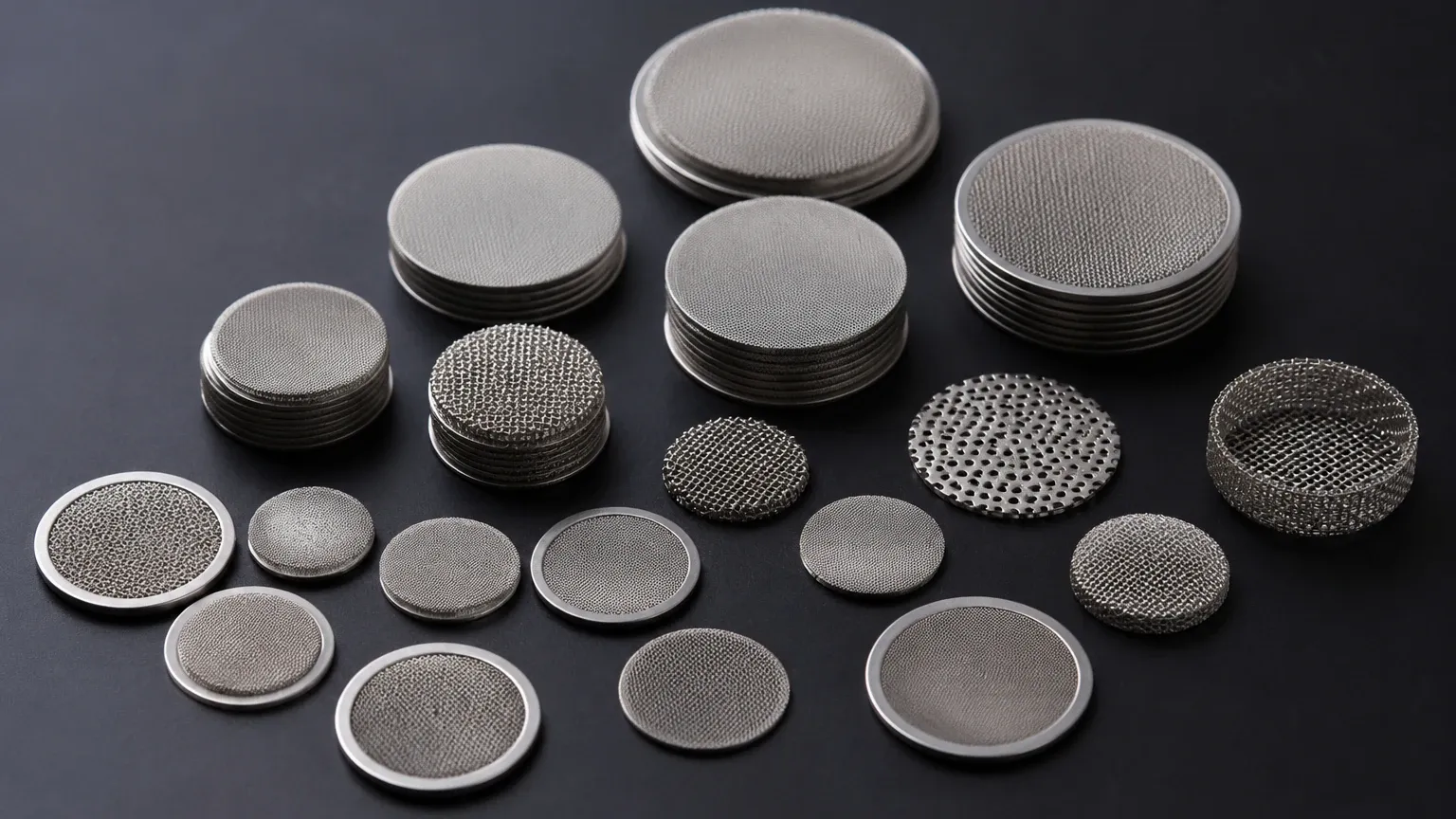
Small filter discs are typically manufactured from stainless steel wire mesh, although other alloys and sintered metals are utilized for specific chemical or thermal requirements. The construction of these discs determines their filtration efficiency, mechanical strength, and longevity.
Single-Layer vs. Multi-Layer Discs
Single-layer small filter discs are often used in applications where the pressure drop must be kept to an absolute minimum and the contaminant load is relatively light. These are common in simple straining applications or as a final safety barrier before a sensitive nozzle or sensor.
Multi-layer discs, often referred to as filter packs, involve stacking multiple layers of wire mesh. These layers are usually arranged with a fine filtration mesh sandwiched between coarser support meshes. This configuration provides several advantages:
* Enhanced Structural Integrity: The coarser outer layers protect the fine inner mesh from mechanical damage and deformation under high pressure.
* Improved Dirt-Holding Capacity: The graduated density allows for depth filtration, capturing larger particles on the outer layers while the inner layer performs the final precision cut.
* Flow Distribution: Multi-layer designs can help stabilize fluid flow across the surface of the disc, preventing localized blinding of the mesh.
Edge Treatment and Finishing
Because small filter discs are often installed in tight-tolerance housings or threaded fittings, the edge finish is a vital engineering consideration. Common edge treatments include:
* Spot Welding: Multiple layers are fused at specific points to maintain alignment.
* Rimmed or Bound Edges: The circumference of the disc is encased in a metal rim (often aluminum, stainless steel, or copper). This prevents fraying of the wire mesh and provides a reliable sealing surface for gaskets or O-rings.
* Sintered Edges: In high-performance applications, the edges may be sintered to create a solid, monolithic structure that eliminates the risk of bypass.
Material Selection for Demanding Environments
The performance of small filter discs is heavily influenced by the metallurgy of the wire mesh. In industrial B2B applications, stainless steel is the standard due to its balance of cost, durability, and corrosion resistance.
304 and 316L Stainless Steel
Grade 304 stainless steel is suitable for general industrial use where basic corrosion resistance is required. However, for chemical processing, pharmaceutical, and marine applications, 316L stainless steel is the preferred choice. The addition of molybdenum in 316L provides superior resistance to chlorides and pitting, while the "L" (low carbon) designation ensures better weldability and resistance to intergranular corrosion.
Specialty Alloys
For extreme environments, small filter discs can be manufactured from specialty alloys such as Monel, Inconel, or Hastelloy. These materials are selected when the process fluid is highly acidic, alkaline, or when the operating temperature exceeds the limits of standard stainless steel. Engineers must confirm the chemical compatibility of the mesh material with the process fluid to prevent premature failure due to stress corrosion cracking or general thinning of the wire.
Key Engineering Specifications and Tolerances
When specifying small filter discs, technical professionals must look beyond simple dimensions. The following parameters are essential for ensuring the component performs as intended within a larger system.
Micron Rating and Weave Type
The filtration accuracy is defined by the micron rating, which can range from over 1,000 microns down to 1 micron. The weave type of the mesh plays a significant role here:
* Plain Weave: The most common type, offering a straightforward aperture for general filtration.
* Dutch Weave: This weave utilizes thicker warp wires and thinner shute wires, resulting in a dense, strong mesh with very fine filtration capabilities and high pressure resistance.
* Twill Weave: Allows for a heavier wire diameter in a given mesh count, increasing the mechanical strength of the disc.
Dimensional Accuracy
In precision instrumentation, a deviation of even a fraction of a millimeter in the diameter of small filter discs can lead to bypass—where fluid flows around the filter rather than through it. Manufacturers like Kaifil utilize precision die-cutting or laser-cutting technologies to ensure that discs meet strict dimensional tolerances, ensuring a snug fit within the filter housing.
Cleanliness Standards
For pharmaceutical and semiconductor applications, the cleanliness of the filter disc itself is a critical specification. Residual oils from the manufacturing process or microscopic metal fragments from the cutting process can contaminate the process stream. Ultrasonic cleaning and cleanroom packaging are often required for these sensitive sectors.
Applications in Precision Industrial Systems
Small filter discs are found in a diverse array of industries, often serving as the "last line of defense" for high-value components.
Laboratory and Analytical Instrumentation
In chromatography and mass spectrometry, small filter discs are used to protect sensitive columns and detectors from particulate matter. These discs must offer high filtration efficiency without introducing any extractables that could interfere with the analytical results.
Hydraulic and Pneumatic Systems
Precision hydraulic valves and actuators are highly sensitive to contamination. Small filter discs are often integrated directly into the valve body or the fluid line to protect internal orifices from wear particles or external debris. Their compact size allows for integration without significantly increasing the footprint of the hydraulic power unit.
Chemical and Petrochemical Sampling
When taking samples for process control, it is essential to remove solids that could damage sampling pumps or foul analytical sensors. Small filter discs made from corrosion-resistant alloys are ideal for these localized filtration tasks, providing reliable performance in harsh chemical environments.
Aerospace and Defense
In aerospace fuel and lubrication systems, weight and space are at a premium. Small, high-strength filter discs provide the necessary filtration while meeting the rigorous vibration and temperature requirements of flight hardware.
Selection Criteria for Engineers and Purchasing Teams
To ensure the optimal selection of small filter discs, engineers should evaluate the following factors during the design and procurement phase:
1. Flow Rate vs. Pressure Drop: Small discs have a limited surface area. It is vital to calculate the expected pressure drop across the disc at the required flow rate. If the pressure drop is too high, it may necessitate a coarser mesh or a multi-layer design to increase the effective open area.
2. Contaminant Loading: If the process fluid has a high concentration of solids, a single-layer small disc will blind quickly. In such cases, a pleated design or a multi-stage Filter Discs & Packs approach should be considered to extend the service life.
3. Operating Temperature and Pressure: The mechanical strength of the wire mesh decreases at elevated temperatures. Engineers must verify that the chosen material and disc structure can withstand the maximum operating pressure at the maximum process temperature without deforming or rupturing.
4. Installation Method: How will the disc be held in place? Will it be clamped, welded, or held by a retaining ring? The edge treatment must be compatible with the chosen installation method to ensure a leak-free seal.
Common Risks and Mitigation Strategies
The primary risk associated with small filter discs is "bypass." This occurs when the fluid path of least resistance is around the edge of the filter rather than through the mesh. This is typically caused by improper sizing, poor edge finishing, or the use of inadequate sealing mechanisms. To mitigate this, engineers should specify rimmed edges for applications involving high differential pressures.
Another risk is media migration, where individual wires or fragments of the mesh break off and enter the downstream flow. This is a significant concern in the food and beverage and pharmaceutical industries. Utilizing high-quality, sintered mesh or ensuring rigorous post-manufacturing cleaning can significantly reduce this risk.
The Importance of Customization and OEM Support
Because every industrial system has unique requirements, off-the-shelf filter discs are often insufficient. Customization is a hallmark of professional filtration manufacturing. Kaifil specializes in developing tailored solutions that address specific challenges in filtration accuracy, material compatibility, and mechanical design.
When working with an OEM partner, technical teams should provide detailed information regarding:
* The specific chemical composition of the process fluid.
* The target particle size for removal.
* The maximum allowable pressure drop.
* The physical dimensions and housing constraints.
By collaborating closely with a manufacturer that understands the nuances of wire mesh fabrication, companies can ensure that their small filter discs provide reliable, long-term performance, reducing maintenance costs and protecting downstream equipment.
Conclusion
Small filter discs may be small in stature, but their role in maintaining the efficiency and safety of industrial processes is immense. From protecting delicate sensors in a chemical plant to ensuring the purity of a pharmaceutical batch, these components are essential for modern precision engineering. By focusing on material quality, dimensional precision, and application-specific design, engineers can leverage Filter Discs & Packs to achieve optimized filtration performance in even the most demanding environments.
