


Water Bottle Filter Discs
In the landscape of portable hydration technology, the demand for high-performance, durable, and food-safe filtration components has shifted from disposable plastic solutions toward robust metal-based systems. Water bottle filter discs serve as the critical barrier between raw water sources and the end-user, ensuring that particulates, sediments, and contaminants are effectively removed. For engineers and product designers in the hydration and outdoor equipment sectors, selecting the right filtration medium involves a complex balance of flow rate, mechanical strength, and material compatibility.
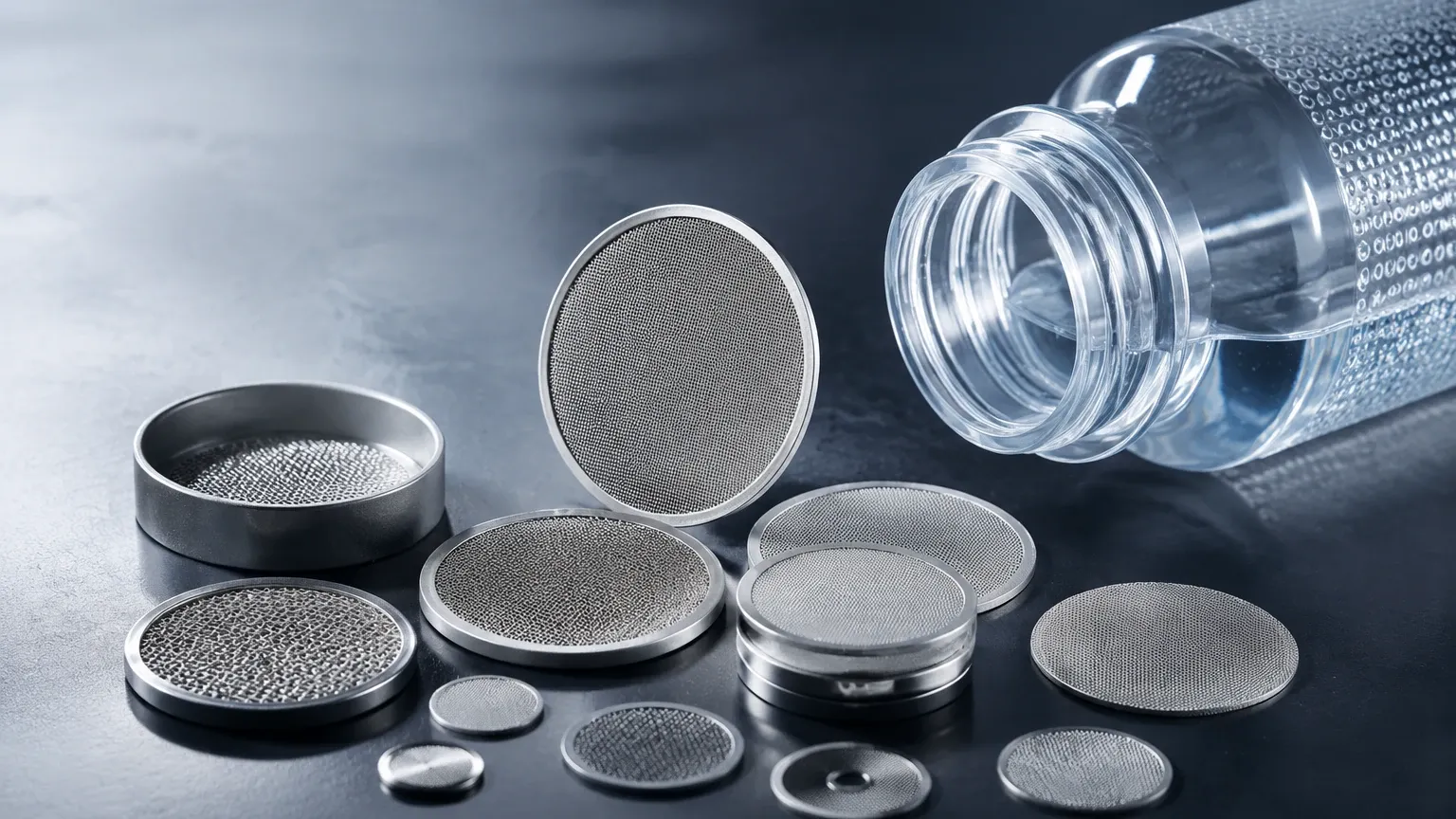
Industrial-grade Filter Discs & Packs manufactured from stainless steel wire mesh offer a significant upgrade over traditional fiber or carbon-based inserts. These components provide repeatable performance and can be engineered to meet specific micron ratings while maintaining structural integrity under the varying pressures of manual or gravity-fed water systems. Understanding the technical nuances of these discs is essential for developing products that meet both consumer expectations and rigorous safety standards.
Understanding the Role of Precision Filter Discs in Hydration Systems
Water bottle filter discs are typically integrated into the cap, straw, or internal reservoir of a portable water container. Unlike industrial large-scale filtration, these components must operate efficiently within a very small footprint. The primary function is to provide mechanical filtration—trapping suspended solids such as sand, silt, and microplastics before the water reaches the user.
From a B2B procurement perspective, the choice of a filter disc is often dictated by the target environment of the end product. A bottle designed for urban tap water filtration may prioritize chlorine reduction (often requiring a composite disc with carbon), whereas a bottle designed for backcountry hiking requires a high-precision stainless steel mesh disc capable of blocking fine sediment and protecting secondary chemical or UV treatment stages.
Stainless steel water bottle filter discs are increasingly favored for their sustainability. Because they are resistant to corrosion and mechanical wear, they can be cleaned and reused indefinitely, aligning with the "zero-waste" product positioning common in the modern hydration market. For manufacturers, this translates to a higher-value product with a lower lifecycle cost for the consumer.
Material Selection: Why Stainless Steel Mesh?
The choice of material is the most critical decision in the engineering of filter discs. While synthetic meshes (such as nylon or polyester) are available, stainless steel remains the gold standard for industrial and high-end consumer applications for several reasons:
1. Corrosion Resistance and Longevity
Portable water bottles are frequently exposed to moisture, varying temperatures, and sometimes cleaning agents. Using Grade 304 or 316L stainless steel ensures that the filter disc will not rust or degrade over time. 316L, in particular, contains molybdenum, which provides superior resistance to chlorides—a vital feature if the bottle is used with treated municipal water or in coastal environments.
2. Structural Rigidity
Unlike soft fabrics, stainless steel wire mesh maintains its pore size even under pressure. When a user suctions water through a straw or squeezes a flexible bottle, the pressure differential can cause flexible filter media to deform, potentially enlarging the pores and allowing contaminants through. Stainless steel discs remain rigid, ensuring consistent filtration accuracy.
3. Food-Grade Safety
Stainless steel is inherently BPA-free and does not leach chemicals into the water. As a non-porous material, it does not harbor bacteria or mold as easily as organic or synthetic fibers, provided it is cleaned regularly. This makes it an ideal material for meeting FDA and LFGB compliance standards in the food and beverage industry.
Technical Specifications: Layers, Weaves, and Micron Ratings
When specifying water bottle filter discs, engineers must define the internal structure of the disc. A single layer of mesh may suffice for coarse filtration, but more demanding applications often require multi-layer Filter Discs & Packs.
Weave Types
The style of the weave determines the filtration characteristics:
* Plain Weave: The most common type, where wires cross over and under each other. It provides a high open area and excellent flow rates, suitable for general sediment removal.
* Twill Weave: Used for finer filtration, this weave allows for a heavier wire diameter in a given mesh count, increasing strength.
* Dutch Weave: This produces a much tighter, denser mesh with smaller pore sizes. It is ideal for precision filtration where high mechanical strength and fine particle retention are required simultaneously.
Multi-Layer Configurations
In many high-performance water bottle designs, a single layer of fine mesh is too fragile. To solve this, manufacturers use multi-layer packs. A typical configuration might include:
* A Fine Filtration Layer: The middle layer that determines the micron rating.
* Support Layers: Coarser mesh layers on either side that provide rigidity and protect the fine mesh from mechanical damage during assembly or cleaning.
* Drainage Layers: Optimized to ensure that water flows evenly across the entire surface area of the disc, preventing "blind spots" and maximizing the flow rate.
Micron Ratings
For water bottle applications, micron ratings typically range from 20 microns to 200 microns. A 50-micron disc is often the "sweet spot" for portable filters, as it is fine enough to catch visible sediment and many microplastics without significantly impeding the user's ability to drink naturally.
Structural Integrity: Edge Binding and Spot Welding
A common failure point in filter discs is the edge. If the wire mesh is simply cut to shape, the individual wires at the perimeter can fray or unravel, leading to bypass (where unfiltered water escapes around the edges) or, worse, metal fragments entering the water stream. To prevent this, professional manufacturers employ several edge-treatment techniques:
Metal Rims (Binding)
The most robust solution is to encase the perimeter of the disc in a metal rim, usually made of aluminum or stainless steel. This "U-shaped" binding is crimped around the mesh, locking the wires in place and providing a smooth, solid surface for the disc to seat against the bottle's gasket or housing. This ensures a 100% leak-proof seal.
Spot Welding
For multi-layer packs, spot welding at strategic points across the surface or along the circumference keeps the layers perfectly aligned. This is crucial during the automated assembly of water bottles, where any misalignment of the filter layers could result in a defective unit.
Sintering
In extreme cases, the mesh layers can be sintered together. Sintering involves heating the layers in a vacuum furnace until the contact points of the wires fuse together. This creates a single, monolithic piece of porous metal that is virtually indestructible and has no risk of wire migration.
Performance Metrics: Flow Rate, Pressure Drop, and Reusability
For a B2B buyer, the performance of a water bottle filter disc is measured by how it affects the user experience. Two primary metrics are flow rate and pressure drop.
Flow Rate vs. Filtration Efficiency
There is an inverse relationship between how well a disc filters and how fast water moves through it. A very fine mesh will catch more particles but will require more force (suction or pressure) to move the water. Engineering the disc involves selecting a mesh with the highest possible "open area" percentage while maintaining the required micron rating. This ensures the user doesn't feel like they are struggling to drink.
Pressure Drop (Delta P)
In gravity-fed systems or straw-based bottles, a high pressure drop can make the product unusable. By using high-quality stainless steel wire mesh with precise wire diameters, manufacturers can minimize this drop. Testing the "bubble point" and air permeability of the Filter Discs & Packs helps engineers predict how the disc will perform in real-world hydration scenarios.
Maintenance and Cleaning
One of the strongest selling points of metal water bottle filter discs is their ease of maintenance. Unlike carbon filters that must be discarded once saturated, stainless steel discs can be backwashed or cleaned in an ultrasonic bath. For the consumer, this means a one-time purchase. For the OEM manufacturer, this supports a brand image of sustainability and high-quality engineering.
OEM Customization and Manufacturing Considerations
Every water bottle design is unique, meaning that off-the-shelf filter components rarely suffice. Customization is a standard requirement in the B2B filtration market. When partnering with a manufacturer like Kaifil, several variables can be tailored to the specific project:
* Custom Geometry: While circular discs are standard, filters can be die-cut or laser-cut into oval, rectangular, or complex 3D shapes to fit proprietary cap designs.
* Variable Thickness: By adjusting the number of layers and wire diameters, the total thickness of the filter pack can be controlled to fit within tight tolerances in the bottle assembly.
* Branding and Identification: For high-volume orders, part numbers or brand logos can sometimes be etched onto the metal rims for easier inventory management and brand reinforcement.
Prototyping and Scaling
For engineers in the R&D phase, it is vital to work with a supplier that can provide rapid prototyping. Testing different mesh combinations in a functional prototype allows for the verification of flow rates before committing to mass production. Once the design is finalized, die-cutting ensures that thousands of units can be produced with identical dimensions and performance characteristics.
Conclusion: Selecting the Right Partner for Hydration Filtration
The integration of high-quality water bottle filter discs is more than a functional necessity; it is a commitment to product durability and user safety. By moving away from disposable media and embracing the precision of stainless steel Filter Discs & Packs, manufacturers can deliver superior hydration solutions that stand up to the rigors of daily use and extreme environments.
When evaluating potential filtration components, engineers should focus on material grade, weave precision, and edge-finishing techniques. A well-designed filter disc not only protects the consumer from particulates but also enhances the overall perceived quality of the brand. As the market for sustainable and high-performance outdoor gear continues to grow, the role of precision metal filtration will remain a cornerstone of innovative product design.
