


Water Filter Discs
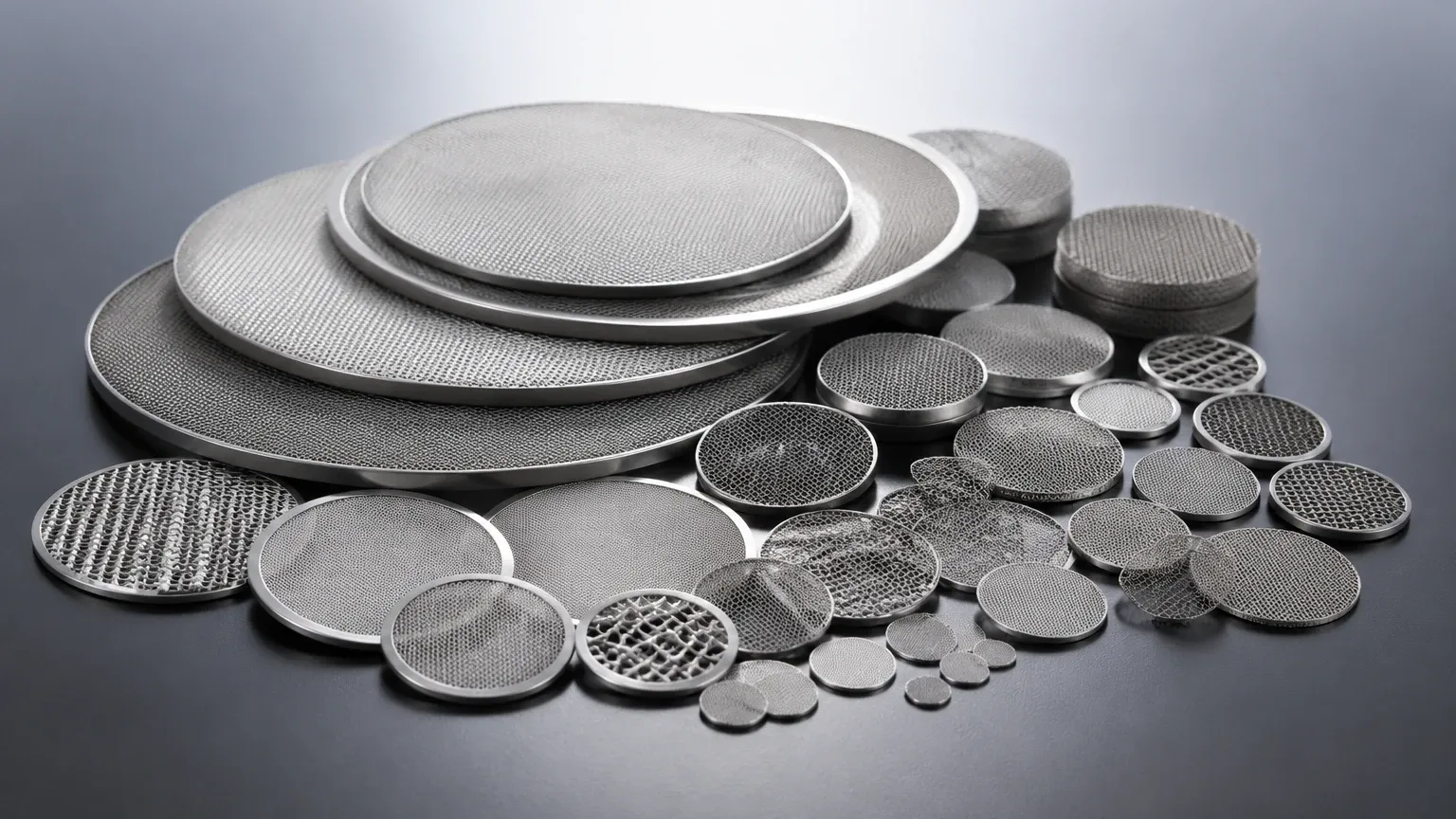
In industrial water treatment and process engineering, the efficiency of a filtration system is often determined by the precision and durability of its smallest components. Stainless steel water filter discs represent a critical category of filtration media designed to remove particulate matter from fluid streams while maintaining structural integrity under high pressure and temperature. Unlike disposable polymer-based filters, these metallic discs offer a reusable, high-strength solution for demanding B2B applications ranging from chemical processing to cooling water systems.
Selecting the appropriate filtration component requires a deep understanding of mesh geometry, material science, and fluid dynamics. For engineers and procurement specialists, the goal is to balance filtration fineness with flow capacity and long-term operational costs. This guide examines the technical specifications, design variations, and engineering considerations essential for integrating water filter discs into industrial systems.
Engineering Fundamentals of Stainless Steel Water Filter Discs
The performance of a water filter disc is primarily dictated by the characteristics of the wire mesh from which it is fabricated. In industrial environments, stainless steel is the material of choice due to its mechanical strength and resistance to oxidation. The two most common grades utilized are SS304 and SS316L.
* SS304: Suitable for general industrial water filtration where basic corrosion resistance is required. It is cost-effective for applications involving neutral pH fluids and moderate temperatures.
* SS316L: Contains molybdenum, which significantly enhances resistance to pitting and crevice corrosion, particularly in chloride-rich environments such as seawater or brine. The "L" denotes low carbon content, which improves weldability and prevents intergranular corrosion in processed components.
The filtration capability is determined by the weave pattern of the mesh. Plain weave is standard for high-flow applications with larger particulate sizes, while Dutch weave patterns (Plain Dutch or Twill Dutch) provide a denser structure for fine filtration. These weaves create a tortuous path for the fluid, ensuring that particles exceeding the micron rating are effectively trapped on the surface or within the mesh layers.
Structural Variations: Single Layer vs. Multi-Layer Packs
Industrial filtration requirements vary significantly based on the nature of the contaminant and the pressure of the system. To meet these diverse needs, Filter Discs & Packs are manufactured in several configurations.
Single-Layer Filter Discs
Single-layer discs are typically used in low-pressure applications or as a primary screening stage. They offer the highest open area and lowest pressure drop. These are often used in spray nozzle protection or as pre-filters for more sensitive downstream equipment. Because they consist of a single mesh sheet, they are easy to clean via backwashing or ultrasonic baths.
Multi-Layer Filter Packs
In high-pressure systems or applications requiring higher filtration accuracy, multiple layers of mesh are combined. These layers are often graduated, with a coarse support mesh providing structural rigidity and a fine mesh layer performing the actual filtration.
1. Spot-Welded Packs: Multiple layers are joined at specific points using resistance welding. This keeps the layers aligned during installation and operation without restricting the flow at the edges.
2. Rimmed/Framed Discs: The edges of the mesh layers are enclosed in a metal rim (often aluminum or stainless steel). This framing prevents bypass—where fluid escapes around the edges of the filter—and adds significant mechanical strength, allowing the disc to withstand higher differential pressures without deforming.
Performance Metrics: Micron Rating and Flow Dynamics
When specifying water filter discs, engineers must prioritize two conflicting metrics: filtration accuracy (micron rating) and flow rate.
Micron Rating
The micron rating defines the size of the smallest particle the mesh can reliably intercept. In industrial water treatment, this can range from 5 microns for fine process water to 500 microns for raw water intake. It is important to distinguish between "absolute" and "nominal" ratings. An absolute rating indicates that 99.9% of particles of that size will be captured, whereas a nominal rating is an average based on weight percentage. For critical B2B processes, absolute ratings are generally preferred to ensure consistent fluid quality.
Pressure Drop (Delta P)
As fluid passes through the water filter discs, a loss of pressure occurs. This is influenced by the mesh's open area percentage. A mesh with a high open area allows for higher flow rates but may offer less structural support. Engineers must calculate the clean pressure drop to ensure the pump system can maintain the required flow as the filter begins to load with contaminants. A high initial pressure drop reduces the available "dirt-holding capacity" before the filter requires cleaning or replacement.
Industrial Applications for Metal Filter Discs
Stainless steel filtration components are utilized across sectors where plastic alternatives fail due to heat, chemical incompatibility, or mechanical stress.
* Cooling Water Systems: In power plants and manufacturing facilities, water filter discs remove scale and organic debris from cooling loops, preventing the clogging of heat exchangers and cooling tower nozzles.
* Wastewater Treatment: Metal discs serve as tertiary treatment filters to remove fine suspended solids before water discharge or reuse. Their ability to be cleaned and reused makes them more sustainable than disposable cartridges in high-volume municipal or industrial waste streams.
* Chemical and Petrochemical Processing: The filtration of process water used in chemical reactions requires media that can withstand aggressive pH levels and high temperatures. SS316L discs are standard here to prevent metallic contamination of the chemical product.
* Food and Beverage: Used in the filtration of ingredient water and cleaning-in-place (CIP) systems. Stainless steel is preferred for its hygienic properties and ability to withstand steam sterilization.
Maintenance, Cleaning, and Service Life
One of the primary advantages of stainless steel water filter discs in a B2B context is their longevity. Unlike polymer filters that are discarded after a single loading cycle, metal discs can be restored to near-original performance through various cleaning methods.
1. Backwashing: Reversing the flow of fluid through the disc to dislodge surface-bound particles. This is effective for single-layer discs or coarse mesh packs.
2. Ultrasonic Cleaning: Using high-frequency sound waves in a cleaning solvent to remove fine particles trapped deep within the weave of multi-layer packs. This is the most effective method for restoring discs used in fine filtration (under 40 microns).
3. Chemical Cleaning: Soaking the discs in acids or alkalis to dissolve organic or mineral scaling. This requires careful selection of cleaning agents to ensure they do not compromise the stainless steel grade (e.g., avoiding high concentrations of hydrochloric acid on SS304).
The total cost of ownership (TCO) for stainless steel discs is often lower than disposables when considering the reduction in waste disposal costs, storage requirements, and system downtime associated with frequent filter changes.
Technical Selection Criteria for Procurement
To ensure the successful integration of filtration components, purchasing teams and engineers should confirm the following technical parameters before finalizing a design or order:
* Fluid Compatibility: Beyond just "water," confirm the presence of salts, acids, or oxidizing agents. This determines whether SS304 is sufficient or if SS316L/904L is required.
* Operating Temperature: While stainless steel handles high heat well, the expansion coefficients must be considered if the disc is fitted into a housing made of a different material.
* Maximum Differential Pressure: Determine the point at which the filter will be cleaned. The disc must be engineered to withstand this pressure without "bursting" or permanent deformation.
* Seal Requirements: Confirm if the disc requires a gasket (such as PTFE or Viton) or if the metal rim itself will provide the necessary seal against the housing seat.
* Dimensional Tolerances: For OEM applications, precise outer diameter (OD) and thickness (T) tolerances are vital to prevent bypass. Even a 0.5mm deviation can lead to unfiltered water leaking past the component.
Conclusion
Stainless steel water filter discs are indispensable in modern industrial fluid management. By providing a robust, cleanable, and highly customizable filtration medium, they allow facilities to maintain high standards of water purity while optimizing operational efficiency. Whether used as a single-layer screen or a complex multi-layer pack, the success of these components depends on a rigorous selection process that accounts for material grade, weave geometry, and the specific mechanical demands of the application. For engineers looking to enhance system reliability, moving toward high-quality metal filtration solutions offers a path to reduced maintenance and more predictable process outcomes.
