


Water Filter Packs
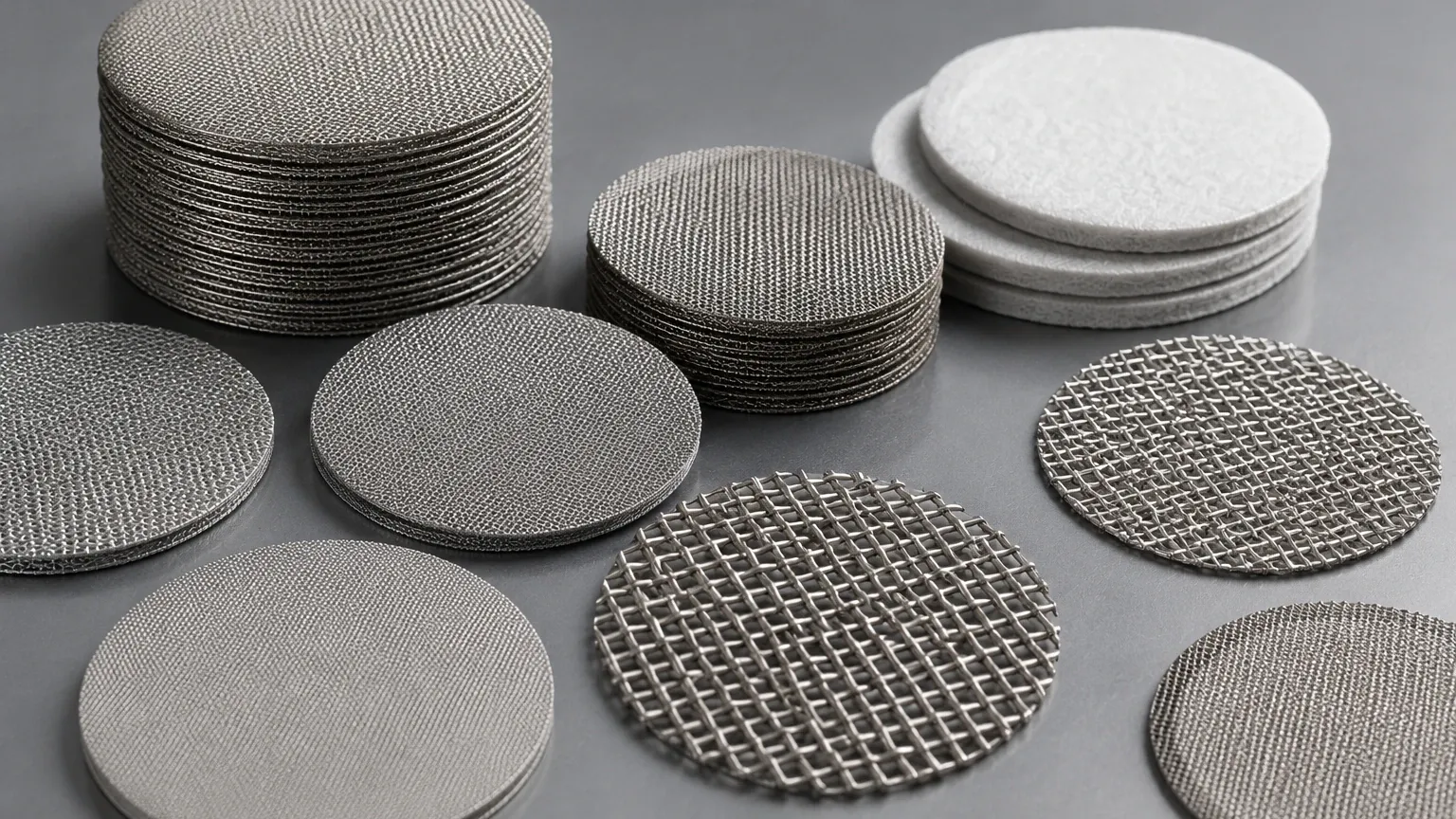
In industrial fluid processing, the efficiency of a system often depends on the precision of its smallest components. Water filter packs, which are specialized configurations of Filter Discs & Packs, serve as critical barriers against particulate contamination in high-flow and high-pressure environments. These components are not merely mesh cutouts; they are engineered assemblies designed to meet specific hydraulic requirements, chemical compatibility standards, and mechanical stress tolerances.
For engineers and procurement specialists, selecting the correct water filter packs requires a deep understanding of wire cloth metallurgy, weave patterns, and structural design. This guide examines the technical variables that define high-performance filtration and the factors that influence the total cost of ownership in industrial water treatment and process applications.
Technical Composition and Material Selection
The performance of water filter packs is fundamentally tied to the materials used in their construction. In industrial settings, stainless steel is the standard due to its balance of mechanical strength and corrosion resistance. The most common alloys include:
* AISI 304: Suitable for general water filtration where moderate corrosion resistance is required. It is cost-effective for treated water or mildly acidic environments.
* AISI 316/316L: The preferred choice for process water containing chlorides or in pharmaceutical and food-grade applications. The addition of molybdenum enhances resistance to pitting and crevice corrosion, while the "L" (low carbon) version provides better weldability and resistance to intergranular corrosion.
* Specialty Alloys: For highly aggressive saline environments or high-temperature steam filtration, alloys like Monel or Inconel may be utilized, though stainless steel remains the industry benchmark for standard water filter packs.
The wire mesh itself is defined by the wire diameter and the mesh count (the number of openings per linear inch). In water filtration, the goal is often to maximize the "Open Area" percentage to reduce initial pressure drop while maintaining the required micron rating to capture target contaminants.
Multi-Layer Design and Structural Integrity
Single-layer filter discs are often insufficient for industrial water applications where flow rates are high and pressure fluctuations are common. Water filter packs typically employ a multi-layer construction to achieve a balance between filtration fineness and structural rigidity.
The Layering Strategy
1. Filtration Layer: The central layer or layers consist of fine wire mesh with a specific micron rating. This layer determines the filtration accuracy of the pack.
2. Support Layers: To prevent the fine mesh from deforming under pressure, coarser mesh layers are placed on either side. These provide mechanical stability and ensure the filtration layer remains flat and functional.
3. Drainage Layers: In complex packs, additional layers may be added to facilitate the even distribution of fluid across the entire surface area, preventing localized clogging and extending the service life.
By combining different mesh counts, engineers can create a "gradient" filtration effect. This allows larger particles to be trapped by the outer layers while the inner layers capture finer silt or debris, significantly increasing the dirt-holding capacity compared to a single-layer disc.
Weave Patterns and Filtration Characteristics
The geometry of the weave determines how water filter packs interact with particulates. Different patterns offer varying levels of flow resistance and cleaning ease.
* Plain Weave: The most common pattern where wires cross over and under each other. It provides a high open area and is easy to clean, making it ideal for primary water filtration.
* Twilled Weave: Used for finer filtration, this pattern allows for thicker wires in a given mesh count, increasing the strength of the pack.
* Dutch Weave (Plain or Twilled): This pattern features a higher density of wires in one direction, creating smaller, triangular openings. Dutch weave packs are used when high-pressure resistance and fine particulate retention (down to 5-10 microns) are required.
When specifying Filter Discs & Packs for water systems, the choice of weave affects the "nominal" versus "absolute" filtration rating. Engineers must determine if the application requires a strictly defined pore size (absolute) or if a percentage-based retention (nominal) is acceptable for the process.
Manufacturing Processes: Welding and Edging
The method used to assemble water filter packs is as important as the mesh itself. Improper assembly can lead to "bypassing," where unfiltered water escapes around the edges of the filter element.
Spot Welding
For multi-layer packs, spot welding is used to fuse the layers into a single, cohesive unit. This ensures that the layers do not shift during installation or operation. Precise control over welding temperature and pressure is required to avoid damaging the fine wires of the filtration layer.
Rimmed Edges and Frames
To ensure a perfect seal within the filter housing, water filter packs are often finished with a metal rim. Materials such as aluminum, stainless steel, or copper are compressed around the circumference of the pack. This rim serves two purposes: it provides a gasket-like surface for a leak-proof fit and protects the edges of the mesh from fraying. In high-vibration environments, a framed edge is essential for maintaining the integrity of the filter assembly.
Performance Metrics in Industrial Water Systems
When evaluating water filter packs, engineers focus on three primary performance indicators: pressure drop, filtration efficiency, and mechanical strength.
1. Pressure Drop (Delta P): Every filter introduces resistance to flow. A well-designed pack minimizes the initial pressure drop to reduce energy consumption in pumping systems. As the pack captures debris, the Delta P increases; the rate of this increase determines the maintenance interval.
2. Filtration Efficiency: This is the ratio of particles captured versus particles present in the influent. In water filter packs, efficiency is influenced by the velocity of the water. Higher velocities can sometimes "push" deformable particles through the mesh, a factor that must be accounted for in the design phase.
3. Burst Pressure: In hydraulic or high-pressure water systems, the filter pack must withstand the maximum system pressure without rupturing. The use of reinforced support layers and high-quality spot welding is critical here.
Maintenance, Cleaning, and Total Cost of Ownership
One of the primary advantages of stainless steel water filter packs over disposable synthetic filters is their cleanability. In many industrial applications, the total cost of ownership is significantly lower for permanent metal filters due to reduced waste and replacement frequency.
Cleaning Methods
* Backwashing: Reversing the flow of water can dislodge surface-level contaminants.
* Ultrasonic Cleaning: For packs used in pharmaceutical or high-purity applications, ultrasonic baths can remove microscopic particles embedded deep within the mesh layers.
* Chemical Cleaning: Stainless steel packs can be treated with specific solvents or acids to remove mineral scaling or organic biofouling without damaging the filter structure.
Replacement Cycles
While durable, water filter packs are eventually subject to fatigue and permanent fouling. Regular inspection of the mesh for signs of "blinding" (permanent clogging) or wire breakage is necessary. A proactive replacement strategy based on Delta P trends helps prevent unplanned downtime and protects downstream equipment like pumps, nozzles, and membranes.
Engineering Checklist for Procurement
Before ordering custom water filter packs, technical teams should confirm the following specifications to ensure the product meets the application requirements:
* Fluid Chemistry: Is the water deionized, saline, or treated with specific chemicals? This dictates the grade of stainless steel required.
* Operating Temperature: High temperatures can affect the tensile strength of the wire mesh and the integrity of the rimming material.
* Micron Rating: Is the goal to protect a pump (coarse filtration) or to provide pre-filtration for an RO membrane (fine filtration)?
* Physical Dimensions: Precise diameter and thickness measurements are required to ensure the pack fits the existing housing without bypassing.
* Flow Rate and Pressure: The maximum and normal operating pressures determine the number of support layers needed for structural stability.
By focusing on these technical parameters, industrial operators can leverage high-quality Filter Discs & Packs to optimize their water treatment processes, ensuring consistent water quality and protecting critical infrastructure from particulate damage. Kaifil’s manufacturing expertise allows for the development of customized solutions that address these specific engineering challenges, providing reliable performance in the most demanding industrial environments.
