


1 Micron Air Filter
In industrial environments, the precision of air filtration is often the deciding factor between operational efficiency and costly equipment failure. A 1 micron air filter represents a critical threshold in particulate control, capable of capturing microscopic contaminants that are invisible to the naked eye but detrimental to sensitive pneumatic systems, chemical processes, and sterile environments. Understanding the technical specifications, material science, and engineering trade-offs of these filters is essential for technical professionals tasked with optimizing industrial air quality.
At the 1-micron level, filtration moves beyond simple mechanical straining into the realm of complex particle dynamics. For engineers, selecting the right filter involves more than just identifying a micron rating; it requires a deep dive into material compatibility, pressure drop characteristics, and the long-term durability of the filter media under specific operating conditions.
The Technical Significance of 1 Micron Filtration
To put the scale into perspective, a human hair is approximately 50 to 70 microns in diameter. A 1 micron air filter is designed to capture particles that are 1/1,000th of a millimeter in size. This includes fine dust, certain bacteria, oil mists, and metallic fumes. In many industrial applications, these sub-micron particles are the primary cause of abrasive wear in high-speed machinery and contamination in chemical reactions.
When evaluating a 1 micron air filter, it is important to distinguish between nominal and absolute ratings. A nominal rating refers to a filter's ability to retain a majority percentage (often 60% to 80%) of particles of a certain size. In contrast, an absolute rating implies that the filter can capture 99.9% or more of particles at that micron level. For critical applications, such as pharmaceutical air processing or high-precision pneumatic controls, absolute-rated stainless steel mesh or sintered metal filters are typically the standard due to their predictable performance and structural integrity.
Material Selection: Stainless Steel vs. Synthetic Media
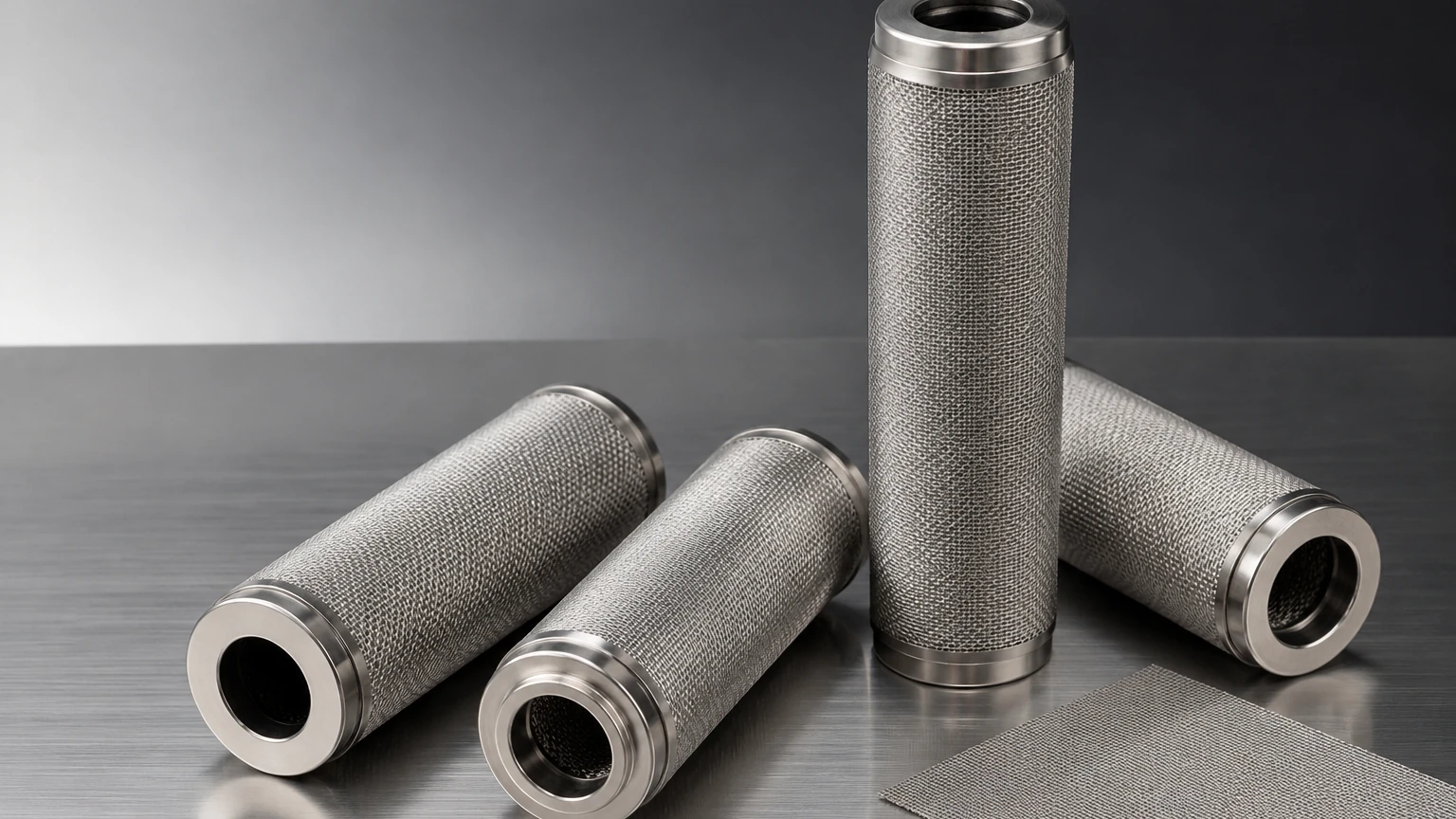
While many commercial air filters utilize synthetic fibers or paper media, industrial-grade 1 micron air filters often leverage stainless steel for its superior mechanical properties. Stainless steel wire mesh and sintered metal fiber felt offer several distinct advantages in heavy-duty environments:
1. Thermal Stability: Stainless steel filters can operate in high-temperature air streams where synthetic materials would melt or degrade. This is particularly relevant in exhaust gas filtration and heat recovery systems.
2. Chemical Resistance: In chemical processing plants, air streams may contain corrosive vapors. Stainless steel (specifically grades like 304 or 316L) provides the necessary corrosion resistance to maintain filtration efficiency without media breakdown.
3. Structural Rigidity: High-pressure air systems exert significant force on filter elements. Metal filters maintain their pore structure under high differential pressure, preventing "unloading," where captured contaminants are forced through the media.
4. Cleanability: Unlike disposable synthetic filters, stainless steel 1 micron air filters can often be cleaned via ultrasonic baths or backwashing, significantly reducing the total cost of ownership over the life of the equipment.
As a professional manufacturer, Kaifil specializes in these high-performance metal filtration solutions, ensuring that the media is engineered to withstand the rigors of industrial use while maintaining precise 1-micron accuracy.
Engineering Considerations: Pressure Drop and Flow Rate
One of the primary challenges in implementing a 1 micron air filter is managing the pressure drop (ΔP). As the pore size of the filter media decreases to capture smaller particles, the resistance to airflow naturally increases. If not properly managed, this can lead to increased energy consumption by air compressors and blowers.
Engineers must balance the following factors when integrating a 1-micron solution:
* Surface Area Optimization: Increasing the effective filtration area through pleating can mitigate high pressure drops. By increasing the surface area, the face velocity of the air through the media is reduced, which lowers resistance and extends the filter's service life.
* Pore Size Distribution: High-quality 1 micron air filters feature a controlled pore size distribution. This ensures that the filter does not clog prematurely due to larger particles while still maintaining its 1-micron efficiency.
* Housing Design: The transition of air into and out of the filter housing can also contribute to pressure loss. Utilizing streamlined housings and properly sized inlet/outlet ports is essential for maintaining system efficiency.
Industrial Applications for 1 Micron Air Filters
The requirement for 1-micron filtration spans across various demanding sectors. Each industry presents unique challenges that dictate the design and material of the filter element.
Chemical and Petrochemical Processing
In these environments, air filters are used to protect catalysts from contamination and to purify process air used in sensitive reactions. The durability of stainless steel wire mesh is vital here, as the filters must often withstand both high pressures and aggressive chemical exposure.
Food and Beverage Production
Compressed air is frequently used for packaging, sorting, and even direct product contact. A 1 micron air filter acts as a critical barrier against microbial contaminants and oil carryover from compressors. In these applications, the use of food-grade stainless steel ensures that the filtration process does not introduce any impurities into the production line.
Pharmaceutical Manufacturing
Sterile air is a prerequisite for pharmaceutical compounding and packaging. 1-micron filtration often serves as a pre-filtration stage for HEPA filters or as a final stage for general process air. The ability to sterilize stainless steel filter cartridges using steam-in-place (SIP) methods makes them an ideal choice for maintaining aseptic conditions.
Hydraulic and Pneumatic Systems
Fine particulates in pneumatic lines can cause valve sticking and seal failure. Integrating a 1 micron air filter at the point of use or at the compressor discharge protects expensive downstream components and reduces unplanned maintenance intervals.
Maintenance and Replacement Cycles
Determining the optimal replacement or cleaning cycle for a 1 micron air filter is a function of the particulate loading in the environment and the allowable pressure drop of the system. Most industrial systems utilize differential pressure gauges to monitor the health of the filter. When the pressure drop reaches a predetermined limit (often between 10 to 15 psi depending on the application), the filter element must be serviced.
For stainless steel filters, the cleaning process is a significant advantage. Unlike synthetic media that must be discarded, metal filters can be restored to near-original performance levels. However, it is crucial to follow manufacturer guidelines regarding cleaning agents and methods to avoid damaging the precision wire mesh or sintered structure.
When evaluating the total cost of ownership, engineers should look beyond the initial purchase price. While a stainless steel 1 micron air filter has a higher upfront cost than a disposable alternative, the longevity, cleanability, and reduced waste often result in lower long-term expenditures. For more information on selecting the right specifications for your project, you can visit the Main Page to review product options and application support.
Customization and OEM Integration
Standard off-the-shelf filters do not always meet the specific geometric or performance requirements of specialized industrial machinery. Customization is often necessary to ensure a perfect fit within existing housings or to achieve specific flow characteristics.
Key customization options for 1 micron air filters include:
* End Cap Configurations: Custom end caps (such as 222, 226, or threaded connections) ensure a leak-proof seal within the filter housing.
* Reinforcement Layers: For high-pressure applications, the 1-micron media can be supported by coarser mesh layers to prevent deformation.
* Dimensional Adjustments: Filters can be manufactured to specific lengths and diameters to maximize the available space within a machine's footprint.
Kaifil provides extensive OEM and customized filtration solutions, working closely with engineering teams to develop filter components that meet the exact demands of their specific industrial environments. From material selection to final production, the focus remains on delivering a product that ensures reliable, high-performance filtration.
Conclusion: Making an Informed Selection
Selecting a 1 micron air filter is a technical decision that impacts the reliability and efficiency of an entire industrial process. By focusing on material integrity, pressure drop management, and the specific needs of the application, engineers can ensure they are choosing a solution that provides maximum protection. Whether the goal is to protect sensitive pneumatic components or to ensure the purity of a pharmaceutical product, high-quality stainless steel filtration remains the gold standard for precision and durability. When the requirements are demanding, a well-engineered 1 micron air filter is an investment in operational stability and product quality.
