


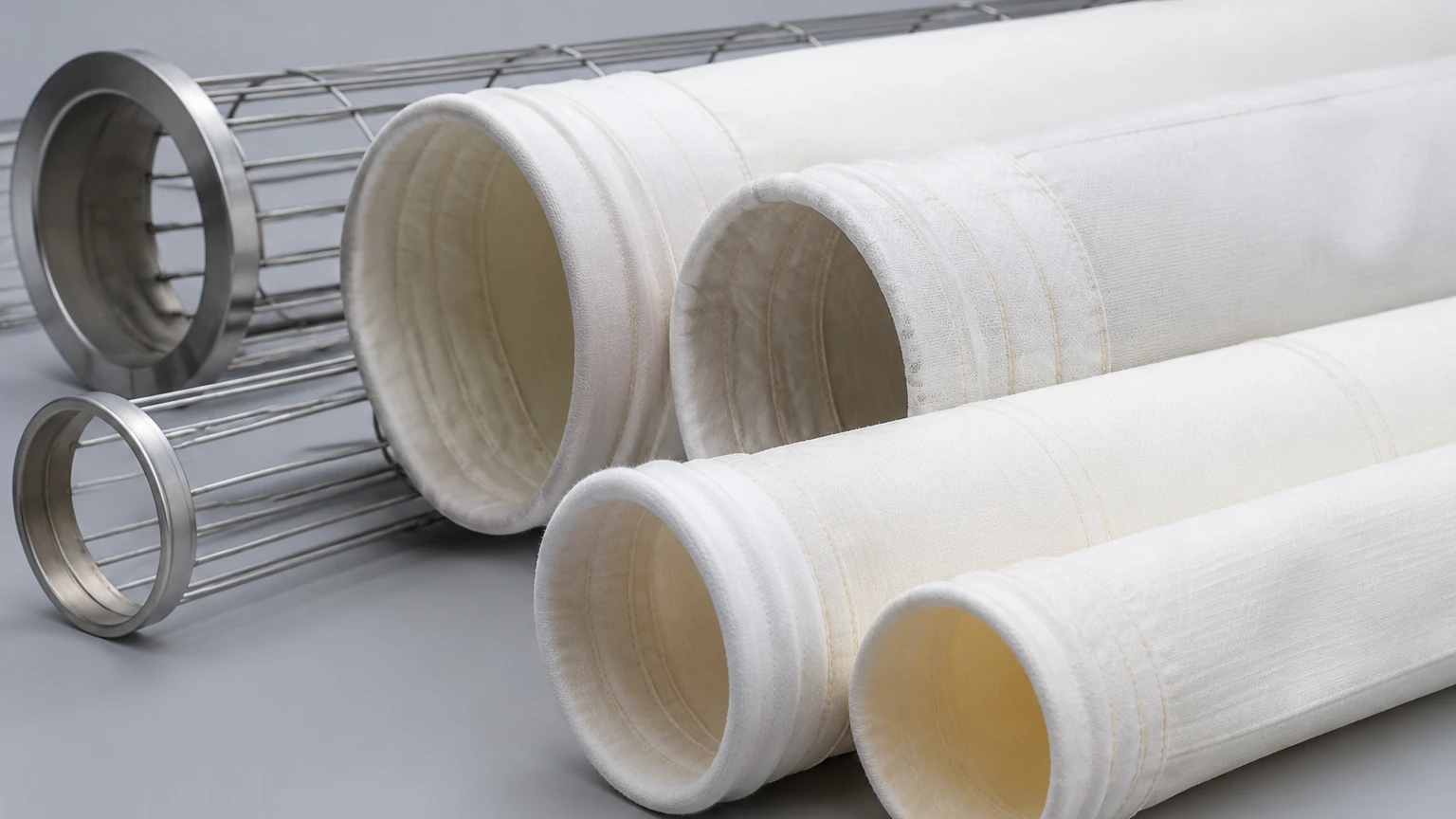
1 Micron Dust Collector Bag
In industrial environments, the management of airborne particulates is a critical factor for both operational efficiency and personnel safety. While standard dust collection systems often utilize filters rated for 30 or 5 microns, the transition to a 1 micron dust collector bag represents a significant upgrade in filtration performance. This level of filtration is essential for capturing fine dust—such as wood flour, silica, and chemical powders—that can otherwise bypass coarser media and remain suspended in the air. For engineers and facility managers, selecting the correct 1 micron filtration solution requires a deep understanding of material science, airflow dynamics, and the specific demands of the industrial process.
The Technical Significance of 1 Micron Filtration
To understand the value of a 1 micron dust collector bag, one must first define the scale of the challenge. A micron (micrometer) is one-millionth of a meter. For context, a human hair is approximately 70 microns in diameter. Particles in the 1 to 5 micron range are often invisible to the naked eye but are the most hazardous to human health because they can penetrate deep into the lungs.
In industrial applications, standard bags might capture large chips and sawdust, but they often allow "fines" to pass through the fabric and back into the workspace. This is known as bypass. A 1 micron rating indicates that the filter media is designed to trap particles as small as 1 micrometer. However, it is vital to distinguish between nominal and absolute ratings. Most fabric-based dust collector bags are nominally rated, meaning they capture a high percentage (typically 95% to 99%) of particles at that size, whereas absolute ratings (more common in precision stainless steel mesh) imply 99.9% efficiency or higher.
Material Selection and Construction
The performance of a 1 micron dust collector bag is largely determined by the media used in its construction. Most high-efficiency bags are made from needle-felted polyester. This material is chosen for its durability and its ability to create a dense, three-dimensional matrix that traps dust throughout the depth of the fabric, rather than just on the surface.
Singed and Glazed Finishes
To improve the release of the "dust cake" during cleaning cycles, many 1 micron bags undergo surface treatments. A singed finish involves passing the fabric over an open flame to remove loose fibers, while a glazed finish uses high-pressure rollers and heat to create a smooth surface. These treatments prevent dust from becoming deeply embedded in the fibers—a condition known as blinding—which can prematurely end the life of the filter.
Specialized Coatings
In environments where moisture or oils are present, standard polyester may fail. In these cases, bags may be treated with oleophobic or hydrophobic coatings. For highly sensitive applications, a PTFE (Teflon) membrane may be laminated to the surface of the bag. This membrane provides a true surface-loading filtration, allowing for near-zero emissions and easier cleaning, though at a higher initial cost.
Performance Metrics: CFM and Static Pressure
When upgrading to a 1 micron dust collector bag, engineers must account for the impact on the system’s total airflow, measured in Cubic Feet per Minute (CFM). Finer filter media inherently offers more resistance to airflow, which manifests as increased static pressure.
If the static pressure becomes too high, the velocity of the air at the collection point (the hood or intake) will drop, leading to poor dust pickup at the source. This is why the air-to-cloth ratio is a critical calculation. This ratio represents the amount of air passing through each square foot of filter media. For a 1 micron bag, a lower air-to-cloth ratio is generally required to prevent the fine particles from being forced through the pores of the fabric by high-velocity air.
Challenges and Risks in Fine Dust Collection
While a 1 micron dust collector bag offers superior air quality, it introduces specific operational challenges that must be managed to ensure a return on investment.
1. Filter Blinding: Because the pores are so small, they are more susceptible to clogging if the dust is oily, damp, or if the system is not cleaned regularly. Once a bag is blinded, the pressure drop across the filter will remain high even after cleaning, necessitating replacement.
2. Static Electricity: Fine dust moving through a plastic or fabric system can generate significant static charges. In industries handling combustible dust (like flour, sugar, or certain metals), this creates an explosion risk. Anti-static bags, which incorporate epitaxial fibers or stainless steel wires into the weave, are necessary to safely dissipate these charges.
3. Compressed Air Quality: In pulse-jet cleaning systems, the air used to clean the bags must be dry and oil-free. If moisture from the compressor reaches a 1 micron bag, it can turn the fine dust into a slurry that permanently clogs the media.
Comparing Fabric Bags with Stainless Steel Filtration Solutions
In many demanding industrial sectors, such as chemical processing or high-temperature manufacturing, traditional fabric dust collector bags may reach their physical limits. This is where precision metal filtration components become a superior alternative. While a 1 micron dust collector bag is excellent for ambient temperature air filtration, stainless steel wire mesh filters offer distinct advantages in more aggressive environments.
Stainless steel filters, such as those manufactured by Kaifil, provide exceptional mechanical strength and resistance to temperatures that would melt or degrade synthetic fabrics. Furthermore, stainless steel media can be engineered to precise absolute micron ratings, ensuring consistent performance in high-pressure hydraulic or liquid filtration systems where fabric bags would be insufficient. For organizations looking to optimize their entire filtration stack, reviewing specialized metal components can lead to longer service intervals and reduced downtime. You can Review product options and application support to see how custom metal solutions complement standard dust collection strategies.
Maintenance and Operational Longevity
The lifespan of a 1 micron dust collector bag is not determined by time, but by the pressure differential (Delta P) across the media. Monitoring this differential with a magnehelic gauge is the most effective way to manage maintenance.
* Initial Seasoning: When a new bag is installed, it actually performs better after a thin layer of dust (the dust cake) has formed. This cake acts as a secondary filter.
* Cleaning Cycles: Whether the system uses a mechanical shaker, a reverse air flow, or a pulse-jet, the frequency of cleaning must be balanced. Over-cleaning can prevent the dust cake from forming and cause "bleeding," while under-cleaning leads to excessive static pressure.
* Replacement Indicators: If the system's CFM drops below the required threshold for dust capture at the source, or if the pressure gauge shows a high baseline even after a cleaning cycle, the bags have likely reached their end-of-life.
Total Cost of Ownership (TCO) Considerations
When specifying a 1 micron dust collector bag, the purchasing team should look beyond the initial unit price. The Total Cost of Ownership includes:
* Energy Consumption: Higher static pressure requires the fan motor to work harder, increasing electricity costs.
* Labor Costs: The time required to change out a set of bags in a large baghouse can be significant, often involving confined space entry protocols.
* Disposal Costs: Depending on the material being collected (e.g., heavy metals or hazardous chemicals), the bags themselves may need to be disposed of as hazardous waste.
* Production Downtime: Choosing a higher-quality bag with a longer lifespan reduces the frequency of planned shutdowns.
Engineering the Right Solution
Selecting a 1 micron dust collector bag is rarely a standalone decision. It must be integrated into a broader strategy of air quality management. For example, in a multi-stage system, a cyclone separator might be used to remove 90% of the heavy debris, leaving only the fine particles for the 1 micron bags to handle. This protects the expensive high-efficiency media from abrasion and premature loading.
In specialized applications where the dust is corrosive or the process involves high-pressure fluids, the limitations of fabric become apparent. In these instances, transitioning to stainless steel cartridges or wire mesh elements provides the durability required for 24/7 industrial operations. For more information on high-performance filtration components, visit the Kaifil Main Page to explore technical specifications and customization options.
By focusing on the technical requirements of the specific dust type, the environmental conditions of the facility, and the mechanical limits of the collection system, engineers can implement a 1 micron filtration solution that ensures a clean, compliant, and efficient industrial workspace.
