


10 Micron Oil Filter
In industrial fluid power and lubrication systems, the 10 micron oil filter serves as a critical component for protecting sensitive machinery from particulate contamination. As systems become more complex and tolerances tighter, the demand for precise filtration has moved from a general requirement to a specific engineering necessity. A 10 micron rating is often considered the "sweet spot" for many high-pressure hydraulic systems and precision lubrication circuits, providing a balance between high-efficiency particle removal and manageable pressure drop.
Understanding the technical nuances of a 10 micron oil filter requires more than just looking at a single number. Engineers must evaluate the filter’s construction, material compatibility, and efficiency ratings to ensure the component meets the operational demands of the specific application. As a manufacturer specializing in stainless steel filtration solutions, Kaifil provides the technical expertise required to navigate these selection criteria.
Understanding Micron Ratings in Oil Filtration
The term "micron" refers to a micrometer, which is one-millionth of a meter. To put this in perspective, the human eye can typically see particles down to approximately 40 microns, while a human hair is roughly 70 microns in diameter. A 10 micron oil filter is designed to capture particles that are invisible to the naked eye but capable of causing significant abrasive wear in hydraulic pumps, valves, and bearings.
However, not all 10 micron filters are created equal. In the B2B and industrial sectors, it is essential to distinguish between nominal and absolute ratings:
* Nominal Rating: This is an arbitrary value assigned by a manufacturer, indicating that the filter can trap a certain percentage of particles of a given size. A nominal 10 micron filter might only capture 50% to 80% of 10-micron particles, allowing a significant portion of contaminants to pass through.
* Absolute Rating: This rating is determined through rigorous testing, such as the bubble point test or the Multi-Pass Test (ISO 16889). An absolute 10 micron filter is designed to remove nearly 100% (typically 98.7% or higher) of particles at that size.
For critical industrial applications, engineers usually specify the Beta Ratio ($\beta$). A filter with a $\beta_{10} \ge 200$ means that for every 200 particles of 10 microns entering the filter, only one passes through, representing 99.5% efficiency. When evaluating options on the Main Page of a supplier's catalog, confirming the Beta ratio is a prerequisite for ensuring system reliability.
The Role of Stainless Steel in 10 Micron Filtration
While many standard oil filters use cellulose or synthetic glass fibers, industrial-grade 10 micron oil filters often utilize stainless steel wire mesh. This material choice is driven by the demanding environments found in chemical processing, aerospace, and heavy manufacturing.
Durability and Pressure Resistance
Stainless steel wire mesh provides superior mechanical strength compared to disposable media. In high-pressure hydraulic systems, filters are subject to pressure surges and flow fluctuations. Stainless steel 10 micron elements can withstand high differential pressures ($\Delta P$) without collapsing or experiencing "media migration," where bits of the filter material itself break off and enter the downstream flow.
Thermal and Chemical Stability
Industrial oils can reach high temperatures, and some synthetic lubricants contain additives that can degrade standard paper-based filters. Stainless steel (typically Grade 304 or 316L) remains inert and structurally sound at temperatures exceeding 500°F (260°C) and is resistant to a wide range of corrosive chemicals. This makes them ideal for filtration in refineries and chemical plants where the fluid chemistry is aggressive.
Cleanability and Reusability
One of the most significant advantages of a stainless steel 10 micron oil filter is that it is often cleanable. While disposable filters represent a recurring cost and environmental waste, a stainless steel mesh element can be cleaned via backflushing, ultrasonic cleaning, or chemical solvent baths. This extends the service life of the component significantly, reducing the total cost of ownership over the life of the machinery.
Technical Parameters and Performance Metrics
When specifying a 10 micron oil filter for an OEM project or a facility upgrade, several technical parameters must be harmonized to ensure optimal performance.
Flow Rate and Viscosity
The flow rate (measured in GPM or LPM) is directly affected by the viscosity of the oil. Thicker oils (higher ISO VG ratings) require more force to pass through a 10 micron mesh. If the filter surface area is too small for the required flow and viscosity, the pressure drop will be excessive, potentially triggering a bypass valve and allowing unfiltered oil to circulate through the system. To mitigate this, engineers often use pleated designs to increase the effective filtration area within a compact housing.
Dirt Holding Capacity (DHC)
DHC refers to the amount of contaminant a filter can retain before the pressure drop reaches a critical limit. A 10 micron filter with a high DHC will have a longer service interval. In stainless steel filters, the DHC is influenced by the weave pattern of the wire mesh (such as plain weave, twilled weave, or Dutch weave). Dutch weave patterns are particularly effective for 10 micron applications as they provide a dense, tortuous path for particles while maintaining structural integrity.
Seal and End Cap Compatibility
The effectiveness of a 10 micron element is negated if the seals fail. B2B purchasers must ensure that the O-rings or gaskets (Viton, Buna-N, EPDM) are compatible with the specific oil type and operating temperature. Furthermore, the end caps must be securely bonded—often through welding in stainless steel designs—to prevent any bypass leakage.
Industrial Applications for 10 Micron Oil Filters
The 10 micron threshold is a standard requirement across several high-stakes industries where even minor contamination can lead to catastrophic failure.
1. Hydraulic Systems: Modern hydraulic valves, especially proportional and servo valves, have extremely tight clearances. Particles larger than 10 microns can cause these valves to stick or erode the precision edges of the spools, leading to loss of control and internal leakage.
2. Turbine Lubrication: In power generation, steam and gas turbines rely on a constant film of clean oil to protect bearings rotating at high speeds. A 10 micron oil filter ensures that the lubrication film remains free of abrasive metallic particles and varnish precursors.
3. Gearboxes and Transmissions: Heavy-duty industrial gearboxes generate metallic wear debris. Effective 10 micron filtration removes these particles before they can be ground further into the gear teeth or bearing races, extending the Mean Time Between Failures (MTBF).
4. Compressor Systems: Oil-injected screw compressors require clean oil for both lubrication and sealing. Contaminants in the oil can damage the rotors and reduce the volumetric efficiency of the compressor.
Design and Customization for OEM Requirements
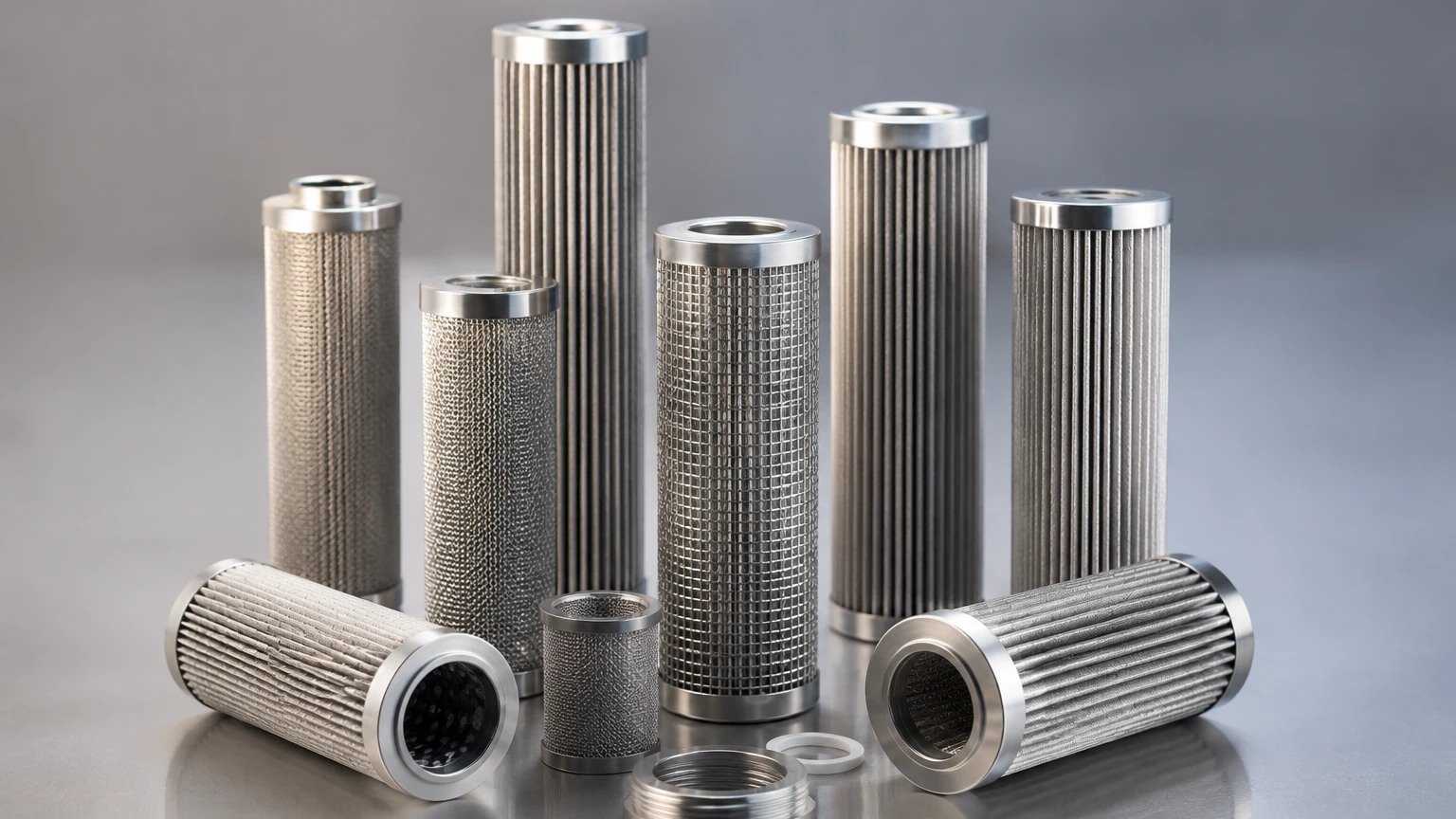
For many equipment manufacturers, a standard off-the-shelf filter is insufficient. Customization is often required to fit specific spatial constraints or to meet unique performance targets. As a professional manufacturer, Kaifil works with engineering teams to develop bespoke 10 micron oil filter solutions.
Customization options include:
* Pleated vs. Cylindrical: Pleated elements offer significantly more surface area, which is ideal for high-flow applications where a low pressure drop is required. Cylindrical elements are easier to clean and are often used in lower-flow or high-viscosity scenarios.
* Support Layers: For high-pressure applications, a 10 micron mesh may be sandwiched between coarser support layers (e.g., a 20-mesh outer guard) to prevent deformation under stress.
* Connection Types: Depending on the housing design, filters can be manufactured with threaded connections, double open ends (DOE), or various single open end (SOE) configurations like 222 or 226 O-ring fittings.
By focusing on these engineering details, OEMs can ensure that the filtration component is an integrated part of the machine's reliability strategy rather than an afterthought.
Maintenance, Cleaning, and Total Cost of Ownership
While the initial purchase price of a stainless steel 10 micron oil filter is higher than that of a disposable cellulose element, the long-term economic benefits are substantial. The total cost of ownership (TCO) should be the primary metric for B2B procurement.
Monitoring Performance
To maximize the life of a 10 micron filter, systems should be equipped with differential pressure gauges or sensors. These tools alert maintenance personnel when the filter is reaching its dirt-holding capacity. Replacing or cleaning the filter too early is a waste of resources, while doing it too late risks system damage or bypass activation.
The Cleaning Process
For stainless steel elements, the cleaning process is a critical maintenance step. It typically involves:
1. Pre-cleaning: Removing bulk oil and loose debris.
2. Ultrasonic Cleaning: Using high-frequency sound waves in a surfactant solution to dislodge particles trapped deep within the wire mesh pores.
3. Backflushing: Forcing clean fluid through the mesh in the reverse direction of normal flow.
4. Drying and Inspection: Ensuring the element is free of moisture and inspecting the mesh for any signs of damage or "blinding" (permanent clogging).
Key Considerations for Procurement and Engineering
Before finalizing a purchase or design specification for a 10 micron oil filter, technical teams should confirm the following information to ensure the product is fit for purpose:
* Fluid Type: Is the oil mineral-based, synthetic, or a water-glycol emulsion?
* Operating Temperature: What are the normal and maximum peak temperatures?
* System Pressure: What is the working pressure, and are there significant pressure spikes?
* Target ISO Cleanliness Code: What is the desired oil cleanliness level (e.g., ISO 18/16/13) for the system?
* Housing Dimensions: Are there specific length and diameter constraints for the replacement element?
By addressing these factors, engineers can select a filtration solution that not only protects the machinery but also optimizes operational efficiency. For those seeking detailed specifications or custom engineering support, visiting the Main Page of an experienced manufacturer like Kaifil is the most effective way to begin the procurement process.
In conclusion, the 10 micron oil filter is a fundamental component in the maintenance of industrial health. Whether through the use of high-grade stainless steel mesh or customized OEM designs, the goal remains the same: the consistent removal of harmful particulates to ensure the longevity and reliability of critical industrial assets.
