


Acier Poreux
In the landscape of industrial filtration and fluid control, the term "acier poreux" (porous steel) refers to a specialized class of materials engineered to provide controlled permeability while maintaining the structural integrity of stainless steel. These materials are primarily produced through powder metallurgy or the sintering of metal fibers, resulting in a rigid, porous structure that serves as a high-performance filtration medium. For engineers and procurement specialists in sectors such as chemical processing, pharmaceuticals, and power generation, understanding the technical nuances of acier poreux is essential for optimizing system efficiency and ensuring long-term reliability.
At Kaifil, we specialize in the manufacturing of custom stainless steel filtration solutions that leverage the unique properties of porous metals. By focusing on precision engineering and material science, we provide components that withstand extreme temperatures, corrosive environments, and high-pressure differentials. This article examines the technical characteristics, manufacturing processes, and selection criteria for acier poreux in industrial applications.
Understanding the Structure and Composition of Acier Poreux
Acier poreux is not a single material but a category of engineered structures. The most common base material is 316L stainless steel, chosen for its exceptional corrosion resistance and mechanical strength. However, other alloys like 304L, Inconel, Monel, and Hastelloy are also utilized depending on the specific chemical and thermal requirements of the application.
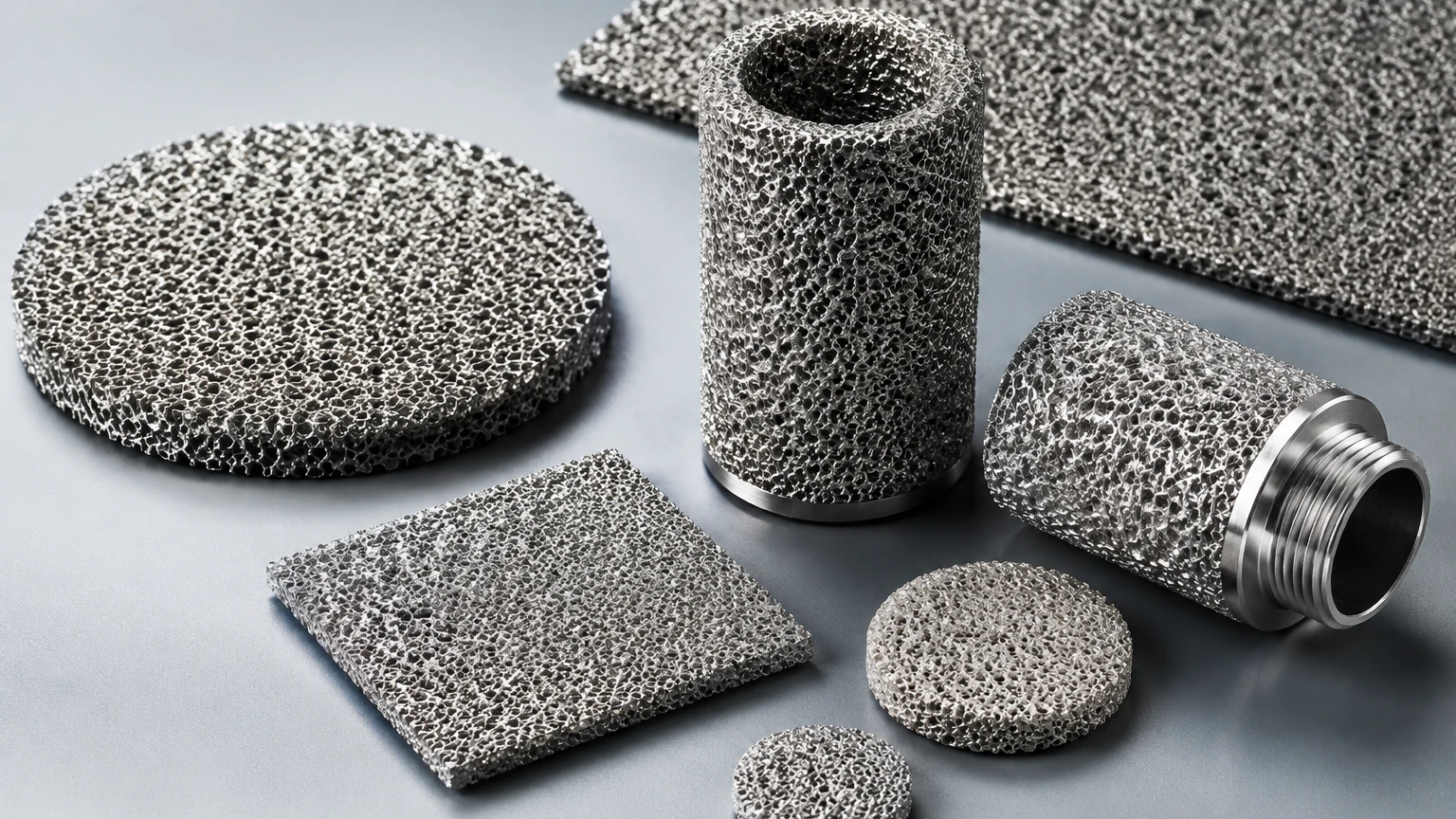
The porosity of these materials is created by bonding metal particles or fibers together at temperatures below their melting point—a process known as sintering. This creates a "tortuous path" for fluids. Unlike simple surface filters, such as thin membranes or perforated plates, acier poreux functions as a depth filtration medium. As fluid passes through the interconnected network of pores, contaminants are trapped not only on the surface but also within the internal structure of the metal matrix.
Powder Sintered vs. Fiber Sintered Structures
There are two primary forms of acier poreux used in industrial filtration:
1. Sintered Metal Powder: This involves pressing and sintering spherical or irregular metal powders. The resulting structure is highly rigid and offers excellent pressure resistance. It is ideal for applications requiring precise pore size control and high mechanical strength, such as sparging or high-pressure liquid filtration.
2. Sintered Metal Fiber (Felt): This structure is composed of non-woven stainless steel fibers that are sintered together. It offers much higher porosity (up to 80% or more) compared to powder-based materials. This leads to lower pressure drops and higher dirt-holding capacity, making it suitable for high-viscosity fluids and gas filtration.
Engineering Properties of Porous Stainless Steel
When evaluating acier poreux for a specific project, engineers must consider several critical physical and mechanical properties that define the material's performance limits.
Porosity and Permeability
Porosity refers to the percentage of void space within the material, while permeability is a measure of how easily a fluid can pass through that space. In acier poreux, these two factors are carefully balanced. Higher porosity typically reduces the pressure drop across the filter but may compromise the mechanical strength. Engineers use Darcy’s Law to calculate the permeability and ensure that the selected material can handle the required flow rates without exceeding the system's pressure limits.
Filtration Rating (Micron Rating)
The filtration rating of acier poreux can range from sub-micron levels (0.5 μm) up to 100 μm or more. It is important to distinguish between "absolute" and "nominal" ratings. An absolute rating indicates the pore size at which a specific percentage of particles (usually 99.9%) will be captured, whereas a nominal rating is an average figure. For critical applications in the pharmaceutical or semiconductor industries, absolute ratings are typically required to ensure process consistency.
Thermal and Chemical Stability
One of the primary advantages of using acier poreux over polymer-based filters is its ability to operate in extreme conditions. Stainless steel 316L can maintain its structural integrity at temperatures exceeding 450°C (842°F) in oxidizing atmospheres and even higher in reducing environments. Furthermore, its resistance to a wide range of acids, bases, and organic solvents makes it the preferred choice for aggressive chemical processing.
Key Industrial Applications of Acier Poreux
The versatility of acier poreux allows it to be integrated into various stages of industrial production. Its role extends beyond simple particulate removal to include fluidization, gas diffusion, and sound dampening.
Chemical and Petrochemical Processing
In the chemical industry, filters made from acier poreux are used to protect downstream equipment from catalyst fines and other solid contaminants. Because these filters can be cleaned and reused, they offer a lower total cost of ownership compared to disposable cartridges, especially when handling hazardous materials where disposal costs are high.
Food and Beverage Production
For food-grade applications, the inert nature of stainless steel is a significant benefit. Acier poreux is used for steam filtration (culinary steam), carbonation (sparging CO2 into beverages), and the filtration of edible oils. The ability to withstand Clean-in-Place (CIP) procedures involving caustic chemicals and high-temperature steam is a critical requirement that porous metal fulfills.
Pharmaceutical and Biotechnology
In sterile environments, acier poreux components are used for gas venting and the filtration of process air. The material's ability to be sterilized via autoclaving or in-situ steaming ensures that it meets the stringent hygiene standards of the biotech sector.
Hydraulic and Aerospace Systems
High-pressure hydraulic systems utilize porous metal filters to remove wear particles that could damage sensitive valves and actuators. The high collapse pressure of sintered metal ensures that the filter remains functional even under significant pressure surges.
Selection Criteria: Choosing the Right Porous Metal Solution
Selecting the appropriate acier poreux component requires a comprehensive analysis of the operating environment. Engineers should confirm the following data points before finalizing a design:
* Fluid Characteristics: Is the fluid a liquid or gas? What is its viscosity and density at operating temperature? Is it corrosive?
* Contaminant Profile: What is the nature of the solids being removed? What is the particle size distribution and concentration?
* Operating Conditions: What are the maximum and normal operating temperatures and pressures? What is the allowable pressure drop (ΔP)?
* Cleaning Requirements: Will the filter be cleaned via backwashing, ultrasonic baths, or chemical solvents? How often is a cleaning cycle expected?
* Geometric Constraints: Does the application require a specific shape, such as a seamless tube, a flat disc, or a pleated cartridge to increase surface area?
By addressing these factors, Kaifil helps customers develop customized filtration solutions that balance performance with longevity. For more information on our manufacturing capabilities and to view our full product catalog, please visit our Main Page.
Maintenance and Cleaning of Acier Poreux
One of the most compelling reasons to specify acier poreux is its cleanability. Unlike depth filters made of cellulose or synthetic fibers, sintered metal can be regenerated multiple times, significantly extending its service life.
Backpulse and Backwash Systems
In many continuous processes, acier poreux filters are cleaned in-situ using a backpulse of gas or a backwash of liquid. This reverse flow dislodges the filter cake from the surface and internal pores, restoring the flow rate. The mechanical rigidity of the sintered structure is vital here, as it must withstand the reverse pressure without deforming.
Ultrasonic Cleaning
For filters that have become heavily fouled with fine particulates or sticky residues, ultrasonic cleaning is highly effective. The filter is submerged in a cleaning solution, and high-frequency sound waves create cavitation bubbles that penetrate deep into the pores to dislodge contaminants that manual scrubbing or backwashing cannot reach.
Chemical and Thermal Cleaning
In cases where organic polymers or carbonaceous deposits have fouled the filter, chemical solvents or high-temperature burnout (pyrolysis) may be used. Because acier poreux is made of high-grade stainless steel, it can survive these aggressive cleaning methods that would destroy other filter types.
Customization and OEM Capabilities
No two industrial processes are identical, which is why customization is a core component of the Kaifil service model. We understand that standard off-the-shelf components often fail to meet the specific demands of specialized machinery. Our engineering team works closely with global customers to develop acier poreux components tailored to exact specifications.
Our customization options include:
* Custom Alloy Selection: Beyond 316L, we offer specialized alloys for high-temperature or highly corrosive environments.
* Variable Porosity Grades: We can engineer components with gradient porosity—coarser on the outside and finer on the inside—to optimize dirt-holding capacity and flow.
* Precision Machining: We provide secondary operations such as TIG welding, CNC machining of end fittings, and specialized surface treatments to ensure the filter integrates perfectly into your existing housing.
* Prototype Development: We support engineers in the R&D phase by providing small-batch prototypes for testing and validation before moving to full-scale production.
Conclusion
Acier poreux represents a pinnacle of filtration technology, offering a combination of durability, precision, and chemical resistance that few other materials can match. Whether used for protecting sensitive equipment in a refinery or ensuring the purity of a pharmaceutical product, sintered metal components provide a reliable and cost-effective solution for demanding industrial environments.
As a professional manufacturer, Kaifil is dedicated to providing high-performance filtration components that meet the rigorous standards of modern industry. By focusing on quality manufacturing and technical expertise, we help our partners achieve efficient and sustainable filtration performance. To learn more about our custom stainless steel filtration solutions and how we can support your specific application, visit our Main Page today.
