


Self-cleaning Filters for High Heat
In industrial processing, the management of high-temperature fluids presents a unique set of engineering challenges. Whether dealing with heat transfer oils, molten polymers, or high-temperature chemical reactants, maintaining fluid purity without interrupting the thermal cycle is critical. Manual filtration systems often fail in these environments due to the safety risks associated with handling hot media and the significant downtime required for cooling and cleaning. Consequently, self-cleaning filters for high heat have become a standard requirement for modern, continuous industrial operations.
Designing and implementing a filtration system that operates at elevated temperatures—often exceeding 200°C (392°F) and reaching up to 450°C (842°F) in specialized applications—requires a deep understanding of metallurgy, thermal expansion, and mechanical sealing. This guide examines the technical considerations, material requirements, and selection criteria for engineers looking to integrate self-cleaning filtration into high-heat processes.
The Engineering Demands of High-Temperature Filtration
High-heat environments alter the physical properties of both the fluid being filtered and the filtration equipment itself. Engineers must account for several variables that are often negligible at ambient temperatures.
Thermal Expansion and Tolerances
One of the primary concerns in high-heat filtration is the coefficient of thermal expansion (CTE). Different materials expand at different rates. In a self-cleaning filter, the internal moving parts—such as scrapers, brushes, or backwash arms—must maintain precise clearances with the filter element. If the housing expands more rapidly than the internal mesh, the cleaning mechanism may lose contact, leading to bypass or ineffective cleaning. Conversely, if internal components expand too much, the system can seize. Precision engineering ensures that tolerances are calculated for the operating temperature rather than the ambient assembly temperature.
Fluid Viscosity Changes
Temperature significantly impacts the viscosity of industrial fluids. Most liquids become less viscous as temperature increases. While lower viscosity generally makes filtration easier by reducing pressure drop across the media, it can also increase the likelihood of leaks at seal points. In contrast, some fluids, like certain polymers or heavy oils, are only pumpable at high temperatures. In these cases, the self-cleaning filter must maintain a consistent temperature to prevent the fluid from "freezing" or solidifying within the mesh, which would cause an immediate system failure.
Material Selection for Thermal Stability
The choice of material is the foundation of any filter designed for high-heat service. Standard plastics and low-grade elastomers are unsuitable for these environments, leaving stainless steel and specialized alloys as the primary options.
Stainless Steel Alloys
Stainless steel is the preferred material for high-heat filtration due to its mechanical strength and resistance to oxidation at high temperatures.
* 304/304L Stainless Steel: Suitable for moderately high temperatures in non-corrosive environments.
* 316/316L Stainless Steel: The industry standard for high-heat applications, offering better creep resistance and corrosion protection, particularly in the presence of chlorides or acidic chemicals.
* Duplex and Super Duplex: Used when high pressure and high heat are combined, providing superior tensile strength and resistance to stress corrosion cracking.
For extreme temperatures, specialized alloys like Inconel or Hastelloy may be required to maintain structural integrity and prevent scaling on the filter surface. As a manufacturer, Kaifil focuses on these high-performance materials to ensure that the Main Page of any technical specification includes a robust material compatibility assessment.
Filter Media Construction
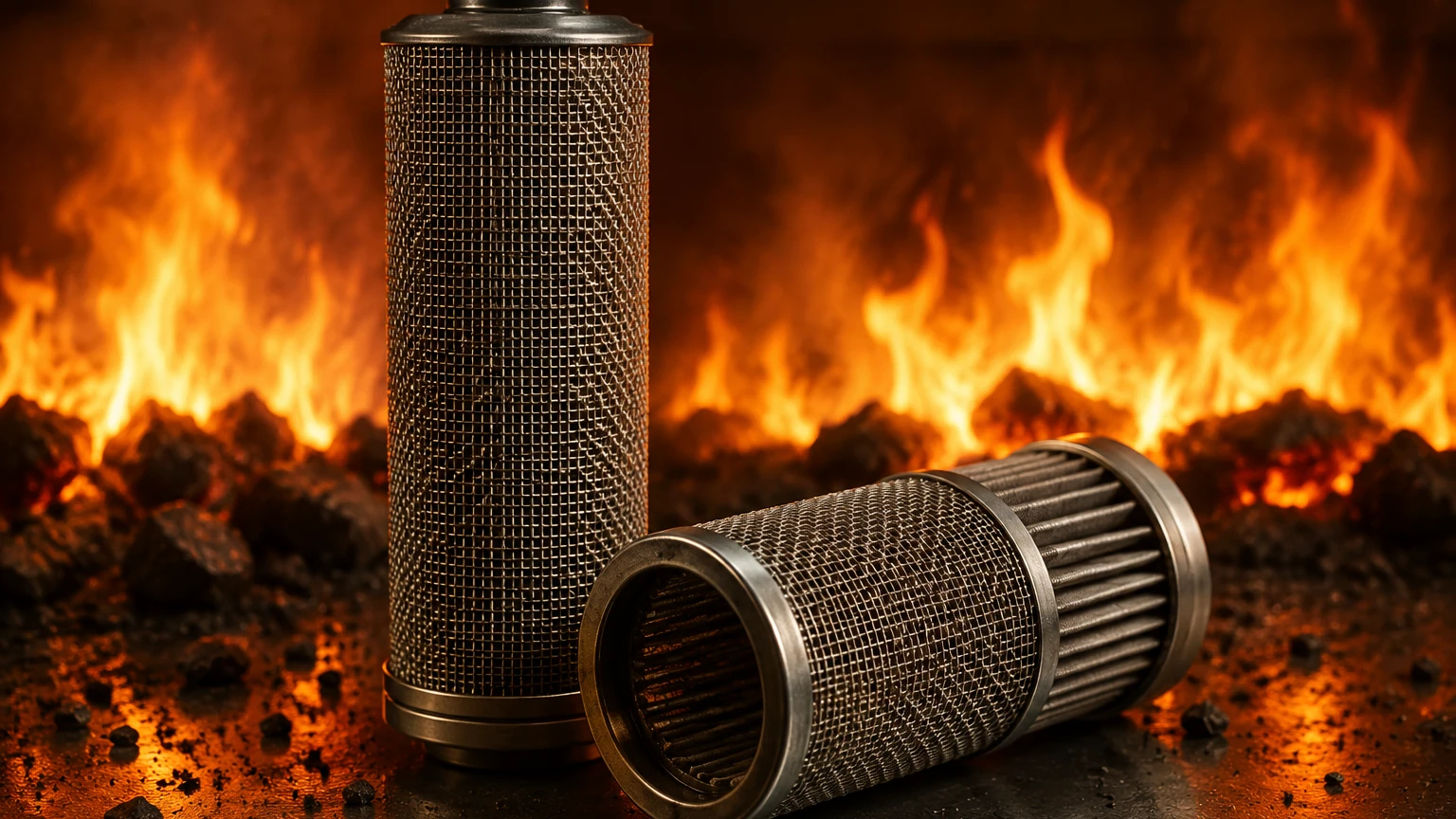
In high-heat self-cleaning systems, the filter media is typically a wedge wire screen or a multi-layered sintered wire mesh. Sintered mesh is particularly effective because the diffusion-bonding process locks the wires in place, preventing the mesh from deforming under thermal stress or high differential pressure. This stability is essential for the mechanical cleaning action of scrapers or backwash nozzles.
Mechanics of Self-Cleaning in High Heat
Self-cleaning filters generally utilize one of two primary mechanisms: mechanical scraping or backwashing (backpulsing). Each has specific implications when operating in high-heat conditions.
Mechanical Scraper Systems
Mechanical cleaning involves a blade or brush that moves across the surface of the filter element to remove accumulated solids. In high-heat applications, the scraper material must be carefully chosen. Metal blades are common, but they must be softer than the filter mesh to prevent abrasive wear. If the fluid is abrasive or the temperature is high enough to affect metal hardness, specialized coatings may be applied to the scraping edge. These systems are ideal for high-viscosity fluids that do not respond well to backwashing.
Backwash and Backpulse Systems
Backwash systems use a portion of the filtered fluid (or an external gas/liquid) to flush the contaminants off the mesh in the reverse direction. In high-heat scenarios, the "shock" of the backwash fluid must be considered. If the backwash fluid is significantly cooler than the process fluid, it can cause thermal shock, leading to fatigue in the sintered mesh or the filter housing. Automated systems often include pre-heating stages for the backwash media to mitigate this risk.
Sealing and Gasket Technologies
The sealing of a self-cleaning filter is often the most vulnerable point in a high-heat system. Traditional elastomers like NBR or EPDM have relatively low temperature limits. For higher temperatures, engineers must specify:
* PTFE (Teflon): Effective up to approximately 260°C, though it is prone to "cold flow" or deformation under pressure.
* Viton (FKM): Suitable for temperatures up to 200°C with excellent chemical resistance.
* Graphite Seals: Used for extreme temperatures where elastomers fail. Graphite offers excellent thermal stability but requires careful installation to prevent brittle fracturing.
* Metallic O-rings: Often used in the highest temperature ranges, these provide a gas-tight seal but require high clamping forces and precision-machined grooves.
Integration and Automation Considerations
A self-cleaning filter for high heat is rarely a standalone component; it is part of a complex thermal system. Automation is necessary to ensure the cleaning cycle triggers based on differential pressure (DP) or a timed interval without human intervention.
Heat Tracing and Insulation
To prevent temperature loss and ensure the fluid remains at the required viscosity, the filter housing is often equipped with steam jackets or electric heat tracing. Proper insulation is also required not only for process efficiency but for operator safety. The design must allow for the expansion of the housing within the insulation jacket to avoid crushing the insulating material.
Sensor Durability
Differential pressure sensors and automated valves must be rated for the process temperature. In many high-heat installations, sensors are mounted on "pigtails" or cooling spacers to isolate the electronic components from the direct heat of the process fluid while still providing accurate pressure readings.
Selection Criteria: A Checklist for Engineers
When evaluating self-cleaning filters for high heat, purchasing teams and engineers should confirm the following technical parameters with their manufacturer:
1. Maximum Operating and Design Temperature: Ensure there is a safety margin between the process temperature and the filter's maximum rating.
2. Material Compatibility: Verify that the stainless steel grade and seal materials are compatible with the chemical composition of the fluid at peak temperatures.
3. Filtration Micron Rating: Determine if the required precision can be maintained under thermal expansion.
4. Cleaning Mechanism Suitability: Match the cleaning method (scraper vs. backwash) to the solids loading and fluid viscosity.
5. Thermal Shock Potential: Assess whether the cleaning cycle or external environment will introduce rapid temperature fluctuations.
6. Maintenance Access: Even self-cleaning filters require periodic inspection. Ensure the design allows for safe access once the system has cooled.
Total Cost of Ownership (TCO) in High-Heat Applications
While the initial investment in a high-heat-rated self-cleaning filter is higher than a standard unit, the TCO is typically lower in demanding industrial environments. The primary savings come from:
* Reduced Labor: Eliminating the need for manual cleaning in hazardous, hot environments.
* Increased Uptime: Continuous operation without stopping the process for filter changes.
* Lower Waste: Unlike bag or cartridge filters that must be disposed of, the permanent stainless steel media in a self-cleaning system lasts for years.
* Energy Efficiency: Maintaining a clean filter surface reduces the energy required by pumps to move fluid through the system.
Conclusion
Self-cleaning filters for high heat are essential components for maintaining the integrity of high-temperature industrial processes. By selecting the appropriate stainless steel alloys, engineering for thermal expansion, and utilizing robust cleaning mechanisms, facilities can achieve reliable filtration performance in the most demanding conditions. For those seeking specific configurations or custom engineering support, reviewing the available product options and application support on the Kaifil Main Page is a recommended next step in the procurement process. Proper specification at the design stage ensures long-term durability and operational safety in any high-heat filtration application.
