


Active Pharmaceutical Ingredient Manufacturing Process
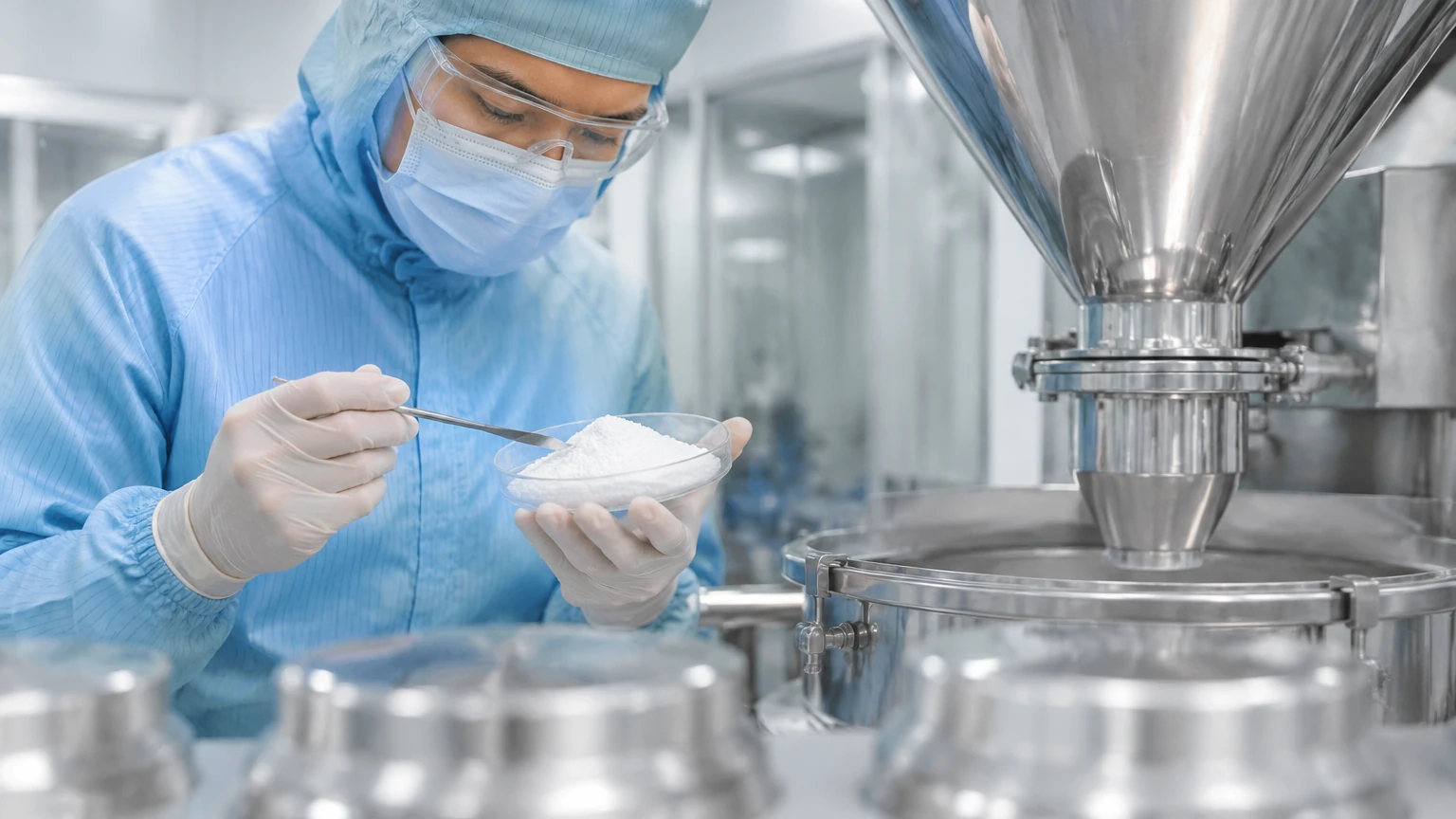
The active pharmaceutical ingredient manufacturing process is a highly regulated and technically demanding sequence of chemical synthesis or biological fermentation designed to produce the primary functional component of a medication. In the pharmaceutical industry, the Active Pharmaceutical Ingredient (API) must meet stringent purity, stability, and safety standards. Achieving these benchmarks requires not only precise chemical engineering but also robust mechanical separation and purification technologies.
For engineers and procurement teams, understanding the nuances of the filtration stages within this process is critical. High-performance filtration ensures that catalysts, unreacted precursors, and particulate contaminants are removed without compromising the integrity of the final product. As a specialist in stainless steel filtration solutions, Kaifil provides the precision components necessary to maintain these rigorous standards throughout the production lifecycle.
Key Stages of the Active Pharmaceutical Ingredient Manufacturing Process
The manufacturing of APIs generally follows two primary pathways: chemical synthesis and biotechnology-based fermentation. Regardless of the method, the process is divided into several distinct phases, each requiring specific environmental controls and filtration strategies.
1. Reaction and Synthesis
In chemical synthesis, raw materials and intermediates are reacted under controlled temperature and pressure conditions. This often involves the use of solvents and catalysts. The primary challenge during this stage is the management of aggressive chemicals and the recovery of expensive catalysts. Filtration at this point must be capable of handling high thermal loads and corrosive environments.
2. Fermentation and Cell Culture
For biological APIs, the process begins in a bioreactor where microorganisms or cell lines produce the target molecule. This stage generates a complex "broth" containing cells, proteins, and metabolic byproducts. Clarification is the immediate next step, where large cellular debris is separated from the liquid phase containing the API.
3. Purification and Isolation
Once the crude API is produced, it must be purified. Techniques such as chromatography, crystallization, and solvent extraction are common. Filtration plays a vital role here in removing precipitates and ensuring that the API crystals are isolated from the mother liquor. This stage often requires multi-stage filtration to achieve the desired micron rating.
4. Drying and Final Processing
After isolation, the API is dried to remove residual solvents. The final powder may undergo milling or micronization to achieve a specific particle size distribution. Filtration is used in the venting systems of dryers and in the final packaging lines to prevent environmental contamination and protect product purity.
The Critical Role of Filtration in API Production
Filtration is not merely a utility in the active pharmaceutical ingredient manufacturing process; it is a core unit operation that directly impacts yield and quality. In industrial API production, filtration systems serve three primary functions: clarification, catalyst recovery, and sterile filtration.
Clarification involves the removal of bulk solids from the process stream. In many API workflows, the target molecule is dissolved in a solvent, and any undissolved matter must be removed to prevent downstream blockages or contamination. Stainless steel wire mesh filters are frequently selected for this task due to their high mechanical strength and ability to be cleaned and reused.
Catalyst recovery is a significant economic factor. Many API syntheses rely on precious metal catalysts (such as palladium or platinum). Efficiently capturing these particles using precision metal filter cartridges allows for the recycling of expensive materials, significantly reducing the total cost of production. Furthermore, removing these catalysts is essential for safety, as residual metal particles can catalyze unwanted secondary reactions or pose toxicity risks in the final drug product.
Selecting Materials for API Filtration Systems
Material compatibility is a non-negotiable factor when designing filtration systems for the active pharmaceutical ingredient manufacturing process. The presence of organic solvents, strong acids, and high-temperature reactions makes standard plastic or polymer filters unsuitable for many primary API stages.
Stainless Steel 316L and Beyond
Stainless steel, particularly Grade 316L, is the industry standard for API filtration. It offers excellent corrosion resistance and can withstand the aggressive cleaning cycles required in pharmaceutical plants. For even more demanding environments involving high concentrations of chlorides or extreme acidity, specialty alloys like Hastelloy may be integrated into the filter design.
Sintered Metal Media
Sintered wire mesh and sintered metal fibers provide a fixed pore structure that does not migrate under high pressure. This is crucial in API manufacturing, where media migration (the shedding of filter fibers into the product) could lead to a catastrophic batch failure. Sintered materials offer high porosity, which translates to lower pressure drops and longer service life between cleaning cycles.
For technical professionals evaluating these materials, it is important to review the full range of available filtration media. You can explore specific configurations and material data on the Main Page of our technical site.
Engineering Considerations for High-Purity Filtration
When integrating filtration into an active pharmaceutical ingredient manufacturing process, engineers must look beyond simple micron ratings. Several technical parameters dictate the success of the filtration system:
* Filtration Accuracy: The micron rating must be precisely matched to the particle size distribution of the impurities or the API crystals being captured. Absolute ratings are preferred over nominal ratings to ensure consistent performance.
* Pressure Drop (ΔP): A high initial pressure drop can indicate a restricted flow, leading to increased energy consumption and potential pump wear. Designing for a low ΔP while maintaining high efficiency is a hallmark of quality filter engineering.
* Flow Rate and Throughput: The filter must handle the required batch volume within the specified timeframe. Sizing the filter housing and the effective filtration area (EFA) is a critical calculation that accounts for the viscosity of the fluid and the solids loading.
* Thermal Stability: API processes often involve cryogenic cooling or high-heat sterilization. Metal filters are uniquely suited to these temperature swings, maintaining their structural integrity where polymer filters might soften or embrittle.
Clean-in-Place (CIP) and Sterilize-in-Place (SIP) Requirements
In the pharmaceutical industry, cross-contamination between batches is a major risk. Therefore, filtration systems must be compatible with Clean-in-Place (CIP) and Sterilize-in-Place (SIP) protocols.
Stainless steel filters from Kaifil are designed to withstand caustic wash cycles and high-pressure steam sterilization. Unlike disposable cartridges, which must be replaced and validated after every batch, permanent stainless steel elements can be cleaned and validated in situ. This not only reduces the waste generated by the facility but also ensures that the system remains closed, minimizing the risk of operator exposure to potent APIs or hazardous solvents.
Engineers should confirm that the filter housing design eliminates "dead legs" or crevices where bacteria or residual product could accumulate. Smooth surface finishes (often measured in Ra) and electropolishing are standard requirements for pharmaceutical-grade filtration components.
Quality Control and Regulatory Compliance
The active pharmaceutical ingredient manufacturing process is governed by Good Manufacturing Practices (GMP). Every component that comes into contact with the product, including the filters, must be documented and validated.
Regulatory bodies such as the FDA and EMA require proof that filtration media do not leach harmful substances into the API. Stainless steel is an inert material that meets these requirements, provided it is sourced from reputable manufacturers who provide full material traceability (MTRs). When purchasing filtration components, it is essential to confirm that the supplier provides the necessary documentation to support the facility’s validation master plan.
Optimizing Total Cost of Ownership (TCO) in Filtration
While the initial investment in high-quality stainless steel filtration may be higher than that of disposable alternatives, the Total Cost of Ownership (TCO) is often significantly lower in an industrial API environment.
1. Durability: Metal filters can last for years with proper maintenance, whereas disposable filters represent a recurring procurement and disposal cost.
2. Reduced Downtime: Permanent filtration systems designed for CIP/SIP reduce the time required for filter changeouts, allowing for faster batch turnover.
3. Waste Mitigation: In many regions, used pharmaceutical filters are classified as hazardous waste, carrying high disposal fees. Reusable filters eliminate this waste stream.
4. Customization: Standard filters often require process compromises. By opting for customized filtration solutions, engineers can optimize the filter for the specific flow characteristics and solids loading of their unique active pharmaceutical ingredient manufacturing process.
Conclusion
Success in the active pharmaceutical ingredient manufacturing process relies on the seamless integration of chemistry and mechanical engineering. Filtration stands at the crossroads of these disciplines, ensuring that the final API is pure, safe, and effective. By selecting high-performance stainless steel filtration components, manufacturers can protect their product quality, recover valuable catalysts, and maintain compliance with global regulatory standards.
For engineers seeking to optimize their filtration stages, Kaifil offers the technical expertise and manufacturing capabilities to deliver reliable, durable, and precise solutions. Whether you are scaling up a new synthesis or retrofitting an existing production line, choosing the right filtration partner is a vital step in achieving operational excellence in API manufacturing.
Download Active Pharmaceutical Ingredient Manufacturing Process as a PDF
