


Air Compressor Filters By Size
In industrial compressed air systems, selecting the correct air compressor filters by size is a critical engineering decision that directly impacts system efficiency, equipment longevity, and air quality. While many purchasing teams focus primarily on the micron rating or the initial cost, the physical dimensions and the resulting surface area of the filter media dictate the pressure drop, dirt-holding capacity, and service life of the component. For engineers managing complex chemical processing, pharmaceutical, or hydraulic systems, understanding the technical nuances of filter sizing is essential to maintaining optimal performance.
At Kaifil, we specialize in manufacturing custom stainless steel filtration solutions designed to meet the rigorous demands of industrial environments. By focusing on precision engineering and high-quality materials, we help technical teams navigate the complexities of filter selection, ensuring that every component—whether standard or custom-sized—performs reliably under pressure.
Understanding Dimensional Parameters in Industrial Filtration
When evaluating air compressor filters by size, engineers must look beyond basic external measurements. The sizing of a filter element involves a combination of geometric dimensions and interface specifications that ensure a proper fit within the filter housing and an airtight seal.
Outer Diameter (OD) and Inner Diameter (ID)
The outer diameter determines whether the filter will fit within the housing bowl with sufficient clearance for air to circulate around the media. The inner diameter is equally important, as it must align with the internal support core or the discharge port of the filter head. In stainless steel wire mesh or sintered metal filters, these dimensions are held to tight tolerances to prevent bypass, which occurs when air escapes around the filter media rather than passing through it.
Overall Length and End-Cap Configuration
The length of the filter element is a primary driver of the total filtration surface area. Longer elements generally offer lower resistance to airflow and a higher capacity for capturing contaminants. Furthermore, the end-cap design—whether it features a threaded connection, a double open end (DOE), or specific O-ring codes (such as Code 7 or Code 3)—is a vital part of the "size" specification. A mismatch in end-cap geometry can lead to installation failures or mechanical stress on the filtration system.
The Relationship Between Filter Size and Flow Dynamics
In the context of compressed air, size is intrinsically linked to the physics of fluid dynamics. The most significant performance metric influenced by size is the initial pressure drop ($\\Delta P$).
Surface Area and Pressure Drop
As air passes through a filter medium, it encounters resistance. If the filter is undersized for the required flow rate (measured in CFM or m³/min), the velocity of the air through the media increases. High-velocity airflow leads to a higher pressure drop, which forces the air compressor to work harder and consume more energy to maintain the desired system pressure. By selecting air compressor filters by size that provide ample surface area, engineers can minimize this energy loss. Stainless steel pleated filters are particularly effective here, as the pleating process significantly increases the effective filtration area within a compact physical footprint.
Dirt-Holding Capacity
A larger filter size typically translates to a higher dirt-holding capacity. In industrial environments where the intake air may contain high concentrations of particulates, an undersized filter will reach its terminal pressure drop much faster, necessitating frequent replacements and increasing downtime. For critical applications, such as those found on the Main Page of industrial filtration planning, calculating the expected contaminant load against the filter's surface area is a standard part of the engineering phase.
Material Engineering: The Role of Stainless Steel in Sizing
While traditional air compressor filters often use paper, glass fiber, or plastic components, industrial-grade applications frequently require the durability of stainless steel. The material choice influences how size is perceived in terms of performance and longevity.
Structural Integrity Under High Pressure
Stainless steel filter cartridges can withstand significantly higher differential pressures than their synthetic counterparts. This means that even if a filter begins to clog, the structural integrity of the metal mesh prevents the media from collapsing or "shedding" fibers into the downstream air supply. This reliability allows for more flexible sizing options in high-pressure hydraulic or pneumatic systems where space is limited but performance cannot be compromised.
Thermal and Chemical Resistance
In chemical processing or pharmaceutical manufacturing, compressed air may be exposed to extreme temperatures or corrosive vapors. Stainless steel (typically 304 or 316L grade) maintains its dimensional stability under these conditions. Unlike plastic filters that may warp or degrade, a stainless steel filter maintains its precise size and sealing properties, ensuring consistent filtration accuracy over a long service life.
Technical Specifications Beyond Physical Dimensions
Selecting air compressor filters by size is only half the battle; the internal structure of the filter—specifically the micron rating—must be matched to the application requirements.
Absolute vs. Nominal Filtration
* Nominal Rating: Refers to a filter's ability to retain a major percentage (usually 60% to 90%) of particles of a specific size.
* Absolute Rating: Refers to the diameter of the largest hard spherical particle that will pass through the filter under specified test conditions.
In precision metal filtration, absolute ratings are often preferred because they provide a guaranteed level of protection for sensitive downstream equipment like pneumatic tools, sensors, or food-grade packaging machinery. When engineers specify air compressor filters by size, they must also define the required micron rating to ensure the media density is appropriate for the flow rate and pressure constraints of the system.
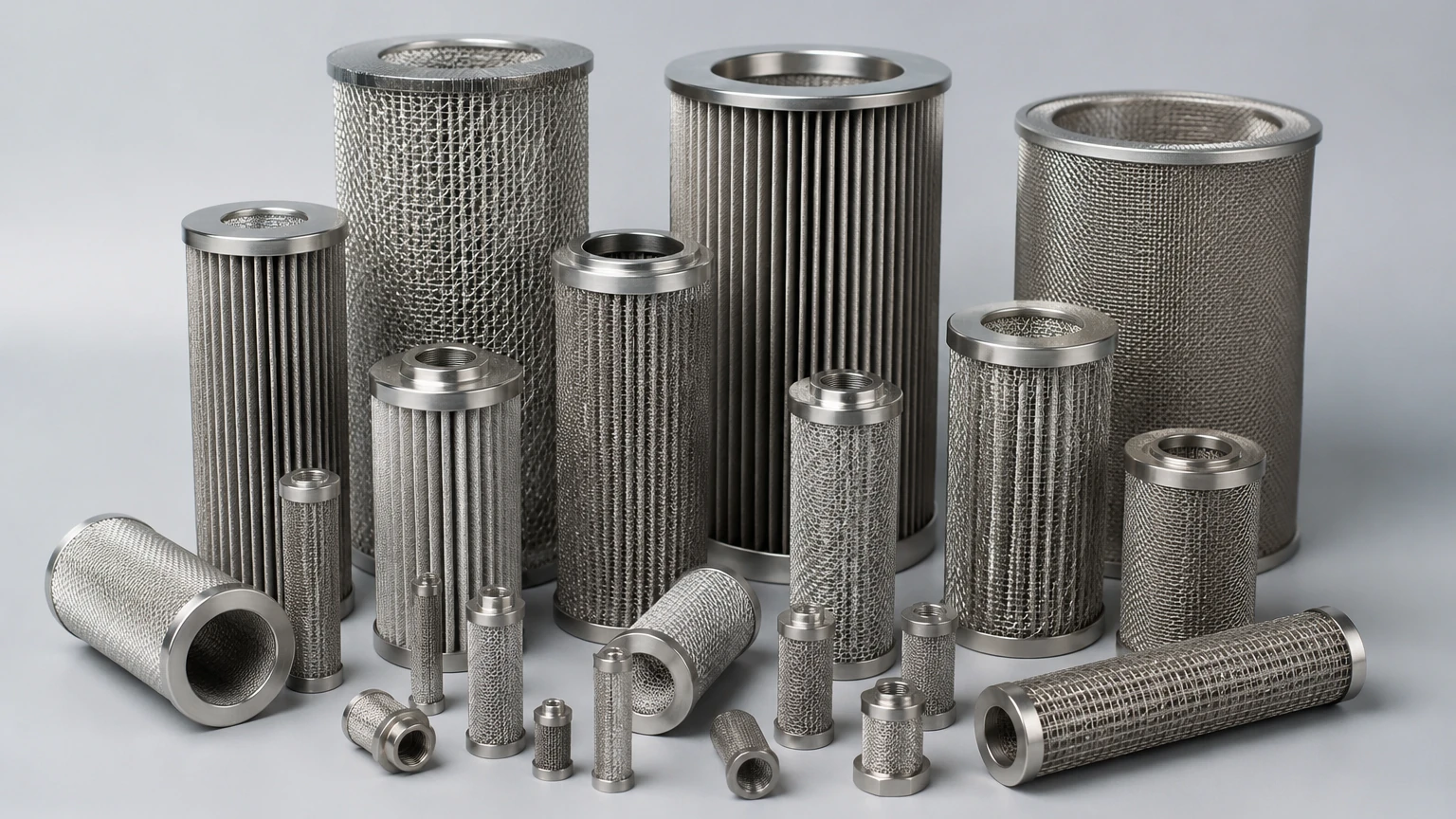
Customization and OEM Solutions for Unique Sizes
One of the primary challenges for maintenance engineers is sourcing replacement filters for older or specialized machinery. Often, the original equipment manufacturer (OEM) may no longer support the model, or the standard off-the-shelf sizes do not meet the specific needs of a modified system.
Kaifil addresses this gap by providing custom-manufactured stainless steel filters. Whether the requirement is for a unique diameter, a non-standard length, or a specialized mounting flange, custom fabrication ensures that the filter fits perfectly without the need for expensive housing modifications. This capability is particularly valuable for:
* Retrofitting Legacy Systems: Upgrading older compressors with high-performance metal filtration.
* Prototyping New Equipment: Developing bespoke filtration components for specialized industrial machinery.
* Optimizing Specific Processes: Adjusting filter size to balance space constraints with high-flow requirements.
Evaluating Total Cost of Ownership (TCO)
When purchasing air compressor filters by size, it is vital to consider the total cost of ownership rather than just the initial purchase price. A smaller, cheaper filter may seem cost-effective at the outset, but the long-term implications can be expensive.
1. Energy Costs: As mentioned, undersized filters cause higher pressure drops. A constant 2 psi increase in pressure drop can lead to a 1% increase in compressor energy consumption. Over a year of continuous operation, this can amount to thousands of dollars in excess electricity costs.
2. Maintenance Labor: Frequently changing undersized or low-quality filters increases labor costs and introduces more opportunities for system contamination during the changeover process.
3. Waste and Disposal: Stainless steel filters are often cleanable and reusable, unlike disposable paper or plastic filters. By choosing a high-quality metal filter of the correct size, facilities can significantly reduce their environmental footprint and disposal costs.
Critical Questions for Engineers and Purchasing Teams
Before finalizing an order for air compressor filters by size, technical professionals should confirm several key data points to ensure the component is fit for purpose:
* What is the maximum operating pressure and temperature? This determines whether a standard or reinforced stainless steel core is required.
* What is the specific fluid or gas being filtered? Compatibility with 304 vs. 316L stainless steel is crucial in corrosive environments.
* What is the required flow rate at the minimum operating pressure? This calculation ensures the filter size is sufficient to keep the pressure drop within acceptable limits.
* Are there specific industry certifications required? Applications in food and beverage or pharmaceuticals may require FDA-compliant materials or specific surface finishes.
Conclusion
Selecting the right air compressor filters by size is a multi-faceted process that integrates mechanical dimensions, material science, and fluid dynamics. By prioritizing precision-engineered stainless steel solutions, industrial operations can achieve a balance of high filtration efficiency, low energy consumption, and exceptional durability.
Whether you are looking for standard replacements or specialized OEM components, understanding the technical boundaries of your filtration system is the first step toward optimized performance. For more information on how custom metal filtration can support your specific industrial application, you can explore the technical resources and product capabilities available on our Main Page. Investing in the correct filter size and material today prevents costly system failures and energy inefficiencies tomorrow.
