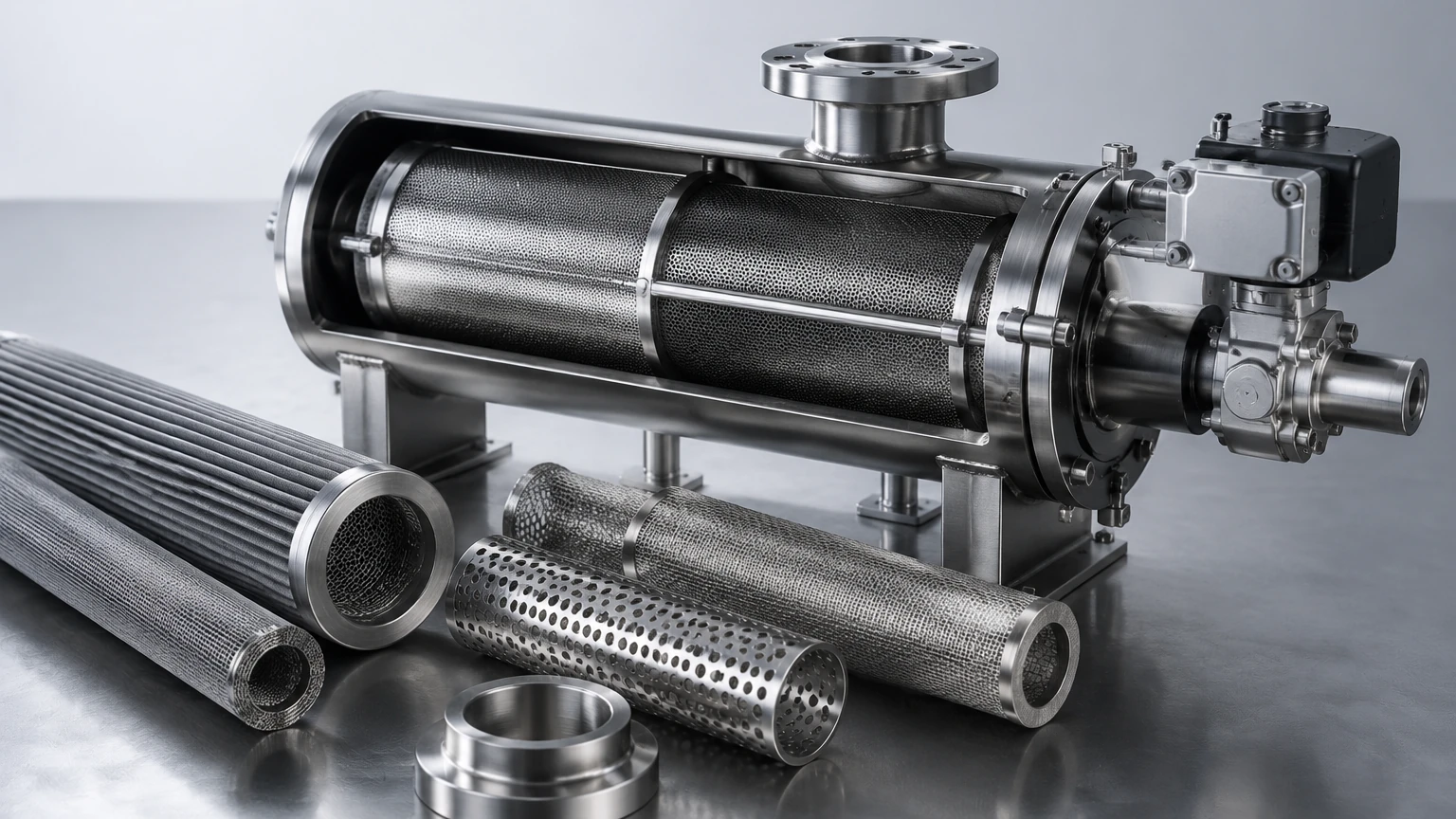
Automatic Self Cleaning Filters
In industrial fluid handling, the transition from manual filtration to automated systems represents a significant shift toward operational efficiency and process stability. Automatic self cleaning filters are engineered to remove suspended solids from water and other process fluids without requiring system downtime for cleaning or element replacement. This technology is particularly critical in industries such as chemical processing, power generation, and wastewater treatment, where continuous flow is a prerequisite for productivity. By automating the debris removal process, these systems mitigate the risks associated with human error, reduce labor costs, and protect downstream equipment from damage and fouling.
The Engineering Principles of Automatic Self-Cleaning Filtration
The fundamental advantage of automatic self cleaning filters lies in their ability to maintain a consistent flow rate while simultaneously cleaning the filter element. Most systems operate based on a differential pressure (DP) principle. As contaminants accumulate on the internal surface of the filter screen, the pressure drop across the unit increases. Once a pre-set DP threshold is reached—typically between 0.5 to 1.0 bar—the control system triggers a cleaning cycle.
There are several mechanical methods used to achieve this cleaning action, each suited to specific particle types and fluid characteristics:
1. Suction Scanning: A scanner with multiple nozzles rotates across the internal surface of the screen. A flush valve opens to the atmosphere, creating a high-velocity vacuum effect at the nozzle tips. This localized suction pulls the accumulated debris off the screen and out through the waste line. This method is highly efficient for fine particles and uses minimal flush water.
2. Mechanical Brushing: In applications involving sticky or fibrous contaminants, internal brushes rotate against the screen to physically dislodge particles. This is often used in high-viscosity fluids or where organic matter might adhere more aggressively to the mesh.
3. Backwashing: This involves reversing the flow of a portion of the filtered fluid through the screen to push particles away from the surface. While effective, it generally consumes more process fluid than suction scanning.
For engineers, selecting the right mechanism depends on the "filter cake" characteristics. A brittle cake may easily flake off with suction, while a gelatinous substance may require the mechanical force of a brush.
Critical Material Selection for Harsh Industrial Environments
The durability of automatic self cleaning filters is largely dictated by the materials used in their construction, specifically the filter element and the housing. Given that these systems are often exposed to corrosive chemicals, high temperatures, and abrasive particles, stainless steel is the industry standard.
Kaifil specializes in custom stainless steel filtration solutions, emphasizing the use of high-grade alloys like 304, 316L, and Duplex steels. The choice between these materials is driven by the chemical compatibility of the process fluid. For instance, 316L stainless steel is preferred in pharmaceutical and food and beverage applications due to its superior resistance to pitting and crevice corrosion in chloride-rich environments.
Beyond the housing, the architecture of the filter mesh itself is a vital engineering consideration. Two primary types are commonly employed:
* Woven Wire Mesh: Provides precise filtration ratings and a high percentage of open area, which is ideal for high-flow applications. However, it may require support layers to withstand high differential pressures.
* Wedge Wire (V-Slot): Constructed from V-shaped profiles welded onto support rods, wedge wire is exceptionally robust and inherently resistant to clogging. The widening gap between the wires ensures that any particle that passes the initial opening will continue through, preventing "peening" or permanent entrapment.
To explore the full range of custom stainless steel filtration solutions and technical specifications, technical teams can refer to the Main Page for comprehensive product data and manufacturing capabilities.
Performance Parameters and Sizing Considerations
Properly sizing automatic self cleaning filters is more complex than simply matching the pipe diameter of the existing system. Engineers must evaluate several variables to ensure the filter does not become a bottleneck or fail prematurely.
Flow Rate and Flux: The "flux" refers to the volume of fluid passing through a unit area of the filter screen. If the flux is too high, particles are driven deep into the mesh, making the self-cleaning cycle less effective and increasing the frequency of cleaning. A lower flux generally leads to a longer screen life and more reliable operation.
Micron Rating: Choosing the correct micron rating requires a balance between downstream protection and operational frequency. If a filter is specified with a micron rating that is too fine for the incoming particle load, the system will enter a continuous cleaning loop, leading to excessive waste water and wear on moving parts. Conversely, a rating that is too coarse will fail to protect sensitive equipment like spray nozzles, heat exchangers, or membranes.
Total Suspended Solids (TSS): The concentration of solids, measured in ppm or mg/L, dictates the required screen area. High TSS loads necessitate larger filter bodies or multi-element configurations to handle the rapid accumulation of debris without overwhelming the cleaning mechanism.
Integration and Control Systems in Modern Industrial Plants
Modern automatic self cleaning filters are rarely standalone units; they are integrated components of a larger automated facility. The control system, usually governed by a Programmable Logic Controller (PLC), manages the cleaning triggers, valve timing, and alarm outputs.
Integration considerations for engineers include:
* Signal Communication: Systems should offer Modbus, Profibus, or simple 4-20mA signals to allow the central control room to monitor the filter’s status, DP levels, and cleaning frequency in real-time.
* Bypass Manifolds: For critical processes, a bypass arrangement with manual valves is essential. This allows for maintenance on the automatic unit without halting the entire production line.
* Power and Air Requirements: While the filtration itself is passive, the cleaning mechanism requires either electrical power for motors or pneumatic air for actuators. Ensuring these utilities are available at the installation site is a basic but often overlooked step in the procurement process.
Customization options provided by manufacturers like Kaifil allow for these filters to be tailored to specific spatial constraints, such as vertical or horizontal orientations, and custom flange configurations to match existing piping standards (ANSI, DIN, or JIS).
Maintenance, Reliability, and Total Cost Analysis
While the primary selling point of automatic self cleaning filters is the reduction in manual labor, they are not "maintenance-free." A proactive maintenance schedule is required to ensure long-term reliability. Key wear components include seals, gaskets, and the moving parts of the cleaning assembly (brushes or scanners).
Common Risks and Mitigation:
1. Seal Failure: Continuous movement during cleaning cycles can wear down internal seals. Using high-quality elastomers like Viton or EPDM, selected based on chemical compatibility, is essential.
2. Screen Fatigue: Repeated pressure cycles can lead to mechanical fatigue in the filter mesh. Regular inspection of the element during scheduled shutdowns is recommended.
3. Inadequate Flush Pressure: If the waste line backpressure is too high, the suction scanner will not have enough pressure differential to clean effectively. Engineers must ensure the flush line is short and unobstructed.
When calculating the Total Cost of Ownership (TCO), the initial capital expenditure (CAPEX) of an automatic system is higher than a manual basket strainer. However, the operational expenditure (OPEX) is significantly lower. The ROI is typically realized through the elimination of replacement filter cartridges, the reduction in fluid loss during cleaning, and the prevention of costly unscheduled downtime. In high-volume industrial settings, the payback period for an automatic system can often be less than 18 months.
Selection Strategy for Engineering Teams
Before finalizing a specification for automatic self cleaning filters, purchasing and engineering teams should confirm several technical details with the manufacturer. This ensures the equipment is fit for purpose and optimized for the specific application environment.
* Fluid Viscosity: High-viscosity fluids (above 50-100 cP) significantly impact pressure drop and cleaning efficiency. Special motor torques or modified cleaning cycles may be required.
* Particle Morphology: Are the particles hard and abrasive, or soft and deformable? Abrasive sand requires hardened screen materials, while soft organic matter might require specific brush densities.
* Operating Pressure: Ensure the housing and cleaning mechanism are rated for both the minimum operating pressure (required to drive the flush cycle) and the maximum design pressure of the system.
By focusing on these technical boundaries, engineers can move beyond generic marketing claims and select a filtration solution that provides measurable performance improvements. For those in the early stages of project design, reviewing product options and application support on the Main Page can provide the necessary foundation for a robust filtration strategy. Whether the application is protecting a reverse osmosis system or filtering cooling water in a steel mill, the move toward automation is a proven path to industrial optimization.