


Stainless Steel Fine Mesh
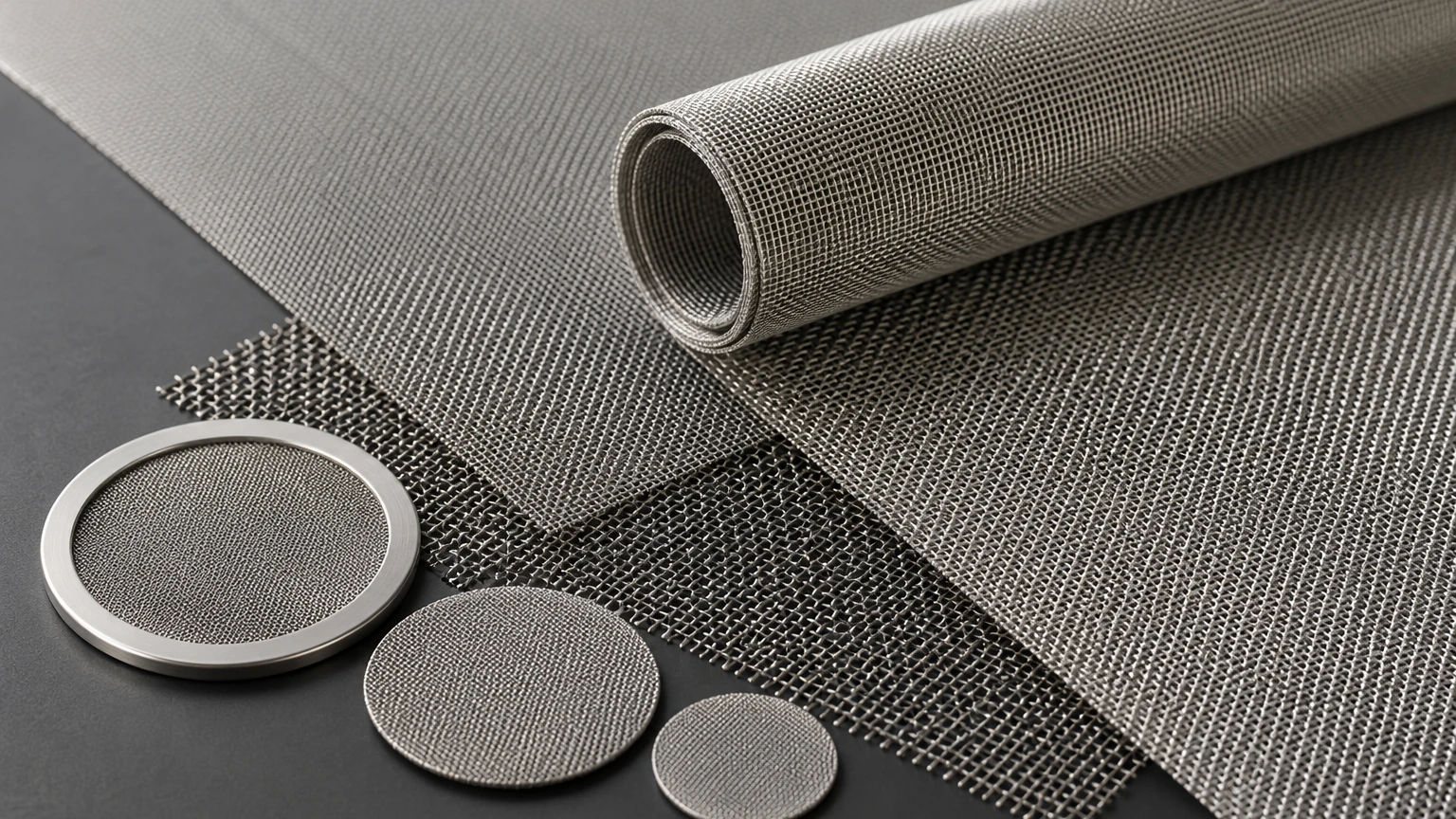
In industrial filtration and separation processes, stainless steel fine mesh serves as a critical component for ensuring product purity, protecting downstream equipment, and maintaining process efficiency. Unlike standard industrial screens, fine mesh is engineered with high precision to provide specific micron ratings, often reaching levels where the human eye can no longer distinguish individual apertures. Selecting the correct mesh requires a deep understanding of material science, fluid dynamics, and mechanical engineering to ensure the component survives the rigors of high-pressure, corrosive, or high-temperature environments.
For engineers and procurement specialists, the challenge lies in balancing filtration fineness with structural integrity and flow capacity. This guide examines the technical specifications, material considerations, and engineering variables essential for implementing stainless steel fine mesh in professional industrial applications.
Technical Fundamentals: Mesh Count, Wire Diameter, and Aperture
The performance of stainless steel fine mesh is defined by three primary geometric variables: mesh count, wire diameter, and aperture size. Understanding the relationship between these factors is the first step in technical selection.
Mesh Count vs. Micron Rating
Mesh count refers to the number of openings per linear inch. As the mesh count increases, the aperture size typically decreases, leading to a finer filtration capability. However, the micron rating (the size of the smallest particle the mesh can reliably retain) is not determined by mesh count alone. It is a function of the aperture—the clear distance between two adjacent parallel wires.
To calculate the aperture size, engineers use the following formula:
Aperture (mm) = (25.4 / Mesh Count) – Wire Diameter (mm)
Open Area and Flow Rate
The "open area" percentage is a critical metric for calculating the pressure drop across the filter. A higher open area allows for greater flow rates and lower initial differential pressure ($ΔP$). However, in very fine meshes, the wire diameter must be sufficiently thin to maintain an acceptable open area, which can compromise the mechanical strength of the mesh. Engineers must often choose between a "light" mesh with high permeability and a "heavy" mesh designed for mechanical durability.
Material Selection for Corrosive and Thermal Environments
Stainless steel is the industry standard for fine mesh due to its combination of mechanical strength and chemical resistance. However, the specific grade of stainless steel must be matched to the operating environment to prevent premature failure due to pitting, crevice corrosion, or stress corrosion cracking.
Type 304 Stainless Steel
Type 304 is the most common grade for general industrial use. It provides excellent strength and good corrosion resistance for applications involving water, food processing, and mild chemicals. It is an economical choice for environments where chloride exposure is minimal.
Type 316L Stainless Steel
For more demanding applications, particularly in the chemical processing and pharmaceutical industries, Type 316L is preferred. The addition of molybdenum enhances its resistance to chlorides and acids. The "L" denotes low carbon content, which is essential if the mesh is to be welded into a filter housing or cartridge, as it prevents carbide precipitation and maintains corrosion resistance in the heat-affected zones.
Specialized Alloys
In extreme cases involving highly acidic or high-temperature environments (exceeding 800°C), specialized alloys such as 904L, Inconel, or Hastelloy may be required. These materials ensure that the stainless steel fine mesh maintains its pore geometry and structural integrity under conditions that would cause standard grades to oxidize or degrade.
Engineering the Weave: Plain, Twill, and Dutch Variations
The method by which the wires are interwoven significantly impacts the filtration characteristics and the physical robustness of the mesh. While there are many weave styles, three are most prevalent in industrial filtration.
Plain Weave
This is the simplest and most common weave, where each warp wire passes alternately over and under each shute wire. It produces a square opening and is typically used for meshes up to 200-300 mesh count. It offers the highest open area but has limitations in terms of the fineness of the filtration it can achieve while maintaining wire stability.
Twill Weave
In a twill weave, each shute wire passes alternately over and under two warp wires. This allows for the use of heavier wire diameters for a given mesh count, providing greater strength and the ability to weave finer meshes (up to 635 mesh) that would be too tight for a plain weave configuration.
Dutch Weave (Plain and Twill)
Dutch weaves utilize different diameters for the warp and shute wires. The shute wires are driven closely together, creating a "zero-aperture" appearance where the fluid path is tortuous rather than a straight-through hole. This results in a very strong, dense mesh capable of high-pressure filtration and extremely fine micron ratings. Dutch weaves are the standard for Main Page applications involving hydraulic systems and high-pressure liquid-solid separation.
Performance Evaluation and Quality Assurance
When specifying stainless steel fine mesh, engineers must look beyond basic dimensions and consider the performance verification methods used during manufacturing. Reliability in the field depends on the consistency of the pore size across the entire surface of the medium.
Bubble Point Testing
The Bubble Point test is a non-destructive method used to determine the maximum pore size of a filter. By submerging the mesh in a liquid and increasing air pressure until the first bubble appears, manufacturers can calculate the largest aperture based on the surface tension of the fluid. This is a critical metric for pharmaceutical and aerospace applications where absolute filtration is required.
Mechanical Integrity and Support
Fine mesh is inherently delicate. In most industrial filter cartridges, the fine mesh layer is supported by a coarser "drainage" or support mesh and often a perforated metal core. This multi-layer construction prevents the fine mesh from collapsing or deforming under the force of the fluid flow. Sintered mesh—where multiple layers of mesh are heat-bonded together—is often used when the application requires the precision of fine mesh with the structural rigidity of a plate.
Operational Considerations: Cleaning and Replacement
The total cost of ownership for stainless steel fine mesh is heavily influenced by its cleanability and service life. Unlike disposable polymer filters, stainless steel media can often be regenerated, provided the cleaning protocol is technically sound.
Cleaning Methodologies
* Ultrasonic Cleaning: High-frequency sound waves create cavitation bubbles that dislodge sub-micron particles trapped within the weave. This is highly effective for Dutch weaves and sintered media.
* Backwashing: Reversing the flow of the process fluid can remove surface cakes. This is most effective when the mesh has a smooth surface and the particles are non-fibrous.
* Chemical Cleaning: Using surfactants or acids to dissolve organic or inorganic scaling. Compatibility between the cleaning agent and the stainless steel grade must be verified.
Determining Replacement Cycles
Replacement should be dictated by the "Terminal Differential Pressure." Once the $ΔP$ reaches a predetermined limit that cleaning can no longer restore to near-baseline levels, the mesh has likely suffered from depth loading or mechanical fatigue. Monitoring the rate of pressure increase over time allows maintenance teams to predict failure and avoid unplanned downtime.
Procurement Checklist for Engineers
Before finalizing a purchase order for stainless steel fine mesh or custom filter components, technical teams should confirm the following data points with the manufacturer:
1. Micron Rating (Nominal vs. Absolute): Does the application require 100% retention of a specific particle size, or is a nominal efficiency acceptable?
2. Fluid Compatibility: Does the alloy (304, 316L, etc.) resist all chemicals in the process stream, including cleaning agents?
3. Operating Pressure and Temperature: What are the maximum surge pressures and thermal peaks the mesh will encounter?
4. Flow Requirements: What is the maximum allowable initial pressure drop at the required flow rate?
5. Customization Needs: Does the application require specific edge treatments (e.g., hemmed, welded, or framed) to prevent fraying or bypass?
By addressing these technical boundaries, organizations can ensure they select a filtration solution that provides the necessary precision without sacrificing durability. Kaifil specializes in providing these customized stainless steel filtration solutions, leveraging advanced manufacturing to meet the exacting standards of modern industrial processing. For more detailed technical specifications and support on custom filter designs, engineers are encouraged to review the available resources on the Main Page.
