


Backwashing Water Filter
In industrial water treatment and process engineering, the efficiency of a filtration system is often measured by its ability to maintain consistent flow rates while minimizing downtime for maintenance. A backwashing water filter represents a critical solution for high-volume, continuous-duty applications where manual cleaning of filter elements is impractical or cost-prohibitive. By utilizing a reverse-flow mechanism to dislodge accumulated contaminants from the filter media, these systems ensure long-term operational stability in demanding environments such as chemical processing, power generation, and large-scale water treatment facilities.
For engineers and procurement specialists, selecting the right backwashing water filter requires a deep understanding of fluid dynamics, material compatibility, and the specific mechanical requirements of the application. This guide explores the technical principles, engineering considerations, and selection criteria essential for integrating these systems into industrial workflows.
The Mechanics of Backwashing Filtration
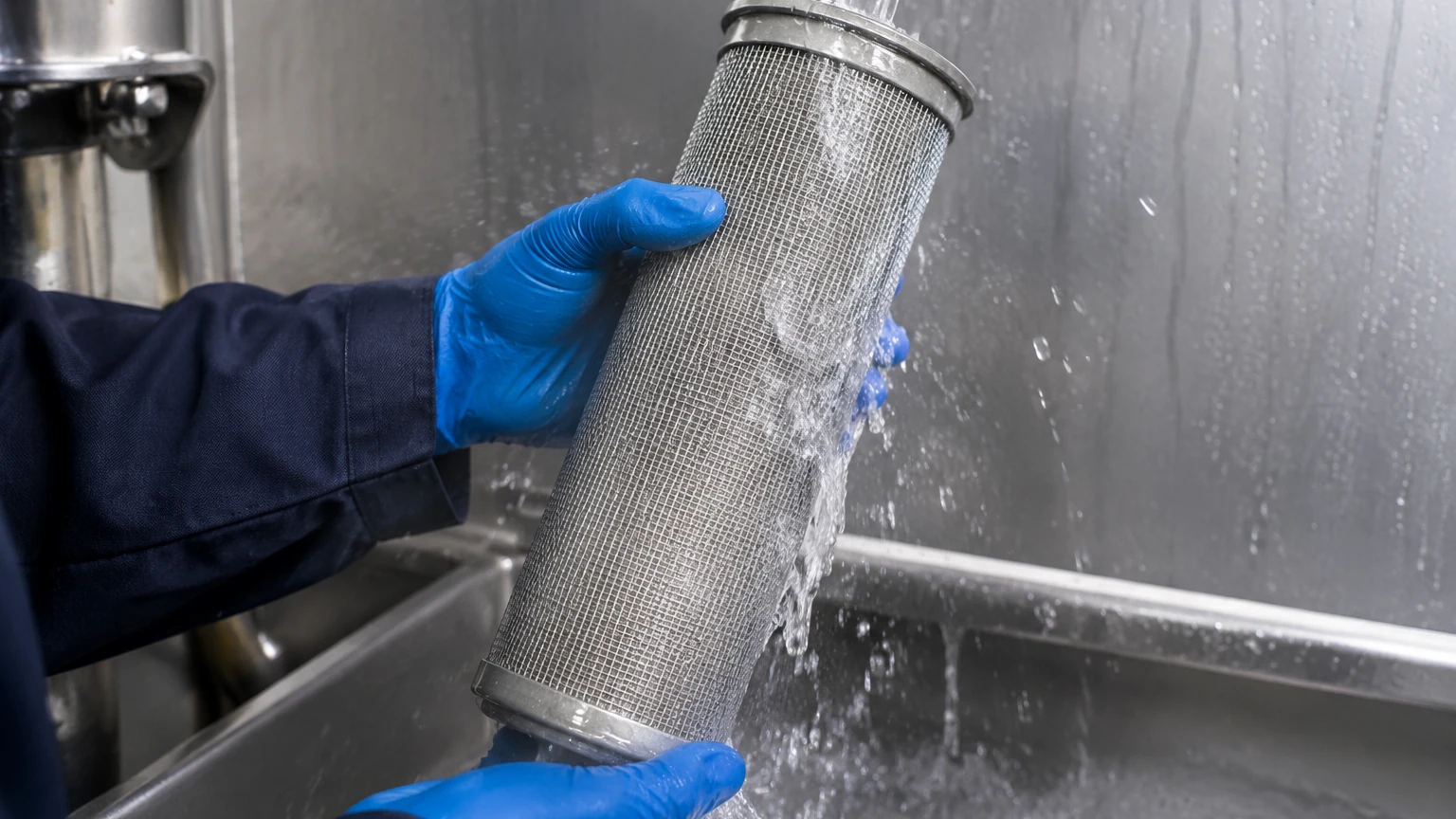
The fundamental principle of a backwashing water filter is the periodic reversal of fluid flow to clean the filter element without requiring system shutdown. During normal operation, the process fluid enters the filter housing and passes through the filter media—typically a stainless steel wire mesh or wedge wire element—from the inside out or outside in, depending on the design. As solids are captured, a layer of debris, often referred to as a "filter cake," builds up on the surface of the media.
As this layer thickens, the resistance to flow increases, resulting in a measurable pressure drop ($ΔP$) across the filter element. When this pressure differential reaches a pre-set threshold, the backwash cycle is initiated. In an automated system, valves redirect a portion of the filtered fluid (or an external cleaning fluid) back through the media in the opposite direction. This high-velocity reverse flow dislodges the particles and flushes them out through a dedicated drain or discharge port. Once the cleaning cycle is complete, the valves return to their original positions, and the filtration process resumes with a clean element and restored flow capacity.
Engineering Considerations for Filter Media Selection
The heart of any backwashing water filter is the filter element. Unlike disposable cartridge filters, backwashing systems rely on durable, permanent media that can withstand the mechanical stresses of repeated flow reversals. Stainless steel is the industry standard due to its structural integrity and resistance to corrosion.
Woven Wire Mesh vs. Wedge Wire
Two primary types of stainless steel media are commonly employed in industrial backwashing systems:
1. Sintered Woven Wire Mesh: This media consists of multiple layers of stainless steel wire cloth bonded together through a sintering process. It offers high porosity and precise filtration ratings, making it ideal for removing fine particles. However, in backwashing applications, the depth of the mesh can sometimes trap particles that are difficult to dislodge purely through reverse flow.
2. Wedge Wire (V-Wire): Wedge wire elements are constructed by wrapping a profile wire around longitudinal support rods. The resulting V-shaped gap widens toward the interior of the element. This geometry is particularly effective for backwashing because any particle that passes through the narrowest point of the gap is unlikely to become wedged, as the space opens up immediately. Wedge wire provides superior mechanical strength and is highly resistant to pressure surges.
Material Compatibility
Selecting the correct grade of stainless steel is vital for the longevity of the filter. While SS304 is suitable for general water treatment, applications involving brackish water, seawater, or aggressive chemicals often require SS316L or even duplex stainless steels to prevent pitting and crevice corrosion. Engineers must evaluate the chemical composition of the process fluid, including pH levels and chloride concentrations, before finalizing the material specifications.
Automation and Control Systems
In modern industrial settings, manual backwashing is rarely efficient. Automated backwashing water filters utilize sophisticated control logic to optimize the cleaning cycle. There are three primary methods for triggering a backwash:
* Differential Pressure Control: This is the most common and reliable method. Sensors monitor the pressure at the inlet and outlet. When the $ΔP$ reaches a specific limit (e.g., 0.5 to 1.0 bar), the controller initiates the backwash. This ensures that cleaning only occurs when necessary, reducing fluid waste.
* Timer-Based Control: The system is programmed to backwash at fixed intervals (e.g., every four hours). This is useful in applications where the contaminant load is constant and predictable.
* Manual Override: Even in fully automated systems, a manual trigger is essential for maintenance checks or responding to unexpected process upsets.
Effective control systems also manage the duration of the backwash and the sequence of valve operations to prevent hydraulic shock, which can damage downstream equipment or the filter media itself.
Applications in Heavy Industry
The versatility of the backwashing water filter makes it a staple across various sectors where water quality is paramount for equipment protection and process integrity.
Cooling Tower Filtration
Cooling towers are prone to accumulating airborne dust, biological growth, and scale. If left unfiltered, these solids can foul heat exchangers, reducing thermal efficiency and increasing energy costs. A side-stream backwashing filter continuously removes these solids, maintaining water clarity and protecting the entire cooling loop.
Pre-filtration for Membrane Systems
Reverse Osmosis (RO) and Ultrafiltration (UF) membranes are highly sensitive to suspended solids. Using a backwashing filter as a pre-filtration stage removes larger particles that would otherwise cause rapid membrane fouling. This extends the life of the expensive membranes and reduces the frequency of chemical cleanings (CIP).
Oil and Gas Produced Water
In the oil and gas industry, produced water must be treated before reinjection or discharge. Backwashing filters capable of handling high pressures and oily solids are used to remove fine sands and scale, ensuring that injection wells do not become plugged.
Evaluating Total Cost of Ownership (TCO)
When specifying a backwashing water filter, the initial purchase price is only one component of the total cost. Engineers must look at the long-term operational expenses, which include:
* Media Longevity: Stainless steel elements can last for years if properly maintained, whereas disposable filters incur ongoing replacement and disposal costs.
* Water Consumption: Each backwash cycle consumes a volume of process water. High-efficiency designs minimize this "reject" water, which is particularly important in regions with high water costs or strict discharge regulations.
* Energy Requirements: The pressure required to drive the backwash and the power for the control system contribute to the operational footprint.
* Maintenance Downtime: Systems designed for easy access to internal components reduce the labor hours required for annual inspections or seal replacements.
Technical Specifications and Sizing
Correct sizing is paramount to prevent premature failure. A filter that is too small will backwash too frequently, leading to excessive wear and water loss. Conversely, an oversized filter may not achieve the necessary velocity during the backwash cycle to effectively clean the media. Key data points required for sizing include:
1. Maximum and Minimum Flow Rate: Usually measured in $m^3/h$ or GPM.
2. Operating Pressure: Both the nominal and maximum design pressure.
3. Contaminant Characteristics: The type of solids (organic vs. inorganic), particle size distribution, and concentration (PPM).
4. Required Micron Rating: The level of filtration needed to protect downstream processes.
By providing these details to a manufacturer like Kaifil, engineers can ensure the resulting solution is tailored to their specific hydraulic conditions. For more information on custom stainless steel filtration components and engineering support, visit the Main Page.
Conclusion
The backwashing water filter is an indispensable tool for modern industrial water management. By automating the cleaning process and utilizing durable stainless steel media, these systems provide a level of reliability and efficiency that manual filtration cannot match. Whether the goal is to protect sensitive downstream equipment, ensure regulatory compliance, or optimize process water reuse, understanding the technical nuances of backwashing technology is the first step toward a successful installation. Through careful material selection, precise sizing, and robust control logic, industrial facilities can achieve a filtration solution that delivers consistent performance over a long service life.
