


Basket Strainer Supplier
In industrial fluid handling systems, the selection of a basket strainer supplier is a critical decision that impacts the longevity of downstream equipment, the efficiency of the production process, and the overall maintenance costs. Basket strainers serve as the primary line of defense, removing large particulates and debris from liquid streams to protect sensitive components such as pumps, valves, and heat exchangers. For engineers and procurement professionals, finding a partner who understands the nuances of material science, fluid dynamics, and precision manufacturing is essential for operational reliability.
Industrial filtration requires more than off-the-shelf products. It demands a deep understanding of how different media behave under pressure, how corrosive environments affect metal integrity, and how specific flow rates dictate the physical dimensions of the filtration element. This article explores the technical considerations, evaluation criteria, and engineering standards that should guide the selection of a professional filtration partner.
Technical Engineering Considerations for Basket Strainers
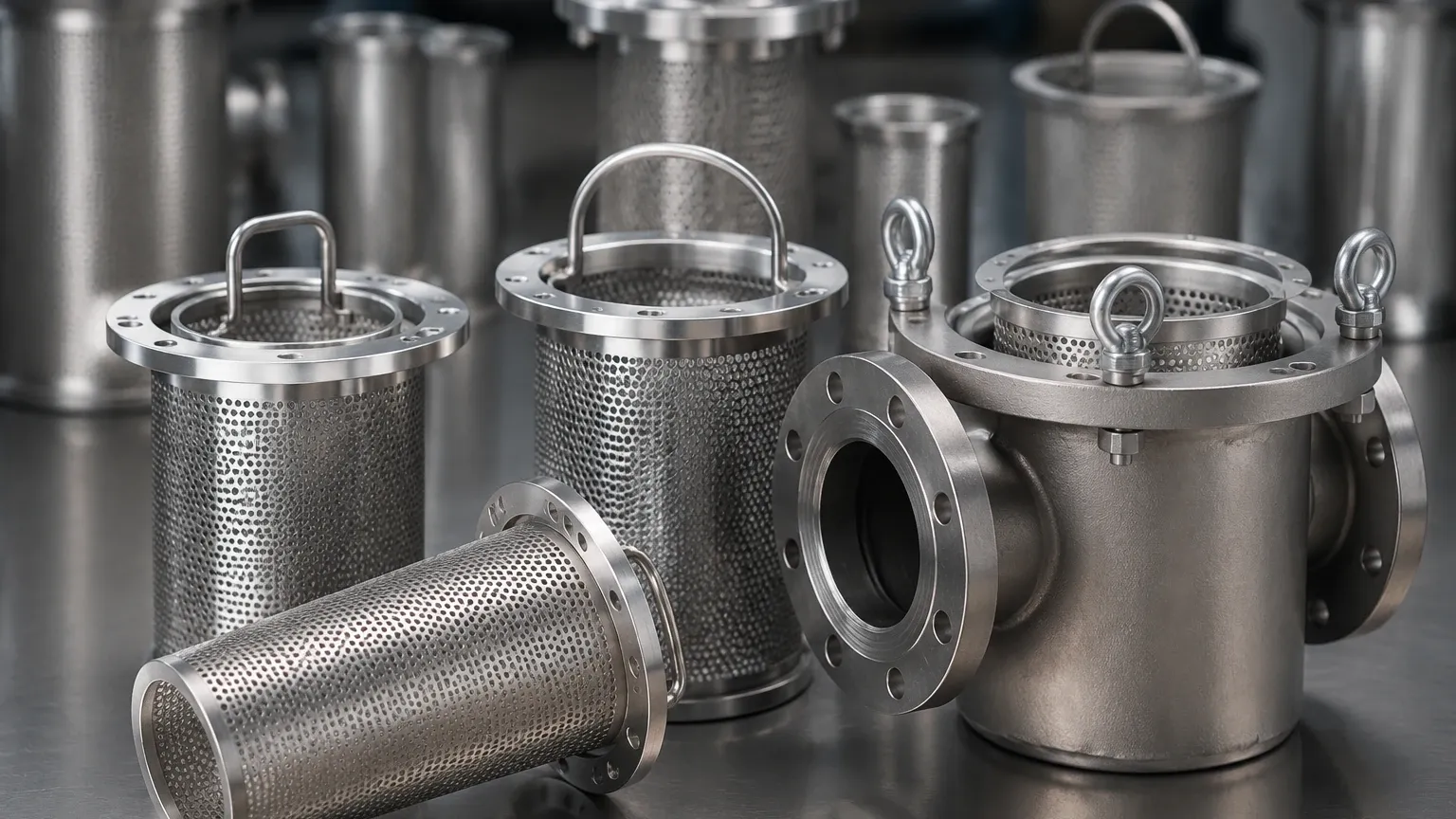
A basket strainer is essentially a closed vessel with a removable screen or basket that intercepts solids. While the concept is simple, the engineering behind an effective strainer is complex. When evaluating a basket strainer supplier, technical teams must look beyond the external housing and focus on the performance characteristics of the internal filtration element.
Effective Filtration Area (EFA)
One of the most important metrics in strainer design is the ratio of the open area of the basket to the cross-sectional area of the inlet pipe. A high-quality supplier will provide baskets with an EFA ratio typically between 6:1 and 8:1. A larger filtration area results in a lower pressure drop (ΔP) across the strainer, which reduces the load on pumps and extends the time between cleaning cycles. If the EFA is too small, the strainer will clog rapidly, leading to frequent downtime and potential cavitation in centrifugal pumps.
Micron Rating and Mesh Selection
The choice between perforated metal and wire mesh depends on the specific application requirements. Perforated baskets are robust and suitable for removing larger debris, whereas wire mesh linings are required for finer filtration (down to 5 microns). A specialized manufacturer like Kaifil utilizes advanced weaving techniques to produce stainless steel wire mesh that maintains consistent pore sizes even under high-pressure conditions. Engineers must confirm that the supplier can provide the exact micron rating required without compromising the structural integrity of the basket.
Evaluating Manufacturing Capabilities and Material Integrity
The durability of a basket strainer is directly linked to the quality of the materials used and the precision of the manufacturing process. In industries such as chemical processing or pharmaceutical manufacturing, material traceability is not optional—it is a regulatory requirement.
Stainless Steel Grades and Corrosion Resistance
Most industrial basket strainers are fabricated from stainless steel due to its excellent corrosion resistance and mechanical strength. A reliable basket strainer supplier should offer a range of alloys, including:
* Grade 304: Suitable for water treatment and general industrial applications where moderate corrosion resistance is required.
* Grade 316L: The standard for chemical, food and beverage, and pharmaceutical industries, offering superior resistance to chlorides and organic acids.
* Super Duplex or 904L: Utilized in highly aggressive environments, such as seawater filtration or concentrated acid processing.
Suppliers must provide Material Test Reports (MTRs) to verify the chemical composition of the steel. This ensures that the components will not fail prematurely due to pitting or stress corrosion cracking.
Precision Welding and Fabrication
The structural integrity of the basket is often tested at the weld points. Inadequate welding can lead to bypass—where fluid leaks around the filter media—or total basket failure. Professional manufacturers employ TIG (Tungsten Inert Gas) or laser welding to ensure clean, strong seams that can withstand the mechanical stresses of high-velocity fluid flow and the physical rigors of manual cleaning.
The Role of Customization in Industrial Filtration
No two industrial systems are identical. Factors such as space constraints, unique fluid viscosities, and specific flow patterns often necessitate customized filtration solutions. A supplier that only offers standardized products may force engineers to compromise on system design.
OEM and Bespoke Design Services
Customization starts with the physical dimensions of the strainer. Whether it is a modified flange connection, a non-standard height-to-width ratio, or a specialized handle for easier extraction, a manufacturer with OEM capabilities can tailor the product to the application. At Kaifil, the focus is on providing Main Page resources that allow engineers to explore custom stainless steel filtration components designed for specific industrial environments.
Multi-Stage Filtration Baskets
In some applications, a single layer of mesh is insufficient. Suppliers may design multi-stage baskets that feature a coarse outer perforated layer for structural support and a fine inner mesh for precision filtration. This "pleated" or layered approach increases the surface area and provides a graduated filtration effect, which is particularly useful in hydraulic systems and oil processing.
Operational Efficiency and Total Cost of Ownership
While the initial purchase price of a basket strainer is a factor, the Total Cost of Ownership (TCO) is a more accurate measure of value. TCO includes the cost of replacement parts, the labor required for maintenance, and the cost of lost production during downtime.
Ease of Maintenance and Cleaning
A well-designed basket strainer should be easy to service. Suppliers should offer quick-opening covers (such as swing-bolt or clamp-style closures) that allow maintenance teams to access the basket without specialized tools. Furthermore, the basket itself should be designed for easy cleaning. Smooth surface finishes, such as electropolishing, can reduce the adhesion of contaminants, making the backwashing or manual cleaning process more efficient.
Durability and Replacement Cycles
Cheaply manufactured strainers often suffer from mesh deformation or frame failure, requiring frequent replacements. A high-quality basket strainer supplier focuses on durability. By using heavier gauge wire and reinforced frames, the lifespan of the filtration element can be doubled or tripled. This reliability is essential in continuous process industries where an unscheduled shutdown can cost thousands of dollars per hour.
Quality Assurance and Industrial Standards
To ensure the safety and performance of filtration components, suppliers must adhere to recognized international standards. When vetting a basket strainer supplier, engineers should verify compliance with the following:
1. ISO 9001:2015: Ensures a consistent quality management system is in place.
2. Pressure Vessel Codes: Depending on the region and application, housings may need to comply with ASME Section VIII or the PED (Pressure Equipment Directive).
3. FDA/3A Standards: For food, beverage, and pharmaceutical applications, the materials and surface finishes must meet strict sanitary requirements to prevent bacterial growth and contamination.
Critical Questions for Engineers to Ask Suppliers
Before finalizing a partnership with a basket strainer supplier, technical teams should conduct a thorough interview to ensure the supplier's capabilities align with the project's needs. Consider the following questions:
* What is the maximum allowable pressure drop for this design at our specific flow rate? A supplier should be able to provide flow curves and ΔP calculations.
* Can you provide material traceability for both the housing and the internal mesh? Essential for compliance and safety.
* What customization options are available for non-standard piping configurations? This reveals the supplier's engineering depth.
* What is the lead time for replacement baskets? Critical for maintaining operational uptime.
* Do you offer technical support for sizing and selection? A supplier should act as a consultant, not just a vendor.
Conclusion
Selecting the right basket strainer supplier is a strategic decision that affects the efficiency and safety of industrial operations. By prioritizing technical expertise, material quality, and customization capabilities, engineers can ensure they receive a filtration solution that meets the specific demands of their application. Whether in chemical processing, water treatment, or the food industry, a professional manufacturer provides the reliability needed to protect expensive machinery and maintain product purity.
For those seeking high-performance stainless steel filtration and custom-engineered components, reviewing the available technical specifications and manufacturing options is the first step toward optimized system performance. Detailed information on custom wire mesh filters and industrial cartridges can be found through the Main Page of specialized manufacturers who understand the rigors of modern industrial environments.
