


Filter Disc
In industrial filtration, the filter disc represents one of the most versatile and essential components for achieving precise separation in liquid and gas streams. Engineered to withstand high pressures, corrosive environments, and extreme temperatures, these components are critical in maintaining the purity of process fluids and protecting downstream equipment. For engineers and procurement specialists, understanding the technical nuances of filter disc construction, material selection, and performance metrics is vital for optimizing system efficiency and minimizing downtime.
As a specialized manufacturer, Kaifil provides a comprehensive range of stainless steel filtration solutions designed for demanding industrial environments. By focusing on the structural integrity and filtration accuracy of each filter disc, we ensure that technical teams can meet stringent industry standards across chemical, pharmaceutical, and food processing sectors. For more information on specific filtration components, visit the Main Page to explore our engineering capabilities.
Technical Overview of Filter Disc Construction
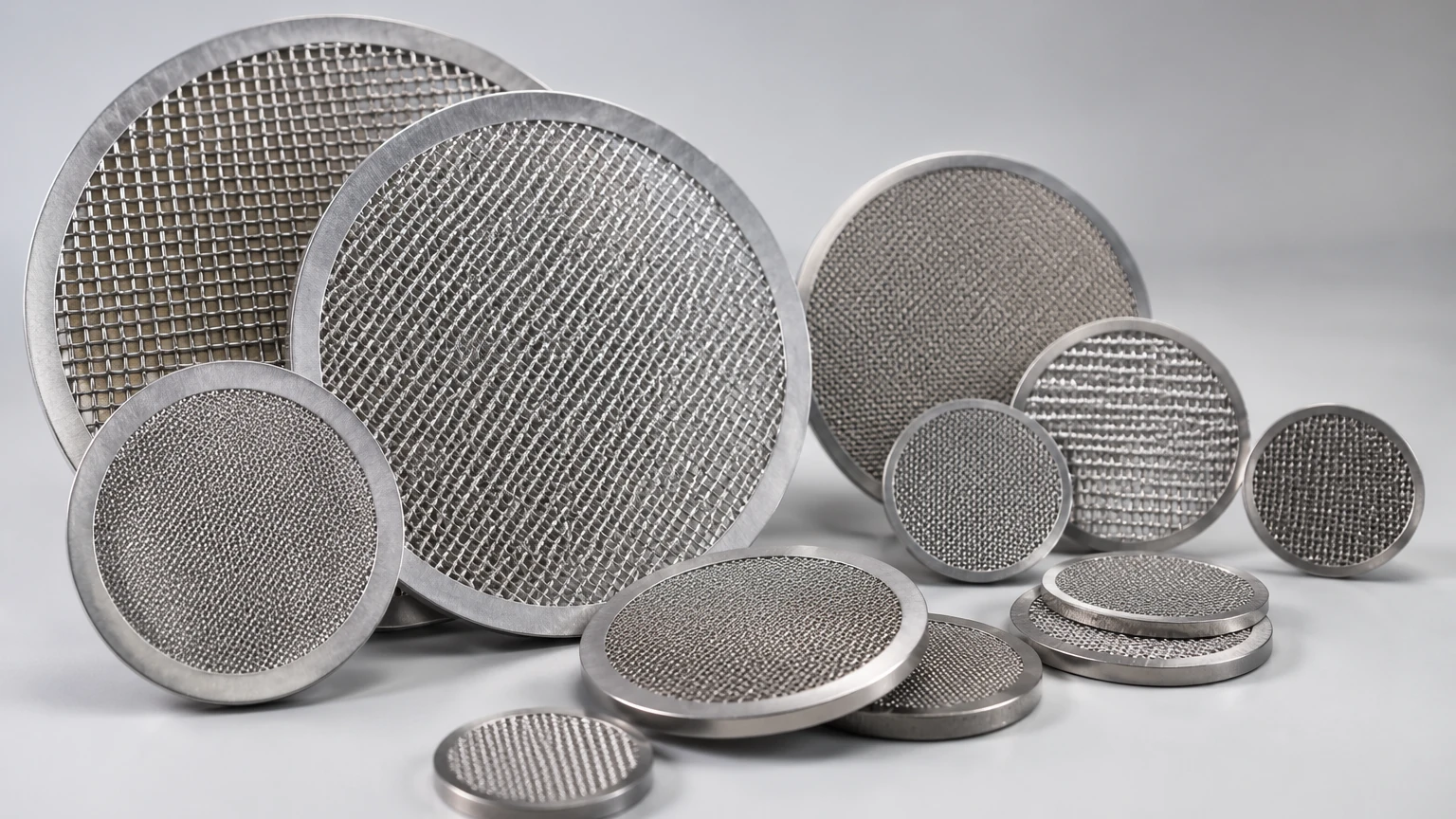
A filter disc is typically a circular or shaped filtration element made from one or more layers of wire mesh, sintered metal, or fiber felt. Unlike cylindrical cartridges, discs are often used in plate filters, nutsche filters, and various specialized housings where a flat filtration surface is required. The construction method significantly influences the disc’s mechanical strength and its ability to be cleaned and reused.
Single-Layer vs. Multi-Layer Discs
Single-layer discs are often used for simple straining or as support structures. However, in most precision industrial applications, multi-layer configurations are preferred. These involve stacking different mesh counts to create a gradient filtration effect. The outer layers typically provide mechanical support and protection, while the inner layers determine the actual micron rating. This layered approach increases the dirt-holding capacity and ensures the disc remains flat under high differential pressure.
Sintered Wire Mesh Discs
Sintering is a process where multiple layers of stainless steel wire mesh are bonded together through heat and pressure without the use of binders. This creates a monolithic structure where the wires at every intersection are fused. Sintered filter discs offer superior mechanical strength, precise pore size distribution, and excellent resistance to delamination, making them ideal for high-pressure hydraulic systems and polymer filtration.
Material Selection for Industrial Environments
The choice of material is the most critical factor in determining the lifespan and chemical compatibility of a filter disc. Stainless steel is the industry standard due to its balance of cost, durability, and resistance to oxidation.
* AISI 304: Suitable for general industrial applications where moderate corrosion resistance is required. It is commonly used in food and beverage processing where high-acid environments are not present.
* AISI 316L: The "L" stands for low carbon, which improves weldability and resistance to intergranular corrosion. This is the preferred material for pharmaceutical and chemical processing due to its superior resistance to chlorides and organic acids.
* Specialty Alloys: For environments involving extreme temperatures or highly aggressive chemicals (such as concentrated sulfuric acid or seawater), discs can be manufactured from Hastelloy, Monel, or Inconel. These alloys offer exceptional stability where standard stainless steels would fail.
When selecting materials, engineers must consider the "Total Cost of Ownership." While a 316L filter disc may have a higher initial cost than a 304 version, its extended service life and reduced risk of process contamination often result in lower long-term expenses.
Engineering Parameters: Micron Rating and Flow Dynamics
Defining the performance of a filter disc requires a deep dive into its filtration characteristics. Engineers must balance the need for fine particle removal with the requirement for adequate flow rates.
Absolute vs. Nominal Micron Ratings
* Nominal Rating: Refers to the ability of the filter disc to retain a majority of particles of a specific size (e.g., 90% or 95%). This is often used for non-critical applications.
* Absolute Rating: Refers to the diameter of the largest spherical particle that will pass through the filter under specified test conditions. In pharmaceutical and high-purity chemical applications, absolute ratings are mandatory to ensure process integrity.
Pressure Drop and Permeability
The pressure drop ($ΔP$) across a filter disc is a function of the fluid’s viscosity, the flow velocity, and the disc’s open area. A disc with a very fine micron rating will naturally have a higher initial pressure drop. Engineering teams must ensure that the pump system can handle the terminal pressure drop (the point at which the disc is considered "blinded" or full of contaminants) without failing or bypassing the filter.
Customization and Edge Treatment Options
A filter disc is rarely a standalone piece of mesh; it requires specific finishing to integrate into industrial machinery. Customization options are essential for ensuring a leak-proof seal and structural stability.
Edge Binding and Framing
To prevent fraying of the wire mesh and to provide a sealing surface, discs are often finished with edge treatments:
* Spot Welding: Used for multi-layer discs to keep the layers aligned during installation.
* Aluminum or Stainless Steel Edging: A metal U-profile is crimped around the circumference of the disc. This provides a rigid frame and a smooth surface for gaskets.
* Rubber/Elastomer Molding: In some applications, the edge of the disc is over-molded with Viton, EPDM, or Silicone to create an integrated gasket, simplifying the assembly process in the field.
Geometric Variations
While circular discs are the most common, industrial processes often require specialized shapes. This includes ring-shaped discs for coaxial flow, kidney-shaped discs for polymer melt filters, and rectangular or oval variations for specific housing geometries. Precision laser cutting or stamping dies are used to ensure dimensional accuracy within tight tolerances.
Applications Across Key Industrial Sectors
The versatility of the filter disc allows it to be utilized in a wide array of specialized equipment. Kaifil’s expertise in custom manufacturing supports several critical industries:
Chemical and Petrochemical Processing
In these environments, filter discs are used for catalyst recovery, solvent filtration, and the removal of impurities from corrosive chemical streams. The ability to withstand high temperatures (up to 600°C with appropriate alloys) and high pressure is a prerequisite.
Pharmaceutical and Biotechnology
Filter discs used in the pharmaceutical industry must meet stringent cleanliness standards. They are often used in Nutsche filters for API (Active Pharmaceutical Ingredient) recovery. These discs must be easy to clean (CIP/SIP compatible) and have a smooth surface finish to prevent bacterial growth.
Food and Beverage Industry
From vegetable oil filtration to beverage clarification, filter discs provide a reliable barrier against contaminants. Using food-grade stainless steel ensures that no metallic taste or harmful substances are leached into the product. The durability of metal discs compared to disposable paper or fabric filters significantly reduces waste and operational costs.
Hydraulic and Lubrication Systems
In high-pressure hydraulic circuits, a filter disc can act as a "last chance" filter, protecting sensitive valves and actuators from metal shavings or other debris that could cause catastrophic system failure.
Maintenance, Cleaning, and Replacement Cycles
One of the primary advantages of a stainless steel filter disc is its cleanability. Unlike disposable media, metal discs can be restored to near-original performance levels through various cleaning methods:
1. Backwashing: Reversing the flow of the process fluid to dislodge particles trapped on the surface.
2. Ultrasonic Cleaning: Using high-frequency sound waves in a cleaning solution to remove fine particles from deep within the mesh pores.
3. Chemical Cleaning: Using acids or alkalis to dissolve organic or inorganic scaling, provided the chemical is compatible with the disc material.
4. Burn-off/Pyrolysis: For polymer applications, discs can be heated in a controlled environment to burn off plastic residue.
Determining Replacement
Despite their durability, filter discs eventually reach the end of their service life. Signs that a disc needs replacement include permanent deformation (cupping), mesh breakage, or an inability to return to a low baseline pressure drop after cleaning. Regular inspection of the mesh integrity under magnification is recommended for critical processes.
Selection Guide for Engineers and Purchasing Teams
When specifying a filter disc for a new project or as a replacement part, confirming the following technical details with the manufacturer will ensure optimal performance:
* Operating Environment: What is the chemical composition of the fluid? What are the minimum and maximum operating temperatures?
* Filtration Requirement: What is the target micron rating? Is an absolute or nominal rating required?
* Mechanical Load: What is the maximum expected differential pressure? Does the disc require a support plate or a reinforced multi-layer structure?
* Dimensions: Provide exact diameters and thicknesses. For edged discs, specify the frame material and width.
* Compliance: Does the application require FDA compliance, 3A sanitary standards, or specific material certifications (MTRs)?
By addressing these factors during the design phase, engineers can avoid the common pitfalls of premature filter failure and inefficient process flow. Kaifil works closely with global partners to provide the technical documentation and manufacturing precision needed to support these complex requirements.
Conclusion
The industrial filter disc is a high-performance component that demands careful engineering and material selection. Whether it is a single-layer mesh for a simple strainer or a complex sintered laminate for a chemical reactor, the quality of the disc directly impacts the reliability of the entire filtration system. By choosing the correct alloy, construction method, and edge treatment, industrial facilities can achieve superior filtration accuracy and long-term cost savings.
For technical assistance in selecting the right filtration components or to request a quote for custom designs, please visit our Main Page to connect with our engineering team. Our commitment to quality and precision manufacturing ensures that your filtration challenges are met with durable, reliable solutions.
