


Belt Press
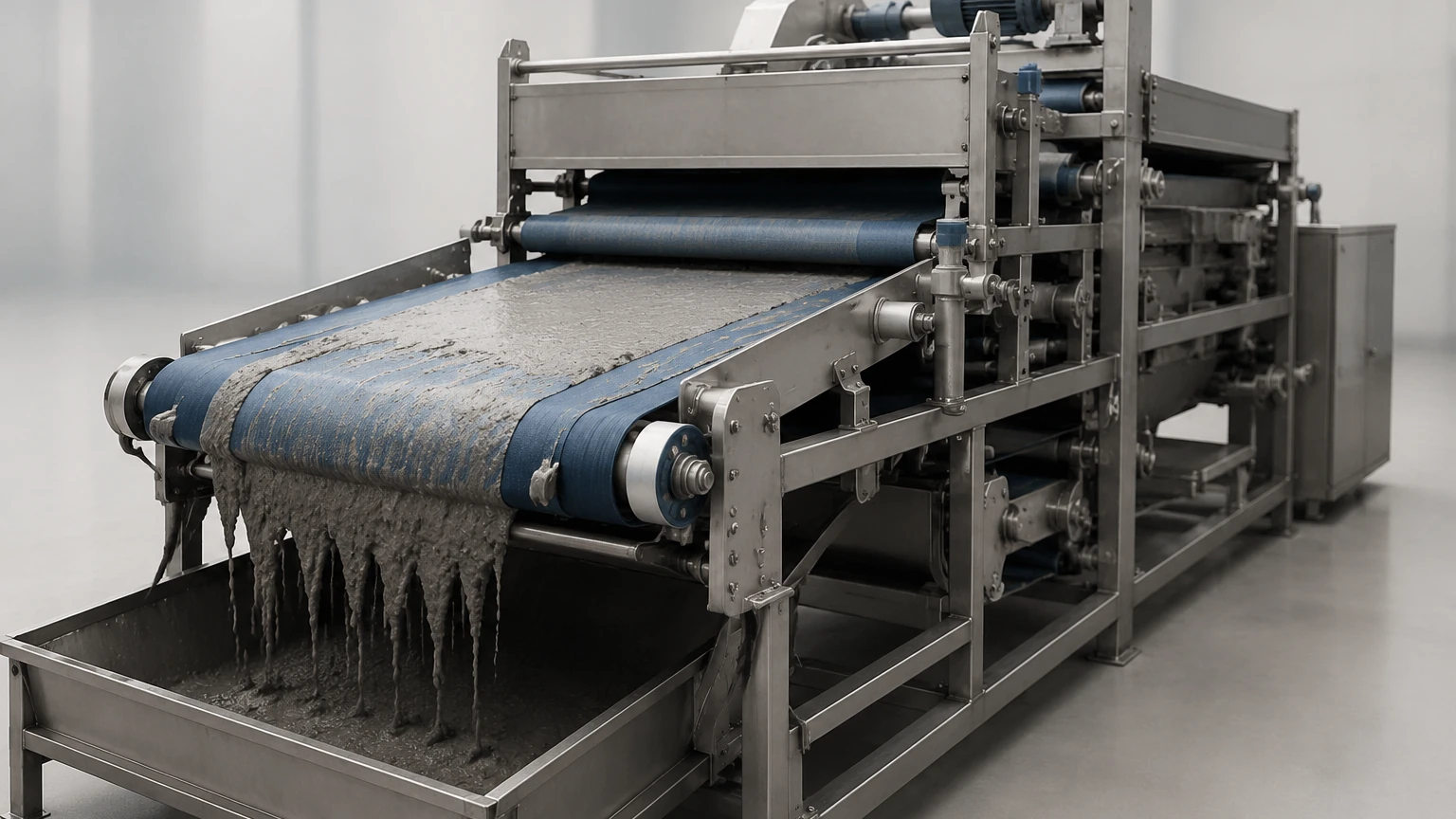
In the landscape of industrial solid-liquid separation, the belt press—often referred to as a belt filter press—remains a cornerstone technology for dewatering sludge and processing slurries. Primarily utilized in municipal wastewater treatment, chemical processing, and food production, the efficiency of a belt press is fundamentally dictated by the mechanical integrity of the system and the precision of its filtration media. For engineers and procurement specialists, understanding the nuances of belt press operation and the critical role of high-performance filter belts is essential for optimizing throughput and achieving desired cake dryness.
As a specialized manufacturer of stainless steel filtration solutions, Kaifil provides the technical expertise and custom components necessary to enhance the performance of these complex systems. This guide examines the engineering principles of the belt press, the selection criteria for filtration media, and the operational considerations that impact long-term reliability.
Fundamental Principles of Belt Press Operation
A belt press operates on the principle of mechanical pressure and shear to extract liquid from a solid-rich slurry. Unlike static filtration methods, the belt press is a continuous process, making it ideal for high-volume industrial applications. The process is typically divided into several distinct stages, each requiring specific conditions to be met by the filtration media.
1. The Gravity Drainage Zone
In the initial stage, the chemically conditioned slurry (often treated with polymers to encourage flocculation) is distributed onto a moving porous belt. Here, the majority of the free water is removed by gravity. The success of this stage depends heavily on the mesh opening size and the drainage capacity of the filter belt. If the mesh is too fine, the belt may blind; if it is too coarse, solids may pass through, compromising the filtrate quality.
2. The Wedge Zone (Low-Pressure Zone)
Following gravity drainage, the sludge enters the wedge zone, where two belts converge. This stage gradually applies increasing pressure to the sludge, preparing it for the high-pressure stages. The transition must be smooth to prevent "side-squeeze," where the sludge is forced out the sides of the belts rather than being compressed.
3. The High-Pressure and Shear Zone
The final stage involves the belts traveling over a series of rollers with decreasing diameters. As the belts wrap around these rollers, they create both compression and shear forces. This dual action breaks down the internal structure of the sludge flocs, releasing trapped water and resulting in a concentrated filter cake. The mechanical stress on the filter belts in this zone is significant, requiring materials with high tensile strength and dimensional stability.
Critical Role of the Filter Belt in Dewatering Efficiency
The filter belt is arguably the most critical component of the belt press system. It serves as both the conveyor of the material and the medium through which the liquid is separated. The performance of the belt press is directly linked to the physical characteristics of the belt, including its weave pattern, material composition, and surface properties.
Drainage Capacity and Permeability
Permeability is measured by the volume of air or water that can pass through the mesh at a given pressure. In belt press applications, the belt must provide a balance between rapid drainage and high solids retention. Industrial engineers must calculate the hydraulic loading rate of the machine to ensure the chosen mesh can handle the volume of liquid without overflowing the gravity zone.
Cake Release Characteristics
After the high-pressure zone, the dewatered cake must be easily separated from the belt. A belt with poor release characteristics will retain residual solids, leading to "blinding" (clogging of the mesh pores). This increases the frequency of wash cycles and reduces the overall uptime of the belt press. Precision-engineered stainless steel wire mesh often provides superior release properties compared to synthetic alternatives, especially in applications involving oily or sticky sludges.
Material Selection: Why Stainless Steel Mesh Outperforms in Industrial Environments
While synthetic belts (such as polyester or polypropylene) are common in standard municipal applications, many industrial belt press operations require the enhanced durability of stainless steel wire mesh. Kaifil specializes in manufacturing these high-end filtration components to meet the rigorous demands of chemical and high-temperature processing.
Chemical Compatibility
In industries such as chemical processing or pharmaceutical manufacturing, the slurry may contain aggressive solvents, acids, or bases that would degrade synthetic fibers. Stainless steel (specifically grades 304, 316, and 316L) offers exceptional resistance to chemical attack, ensuring the structural integrity of the belt remains intact over thousands of operational hours.
Temperature Resistance
Certain dewatering processes occur at elevated temperatures to reduce the viscosity of the liquid and improve separation. Synthetic belts have a relatively low thermal ceiling, beyond which they may stretch or lose their weave alignment. Stainless steel belts maintain their mechanical properties at temperatures far exceeding the limits of polymers, making them the preferred choice for steam-assisted or high-heat dewatering.
Mechanical Durability and Tensile Strength
The shear forces in a belt press exert constant tension on the filtration media. Stainless steel wire mesh provides the high tensile strength required to prevent belt elongation. A belt that stretches will not track properly on the rollers, leading to edge wear and premature failure. By utilizing precision-woven metal mesh, operators can maintain consistent tension and tracking, extending the service life of the filtration component.
Engineering Specifications for Custom Belt Press Filtration Components
When specifying filtration components for a belt press, engineers must look beyond the basic dimensions. Customization is key to matching the filtration media to the specific characteristics of the slurry. On the Kaifil Main Page, technical professionals can explore the various customization options available for industrial filtration needs.
Weave Patterns
* Plain Weave: Offers a straightforward, uniform opening size, suitable for general-purpose dewatering.
* Twill Weave: Allows for a heavier wire diameter for a given mesh count, increasing the belt's strength and durability.
* Dutch Weave: Provides a much finer filtration rating and high pressure resistance, often used in the final stages of high-precision separation.
Edge Reinforcement and Seaming
The edges of a belt press filter are subject to intense friction against guides and rollers. Reinforcing the edges with specialized coatings or mechanical bindings is essential to prevent fraying. Furthermore, the seam—the point where the two ends of the belt are joined—must be as strong as the rest of the belt and perfectly flush to avoid interfering with the doctor blades that scrape the cake off the belt.
Addressing Common Failure Modes in Belt Press Filtration
To maintain the efficiency of a belt press, maintenance teams must be proactive in identifying and mitigating common failure modes. Most issues can be traced back to either improper chemical conditioning or the selection of an inappropriate filtration medium.
Blinding and Scaling
Blinding occurs when fine particles become lodged within the mesh openings. This is often exacerbated by scaling in hard water environments or the buildup of fats and oils. High-pressure wash bars are used to clean the belts continuously, but if the mesh is not designed for the specific particle size of the sludge, blinding will eventually occur. Selecting a mesh with a "self-cleaning" weave geometry can significantly reduce this risk.
Tracking and Alignment Issues
If a belt press belt is not perfectly square or if it has stretched unevenly, it will "walk" to one side of the rollers. This can cause the belt to fold or crease, leading to immediate failure. Ensuring that the filtration media is manufactured with high dimensional stability is the first line of defense against tracking problems.
Mechanical Abrasion
Slurries containing abrasive solids, such as sand or mineral tailings, can quickly wear down the wires of a filter belt. In these instances, selecting a stainless steel alloy with higher hardness or increasing the wire diameter in the weave can extend the interval between replacements.
Total Cost of Ownership and Selection Criteria for Purchasing Teams
For purchasing departments, the initial cost of a belt press filter belt is only one part of the equation. The total cost of ownership (TCO) includes the frequency of replacement, the cost of downtime, the consumption of conditioning polymers, and the disposal costs of the filter cake.
Investing in high-quality, custom-engineered stainless steel filtration components from a reliable manufacturer like Kaifil can lead to significant long-term savings. A more durable belt reduces replacement frequency, while a belt optimized for better drainage can produce a drier cake, drastically lowering the weight and cost of waste disposal.
Information to Confirm Before Ordering
Before engaging with a manufacturer for replacement belt press components, engineering teams should confirm the following data:
1. Slurry Characteristics: pH levels, temperature, particle size distribution, and chemical composition.
2. Machine Specifications: Belt width, total length, roller diameters, and maximum tension ratings.
3. Desired Performance: Target cake solids percentage and required filtrate clarity.
4. Existing Pain Points: Analysis of why the previous belt failed (e.g., blinding, tearing, or chemical degradation).
By providing these details, Kaifil can engineer a filtration solution that is precisely tailored to the application, ensuring that the belt press operates at peak efficiency with minimal intervention.
Conclusion
The belt press remains a vital tool for industrial dewatering, but its success is inseparable from the quality of its filtration media. Whether dealing with municipal sludge or aggressive chemical slurries, the selection of the right mesh, material, and weave pattern is a critical engineering decision. Stainless steel wire mesh components offer the durability, chemical resistance, and precision required to meet the challenges of modern industrial environments.
For those seeking to optimize their belt press operations or develop custom filtration solutions for OEM equipment, reviewing technical specifications and application support is the next logical step. Explore the full range of custom stainless steel filtration products and engineering capabilities by visiting the Kaifil Main Page.
