


Bottle Top Filters
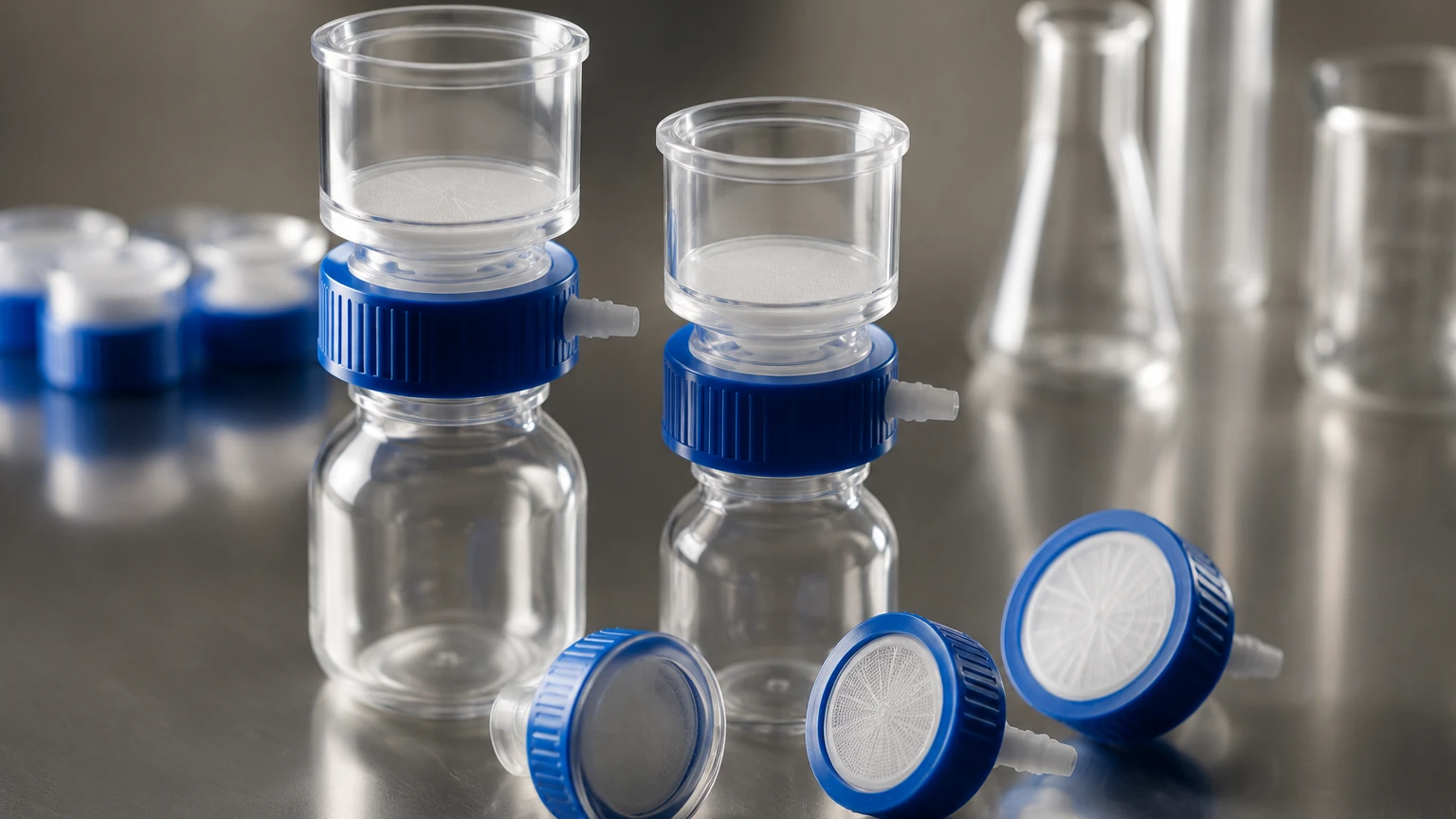
In the landscape of industrial and laboratory filtration, bottle top filters serve as a critical interface for the vacuum-assisted purification of liquids. These devices are designed to sit atop standard laboratory or industrial receiver bottles, utilizing a pressure differential to draw fluids through a specialized filtration medium. While often associated with small-scale laboratory work, the engineering principles governing bottle top filters are increasingly relevant in industrial pilot plants, pharmaceutical processing, and chemical analysis where precision and material integrity are paramount.
For engineers and procurement professionals, selecting the appropriate filtration system requires a deep understanding of fluid dynamics, chemical compatibility, and the mechanical properties of the filter media. As industrial requirements move toward more aggressive solvents and higher temperature ranges, the transition from disposable plastic units to robust, stainless steel components has become a focal point for optimizing operational efficiency.
Understanding the Role of Bottle Top Filters in Industrial Filtration
Bottle top filters function primarily through vacuum filtration. A vacuum source is connected to the receiver bottle or the filter housing, creating a lower pressure zone beneath the filter media. Atmospheric pressure then pushes the liquid through the membrane or mesh, trapping particulates on the surface or within the depth of the media.
In industrial contexts, these filters are used for clarifying reagents, sterilizing growth media, or removing fine particulates from high-purity chemicals. The efficiency of this process is determined by the effective filtration area (EFA), the pore size distribution of the media, and the viscosity of the fluid. Unlike gravity-fed systems, vacuum-assisted bottle top filtration significantly reduces processing time, making it an essential tool for time-sensitive production environments.
When evaluating these systems, technical teams must consider the throughput requirements. A filter that performs adequately for a 500ml sample may fail or become inefficient when scaled to 10-liter batches if the flow resistance is not properly calculated. This is where the engineering of the filter support structure and the precision of the mesh become critical factors.
Material Selection: The Shift Toward Stainless Steel Components
Historically, many bottle top filters were designed as single-use plastic assemblies (often using polystyrene or polypropylene). However, industrial applications frequently involve conditions that exceed the physical limits of polymers. This has led to a growing demand for stainless steel filtration solutions, such as those provided by specialists like Kaifil.
Chemical and Thermal Resistance
Stainless steel, particularly grades 304 and 316L, offers unparalleled resistance to a wide array of organic solvents, acids, and bases that would otherwise degrade plastic housings or membranes. Furthermore, in processes involving elevated temperatures, stainless steel maintains its structural integrity, ensuring that the filtration accuracy is not compromised by thermal expansion or softening of the material.
Durability and Reusability
From a total cost of ownership (TCO) perspective, reusable stainless steel filter components offer a sustainable alternative to disposables. In a high-volume industrial setting, the waste generated by single-use filters is significant. Stainless steel wire mesh filters can be cleaned, sterilized (via autoclaving or ultrasonic cleaning), and reused multiple times without loss of performance. This durability also prevents the risk of housing failure under high vacuum pressures, which can be a safety concern with brittle plastic alternatives.
Precision Engineering
Precision metal filter components allow for tighter control over pore size. While polymer membranes are effective, they can be prone to deformation under pressure. Stainless steel wire mesh, woven to exacting specifications, provides a rigid and consistent filtration barrier. This consistency is vital for maintaining validated processes in the pharmaceutical and food and beverage sectors.
Engineering Evaluation Criteria for High-Performance Filtration
When specifying bottle top filters for industrial use, engineers must look beyond the basic micron rating. Several technical parameters dictate the success of the filtration step:
1. Micron Rating and Beta Ratio: It is essential to distinguish between nominal and absolute filtration ratings. For critical applications, an absolute rating ensures that 99.9% of particles above a certain size are captured. The Beta ratio provides a mathematical representation of this efficiency.
2. Flow Rate vs. Pressure Drop: Every filter medium introduces a pressure drop ($ΔP$). Engineers must ensure that the available vacuum strength is sufficient to overcome this resistance while maintaining the desired flow rate. Factors such as fluid viscosity and particulate loading directly impact this calculation.
3. Effective Filtration Area (EFA): The larger the EFA, the longer the filter can operate before clogging (blinding). Custom-designed stainless steel filters can often optimize the housing geometry to maximize EFA within the constraints of a standard bottle top interface.
4. Seal Integrity: The interface between the filter and the bottle must be airtight. In industrial environments, specialized gaskets (such as Viton or EPDM) may be required to ensure chemical compatibility and prevent vacuum leaks that could lead to contamination or process delays.
Managing Operational Risks and Performance Degradation
Even the most robust filtration system is subject to risks that can compromise the end product. Identifying these early in the selection process is a key responsibility for technical teams.
Media Migration: In lower-quality filters, there is a risk that fragments of the filter media itself may shed into the filtrate. This is particularly dangerous in hydraulic and pharmaceutical applications. High-quality stainless steel wire mesh filters are engineered to prevent fiber shedding, providing a cleaner output.
Bypass and Leakage: If the filter media is not properly seated or bonded within the housing, liquid may bypass the filtration zone entirely. This is often a result of poor manufacturing tolerances. Utilizing precision-machined metal components ensures a secure fit that eliminates bypass risks.
Clogging and Blinding: Rapid clogging occurs when the particulate size distribution closely matches the pore size of the filter, or when the concentration of solids is too high for a single-stage filter. In these cases, engineers might consider a multi-stage approach or a custom mesh design that incorporates a pre-filtration layer to extend the life of the primary filter.
Customization and OEM Integration for Specialized Applications
Standard off-the-shelf bottle top filters do not always meet the unique demands of specialized industrial processes. Customization is often necessary to align the filtration system with specific machinery or chemical requirements.
Manufacturers like Kaifil specialize in developing tailored filtration solutions. This includes:
* Custom Mesh Weaves: Depending on the particle shape and fluid characteristics, different weave patterns (such as Dutch weave or Twill weave) can be employed to optimize either flow rate or particle retention.
* Specialized Fittings: Industrial bottles may have non-standard neck sizes or threading. Custom-machined adapters allow for the seamless integration of high-performance filters into existing workflows.
* Material Upgrades: For extremely corrosive environments, alloys such as Hastelloy or Monel can be used in place of standard stainless steel.
By working closely with a manufacturer that understands the nuances of metal filtration, engineering teams can develop OEM components that are specifically tuned to their application's pressure, temperature, and chemical profiles. This collaborative approach ensures that the filtration step is not a bottleneck in the production line.
Total Cost of Ownership and Sustainability in Filtration
While the initial capital expenditure for a stainless steel bottle top filter assembly is higher than that of a plastic disposable, the long-term economic benefits are clear. The reduction in recurring procurement costs, waste disposal fees, and the mitigation of risks associated with material failure contribute to a lower TCO.
Furthermore, sustainability is becoming a core metric for industrial operations. Moving away from single-use plastics reduces the environmental footprint of a facility. Stainless steel is 100% recyclable at the end of its long service life, aligning with corporate green initiatives without sacrificing technical performance.
Conclusion
Selecting the right bottle top filters involves a complex balance of material science, fluid dynamics, and economic forecasting. For industrial applications where reliability is non-negotiable, stainless steel and precision metal components offer the durability and accuracy required to maintain process integrity. By understanding the technical boundaries of their specific applications and seeking out customized engineering solutions, professionals can optimize their filtration workflows for maximum efficiency and safety.
For more information on custom stainless steel filtration solutions and to explore a wide range of industrial filter components, visit the Kaifil Main Page. Whether you are looking for wire mesh filters, custom cartridges, or precision metal components, professional manufacturing expertise is essential for achieving reliable filtration performance in demanding environments.
