


Breather Ventilation
In industrial engineering, the integrity of a closed system—whether it is a hydraulic reservoir, a chemical storage tank, or a high-speed gearbox—depends heavily on its ability to interact with the surrounding atmosphere. This interaction is managed through breather ventilation. A breather is not merely a vent; it is a critical filtration component designed to equalize pressure while preventing the ingress of particulate contaminants and moisture. For engineers and maintenance professionals, selecting the correct breather ventilation solution is a prerequisite for protecting sensitive fluids, reducing component wear, and extending the service life of expensive machinery.
As a specialized manufacturer of stainless steel filtration solutions, Kaifil provides the technical expertise required to navigate the complexities of industrial ventilation. This guide examines the engineering principles behind breather ventilation, the material considerations for demanding environments, and the selection criteria necessary for optimizing system performance.
Understanding the Function of Breather Ventilation
Industrial systems are dynamic. As fluid levels within a tank rise and fall, or as internal temperatures fluctuate during operation, the air volume inside the vessel must change accordingly. Without effective breather ventilation, these changes create pressure differentials. A vacuum can lead to tank implosion or pump cavitation, while over-pressurization can rupture seals and cause catastrophic leaks.
However, the act of "breathing" introduces a significant risk: atmospheric contamination. Standard ambient air contains dust, silica, and moisture, all of which are detrimental to industrial processes. For instance, in hydraulic systems, particulate matter as small as 5 microns can cause abrasive wear on valves and cylinders. Breather ventilation acts as the primary gatekeeper, ensuring that the air entering the system is filtered to a specific cleanliness level while allowing unrestricted airflow to maintain atmospheric pressure equilibrium.
Material Engineering: Why Stainless Steel Wire Mesh?
While many commercial breathers utilize plastic housings and disposable paper or foam elements, industrial applications often demand higher durability. Stainless steel wire mesh is the preferred medium for robust breather ventilation for several technical reasons:
1. Thermal Stability: Industrial processes often involve high operating temperatures that would degrade polymer-based filters. Stainless steel maintains structural integrity across a wide temperature spectrum.
2. Chemical Compatibility: In chemical processing or pharmaceutical environments, breathers may be exposed to corrosive vapors. Stainless steel (specifically 304 or 316L grades) offers superior resistance to oxidation and chemical attack.
3. Mechanical Strength: Breathers located on outdoor storage tanks or heavy mobile equipment must withstand physical impact, vibration, and high-pressure washdowns. Metal mesh components do not crack or become brittle over time.
4. Cleanability and Reusability: Unlike disposable elements, stainless steel mesh breathers can often be cleaned using ultrasonic baths or backflushing, providing a lower total cost of ownership over the long term.
At Kaifil, we focus on precision-engineered metal filtration components that leverage these material advantages to provide reliable Main Page solutions for global industrial sectors.
Key Performance Metrics for Industrial Breathers
When specifying breather ventilation, engineers must look beyond simple fitment. Several performance metrics dictate whether a breather will protect the system or become a point of failure.
Micron Rating and Filtration Efficiency
The micron rating defines the size of particles the breather can effectively capture. In high-precision hydraulic systems, a 3-micron to 10-micron absolute rating may be required. For general industrial venting, a nominal rating of 25 to 40 microns might suffice. It is essential to distinguish between nominal and absolute ratings to ensure the filtration level matches the sensitivity of the internal components.
Airflow Capacity (CFM/LPM)
A breather must be able to handle the maximum rate of air exchange expected in the system. This is typically calculated based on the maximum pump flow rate (in hydraulic systems) or the maximum fill/drain rate (in storage tanks). If the airflow capacity is too low, the breather creates a bottleneck, leading to the very pressure spikes it was intended to prevent.
Clean Pressure Drop
Every filter medium introduces some resistance to airflow, known as pressure drop (ΔP). An ideal breather ventilation design minimizes this resistance. A high initial pressure drop indicates that the filter may be undersized or that the mesh weave is too dense for the required flow rate, which can lead to premature clogging.
Environmental and Application-Specific Considerations
The environment in which the breather operates significantly influences its design. Standard breathers may fail prematurely if subjected to specialized industrial conditions.
High-Dust Environments
In mining, cement production, or grain handling, the ambient air is saturated with heavy particulate matter. For these applications, breather ventilation often incorporates a multi-stage design. A coarse pre-filter or a centrifugal shroud may be used to deflect larger particles before the air reaches the fine stainless steel mesh element. This prevents the primary filter from blinding too quickly.
Moisture and Humidity
Water is one of the most destructive contaminants in lubricating oils and fuels. While standard wire mesh breathers capture solids, they do not stop water vapor. In high-humidity environments, engineers may specify desiccant breathers or breathers equipped with hydrophobic coatings. However, in many heavy-duty industrial applications, the focus remains on preventing "splash-back" or liquid ingress during equipment cleaning, where a baffled stainless steel breather is highly effective.
Corrosive Vapors
In the pharmaceutical and food industries, the breather may be exposed to CIP (Clean-in-Place) chemicals or aggressive process vapors. Selecting the correct grade of stainless steel and ensuring that all gaskets and seals are compatible with these chemicals is critical to preventing system contamination from corroded filter fragments.
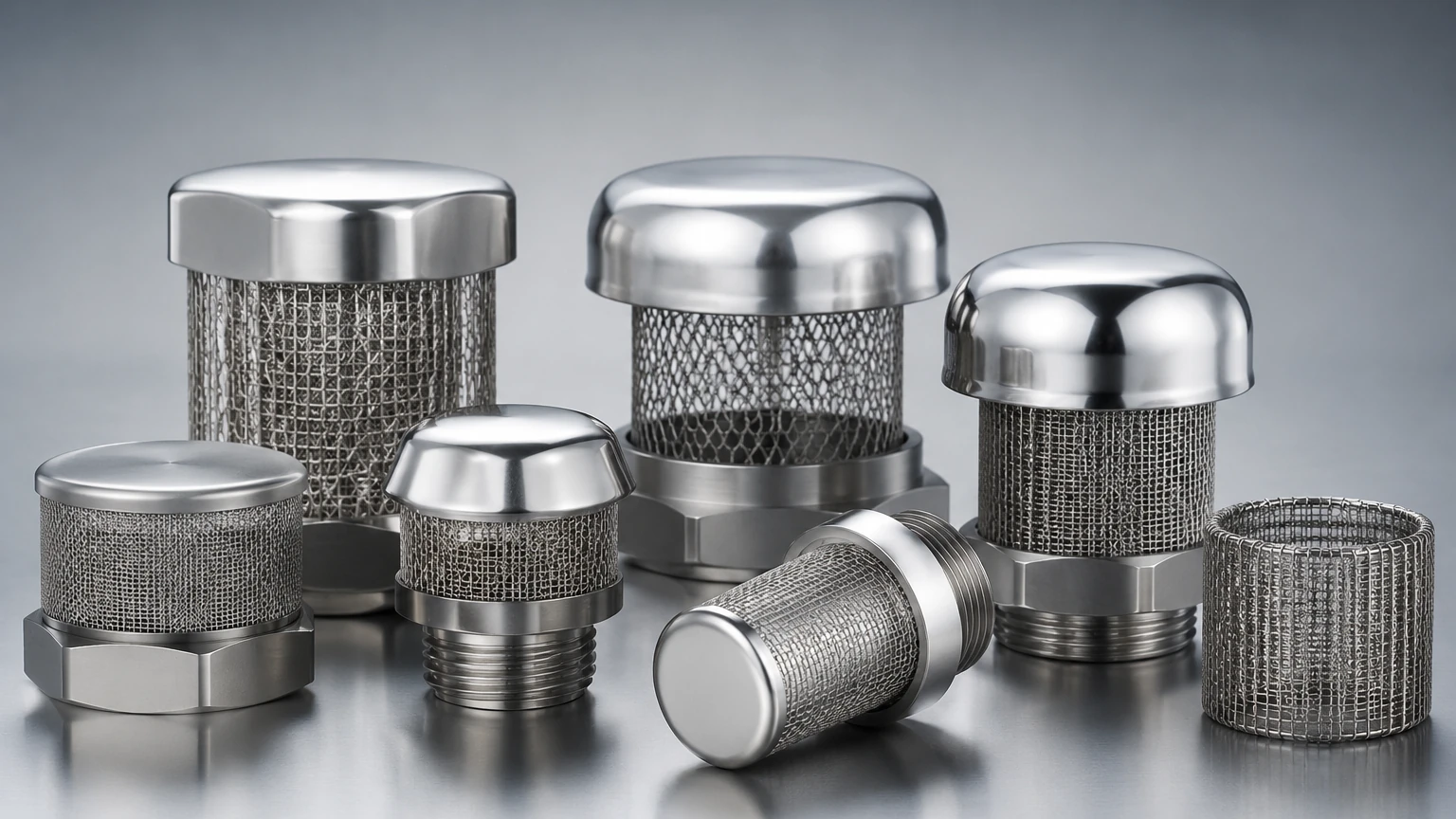
Customization and OEM Integration Strategies
Off-the-shelf breather solutions often fail to meet the specific spatial or performance constraints of specialized machinery. Customization is a core aspect of modern industrial filtration. When working with a manufacturer like Kaifil, OEM teams can specify several variables:
* Connection Types: Breathers can be designed with NPT/BSP threads, flanged connections, or even push-to-connect fittings to match existing tank ports.
* Housing Geometry: For equipment with limited overhead clearance, low-profile breather designs ensure that ventilation is maintained without increasing the machine's footprint.
* Integrated Indicators: Advanced breather ventilation units can include visual vacuum indicators or electrical sensors that alert maintenance teams when the filter element is reaching its dirt-holding capacity.
* Baffling and Internal Structure: To prevent oil mist from escaping or external fluids from entering during high-vibration operation, internal baffles can be engineered into the metal housing.
By tailoring these components to the specific application, manufacturers can ensure that the breather ventilation system provides maximum protection without compromising the machine's operational efficiency.
Maintenance, Cleaning, and Total Cost of Ownership
A common mistake in industrial maintenance is treating breathers as "fit and forget" components. A clogged breather is a liability. As the mesh becomes saturated with contaminants, the pressure required to move air through the filter increases, which can lead to seal failure or tank deformation.
Monitoring Performance
Regular inspections should include checking for visible accumulation of dust or oily residue on the breather exterior. In critical systems, differential pressure gauges provide a quantitative measure of the breather's condition. If the pressure drop exceeds the manufacturer's recommended limit, the element must be serviced.
The Advantage of Metal Mesh Reusability
One of the primary benefits of stainless steel breather ventilation is the ability to restore performance through cleaning. Depending on the contaminant, metal mesh elements can be cleaned using:
* Solvent Cleaning: Effective for removing oil and grease buildup.
* Ultrasonic Cleaning: The most thorough method for removing fine particulates lodged deep within the wire mesh weave.
* Pressure Washing: Suitable for removing heavy external debris, provided the mesh is robust enough to withstand the force.
This reusability significantly reduces the long-term cost compared to disposable plastic breathers, which contribute to waste streams and require frequent purchasing and inventory management.
Conclusion: Confirming Specifications Before Selection
Selecting the right breather ventilation is a technical decision that impacts the reliability of the entire industrial system. Before proceeding with a purchase or a custom design, engineers should confirm the following data points:
1. What is the maximum air exchange rate (CFM or LPM) required by the system?
2. What is the target ISO cleanliness code for the internal fluid?
3. Will the breather be exposed to extreme temperatures or corrosive chemicals?
4. Are there space constraints that require a custom housing or connection?
By addressing these questions, purchasing teams can ensure they are investing in a solution that provides durable, high-performance filtration. Kaifil remains committed to supporting these engineering challenges through high-quality stainless steel filter manufacturing and customized design services. For more information on our range of precision filtration components, visit our Main Page to explore our capabilities and application support.
