


Brewery Filtration
In the industrial brewing sector, filtration is a critical unit operation that directly influences product clarity, biological stability, and shelf life. Brewery filtration encompasses a range of mechanical separation processes designed to remove suspended solids, such as spent grains, hop particles, trub, yeast cells, and spoilage bacteria, from the liquid stream. For engineers and production managers, selecting the appropriate filtration technology requires a deep understanding of fluid dynamics, material compatibility, and the specific requirements of different brewing stages.
Effective filtration ensures that the final product meets the aesthetic and sensory expectations of consumers while maintaining the chemical integrity of the beer. From the initial separation of wort to the final sterile filtration before packaging, the choice of filter media—particularly the use of durable stainless steel components—plays a pivotal role in operational efficiency and total cost of ownership.
Technical Principles of Brewery Filtration
Filtration in a brewery environment typically relies on two primary mechanisms: surface filtration and depth filtration. Understanding the distinction between these is essential for optimizing the filtration train.
Surface Filtration
Surface filtration occurs when particles larger than the pore size of the filter medium are trapped on the upstream side of the filter. This is common in applications using stainless steel wire mesh or wedge wire screens. The advantage of surface filtration is its predictability and the ability to clean the medium through backwashing or mechanical scraping. In brewery applications, surface filters are often used for coarse separation, such as removing hop husks or large protein aggregates.
Depth Filtration
Depth filtration involves a thicker medium where particles are trapped within the tortuous path of the filter material. While often associated with disposable cartridges, high-performance stainless steel sintered felt or multi-layered mesh can also provide depth-loading characteristics. This mechanism is particularly effective for removing smaller particles and deformable solids, such as yeast and certain proteins, which might otherwise bypass a simple surface filter.
Micron Ratings and Retention Efficiency
Engineers must distinguish between nominal and absolute micron ratings. A nominal rating indicates the ability of the filter to retain a majority of particles at a specific size, whereas an absolute rating guarantees the retention of nearly all particles (typically 99.9%) of that size. In brewery filtration, absolute-rated filters are critical during the final stages to ensure microbial stability, while nominal filters are sufficient for early-stage clarification.
Primary Filtration: Hot Side Applications
The filtration process begins in the brewhouse, where the goal is to separate the fermentable liquid (wort) from the solid malt remains and hop debris. This stage is characterized by high temperatures and high solids loading.
Lautering and Mash Separation
In the lauter tun, the grain bed itself acts as a natural depth filter. However, the mechanical support for this bed—the lauter tun false bottom—is a precision-engineered component. Stainless steel wedge wire screens are the industry standard here due to their high open area, resistance to clogging, and structural rigidity. The V-shaped profile of the wedge wire ensures that only particles smaller than the gap can pass, while minimizing the risk of blinding.
Wort Clarification (Trub Removal)
After boiling, the wort contains "trub," which consists of coagulated proteins and hop residues. While whirlpooling is the traditional method for trub separation, many modern high-efficiency systems incorporate secondary filtration using stainless steel mesh filters. These filters must withstand temperatures near boiling (95°C–100°C) and the abrasive nature of hop solids. Utilizing robust stainless steel filter cartridges at this stage protects downstream heat exchangers from fouling, ensuring consistent cooling performance.
Secondary Filtration: Cold Side and Polishing
Once fermentation is complete, the beer contains yeast and various haze-forming compounds (polyphenols and proteins). Cold-side filtration, often referred to as polishing, is necessary to achieve the "brilliant" clarity expected in many beer styles.
Yeast Removal and Pre-filtration
The first step in cold-side processing is the removal of the bulk of the yeast. Centrifugation is often followed by a pre-filtration stage using stainless steel wire mesh filters. These filters are designed to handle the high viscosity of cold beer and the relatively high solids volume of yeast. By using cleanable stainless steel media, breweries can significantly reduce the load on expensive, disposable final filters.
Fine Polishing
For many commercial lagers and ales, fine polishing involves removing particles down to the 1.0 to 5.0-micron range. This stage is critical for removing smaller yeast cells and protein-tannin complexes that cause chill haze. Engineers often specify multi-stage stainless steel filter housings that allow for graduated filtration, where each successive layer captures smaller particles, thereby extending the service life of the entire system.
Final Filtration and Microbial Stability
The final filtration stage, occurring just before bottling or kegging, is perhaps the most critical for product safety. This stage focuses on the removal of spoilage organisms such as *Lactobacillus* and *Pediococcus*, as well as any remaining wild yeast.
Sterile Filtration vs. Pasteurization
Many modern breweries prefer sterile filtration over flash pasteurization because it preserves the delicate flavor profile of the beer. Sterile filtration typically requires absolute-rated cartridges with pore sizes of 0.45 to 0.65 microns. While the final membrane is often a polymer, the pre-filtration stages that protect these membranes are increasingly utilizing high-precision stainless steel components. These stainless steel pre-filters can be chemically cleaned and reused, providing a cost-effective barrier against premature membrane fouling.
Integrity Testing
For engineers, the ability to verify filter performance is paramount. Final filtration systems must be designed to support integrity testing (such as pressure hold or bubble point tests). This ensures that the filtration system is operating according to its technical specifications and that no bypass or structural failure has occurred during the production run.
Material Selection: The Case for Stainless Steel
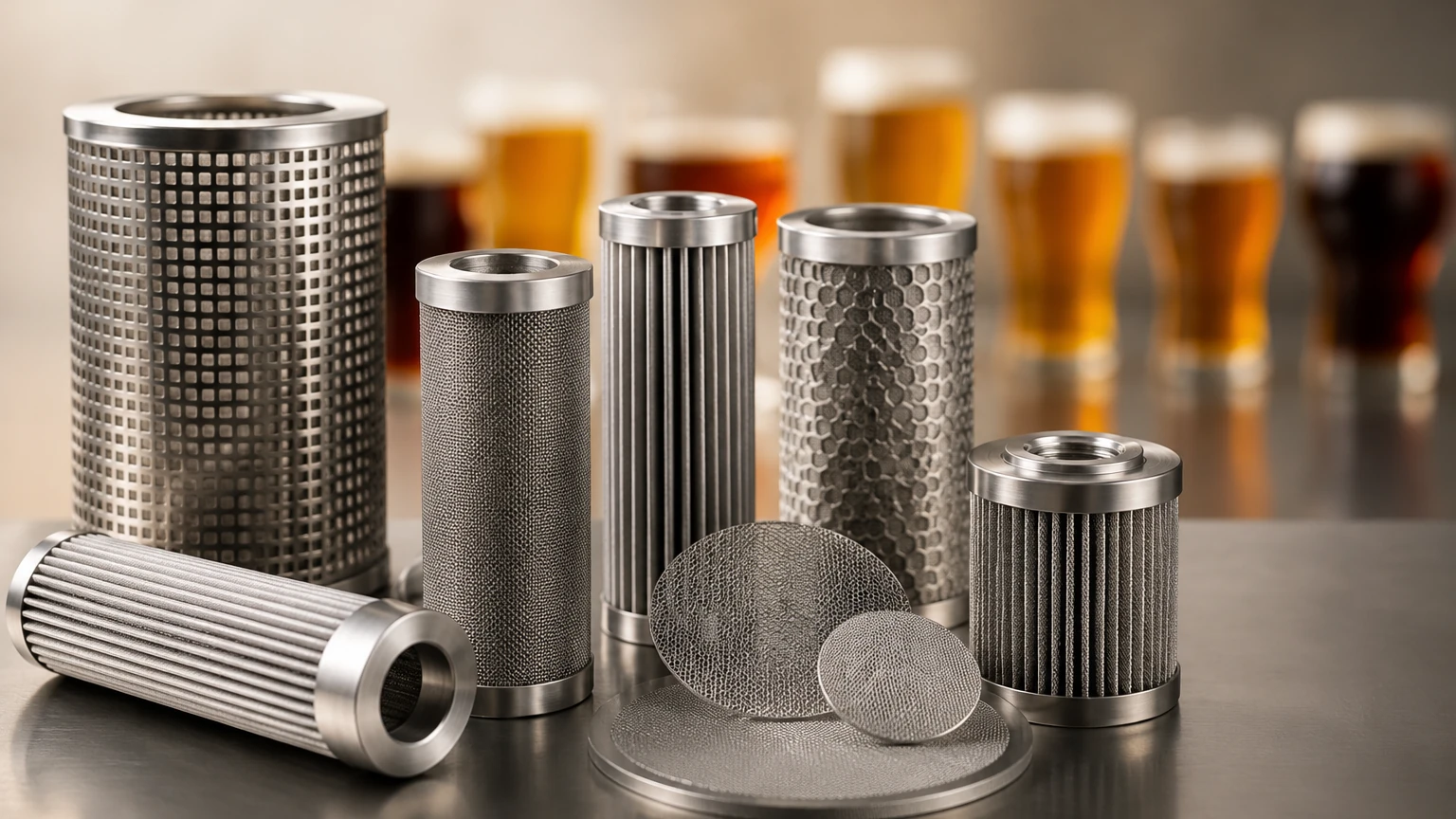
In the demanding environment of a brewery, material selection is not merely a matter of cost but one of hygiene, durability, and chemical resistance. Stainless steel, specifically Grades 304 and 316L, is the material of choice for brewery filtration components.
1. Corrosion Resistance: Breweries use a variety of cleaning agents, including caustic soda (NaOH) and various acids for descaling. Grade 316L stainless steel, with its molybdenum content, offers superior resistance to pitting and crevice corrosion, especially in the presence of chlorides.
2. Thermal Stability: Filtration components must withstand rapid temperature swings, from cold stabilization temperatures (near 0°C) to Clean-In-Place (CIP) temperatures (up to 85°C or higher). Stainless steel maintains its structural integrity and sealing properties across this entire range.
3. Hygienic Design: Stainless steel filters can be manufactured with high-quality surface finishes (Ra < 0.8 μm). This smoothness prevents microbial attachment and ensures that the CIP process is effective in removing all organic residues.
4. Sustainability and Reusability: Unlike disposable plastic or paper-based media, stainless steel wire mesh filters can be cleaned and reused for years, significantly reducing the environmental footprint and long-term operational costs of the brewery.
For those evaluating specific component requirements or seeking technical support for custom filtration designs, reviewing the Main Page of a specialized manufacturer can provide essential data on material grades and configuration options.
Engineering Considerations: Flow, Pressure, and Maintenance
Designing a brewery filtration system requires careful calculation of several engineering parameters to ensure consistent performance and prevent equipment damage.
Differential Pressure (ΔP)
As a filter captures solids, the pressure drop across the medium increases. Engineers must monitor the differential pressure to determine when a filter requires cleaning or replacement. Exceeding the maximum rated ΔP can lead to "breakthrough," where particles are forced through the medium, or structural collapse of the filter element. Stainless steel cartridges are valued for their high collapse pressure ratings, providing a safety margin that polymer filters cannot match.
Flux and Flow Velocity
Flux refers to the flow rate per unit area of the filter medium. In brewery filtration, maintaining a low and consistent flux is often better for filtration efficiency, as high velocities can deform soft particles (like yeast) and push them through the pores. Sizing the filter housing correctly to provide ample surface area is a key engineering task.
Clean-In-Place (CIP) Integration
To maintain hygiene, filtration systems must be fully integrated into the brewery's CIP circuit. The design of the filter housing and the element itself must eliminate "dead zones" where bacteria could proliferate. Forward-flow and back-flow cleaning cycles should be established based on the manufacturer’s recommendations to ensure the filter medium is restored to its original permeability.
Customization and OEM Solutions in Brewery Filtration
Every brewery has a unique layout and specific production goals, which often necessitates customized filtration solutions. Standard off-the-shelf filters may not always fit the specific flow requirements or space constraints of a specialized craft brewery or a high-volume industrial plant.
Customization options often include:
* Bespoke Micron Ratings: Engineering specific mesh weaves to target particular particle sizes unique to a brewery’s recipe.
* Custom End-Cap Configurations: Ensuring compatibility with existing housings, whether they use 222, 226, or flat-gasket connections.
* Reinforced Structures: Adding internal cores or external cages to filter cartridges to handle high-viscosity fluids or high-pressure surges.
Working with an OEM manufacturer allows breweries to develop filtration components that are tailored to their specific process conditions, rather than forcing the process to adapt to the limitations of standard hardware.
Total Cost of Ownership (TCO) Analysis
When purchasing filtration equipment, engineers must look beyond the initial capital expenditure (CAPEX). The total cost of ownership includes the cost of replacement media, labor for change-outs, cleaning chemicals, and the potential cost of product loss due to filtration failure.
While stainless steel filtration elements have a higher initial cost than disposable alternatives, their longevity and reusability often result in a much lower TCO over a 24-to-36-month period. Furthermore, the reduction in waste disposal costs and the increased reliability of the production line contribute to a more sustainable and profitable operation.
Conclusion
Brewery filtration is a sophisticated engineering challenge that sits at the intersection of microbiology and fluid mechanics. By selecting high-quality stainless steel filtration components and adhering to rigorous engineering standards for flow and pressure management, breweries can ensure the production of consistent, high-quality beer. Whether the goal is removing large-scale trub or achieving microbial stability, the right filtration strategy is a fundamental pillar of modern brewing excellence. For further technical specifications and to explore customized filtration options, technical teams should consult with experienced manufacturers to ensure their equipment meets the specific demands of their brewing environment.
