


Purifier Muffler
In industrial pneumatic and gas processing systems, the management of exhaust noise and particulate discharge is a critical engineering requirement. A purifier muffler serves as a specialized component designed to address these two needs simultaneously. By integrating noise attenuation technology with high-efficiency filtration media, such as sintered stainless steel or multi-layer wire mesh, these components ensure that equipment operates within safety noise thresholds while preventing the release of oil mist, moisture, or solid contaminants into the surrounding environment.
For engineers and procurement teams, selecting the right purifier muffler involves a detailed understanding of fluid dynamics, material compatibility, and the specific filtration requirements of the application. As a professional manufacturer, Kaifil provides customized stainless steel filtration solutions that address the rigorous demands of modern industrial environments. To explore the full range of available filtration technologies, technical professionals can visit the Main Page for detailed product specifications.
The Dual Role of the Purifier Muffler
The primary function of a purifier muffler is to provide a controlled path for compressed air or gas to exit a system. In doing so, it must perform two distinct tasks: sound suppression and fluid purification.
Noise Attenuation
Industrial exhaust, particularly from pneumatic valves and cylinders, can reach decibel levels that exceed OSHA safety standards. The purifier muffler reduces this noise through the principle of diffusion. As the high-velocity gas enters the muffler, it passes through a porous medium—typically sintered metal or wire mesh—which breaks the single high-energy stream into thousands of smaller, lower-velocity streams. This dissipation of energy significantly reduces the sound pressure level (SPL) without causing excessive backpressure that could stall the machinery.
Contaminant Filtration
Unlike a standard pneumatic silencer, a purifier muffler is engineered with a specific micron rating. In many industrial processes, exhaust air is not clean; it may contain lubricating oil from the compressor, metallic wear particles from the cylinder, or moisture. The filtration layer within the muffler captures these contaminants, preventing them from atomizing into the workspace. This is particularly vital in "clean" industries such as pharmaceutical manufacturing, food processing, and electronics assembly, where ambient air quality is strictly regulated.
Technical Construction and Materials
The performance of a purifier muffler is largely dictated by its construction materials. While plastic or felt mufflers are common in light-duty applications, industrial-grade solutions almost exclusively utilize stainless steel for its superior durability and chemical resistance.
Sintered Stainless Steel Media
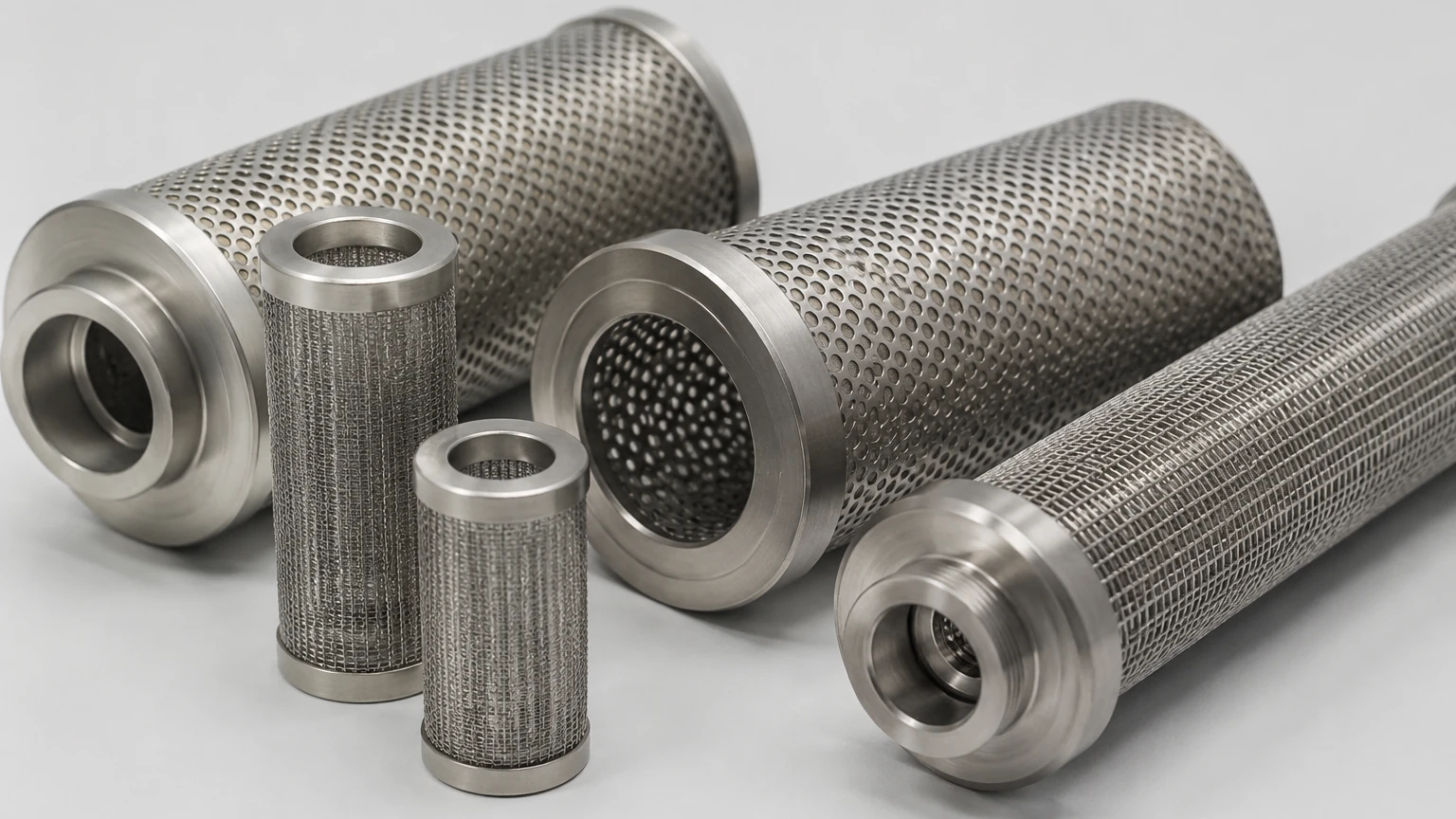
Sintered metal is a preferred material for high-performance purifier mufflers. The process involves taking stainless steel powder or fine wire mesh and heating it below its melting point in a controlled atmosphere. This creates molecular bonds between the particles, resulting in a rigid, porous structure.
* High Porosity: Sintered structures can be engineered with precise porosity levels, allowing for high flow rates while maintaining structural integrity.
* Thermal Stability: Stainless steel (typically 304 or 316L) can withstand extreme temperatures that would melt or degrade synthetic materials.
* Corrosion Resistance: In chemical processing or offshore applications, the ability to resist oxidation and chemical attack is essential for a long service life.
Multi-Layer Wire Mesh
For applications requiring higher flow volumes or specific mechanical strength, multi-layer wire mesh is employed. By vacuum-sintering multiple layers of stainless steel wire cloth together, manufacturers can create a medium that offers the fine filtration of a mesh with the mechanical support of a perforated plate. This structure is highly resistant to pressure shocks, which are common in high-frequency pneumatic cycling.
Engineering Selection Criteria
When specifying a purifier muffler for an industrial system, engineers must evaluate several performance metrics to ensure the component does not become a bottleneck or a point of failure.
1. Pressure Drop (Delta P)
The most significant concern when adding a filter or muffler to an exhaust port is the resulting backpressure. If the purifier muffler is too restrictive, the exhaust stroke of a pneumatic cylinder will slow down, increasing cycle times and reducing overall machine efficiency. Engineers must calculate the maximum allowable pressure drop at the required flow rate (SCFM or m³/min) and select a muffler with sufficient surface area to accommodate that flow.
2. Filtration Efficiency and Micron Rating
Determining the required micron rating depends on the nature of the contaminants. If the goal is simply to catch large particulates, a 40-micron to 100-micron filter may suffice. However, if the muffler is intended to capture oil mist or fine aerosols, a much tighter rating—potentially down to 5 or 10 microns—may be necessary. It is important to note that as the micron rating decreases, the potential for pressure drop increases, requiring a larger physical muffler size to maintain flow.
3. Connection Type and Sizing
Purifier mufflers are available in various connection styles, including NPT (National Pipe Thread), BSP (British Standard Pipe), and metric threads. Ensuring a leak-proof seal is critical, especially in systems where the exhaust gas is hazardous or expensive. The housing of the muffler should also be sized to fit within the physical constraints of the machine without interfering with other components.
4. Environmental Compatibility
Engineers must consider the external environment. Is the muffler exposed to caustic cleaning agents in a food-grade facility? Is it located in a high-vibration area? Stainless steel construction provides the necessary resilience for these demanding conditions, whereas standard brass or plastic components might fail prematurely.
Applications Across Key Industries
The versatility of the purifier muffler makes it a staple in various sectors where air quality and noise control are paramount.
Chemical and Petrochemical Processing
In these environments, gases vented from process lines often contain corrosive vapors. A stainless steel purifier muffler ensures that these gases are diffused safely while capturing any liquid droplets that might have entrained in the gas stream. The use of 316L stainless steel is often mandatory here to prevent pitting and stress-corrosion cracking.
Food and Beverage Production
Cleanliness is the highest priority in food production. Pneumatic actuators used in packaging and sorting lines must not exhaust oil-laden air near the product. Purifier mufflers with high-efficiency filtration layers trap these lubricants. Furthermore, the ability to clean and sterilize stainless steel components makes them ideal for facilities that follow strict HACCP (Hazard Analysis and Critical Control Points) protocols.
Pharmaceutical and Laboratory Environments
Precision and contamination control are vital in pharmaceutical manufacturing. Exhaust from vacuum pumps and laboratory equipment must be filtered to prevent the cross-contamination of batches. The purifier muffler acts as a final barrier, ensuring that the air returned to the cleanroom environment meets the required particulate standards.
Hydraulic and Heavy Machinery
In hydraulic power units, air breathers often incorporate muffler and purifier functions to allow the reservoir to "breathe" as fluid levels change. This prevents dust from entering the hydraulic oil while muffling the sound of the air movement.
Maintenance and Performance Monitoring
To maintain the efficiency of an industrial system, the purifier muffler must be included in regular maintenance schedules. Unlike simple silencers, which may only need occasional inspection, the filtration aspect of a purifier muffler means it will eventually become loaded with contaminants.
Signs of Clogging
* Decreased Machine Speed: If a pneumatic cylinder begins to move slower than its set parameters, it is often a sign of high backpressure caused by a clogged exhaust muffler.
* Increased Noise: In some cases, a saturated filter media can lead to "whistling" or an increase in noise levels as air is forced through a restricted path at higher velocities.
* Visible Oil or Moisture: If liquid begins to drip from the muffler housing, the internal media may be saturated beyond its holding capacity.
1
Cleaning vs. Replacement
One of the primary advantages of stainless steel purifier mufflers is their cleanability. Unlike disposable plastic filters, stainless steel elements can often be restored through ultrasonic cleaning, backflushing, or chemical cleaning. This reduces the total cost of ownership (TCO) and minimizes industrial waste. However, if the media has suffered mechanical damage or if the pores are permanently blinded by carbonized oils, replacement is necessary to protect the system.
The Advantage of Customization
Standard off-the-shelf mufflers often fail to meet the specific requirements of complex industrial systems. Customization allows engineers to specify the exact balance of noise reduction and filtration efficiency needed for their unique application.
Kaifil specializes in the OEM production of these components, offering flexibility in material selection, micron ratings, and structural design. Whether an application requires a compact design for tight spaces or a high-capacity unit for large-scale exhaust systems, custom-engineered solutions ensure that the muffler performs optimally throughout its lifecycle. By focusing on precision manufacturing, Kaifil helps technical teams achieve reliable results in the most demanding filtration scenarios.
Conclusion
The purifier muffler is an essential component for any industrial system that relies on gas or air exhaust. By combining the physics of sound attenuation with the precision of stainless steel filtration, these devices protect both personnel and equipment. When selecting a muffler, engineers must look beyond simple noise reduction and consider the long-term impacts of pressure drop, material durability, and filtration efficiency.
For those seeking high-quality, durable filtration components tailored to specific industrial needs, reviewing the options available from a specialized manufacturer is the first step toward system optimization. Detailed information on custom stainless steel filters and their applications can be found on the Main Page, providing the technical foundation necessary for informed purchasing decisions.
