


Candle Filter for Water
In industrial liquid-solid separation, the candle filter for water serves as a critical component for achieving high-clarity discharge and efficient solids recovery. These filters, characterized by their vertical, cylindrical shape, are designed to maximize filtration surface area within a compact footprint. For engineers and procurement teams in the chemical, pharmaceutical, and food and beverage sectors, selecting the right candle filter involves a deep understanding of material properties, structural integrity, and the specific dynamics of water-based process fluids.
Industrial water filtration often demands systems that can handle high flow rates while maintaining strict micron ratings. Unlike disposable cartridge filters, stainless steel candle filters are engineered for longevity and cleanability, making them a preferred choice for demanding industrial environments where downtime and waste reduction are primary concerns.
Technical Design and Principles of Candle Filters
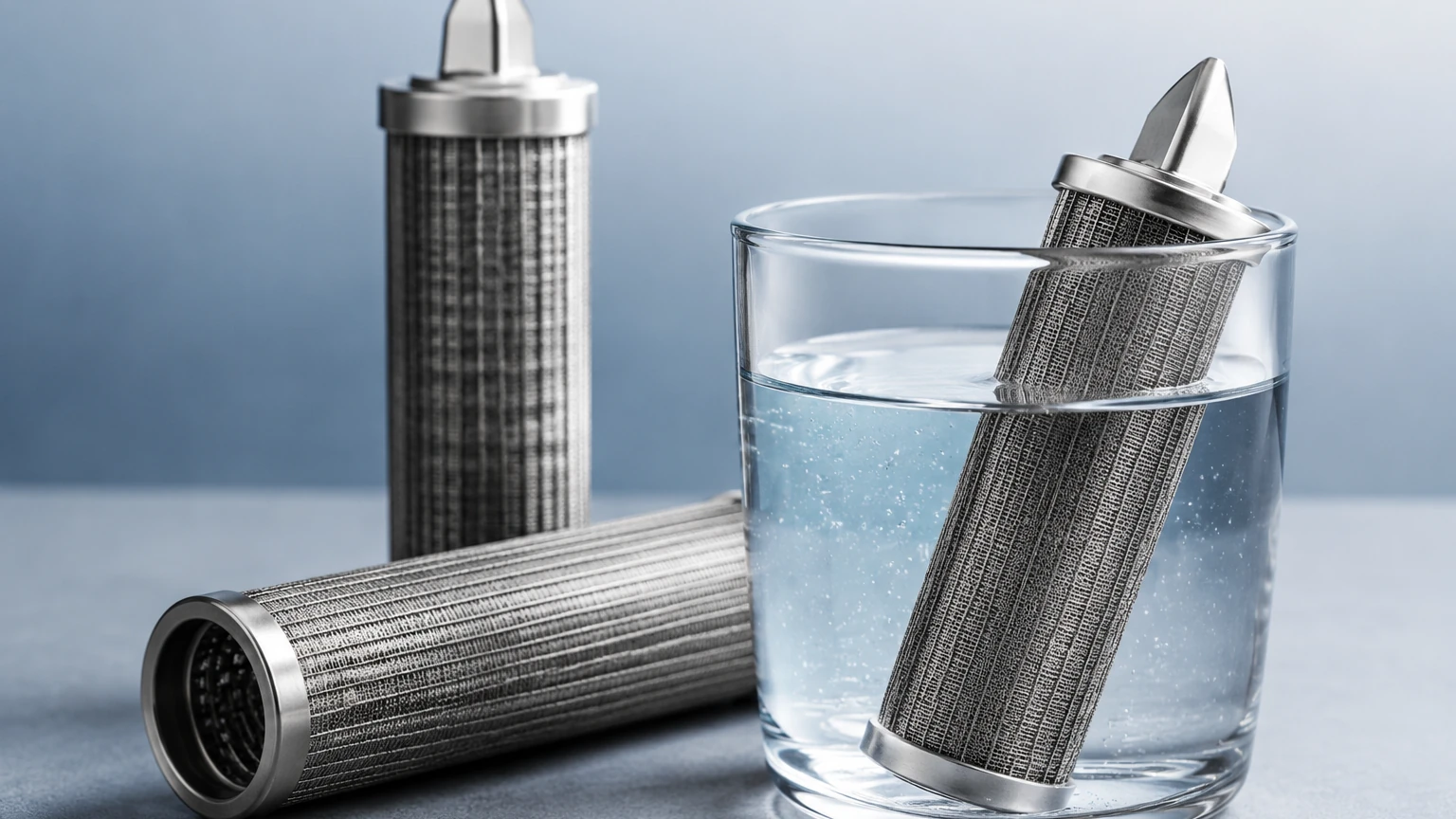
A candle filter for water typically consists of a series of cylindrical filter elements—the "candles"—mounted vertically within a pressure vessel. Each candle is composed of a perforated or grooved support core wrapped with a filtration medium, such as stainless steel wire mesh or sintered metal.
The filtration process occurs as the pressurized water flows from the outside of the candle toward the center. Suspended solids are trapped on the outer surface of the filter medium. In many industrial applications, these filters are designed to facilitate the formation of a "filter cake." This cake itself acts as a secondary filtration layer, often improving the capture of fine particles that might otherwise pass through the initial mesh.
One of the defining features of the candle filter is its ability to operate in batch cycles. Once the pressure drop across the filter reaches a predetermined limit, or the cake reaches a specific thickness, the flow is stopped, and the filter undergoes a cleaning or discharge cycle. This is often achieved through backpulsing with gas or backwashing with clean water, which dislodges the solids from the candle surface.
Material Selection for Industrial Water Environments
When specifying a candle filter for water, material selection is the most significant factor affecting durability and performance. Stainless steel is the industry standard due to its corrosion resistance and mechanical strength.
304 vs. 316L Stainless Steel
For standard industrial water applications, Type 304 stainless steel provides adequate corrosion resistance and structural integrity. However, in environments involving brackish water, high chloride concentrations, or chemical cleaning agents, Type 316L is typically required. The addition of molybdenum in 316L enhances resistance to pitting and crevice corrosion, which is essential for maintaining the longevity of the filter medium in aggressive water chemistries.
Wire Mesh vs. Sintered Metal
The choice of filter medium depends on the required filtration accuracy and the nature of the contaminants:
* Woven Wire Mesh: Ideal for surface filtration where particles are relatively uniform. It offers high porosity and is easy to clean through backwashing.
* Sintered Metal Mesh: Created by diffusion-bonding multiple layers of wire mesh, this medium provides superior mechanical strength and precise pore size distribution. It is resistant to high pressures and thermal shocks, making it suitable for high-temperature water filtration.
* Wedge Wire: Often used for coarser filtration, wedge wire candles are highly resistant to clogging and provide excellent structural support for high-pressure backwashing cycles.
Engineering Considerations: Flow Rates and Micron Ratings
Properly sizing a candle filter for water requires a balance between filtration efficiency and hydraulic performance. Engineers must evaluate several key parameters during the design phase.
Micron Rating and Efficiency
Filtration ratings are generally classified as nominal or absolute. A nominal rating indicates the filter's ability to retain a majority of particles at a certain size, while an absolute rating guarantees the retention of essentially all particles at that size. For critical water treatment processes, such as the protection of reverse osmosis (RO) membranes or the filtration of bottled water, absolute-rated stainless steel mesh is often necessary to ensure consistent water quality.
Pressure Drop (Delta P)
The initial pressure drop across a clean candle filter should be minimized to allow for a longer filtration cycle before cleaning is required. Factors influencing pressure drop include the viscosity of the water (which changes with temperature), the flow velocity, and the open area of the filter medium. A well-designed candle filter maximizes the open area without compromising the structural integrity of the candle under high differential pressures.
Flux Rate
The flux rate—the volume of water passing through a unit area of filter medium per unit of time—must be carefully managed. High flux rates can lead to premature clogging and may force flexible contaminants through the mesh. Conversely, a flux rate that is too low may result in an oversized and unnecessarily expensive filtration system.
Applications in Industrial Water Treatment
The versatility of the candle filter for water allows it to be utilized across various stages of industrial processing.
Process Water and Cooling Loops
In manufacturing facilities, water is used for cooling, heating, and as a solvent. Candle filters are used to remove scale, rust, and organic debris from cooling tower loops, protecting heat exchangers from fouling and maintaining system efficiency.
Food and Beverage Production
In the food and beverage industry, water quality is directly linked to product safety and flavor. Stainless steel candle filters provide a hygienic solution for removing particulates from ingredient water. Because they can be sterilized using steam-in-place (SIP) or cleaned with caustic chemicals, they meet the stringent sanitary requirements of the industry.
Pharmaceutical and Chemical Processing
Chemical manufacturers utilize candle filters for the recovery of expensive catalysts from water-based reactions. In pharmaceutical applications, they serve as pre-filters for high-purity water systems, ensuring that downstream carbon filters or deionization resins are not prematurely fouled by suspended solids.
Maintenance, Cleaning, and Operational Longevity
One of the primary advantages of a stainless steel candle filter for water is that it is a permanent asset rather than a consumable. However, maintaining its performance requires a disciplined approach to cleaning.
Backwashing and Backpulsing
Automated candle filter systems often use a backwash cycle where clean water or air is forced through the filter in the reverse direction. This action expands the filter medium slightly and dislodges the accumulated solids. The effectiveness of this process depends on the structural design of the candle; it must be able to withstand the reverse pressure without collapsing or deforming.
Chemical Cleaning (CIP)
Over time, some contaminants—such as oils, fats, or mineral scale—may not be fully removed by mechanical backwashing. In these cases, Clean-in-Place (CIP) procedures are used. The filter is circulated with specialized cleaning solutions to dissolve the stubborn residues. The chemical compatibility of the stainless steel and the gaskets must be verified to prevent damage during these cycles.
Inspection and Replacement Cycles
While the stainless steel elements are durable, they should be inspected periodically for signs of mechanical wear, mesh blinding, or compromised seals. In most industrial water applications, a high-quality candle filter can last for several years if cleaned and maintained according to manufacturer specifications.
Selection Criteria for Engineers and Purchasing Teams
When sourcing a candle filter for water, it is essential to move beyond basic dimensions and focus on the technical requirements of the specific application. To ensure the most effective filtration solution, engineers should confirm the following details with the manufacturer:
1. Fluid Characteristics: Temperature, pH levels, and the chemical composition of the water.
2. Contaminant Profile: The concentration of solids (ppm), particle size distribution, and the physical nature of the solids (e.g., crystalline, fibrous, or gelatinous).
3. Operational Parameters: Maximum operating pressure, required flow rate, and the preferred cleaning method (manual vs. automated backwash).
4. Compliance Requirements: Necessity for FDA, 3A, or other industry-specific certifications.
By providing detailed application data, technical teams can work with manufacturers to develop customized filtration components that optimize performance and reduce the total cost of ownership. For a comprehensive look at available filtration technologies and customized engineering support, professionals can Review product options and application support on the Kaifil website.
Conclusion
The candle filter for water remains a cornerstone of industrial filtration due to its efficiency, small footprint, and reusable nature. Whether it is used for protecting sensitive downstream equipment or ensuring the purity of a final product, the performance of the system relies on the precision of its components. By selecting high-quality stainless steel materials and adhering to rigorous engineering standards, industrial operators can achieve reliable, long-term filtration performance that meets the demands of modern manufacturing. Understanding the nuances of micron ratings, pressure dynamics, and cleaning protocols is essential for any technical professional tasked with managing industrial water systems.
