


Cartridge Collector Filters
In industrial environments where air quality, process purity, and environmental compliance are paramount, cartridge collector filters serve as the primary line of defense. These specialized filtration components are engineered to capture airborne dust, fumes, and particulate matter from industrial exhaust streams. Unlike traditional baghouse filters, cartridge collectors utilize pleated media to provide a significantly higher surface area within a compact footprint, making them indispensable for modern manufacturing facilities facing space constraints and stringent emission standards.
For engineers and procurement professionals, selecting the right cartridge collector filters involves more than just matching dimensions. It requires a deep understanding of material science, fluid dynamics, and the specific thermal and chemical challenges of the application. As a professional manufacturer, Kaifil specializes in providing high-performance stainless steel filtration solutions that address the limitations of standard synthetic media, particularly in demanding industrial sectors like chemical processing and food production.
The Engineering Behind Cartridge Collector Filters
At its core, a cartridge collector filter is a cylindrical or conical component designed for surface filtration. The efficiency of these filters is largely determined by the geometry of the pleats and the characteristics of the filtration media. By pleating the material, manufacturers can increase the effective filtration area by up to 20 to 30 times compared to a flat sheet of the same diameter.
In industrial dust collection systems, the air-to-cloth ratio (or filtration velocity) is a critical metric. A lower air-to-cloth ratio generally leads to higher efficiency and longer filter life because the velocity of the air passing through the media is reduced, allowing for better particulate capture and easier cleaning. Cartridge collector filters allow for these lower ratios without requiring the massive housing structures associated with traditional baghouses.
Surface vs. Depth Filtration
Most cartridge collector filters operate on the principle of surface filtration. Particles are captured on the outermost layer of the media, forming a "dust cake." This dust cake actually assists in the filtration process by acting as a secondary filter bed. However, if the particles penetrate too deeply into the media—a phenomenon known as depth loading—the filter becomes blinded, leading to a permanent increase in pressure drop that cannot be reversed by standard cleaning cycles. Engineering the media to ensure surface loading is essential for maintaining the longevity of the system.
Material Selection: Beyond Standard Synthetic Media
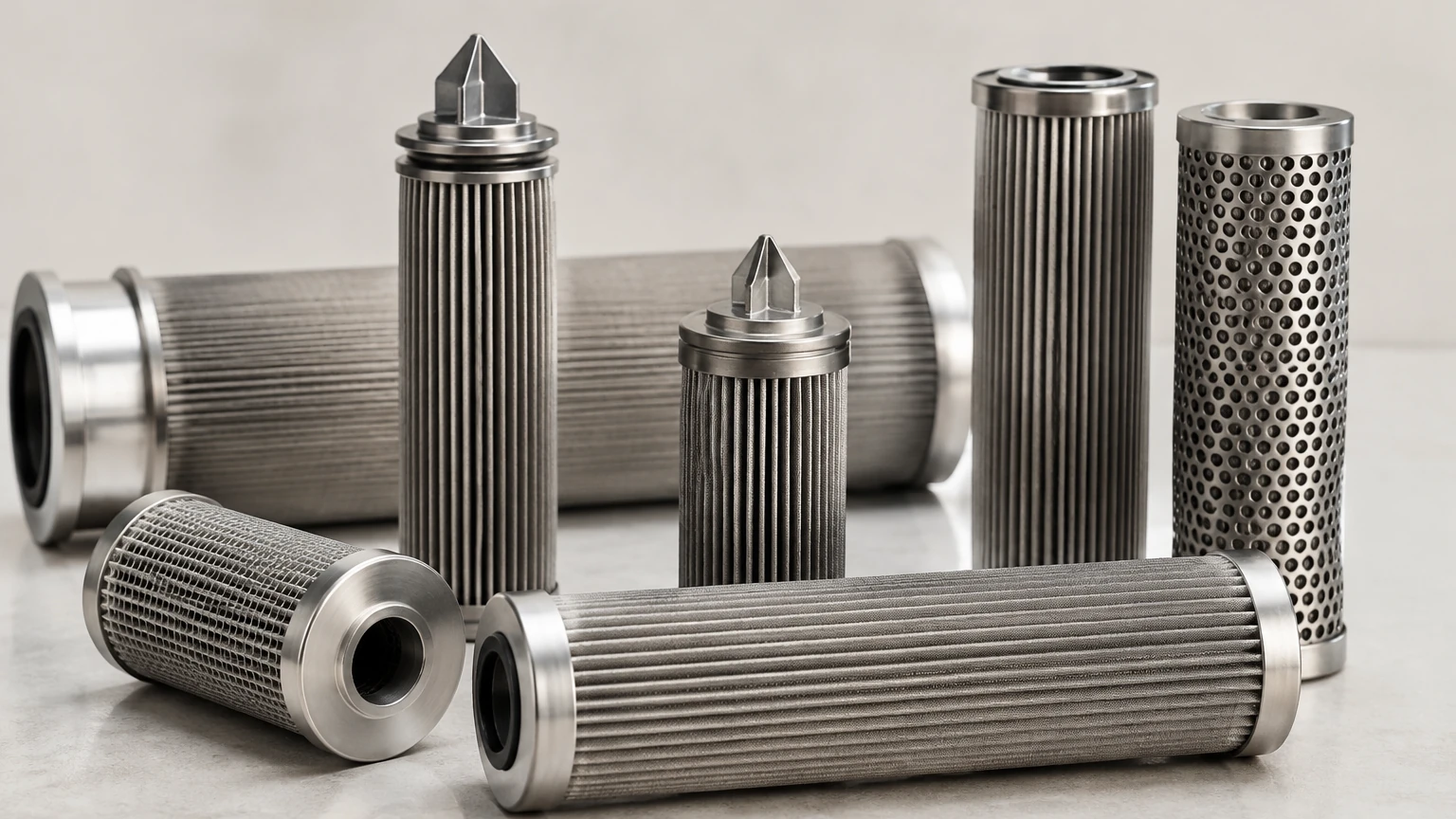
While many standard cartridge collector filters utilize cellulose or polyester blends, high-demand industrial processes often require more robust materials. Stainless steel wire mesh and sintered metal components are increasingly specified for applications where synthetic materials fail.
The Advantages of Stainless Steel in Filtration
In environments involving high temperatures, corrosive gases, or strict hygiene requirements (such as the pharmaceutical or food and beverage industries), stainless steel is the material of choice. Kaifil provides custom stainless steel filtration solutions that offer several technical advantages:
1. Thermal Stability: Standard polyester filters often have a maximum operating temperature of around 275°F (135°C). Stainless steel components can withstand temperatures exceeding 800°F, depending on the alloy (e.g., 304 or 316L).
2. Chemical Compatibility: Stainless steel resists degradation from solvents, acids, and alkaline cleaning agents, which would quickly compromise the structural integrity of synthetic fibers.
3. Mechanical Strength: In high-pressure applications or systems prone to pressure surges, the rigid structure of a metal filter prevents pleat collapse and maintains consistent filtration accuracy.
4. Cleanability: Unlike disposable synthetic cartridges, stainless steel filters can be cleaned and reused multiple times through ultrasonic cleaning, chemical baths, or backwashing, significantly reducing the long-term waste stream.
For more information on material options and engineering support, you can visit the Main Page to review product options and application support.
Key Performance Evaluation Criteria
When evaluating cartridge collector filters for a specific industrial process, engineers must focus on several key performance indicators (KPIs) to ensure system reliability and cost-effectiveness.
Filtration Efficiency and Micron Rating
Filtration efficiency is typically expressed as a percentage of particles captured at a specific micron size. For industrial dust collection, the MERV (Minimum Efficiency Reporting Value) rating is often used, though for precision liquid or gas filtration, absolute vs. nominal ratings are more relevant. It is important to confirm whether the filter maintains its efficiency throughout its lifecycle or if the efficiency fluctuates as the dust cake builds up.
Differential Pressure (Delta P)
Differential pressure is the difference in pressure between the upstream and downstream sides of the filter. A high initial Delta P indicates that the filter media may be too restrictive for the required flow rate, or that the surface area is insufficient. Monitoring Delta P is the primary method for determining when a filter needs cleaning or replacement. Engineering a system to operate within a stable, low Delta P range is crucial for minimizing energy consumption by the system's fan or blower.
Pulse-Jet Cleanability
Most modern cartridge collectors use a pulse-jet cleaning system, where a burst of compressed air is sent down the center of the cartridge to dislodge the dust cake. The effectiveness of this cleaning depends on the structural integrity of the filter. If the pleats are too tightly packed or if the inner core is weak, the pulse of air will not distribute evenly, leading to uneven cleaning and premature filter failure. Precision-manufactured metal cores and outer cages are vital for ensuring the filter can withstand the mechanical stress of thousands of pulse cycles.
Common Risks and Failure Modes
Understanding why cartridge collector filters fail is essential for optimizing system design. Several common risks can lead to unplanned downtime and increased maintenance costs:
* Pleat Crowding: If the pleats are spaced too closely together, the effective filtration area is reduced because the dust cannot reach the bottom of the pleat. This leads to rapid blinding and high pressure drop.
* Abrasion: In processes involving abrasive dust (such as sandblasting or metal grinding), the filter media can be physically worn away. Using protective metal shrouds or reinforced mesh can mitigate this risk.
* Moisture and Oil Contamination: If moisture or oil enters the collector, it can cause the dust cake to turn into a "mud," which is nearly impossible to remove via pulse-jet cleaning. This requires specialized oleophobic or hydrophobic coatings, or a transition to cleanable stainless steel media.
* Structural Collapse: Inadequate support from the inner core can lead to the filter collapsing inward under high differential pressure, allowing unfiltered air to bypass the system and potentially damaging downstream equipment.
Customization and OEM Integration
Every industrial facility has unique requirements based on their specific machinery and environmental constraints. Off-the-shelf cartridge collector filters often fall short when integrated into specialized OEM equipment. Customization allows engineers to specify the exact dimensions, end-cap configurations, and media types required for optimal performance.
Kaifil works closely with global customers to develop customized filtration components. This includes the design of specialized gaskets for leak-proof seals, the selection of specific wire mesh weaves for precise particle retention, and the engineering of reinforced structures for heavy-duty industrial use. By focusing on the specific needs of the application—whether it is hydraulic oil filtration, chemical vapor recovery, or high-temperature dust collection—customized solutions provide a level of reliability that standard products cannot match.
Total Cost of Ownership (TCO) Considerations
While the initial purchase price of a filter is an important factor, the Total Cost of Ownership (TCO) is a much more accurate reflection of the filter's value. TCO includes:
1. Energy Costs: Filters with a higher average Delta P require the system's fan to work harder, significantly increasing electricity consumption over time.
2. Maintenance Labor: The time required for frequent filter changes adds up. Durable filters that last longer or can be cleaned in place reduce labor costs.
3. Disposal Costs: Disposable filters generate significant waste, which may be classified as hazardous depending on the dust being collected. Cleanable stainless steel filters offer a sustainable alternative with lower long-term disposal fees.
4. Production Downtime: The most significant cost is often the lost production time during unplanned filter failures. Investing in high-quality, robust cartridge collector filters is an insurance policy against process interruptions.
Conclusion: Selecting the Right Partner
Choosing the appropriate cartridge collector filters is a technical decision that impacts the efficiency, safety, and profitability of industrial operations. By moving beyond generic solutions and focusing on engineering considerations—such as material compatibility, structural integrity, and cleanability—technical professionals can ensure their systems operate at peak performance.
For engineers looking to optimize their filtration processes, confirming the specific operating parameters—including temperature, chemical exposure, and particle characteristics—is the first step. Partnering with a manufacturer like Kaifil, which offers advanced manufacturing capabilities and extensive experience in stainless steel and custom metal filtration, ensures that the resulting solution is precisely tailored to the application's demands. To explore technical specifications and discuss custom requirements, visiting the Main Page provides access to the necessary resources for informed decision-making in industrial filtration.
