


Cartridge Dust Collection Products
In modern industrial environments, managing airborne particulates is not merely a matter of regulatory compliance but a fundamental requirement for operational efficiency, equipment longevity, and personnel safety. Cartridge dust collection products represent a significant technological evolution from traditional baghouse systems, offering higher filtration efficiency in a more compact physical footprint. For engineers and facility managers in sectors such as chemical processing, pharmaceuticals, and metalworking, selecting the correct filtration components is critical to maintaining system integrity and optimizing the total cost of ownership.
As industrial processes become more specialized, the demand for high-performance filtration media and durable structural components has increased. Whether dealing with fine powders, abrasive dust, or corrosive fumes, the choice of cartridge dust collection products must be informed by a deep understanding of fluid dynamics, material science, and the specific mechanical requirements of the collection system. This guide examines the technical considerations essential for selecting and implementing effective cartridge filtration solutions.
The Mechanics of Cartridge Dust Collection
Cartridge dust collectors operate on the principle of surface filtration, where particulates are captured on the exterior of the filter media. Unlike traditional filter bags, which often rely on the formation of a dust cake within the fabric interstices, cartridge filters utilize pleated media to maximize the available surface area within a defined cylindrical or conical volume.
Pleat Geometry and Air-to-Cloth Ratio
The primary advantage of cartridge dust collection products is their high surface-area-to-volume ratio. By pleating the media, manufacturers can fit significantly more filtration area into a single cartridge than a bag of equivalent size. This design allows for a lower Air-to-Cloth (A/C) ratio, also known as filtration velocity. A lower A/C ratio reduces the speed at which air passes through the media, which in turn minimizes the pressure drop (Delta P) across the filter and enhances the efficiency of particulate capture.
Engineers must carefully evaluate pleat spacing. If pleats are too tightly packed, "bridging" can occur, where dust becomes trapped between the pleats and cannot be dislodged during the cleaning cycle. This leads to a rapid increase in differential pressure and shortened filter life. High-quality cartridge dust collection products often feature structural supports or specialized pleat-locking mechanisms to maintain uniform spacing under high flow conditions.
Pulse-Jet Cleaning Systems
Most modern cartridge collectors utilize a pulse-jet cleaning mechanism. This involves a high-pressure burst of compressed air directed down the center of the cartridge in the opposite direction of the normal airflow. This pulse causes the media to expand rapidly, shedding the accumulated dust cake into a hopper. The effectiveness of this process depends on the structural integrity of the cartridge and the permeability of the media. If the cartridge is not engineered to withstand these repeated mechanical stresses, the media may tear or the end caps may delaminate, leading to system failure.
Material Selection for Industrial Environments
The performance of cartridge dust collection products is heavily dictated by the materials used in their construction. While standard cellulose or polyester media are common in general-purpose applications, demanding industrial environments often require more robust solutions.
Stainless Steel and Metal Filtration Components
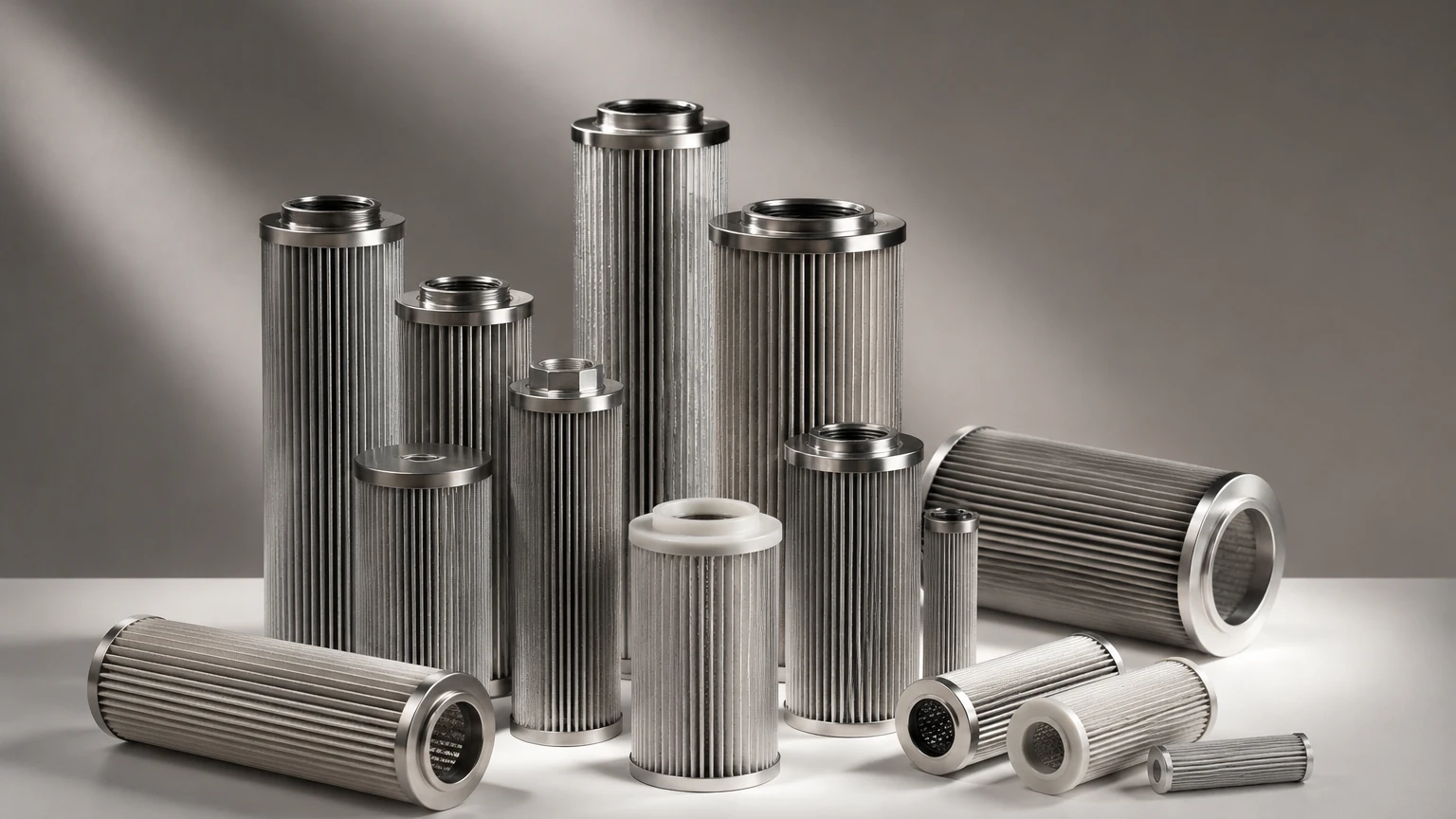
In applications involving high temperatures, corrosive gases, or stringent hygiene requirements (such as food and beverage or pharmaceutical processing), stainless steel filtration components are indispensable. Stainless steel wire mesh and sintered metal fibers provide exceptional mechanical strength and chemical resistance. Unlike synthetic fibers, stainless steel can withstand temperatures exceeding 500°F and is resistant to a wide range of acidic and alkaline environments.
Furthermore, stainless steel cartridges are often cleanable and reusable, offering a sustainable alternative to disposable synthetic filters. For facilities looking to optimize their long-term procurement strategy, investing in durable metal components can significantly reduce the frequency of filter replacements and the associated labor costs. To explore specific material grades and customized metal filtration options, technical professionals can refer to the Main Page for detailed engineering specifications.
Specialized Coatings and Membranes
For fine particulate matter or hygroscopic dust that tends to stick to surfaces, cartridge media may be treated with specialized coatings. PTFE (Polytetrafluoroethylene) membranes are frequently applied to the surface of the media to enhance dust release and provide high-efficiency filtration of sub-micron particles. Other treatments include oleophobic coatings for oily dust and antistatic treatments for explosive dust environments (ATEX compliance).
Key Performance Metrics for Engineers
When evaluating cartridge dust collection products, engineering teams must look beyond the initial purchase price and focus on performance metrics that impact system reliability and energy consumption.
1. Filtration Efficiency (MERV Ratings): The Minimum Efficiency Reporting Value (MERV) scale provides a standardized measure of a filter's ability to capture particles between 0.3 and 10 microns. For industrial dust collection, filters typically range from MERV 11 to MERV 16. In applications requiring ultra-clean air, HEPA-grade cartridges may be necessary.
2. Differential Pressure (Delta P): This is the difference in pressure between the upstream and downstream sides of the filter. A high Delta P indicates that the filter is loaded or that the media is too restrictive, requiring the system's fan to work harder and consume more energy. Monitoring Delta P is the primary method for determining when a cartridge needs cleaning or replacement.
3. Permeability: This refers to the ease with which air passes through the clean media. High permeability allows for higher flow rates but must be balanced against the required filtration efficiency.
4. Structural Integrity: The cartridge must be able to withstand the vacuum or pressure of the system without collapsing. This is where the quality of the inner and outer cores, as well as the bonding of the end caps, becomes critical.
Customization and OEM Considerations
Standard off-the-shelf cartridge dust collection products may not meet the specific requirements of unique industrial processes. In many cases, customized filtration solutions are required to address specific spatial constraints, chemical compatibilities, or flow dynamics.
Engineering for Fit and Function
Customization often begins with the physical dimensions of the cartridge. This includes the outer diameter, inner diameter, and overall length. However, technical customization goes deeper, involving the selection of specific end-cap designs (e.g., flange top, open/closed bottom, bolt-hole configurations) and gasket materials. Gasket selection is particularly important; materials like EPDM, Silicone, or Viton must be chosen based on their compatibility with the process gas and temperature.
OEM Integration
For manufacturers of original equipment (OEMs), integrating high-quality cartridge filters is essential for the performance of their machinery. Custom-engineered filters ensure that the dust collection system is perfectly matched to the volume of dust generated by the process. This prevents under-sizing, which leads to frequent clogging, and over-sizing, which results in unnecessary capital expenditure and wasted floor space.
Lifecycle Management and Total Cost of Ownership
The total cost of ownership (TCO) for cartridge dust collection products includes the initial purchase price, energy costs, maintenance labor, and disposal costs. A common mistake in procurement is prioritizing the lowest unit price, which often leads to higher TCO due to shorter service life and higher energy consumption.
Replacement Cycles
The lifespan of a dust collector cartridge is influenced by the dust loading, the effectiveness of the cleaning system, and the durability of the media. In heavy-duty industrial applications, standard cartridges may need replacement every few months. In contrast, high-quality stainless steel or reinforced synthetic cartridges can last significantly longer. Establishing a predictive maintenance schedule based on Delta P trends can help prevent unplanned downtime and ensure that filters are replaced only when necessary.
Energy Efficiency
Energy consumption is often the largest component of a dust collection system's operating cost. Filters that maintain a low differential pressure throughout their life cycle reduce the load on the system's blower. By selecting cartridge dust collection products with optimized pleat geometry and high-permeability media, facilities can achieve substantial energy savings over time.
Applications Across Industrial Sectors
Cartridge dust collection products are utilized in a diverse array of industries, each with its own set of challenges:
* Chemical Processing: Dealing with corrosive powders and hazardous fumes requires filters with high chemical resistance and excellent containment capabilities. Stainless steel components are frequently used here to prevent media degradation.
* Food and Beverage: Filtration systems must comply with stringent hygiene standards. Cartridges used in these environments often require FDA-compliant materials and designs that eliminate "dead zones" where bacteria could grow.
* Pharmaceuticals: High-potency active pharmaceutical ingredients (APIs) require ultra-high efficiency filtration, often involving HEPA-grade cartridges and "bag-in/bag-out" replacement procedures to protect workers.
* Metalworking and Thermal Spraying: These processes generate fine, often abrasive, metallic dust. Cartridges must be robust enough to handle the abrasive nature of the particles and, in some cases, the high temperatures of the exhaust gas.
Technical Confirmation Before Procurement
Before finalizing the selection of cartridge dust collection products, engineers should confirm several critical data points with their supplier:
* Particle Size Distribution: Understanding the micron size of the dust is essential for selecting the correct MERV rating.
* Gas Stream Chemistry: Are there corrosive elements or high moisture levels that could compromise synthetic media?
* Operating Temperature: Both the continuous and peak temperatures must be within the media's operating range.
* Airflow Volume (CFM): The system must be sized to handle the peak airflow without exceeding the recommended A/C ratio.
By focusing on these technical parameters and opting for high-quality, often customized filtration components, industrial facilities can ensure efficient operation and long-term reliability. For those seeking specialized manufacturing expertise in stainless steel and precision metal filtration, reviewing the available options on the Main Page provides a foundation for developing effective, application-specific solutions.
In conclusion, the selection of cartridge dust collection products is a critical engineering decision that impacts everything from energy efficiency to workplace safety. By understanding the mechanics of pleat design, the benefits of advanced materials like stainless steel, and the importance of total cost of ownership, technical professionals can implement filtration strategies that support both operational goals and environmental responsibilities.
