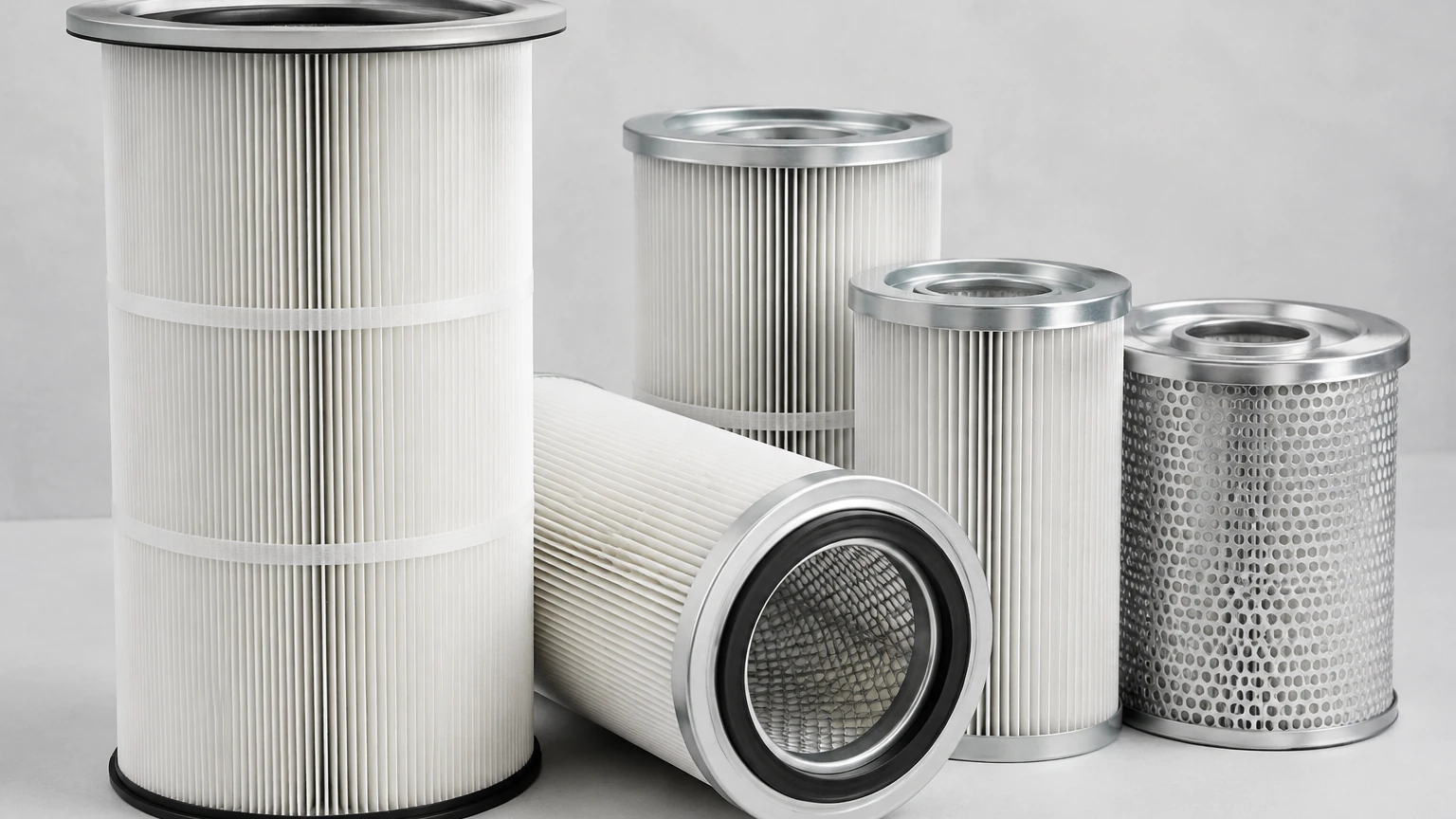
Cartridge Dust Collection
In modern industrial manufacturing, maintaining air quality and managing particulate matter are critical for both operational efficiency and regulatory compliance. Cartridge dust collection represents one of the most effective technologies for capturing fine, airborne contaminants in a compact footprint. Unlike traditional baghouse systems, cartridge collectors utilize pleated filter media to maximize surface area, allowing for higher filtration efficiency and lower air-to-cloth ratios in a smaller physical space. For engineers and facility managers, understanding the technical nuances of cartridge dust collection—from media selection to pulse-jet cleaning dynamics—is essential for optimizing system performance and controlling the total cost of ownership.
Fundamentals of Industrial Cartridge Dust Collection
Cartridge dust collection systems are designed to remove dry, flowable dust and fumes from industrial processes. The primary advantage of these systems lies in their pleated design. By folding the filter media into a series of pleats, manufacturers can pack a significantly larger filtration surface area into a single cartridge compared to a standard filter bag of the same dimensions. This increased surface area allows the system to handle higher volumes of air while maintaining a low face velocity, which is the speed at which air passes through the media.
In a typical operation, dust-laden air enters the collector housing, where it is directed toward the filter cartridges. As the air passes through the media, the particles are trapped on the surface or within the fibers, while the cleaned air exits through the center of the cartridge into the plenum and is either recirculated or exhausted. The effectiveness of this process depends heavily on the particle size distribution of the dust and the specific characteristics of the filter media used.
Key Engineering Considerations for Filter Media Selection
Selecting the appropriate media is the most critical decision in designing or maintaining a cartridge dust collection system. The choice of material directly impacts filtration efficiency, pressure drop, and the lifespan of the components.
1. Cellulose and Blended Media: Often used for general-purpose applications, cellulose fibers are cost-effective but can be susceptible to moisture and high temperatures. Blending cellulose with synthetic fibers like polyester can improve durability and resistance to humidity.
2. Spunbond Polyester: This synthetic media offers excellent structural integrity and moisture resistance. It is often used in applications involving abrasive dust or where the filters require periodic washing.
3. Nanofiber Coatings: Applying a layer of extremely fine fibers (nanofibers) to the surface of a base substrate significantly enhances surface filtration. This technology captures sub-micron particles before they can penetrate deep into the media, making the pulse-cleaning process more effective and extending the filter's life.
4. Stainless Steel Wire Mesh: In specialized industrial environments involving extreme temperatures, high pressure, or corrosive chemical vapors, traditional fabric or paper-based media may fail. Stainless steel mesh cartridges provide the necessary mechanical strength and chemical resistance to operate where synthetic materials degrade. These are often custom-engineered to meet specific micron ratings while ensuring long-term structural stability.
Evaluating Performance: Air-to-Cloth Ratio and Pressure Drop
When specifying a system for cartridge dust collection, engineers must calculate the Air-to-Cloth (A/C) ratio, also known as the filtration velocity. This is the ratio of the volume of air entering the collector (in Cubic Feet per Minute, or CFM) to the total square footage of the filter media.
A common mistake in system design is overestimating the capacity of the cartridges, leading to an excessively high A/C ratio. When the velocity of air through the media is too high, dust particles are driven deep into the substrate—a phenomenon known as depth loading—making it difficult for the cleaning system to dislodge them. This results in a rapid increase in differential pressure (pressure drop), which forces the system fan to work harder, increasing energy consumption and shortening the interval between filter replacements.
Monitoring the pressure drop across the filter bank is the primary method for assessing system health. A stable, low pressure drop indicates that the cleaning cycle is effectively removing the dust cake, while a steadily rising baseline pressure suggests that the filters are becoming blinded or that the A/C ratio is misaligned with the dust load.
Pulse-Jet Cleaning Systems and Maintenance Cycles
Most modern cartridge collectors utilize an automated pulse-jet cleaning system to maintain continuous operation. This system uses a high-pressure blast of compressed air, directed down the center of the cartridge in the opposite direction of the normal airflow. The pulse creates a shockwave that causes the pleated media to expand slightly, dislodging the accumulated dust cake, which then falls into a hopper for collection.
The efficiency of pulse cleaning is influenced by several factors, including the air pressure (typically 60 to 90 PSI), the duration of the pulse, and the design of the venturi or nozzle. If the pulse is too weak, the dust cake remains; if it is too frequent or too strong, it can damage the media or cause "re-entrainment," where the dislodged dust is immediately sucked back onto the adjacent filter.
From a maintenance perspective, the goal is to achieve a "steady state" where the dust cake is thick enough to assist in filtration (as the cake itself acts as a filter) but thin enough to prevent excessive airflow resistance. For technical professionals, reviewing product options and application support on the Main Page can provide deeper insights into how specific cartridge designs interact with varied cleaning configurations.
Addressing High-Temperature and Corrosive Environments
Standard cartridge dust collection systems often struggle in heavy industrial sectors like chemical processing or metal smelting, where gas streams can exceed 250°F (121°C) or contain acidic components. In these scenarios, the structural integrity of the cartridge becomes a safety and performance concern.
For these demanding applications, stainless steel filtration components are often the preferred solution. Unlike polymer-based cartridges that may soften or melt, stainless steel maintains its shape and filtration accuracy under thermal stress. Furthermore, in pharmaceutical or food-grade applications, the ability to sanitize or chemically clean the filter components without degrading the material is a significant advantage. Engineering teams must confirm the compatibility of the gasket materials, adhesives, and end caps with the process environment to ensure the entire cartridge assembly can withstand the operational rigors.
Customization and OEM Solutions for Dust Collection Systems
Industrial processes are rarely identical, and off-the-shelf filtration products may not always meet the specific requirements of a unique workflow. Customization in cartridge dust collection involves more than just adjusting the physical dimensions of the filter. It encompasses the engineering of the pleat pack density, the selection of specialized coatings (such as oleophobic or antistatic treatments), and the design of reinforced inner cores to prevent cartridge collapse under high vacuum conditions.
Manufacturers like Kaifil specialize in providing these customized solutions, working closely with OEM partners to develop filtration components that are optimized for specific housing designs and particulate types. Whether it is a unique mounting flange for a pharmaceutical cleanroom or a high-durability mesh for hydraulic oil mist collection, custom engineering ensures that the filtration system does not become a bottleneck in production.
Total Cost of Ownership (TCO) Considerations
When evaluating cartridge dust collection options, the initial purchase price is only one component of the total cost. A comprehensive TCO analysis should include:
* Energy Consumption: Systems with lower operating pressure drops require less fan power, leading to significant electricity savings over the life of the system.
* Compressed Air Usage: Efficient pulse-cleaning systems reduce the demand on plant air compressors.
* Labor and Downtime: High-quality cartridges that last longer reduce the frequency of filter change-outs, which are labor-intensive and often require process downtime.
* Disposal Costs: In some industries, used filters are considered hazardous waste. Longer-lasting filters reduce the volume of waste generated.
By investing in precision-engineered filtration components, companies can often achieve a lower TCO despite a higher initial capital outlay. The durability and reliability of the filter media are the primary drivers of these long-term savings.
Conclusion
Effective cartridge dust collection is a balance of mechanical design, material science, and operational management. By focusing on the technical requirements of the specific application—such as particle size, temperature, and chemical exposure—engineers can select filtration solutions that provide consistent performance and protect both equipment and personnel. As industrial standards for air purity continue to tighten, the role of high-performance, customized filtration components will only become more vital in maintaining competitive and compliant manufacturing operations.