


Cartridge Filter Pes
In the landscape of industrial liquid processing, the selection of filtration media is a critical engineering decision that impacts product purity, operational efficiency, and long-term cost-effectiveness. Among the various polymeric membranes available, the cartridge filter PES (polyethersulfone) has emerged as a standard for high-flow, sterile, and low-protein-binding applications. Engineers and procurement teams must understand the technical nuances of PES membranes, ranging from their asymmetric pore structure to their chemical compatibility profiles, to ensure they meet the rigorous demands of sectors like pharmaceuticals, food and beverage, and microelectronics.
While many industrial processes rely on the durability of stainless steel components, which can be explored further on the Main Page, the specific role of PES cartridges in fine filtration and sterilization is irreplaceable in certain fluid dynamics scenarios. This guide provides a technical overview of PES filtration technology, selection criteria, and comparative analysis for industrial professionals.
Understanding Polyethersulfone Membrane Technology
Polyethersulfone is a high-performance thermoplastic known for its excellent thermal and chemical stability. When manufactured as a filtration membrane, PES is typically produced through a phase-inversion process, which allows for the creation of an asymmetric pore structure. This asymmetry is a defining characteristic of a high-quality cartridge filter PES.
In an asymmetric membrane, the pore size is not uniform throughout the thickness of the material. Instead, the pores are larger on the upstream side and gradually become tighter toward the downstream side. This structure acts as a built-in pre-filter, allowing larger particles to be trapped within the depth of the membrane while the final "skin layer" ensures the rated micron retention. This technical design results in higher dirt-holding capacity and significantly higher flow rates compared to symmetric membranes like Nylon or Cellulose Acetate.
Furthermore, PES is inherently hydrophilic. Unlike hydrophobic materials such as PTFE or PVDF, PES does not require pre-wetting with alcohols or surfactants before filtering aqueous solutions. This characteristic simplifies operational workflows and reduces the risk of chemical leaching into the process stream.
Key Performance Characteristics of PES Filters
The adoption of PES in critical industrial processes is driven by several specific performance metrics that engineers must evaluate during the specification phase.
High Flux and Low Differential Pressure
Because of the high porosity and asymmetric structure mentioned above, PES membranes exhibit exceptional flux—the rate at which a fluid passes through a unit area of the membrane. For a given surface area, a cartridge filter PES will typically offer lower initial differential pressure (ΔP) than other polymer types. This allows for the use of smaller filter housings or lower pump pressures, contributing to overall energy savings in the system.
Low Protein Binding
In biotechnological and pharmaceutical applications, the loss of expensive active ingredients due to adsorption onto the filter surface is a major concern. PES is recognized for its low non-specific protein binding characteristics. This ensures that high-value proteins, enzymes, and other biological molecules pass through the filter with minimal yield loss, making it the preferred choice for sterile filtration of vaccines and therapeutic proteins.
Chemical and Thermal Resistance
PES membranes can operate across a wide pH range, typically from pH 1 to 14, although prolonged exposure to strong oxidizing agents or certain organic solvents should be avoided. Thermally, PES can withstand repeated sterilization cycles, including autoclaving and in-situ steam sterilization (SIP), often at temperatures up to 135°C (275°F). This durability is essential for maintaining sterility in closed-loop systems.
Critical Applications Across Industrial Sectors
The versatile nature of the cartridge filter PES makes it a staple in several high-stakes industries where filtration failure can lead to significant financial or safety consequences.
Pharmaceutical and Life Sciences
In this sector, PES filters are primarily used for the sterile filtration of buffers, cell culture media, and final drug products. The ability to provide a validated 0.22-micron absolute rating is crucial for removing microbial contaminants like *Brevundimonas diminuta*. Engineers must ensure that the PES cartridges are manufactured in ISO-certified cleanrooms and meet USP Class VI plastics biological reactivity tests.
Food and Beverage Processing
The beverage industry utilizes PES for the final stabilization of bottled water, beer, and wine. In these applications, the goal is to remove spoilage organisms (such as yeast and bacteria) without altering the flavor, color, or aroma of the product. The high flow rates of PES are particularly advantageous for high-volume bottling lines where throughput is a primary KPI.
Microelectronics and Ultrapure Water
In semiconductor manufacturing, ultrapure water (UPW) is required for wafer washing. PES filters help remove sub-micron particles that could cause defects in integrated circuits. The low extractable profile of high-purity PES ensures that no ionic contaminants are introduced into the UPW stream.
Technical Comparison: PES vs. Stainless Steel Filtration
When designing a filtration system, engineers often weigh the benefits of disposable polymeric filters against reusable metal solutions. While Kaifil specializes in custom stainless steel filtration, understanding where each material excels is vital for system optimization.
| Feature | PES Cartridge Filter | Stainless Steel (Wire Mesh/Sintered) |
| :— | :— | :— |
| Filtration Mechanism | Surface and Depth (Asymmetric) | Surface or Depth (Sintered) |
| Micron Rating | Sub-micron (0.04 to 1.2 µm) | 1 µm to 1000+ µm |
| Reusability | Disposable | Cleanable and Reusable |
| Chemical Resistance | Good (pH 1-14) | Excellent (Solvents/High Temp) |
| Initial Cost | Lower | Higher |
| Operating Cost | Higher (Replacement frequency) | Lower (Long-term durability) |
In many industrial configurations, these technologies are used in tandem. For example, a stainless steel wire mesh filter may serve as a robust pre-filter to remove large particulates, protecting a downstream cartridge filter PES from premature clogging. This staged approach maximizes the service life of the more expensive membrane filter. For more information on integrating these solutions, visit the Main Page.
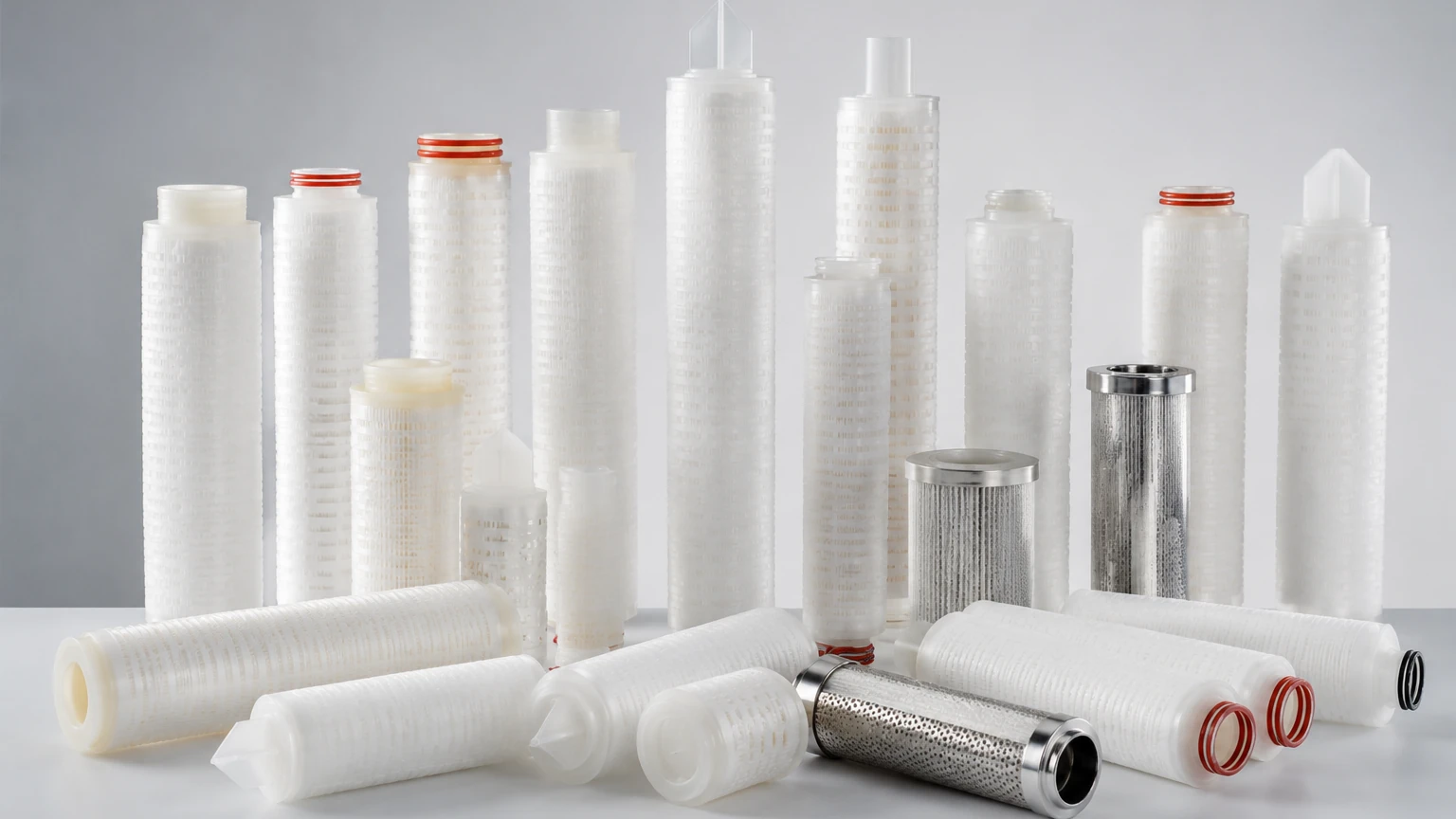
Selection Criteria for Industrial PES Cartridges
Selecting the right cartridge filter PES requires more than just picking a micron rating. Engineers should confirm the following technical specifications before procurement:
1. Effective Filtration Area (EFA): The total surface area of the pleated membrane within the cartridge. A higher EFA generally leads to a longer service life and higher flow rates.
2. Pore Size Validation: For sterile applications, ensure the filter is "absolute-rated" and backed by a validation guide demonstrating bacterial retention.
3. End-Cap Configuration: Cartridges come in various styles, such as Code 7 (226 O-rings with a fin), Code 2 (222 O-rings), or DOE (Double Open End). Compatibility with existing filter housings is essential to prevent bypass.
4. Extractables Profile: In sensitive applications, confirm the levels of TOC (Total Organic Carbon) and conductivity changes after installation to ensure the filter does not contaminate the process fluid.
Integrity Testing and Quality Assurance
One of the most critical aspects of using a cartridge filter PES in regulated industries is the ability to perform non-destructive integrity testing. This ensures that the membrane is intact and that the seals within the cartridge are functioning correctly. Common methods include:
* Bubble Point Test: Measures the minimum pressure required to force air through a liquid-saturated membrane. Each pore size has a specific bubble point value.
* Diffusion Flow (Forward Flow) Test: Measures the rate of gas diffusion through the liquid-filled pores of the membrane at a pressure below the bubble point.
* Water Intrusion Test (WIT): Used primarily for hydrophobic filters, but variations exist for checking the integrity of large systems.
For engineers, the availability of a lot-specific Certificate of Quality (CoQ) is a non-negotiable requirement when purchasing PES cartridges for critical paths.
Maintenance, Sterilization, and Service Life
To optimize the total cost of ownership, the maintenance of the filtration system must be disciplined. PES filters should be monitored using differential pressure gauges. A common industry standard is to replace the cartridge when the ΔP reaches 2.0 to 2.5 bar (30-35 psi), or according to a fixed schedule in sterile processes to prevent bio-burden breakthrough.
Sterilization procedures must be strictly followed. If using Steam-In-Place (SIP), the ramp-up and cool-down temperatures must be controlled to avoid thermal shock, which can damage the membrane's delicate asymmetric structure. Similarly, when using chemical sanitizers, compatibility charts must be consulted to ensure the housing, O-rings, and PES membrane are all resistant to the cleaning agent.
Conclusion
The cartridge filter PES remains a cornerstone of modern industrial filtration due to its unique combination of high flux, low protein binding, and reliable microbial retention. By understanding the engineering principles behind the polyethersulfone membrane and how it interacts with different fluid chemistries, technical professionals can significantly improve their process outcomes. Whether you are designing a new pharmaceutical line or optimizing a water treatment plant, the integration of high-quality PES filtration, often supported by rugged stainless steel pre-filtration stages, ensures a balance between purity and performance.
For technical support regarding filtration system design or custom metal components that complement your PES installations, you can review product options and application support on the Main Page.
