


Rotary Drum Screen Wastewater
In the landscape of industrial and municipal water treatment, the initial stage of solids-liquid separation is critical to the longevity and efficiency of the entire system. Rotary drum screens represent a cornerstone technology in this phase. For engineers and facility managers, understanding the nuances of rotary drum screen wastewater applications is essential for protecting downstream equipment, such as pumps and membranes, and ensuring compliance with environmental discharge regulations.
As a specialized manufacturer of stainless steel filtration components, Kaifil provides the technical expertise and high-precision hardware required to optimize these mechanical screening processes. Whether integrated into large-scale municipal plants or specialized industrial processing lines, the performance of a rotary drum screen depends heavily on the engineering of its filtration media and the structural integrity of its components.
The Role of Rotary Drum Screens in Wastewater Treatment
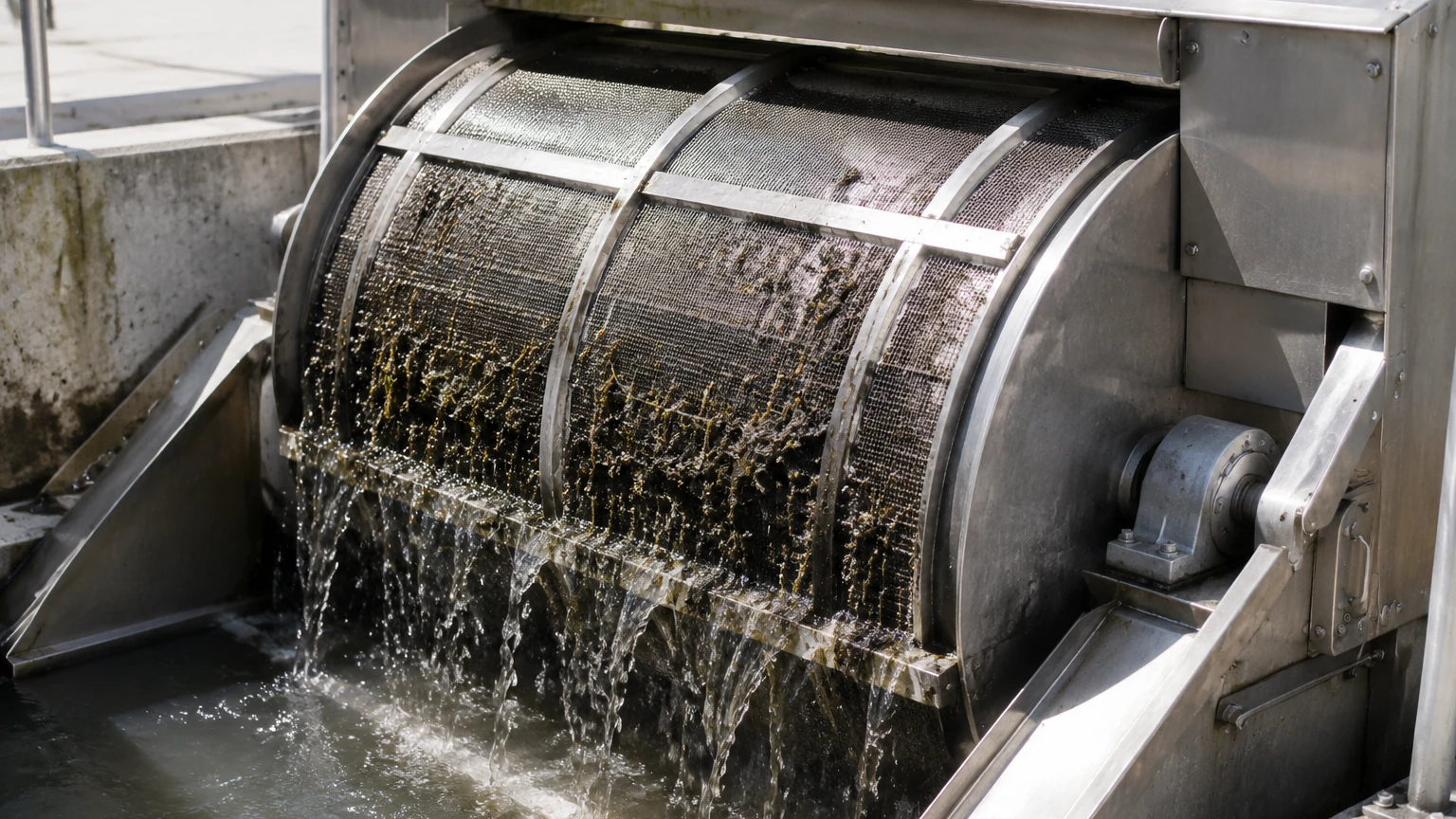
Rotary drum screens are mechanical self-cleaning filters designed to remove suspended solids from wastewater streams. In the hierarchy of treatment, they typically serve as a primary or fine screening solution. Their primary function is to intercept debris, plastics, organic matter, and industrial byproducts before they can cause mechanical failure or process interference in secondary treatment stages.
In the context of rotary drum screen wastewater management, the equipment must handle varying flow rates and fluctuating solids concentrations. Unlike static screens, the rotating action of the drum, combined with integrated cleaning mechanisms, allows for continuous operation without the frequent manual intervention required by traditional bar screens. This makes them particularly effective in industries such as food processing, pulp and paper, and chemical manufacturing, where high volumes of fibrous or particulate waste are common.
Understanding Mechanical Separation: Internal vs. External Feed Systems
When evaluating a rotary drum screen for wastewater, engineers must first decide between internal and external feed configurations. Each has distinct advantages based on the nature of the influent and the required filtration fineness.
Internal Feed Rotary Screens
In an internal feed system, the wastewater enters the center of the drum through an inlet pipe and is distributed onto the inner surface of the screening media. As the drum rotates, the liquid passes through the screen while the solids are retained on the inside. Internal flights or a slight inclination of the drum transport the captured solids toward the discharge end. This design is often preferred for high-flow applications and scenarios where the solids are particularly heavy or abrasive, as the internal containment prevents splashing and simplifies solids collection.
External Feed Rotary Screens
External feed systems operate by directing the wastewater onto the outer surface of the rotating drum. The liquid penetrates the screen and is collected in a tank below, while the solids remain on the exterior surface. A doctor blade or scraper is typically used to remove the accumulated solids as the drum rotates. External feed screens are often more compact and are highly effective for removing fine particles and greasy substances that might otherwise clog internal mechanisms. However, they require precise tensioning of the scraper to maintain efficiency without damaging the filtration surface.
Critical Components: Selecting the Right Filtration Media
The heart of any rotary drum screen is the filtration media itself. The choice of material and structure directly impacts the filtration accuracy, hydraulic capacity, and the frequency of maintenance. For most industrial wastewater applications, stainless steel is the gold standard due to its mechanical strength and chemical resistance.
Wedge Wire vs. Perforated Plate vs. Wire Mesh
1. Wedge Wire: Known for its non-clogging characteristics, wedge wire (V-wire) provides a continuous slot opening that widens inwardly. This ensures that any particle passing the surface will not get stuck. It is ideal for heavy-duty rotary drum screen wastewater applications involving fibrous materials.
2. Perforated Plate: This media offers high structural rigidity and is excellent for removing large, jagged debris. However, it typically has a lower open area percentage compared to mesh or wedge wire, which can limit hydraulic throughput.
3. Stainless Steel Wire Mesh: For fine filtration requirements, precision-woven wire mesh is the preferred choice. It offers the highest open area and can achieve much finer micron ratings than wedge wire or perforated plates. In specialized industrial processes, such as pharmaceutical or fine chemical wastewater treatment, the high-precision mesh components manufactured by Kaifil ensure that even minute contaminants are captured.
To explore the full range of filtration media and technical specifications available for these systems, engineers can visit the Main Page for detailed product data and customization options.
Engineering Considerations for Industrial Wastewater Loads
Designing a rotary drum screen system requires a deep dive into the specific characteristics of the wastewater. A "one size fits all" approach often leads to premature equipment failure or bypass issues. Key engineering parameters include:
Hydraulic Capacity and Head Loss
The hydraulic capacity is the maximum volume of water the screen can process per unit of time. This is influenced by the drum diameter, length, rotational speed, and the open area of the filter media. As solids accumulate on the screen, "head loss" (the difference in water level between the influent and effluent sides) increases. Engineers must calculate the maximum allowable head loss to ensure the system does not overflow during peak loading periods.
Total Suspended Solids (TSS) and Particle Size Distribution
Understanding the TSS concentration and the size of the particles is vital for selecting the correct aperture size. If the screen is too coarse, downstream equipment remains at risk. If it is too fine, the screen will require excessive cleaning and may become a bottleneck. A thorough analysis of the particle size distribution (PSD) allows for the selection of a micron rating that balances protection with operational efficiency.
Fat, Oil, and Grease (FOG) Content
In food processing wastewater, high FOG content can lead to "blinding," where a layer of grease coats the screen and prevents liquid passage. In these environments, rotary drum screens must be equipped with specialized spray bars and potentially heated wash water to maintain the permeability of the stainless steel mesh.
Material Durability and Corrosion Resistance
Wastewater environments are inherently corrosive, often containing hydrogen sulfide, chlorides, and various organic acids. The longevity of a rotary drum screen is largely determined by the grade of stainless steel used in its construction.
* Type 304 Stainless Steel: Suitable for general municipal wastewater and less aggressive industrial environments. It provides good corrosion resistance and structural integrity at a lower cost point.
* Type 316L Stainless Steel: For chemical processing, coastal installations, or high-chloride wastewater, 316L is essential. The addition of molybdenum provides superior resistance to pitting and crevice corrosion.
* Specialty Alloys: In extreme cases involving highly acidic or alkaline streams, duplex stainless steels or other high-nickel alloys may be required for the filter elements to prevent rapid degradation.
Kaifil specializes in the precision manufacturing of these components, ensuring that every wire mesh and filter cartridge meets the rigorous standards required for long-term industrial service.
Operational Challenges and Maintenance Strategies
Even the best-engineered rotary drum screen for wastewater requires a robust maintenance strategy to prevent downtime. Common operational challenges include:
Screen Blinding and Cleaning Cycles
Blinding occurs when particles or biofilms obstruct the screen openings. Most modern rotary drum screens utilize an automated backwash system—a series of high-pressure spray nozzles that clean the drum from the outside (for internal feed) or inside (for external feed). The frequency and duration of these cycles should be optimized based on the solids loading to minimize water consumption while maintaining throughput.
Mechanical Wear and Component Replacement
The moving parts of a rotary drum—bearings, seals, and drive chains—are subject to constant wear. Furthermore, the filtration media itself can suffer from erosion over time, especially if the wastewater contains abrasive silts or sands. Regular inspection of the screen surface for tears or deformations is necessary. Utilizing high-quality OEM or custom-designed replacement components ensures that the system maintains its original filtration efficiency after a repair.
Customization and OEM Integration
Many industrial applications present unique challenges that standard off-the-shelf rotary screens cannot address. This is where customization becomes a critical value-add. Customization can involve:
* Variable Aperture Zones: Designing a drum with different micron ratings across its length to handle staged separation.
* Reinforced Structures: Enhancing the support frames for wire mesh to handle high-pressure surges or heavy solids slugs.
* Specialized Coatings: Applying hydrophobic or anti-microbial coatings to the stainless steel mesh to reduce FOG adhesion or biofilm growth.
By working with a manufacturer like Kaifil, engineers can specify the exact dimensions, materials, and filtration accuracies required for their specific rotary drum screen wastewater project. This collaborative approach ensures that the filtration component is perfectly matched to the mechanical demands of the equipment and the chemical profile of the wastewater.
Total Cost of Ownership and Evaluation Criteria
When procuring filtration solutions, the initial purchase price is only one part of the equation. The Total Cost of Ownership (TCO) includes energy consumption, wash water usage, maintenance labor, and the cost of replacement parts.
Before finalizing a selection, purchasing teams and engineers should confirm:
1. Filtration Efficiency: Does the media provide the required capture rate for the targeted particle size?
2. Ease of Maintenance: How accessible are the internal components for cleaning and part replacement?
3. Material Certification: Can the manufacturer provide material traceability and quality assurance for the stainless steel used?
4. Scalability: Can the system handle future increases in flow or solids concentration?
By focusing on high-quality stainless steel components and precision engineering, facilities can significantly reduce their long-term operational costs and improve the reliability of their wastewater treatment infrastructure. For more information on technical specifications and industrial filtration components, visiting the Main Page provides a comprehensive overview of the solutions available to meet these demanding requirements.
In conclusion, the effective management of rotary drum screen wastewater relies on a synergy between mechanical design and material science. By selecting the appropriate feed system, optimizing the filtration media, and ensuring the use of durable, corrosion-resistant materials, industrial operators can achieve efficient and cost-effective solids separation that stands the test of time.
