


Cartridge Housing Filter
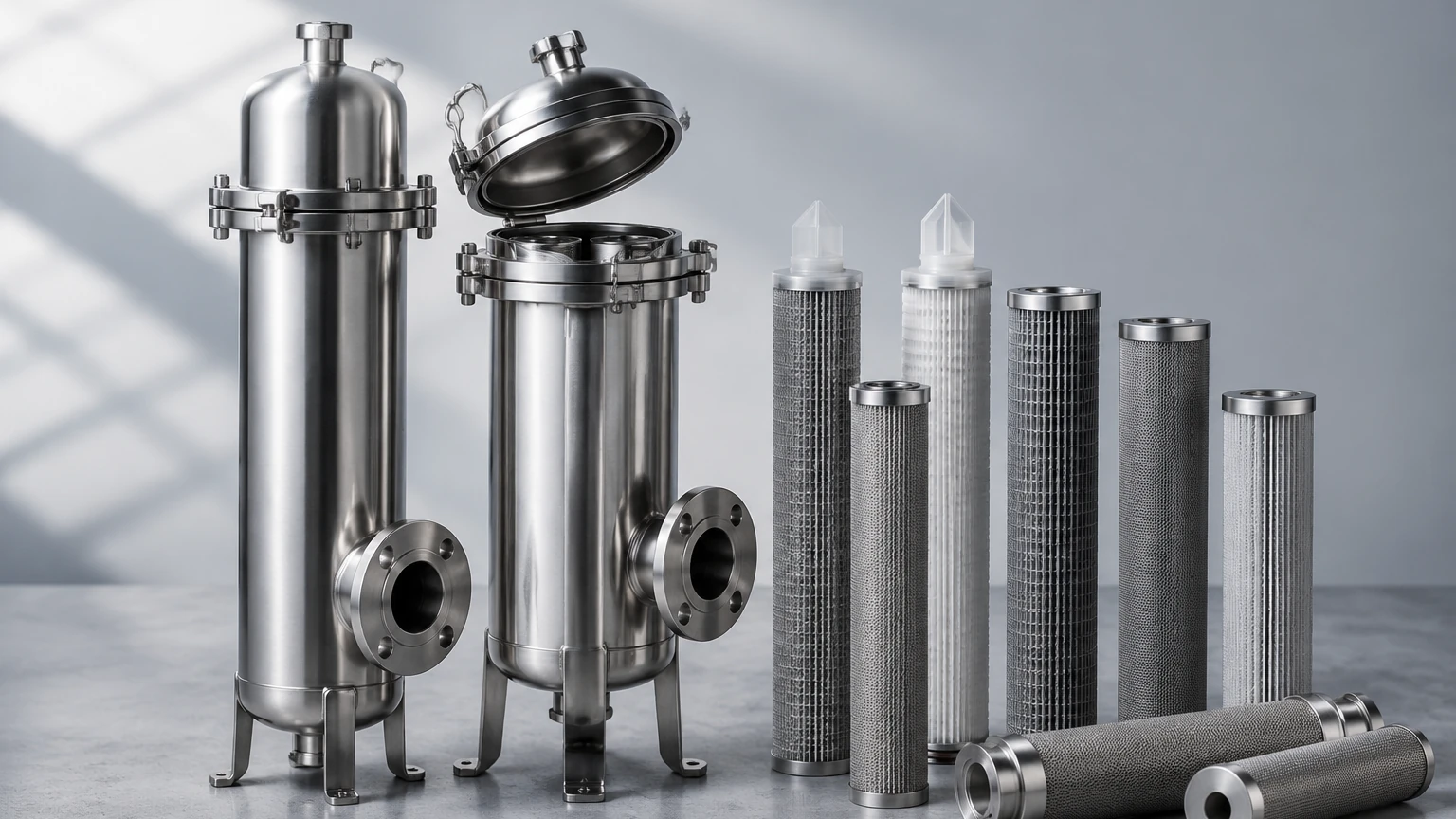
In industrial process engineering, the cartridge housing filter serves as the critical pressure vessel designed to contain and support filter elements. While the filter cartridge itself performs the separation of solids from fluids, the housing provides the structural integrity, flow distribution, and sealing required to maintain system performance. For engineers and procurement teams, selecting a cartridge housing filter involves a complex evaluation of material compatibility, pressure ratings, flow dynamics, and maintenance requirements.
Kaifil specializes in manufacturing high-performance stainless steel filtration components, ensuring that every housing meets the rigorous demands of industrial environments. From chemical processing to pharmaceutical manufacturing, the choice of housing directly impacts the total cost of ownership and the operational efficiency of the filtration system.
Engineering Fundamentals of Industrial Filter Housings
A cartridge housing filter is more than a simple container; it is a precision-engineered component that must withstand fluctuating pressures and temperatures while preventing bypass. The design typically consists of a head (or cover), a body (bowl), and internal hardware to secure the cartridges.
Material Selection and Corrosion Resistance
Industrial housings are predominantly constructed from stainless steel due to its durability and resistance to a wide range of chemicals.
- 304 Stainless Steel: Suitable for general industrial water filtration and non-corrosive chemical applications. It offers a cost-effective solution for standard environments.
- 316L Stainless Steel: The preferred choice for pharmaceutical, food and beverage, and aggressive chemical applications. The low carbon content and addition of molybdenum provide superior resistance to pitting and crevice corrosion.
Beyond the base metal, the surface finish is a critical technical specification. For sanitary applications, housings often undergo electropolishing to achieve a smooth, non-porous surface that inhibits bacterial growth and simplifies the Cleaning-in-Place (CIP) process.
Closure Mechanisms and Pressure Ratings
The method used to seal the housing head to the body determines both the pressure capacity and the ease of cartridge replacement.
- V-Band Clamps: Ideal for low-to-medium pressure applications where frequent cartridge changes are required. They offer a quick-release mechanism but are generally limited in their maximum pressure rating.
- Swing Bolt Closures: Designed for high-pressure and heavy-duty industrial applications. These provide a robust, secure seal that can withstand hydraulic shocks and high operating pressures over long periods.
- Threaded Closures: Often found in smaller, single-cartridge housings used for point-of-use filtration.
Technical Considerations for Sizing and Flow Rates
Sizing a cartridge housing filter requires a balance between flow velocity, pressure drop (Delta P), and the dirt-holding capacity of the internal elements. An undersized housing leads to excessive pressure drop, reduced cartridge life, and potential system downtime.
Understanding Pressure Drop (ΔP)
Every housing introduces some resistance to flow. The total pressure drop in a filtration system is the sum of the housing pressure drop and the clean cartridge pressure drop. Engineers must calculate the "Clean ΔP" to ensure that the system pump can maintain the required flow rate. As the filter cartridges collect contaminants, the ΔP increases; the housing must be rated to handle the maximum allowable differential pressure before the cartridges are replaced.
Single vs. Multi-Round Housings
The volume of fluid to be processed determines whether a single-round or multi-round housing is necessary.
- Single-Round Housings: Used for low flow rates or pilot-scale operations. They are compact and easy to integrate into existing skids.
- Multi-Round Housings: These contain multiple cartridges (ranging from 3 to over 100) in a single vessel. Multi-round designs allow for high flow rates while maintaining a compact footprint. They also extend the time between change-outs by distributing the contaminant load across a larger surface area.
Application-Specific Requirements
Different industries impose unique constraints on the design of a cartridge housing filter. Understanding these nuances is essential for selecting the correct configuration from the Main Page of a manufacturer’s technical catalog.
Chemical and Petrochemical Processing
In chemical plants, housings must be compatible with aggressive solvents, acids, or bases. Compatibility extends beyond the stainless steel body to the gaskets and O-rings. Common sealing materials include EPDM, Viton (FKM), and PTFE-encapsulated silicone. Engineers must verify that the housing design complies with ASME Section VIII standards if the operating pressure exceeds specific thresholds.
Food and Beverage Industry
Housings used in food and beverage production must adhere to sanitary standards. This involves eliminating "dead legs"—areas where fluid can stagnate and harbor microbial growth. These housings typically feature Tri-clamp connections and are designed for easy disassembly and inspection. The internal surfaces are polished to a high Ra (Roughness Average) value to ensure compliance with food safety regulations.
Pharmaceutical and Biotechnology
In the pharmaceutical sector, the cartridge housing filter must support sterile filtration. This requires the ability to withstand repeated steam sterilization (SIP) or autoclaving. The housings are often equipped with sanitary vent and drain valves to facilitate complete drainage and integrity testing of the filter elements.
Customization and OEM Integration
Standard off-the-shelf housings may not always meet the specific spatial or functional requirements of a complex industrial system. Kaifil provides extensive customization options to ensure the filtration hardware integrates seamlessly into the customer's infrastructure.
Connection Types and Orientations
While NPT threads and Flanges (ANSI/DIN) are standard, many applications require specialized connections such as Camlock or Victaulic couplings. Furthermore, the orientation of the inlet and outlet ports (e.g., side-in/side-out, side-in/bottom-out) can be customized to minimize piping complexity and reduce the overall footprint of the filtration skid.
Internal Hardware Modifications
The internal riser tubes and compression plates must be compatible with the specific end-cap configuration of the filter cartridges. Whether the system uses Double Open End (DOE) cartridges or Single Open End (SOE) cartridges with 222 or 226 O-ring seats, the housing internals must provide a positive seal to prevent bypass. Custom spring-loaded plates or screw-down assemblies can be engineered to accommodate variations in cartridge length due to thermal expansion.
Operational Safety and Maintenance
Maintaining a cartridge housing filter is essential for ensuring process continuity and operator safety. A well-designed housing incorporates features that simplify the maintenance cycle.
Venting and Draining
Before opening a housing for a cartridge change-out, the vessel must be depressurized and drained. High-quality housings include dedicated vent ports at the highest point to release trapped air and drain ports at the lowest point to remove residual fluid. In hazardous chemical applications, these ports are often piped to a neutralizer or recovery tank.
Safety Interlocks and Pressure Gauges
Operating a pressurized vessel carries inherent risks. It is standard practice to install pressure gauges on both the inlet and outlet sides of the housing to monitor the differential pressure. Some advanced systems utilize safety interlocks that prevent the housing from being opened while it is under pressure, protecting operators from potential injury.
Gasket and O-Ring Maintenance
The seals are the most common failure point in a housing. During every cartridge change, the O-rings should be inspected for nicks, compression set, or chemical degradation. Using the correct lubricant (compatible with the process fluid) ensures a proper seal and extends the life of the elastomer.
Total Cost of Ownership (TCO) Considerations
When evaluating a cartridge housing filter, the initial purchase price is only one component of the total cost. Engineers should also consider:
1. Cartridge Life: A properly sized housing reduces the frequency of cartridge replacements, which are often the highest ongoing expense.
2. Labor Costs: Features like swing-bolt closures or tool-less designs can significantly reduce the time required for maintenance.
3. Energy Consumption: Minimizing the pressure drop through optimized housing design reduces the load on system pumps, leading to lower energy costs over the life of the equipment.
4. Durability: Investing in high-grade stainless steel (316L) and robust construction prevents premature vessel failure due to corrosion or mechanical fatigue.
Conclusion
The cartridge housing filter is a foundational element of industrial fluid management. By understanding the technical requirements of material selection, pressure management, and application-specific standards, engineers can select a solution that ensures both process purity and operational reliability. Kaifil’s commitment to precision manufacturing and customized engineering provides the industry with the durable filtration components necessary for demanding environments. For detailed specifications and to explore the full range of stainless steel filtration solutions, professionals are encouraged to review product options and application support on the Main Page. Selecting the right housing today prevents costly filtration failures tomorrow.
