


Catalyst Filtration
In modern industrial processing, catalyst filtration represents a critical intersection of chemical engineering and mechanical separation. Catalysts, often composed of expensive precious metals like platinum, palladium, or specialized ceramic compounds, are essential for driving chemical reactions in the petrochemical, pharmaceutical, and fine chemical industries. However, once the reaction is complete, these catalysts must be recovered with high efficiency to maintain process economy and ensure product purity.
For engineers and procurement professionals, selecting the right filtration system is not merely a matter of choosing a mesh size; it involves a deep understanding of fluid dynamics, material science, and the mechanical stresses of industrial environments. Stainless steel filtration solutions have become the industry standard for these applications due to their thermal stability, chemical resistance, and structural integrity under high-pressure conditions.
The Engineering Principles of Catalyst Recovery
Catalyst filtration is fundamentally the process of separating solid catalyst particles from a liquid or gaseous process stream. Unlike general water treatment, catalyst recovery often involves high temperatures, aggressive solvents, and very fine particle sizes, often referred to as "catalyst fines."
Effective filtration design must account for the particle size distribution (PSD) of the catalyst. If the filter pores are too large, valuable catalyst material escapes, leading to financial loss and downstream contamination. If the pores are too small, the filter may blind prematurely, leading to excessive pressure drops and frequent maintenance cycles.
In many batch processes, the goal is to build a "filter cake." This cake, formed by the accumulated catalyst particles themselves, eventually acts as the primary filtration medium, capable of capturing particles much smaller than the physical pore size of the filter element. Engineering the support structure—the stainless steel filter cartridge or wire mesh—requires balancing the need for initial retention with the ability to support this growing cake without collapsing or clogging.
Material Selection for Demanding Chemical Environments
When specifying hardware for catalyst filtration, material compatibility is the first line of defense against system failure. Industrial processes often operate at extremes where standard polymers or low-grade metals would degrade.
Stainless steel 316L is the most common choice for catalyst applications due to its excellent resistance to organic acids and chloride-induced pitting. For more aggressive environments involving high concentrations of sulfuric or hydrochloric acid, specialized alloys like Hastelloy or Monel may be integrated into the filter design.
Beyond chemical resistance, thermal stability is a key factor. Many catalytic reactions occur at temperatures exceeding 200°C (392°F). Stainless steel filter elements maintain their mechanical properties and pore geometry at these temperatures, whereas synthetic media would lose structural integrity. This durability ensures that the filtration performance remains consistent throughout the entire production cycle, providing a reliable baseline for process engineers.
Comparing Filter Media: Sintered Metal vs. Wire Mesh
Selecting the appropriate media type is essential for optimizing the total cost of ownership. Two primary configurations dominate the catalyst filtration landscape:
Sintered Metal Fiber and Powder
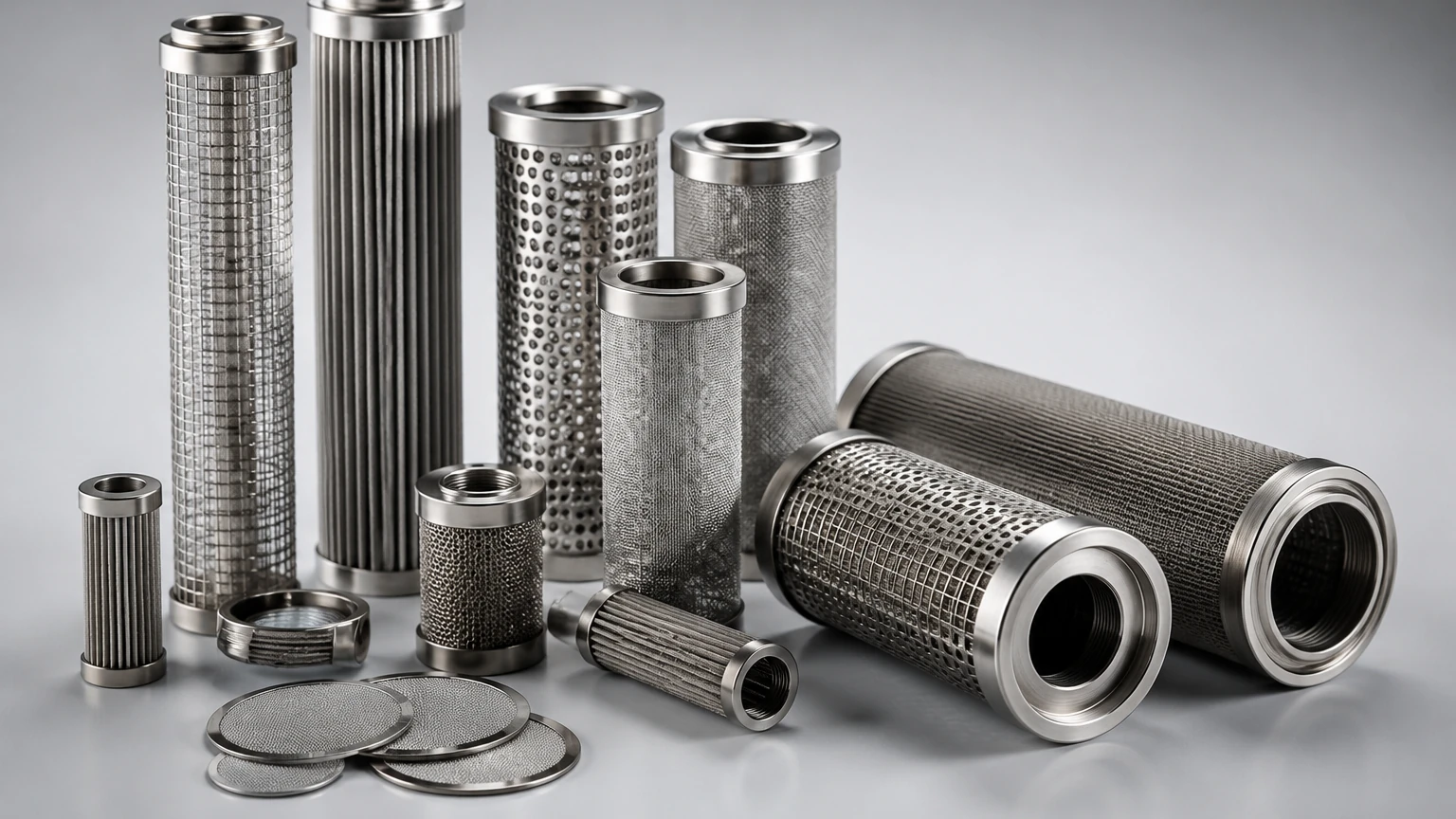
Sintered metal media are created by bonding metal fibers or powders together through a high-temperature heat treatment process. This creates a porous, rigid structure with high permeability. Sintered metal is particularly effective for depth filtration, where particles are trapped within the tortuous path of the media. This is ideal for capturing extremely fine catalyst particles that might bypass a single layer of mesh.
Precision Wire Mesh
Stainless steel wire mesh filters offer surface filtration. They are characterized by highly accurate pore sizes and are easier to clean than depth media. In applications where the catalyst is relatively uniform in size and the goal is rapid recovery and reuse, multi-layer sintered wire mesh provides the necessary mechanical strength to withstand high differential pressures while maintaining a precise micron rating.
For more information on the technical specifications of these materials, you can visit the Main Page of our technical resource center.
Operational Challenges: Pressure Drop and Flux Rates
In a B2B industrial context, the performance of a filtration system is measured by its flux rate—the volume of fluid passing through a unit area of filter media per unit of time. As catalyst filtration progresses, the accumulation of solids on the filter surface increases the resistance to flow, leading to a rise in differential pressure (ΔP).
Engineers must monitor the rate of pressure increase to determine the optimal cleaning or replacement cycle. A common mistake in system design is undersizing the filter area to save on initial capital expenditure. This often leads to higher operational costs, as the higher flux rates force particles deeper into the media, making cleaning more difficult and shortening the overall lifespan of the filter element.
To mitigate these issues, many modern catalyst filtration systems employ "backpulsing" or "backwashing." This involves a momentary reversal of flow, often assisted by pressurized gas, to dislodge the filter cake and restore the flux rate. The filter media must be engineered to withstand these repeated pressure shocks without fatigue or deformation.
Customization and OEM Considerations
Every chemical process is unique, and off-the-shelf filtration solutions rarely provide the efficiency required for high-value catalyst recovery. Customization is often necessary to match the specific geometry of existing reactor vessels or to accommodate unique flow characteristics.
When working with an OEM partner like Kaifil, engineers should confirm several technical parameters before finalizing a design:
1. Micron Rating Requirement: Is the goal absolute or nominal filtration?
2. Operating Pressure and Temperature: What are the maximum spikes the system might encounter?
3. Cleaning Protocols: Will the filter be cleaned in-place (CIP), or does it require manual removal and ultrasonic cleaning?
4. Housing Compatibility: Does the filter cartridge need specific end-cap configurations (e.g., 222, 226, or NPT threads) to ensure a leak-proof seal?
By addressing these factors during the design phase, companies can ensure that their catalyst filtration system integrates seamlessly into their production line, reducing downtime and maximizing catalyst recovery rates.
Maintenance and Total Cost of Ownership (TCO)
While the initial cost of stainless steel filtration components is higher than that of disposable alternatives, the total cost of ownership is significantly lower in industrial catalyst applications. Disposable filters generate substantial waste and require frequent system shutdowns for replacement. Furthermore, the cost of the catalyst trapped in a discarded filter can often exceed the cost of the filter itself.
Stainless steel filters are designed for longevity. With proper maintenance—including regular backwashing and periodic deep cleaning—a single set of filter cartridges can last for years. The ability to recover nearly 100% of the catalyst and return it to the reaction vessel provides a rapid return on investment (ROI).
To maintain peak performance, it is recommended to establish a baseline differential pressure for a clean filter. Deviations from this baseline after a cleaning cycle indicate that the media may be experiencing "permanent fouling," necessitating a more intensive cleaning process or eventual replacement. Monitoring these trends allows for predictive maintenance, preventing unexpected failures that could halt production.
Conclusion: Selecting a Reliable Filtration Partner
Successful catalyst filtration requires a combination of high-quality materials, precise manufacturing, and engineering expertise. As industrial processes become more complex and the cost of raw materials continues to rise, the efficiency of catalyst recovery becomes a major competitive advantage.
Kaifil specializes in providing these high-performance, custom stainless steel filtration solutions. By focusing on durability and precision, we help industrial operators optimize their processes, protect their equipment, and recover valuable assets with confidence. For detailed product options and application support, please refer to our Main Page.
Whether you are designing a new chemical plant or seeking to improve the efficiency of an existing hydraulic or pharmaceutical line, understanding the nuances of catalyst filtration is the first step toward operational excellence. By prioritizing technical specifications and material integrity, you ensure a filtration system that performs reliably under the most demanding industrial conditions.
