


Cement Wastewater Filtration
In the heavy industrial sector, cement manufacturing stands as one of the most resource-intensive processes, particularly regarding water usage and management. As environmental regulations tighten and the cost of raw water rises, the implementation of effective cement wastewater filtration systems has become a technical necessity for plant engineers and facility managers. This process involves the removal of suspended solids, heavy metals, and chemical precipitates from water used in cooling, dust suppression, and equipment maintenance.
Effective filtration in this context is not merely about compliance; it is about protecting downstream equipment, enabling water recycling, and maintaining the operational integrity of the plant. Given the abrasive nature of cement particles and the highly alkaline chemistry of the effluent, selecting the correct filtration components requires a deep understanding of material science and mechanical engineering.
Characteristics of Wastewater in Cement Manufacturing
To design an effective filtration strategy, engineers must first analyze the specific contaminants present in cement industry effluent. Wastewater typically originates from several points in the production cycle, including the cooling of kilns, gas conditioning towers, and the washing of transport vehicles and machinery.
High Suspended Solids and Abrasiveness
The most prominent challenge in cement wastewater filtration is the high concentration of Total Suspended Solids (TSS). These solids consist of raw meal, clinker dust, and finished cement particles. These materials are inherently abrasive. In a filtration system, abrasive particles can cause rapid wear on filter media and housing components if the system is not engineered for high-durability environments. The particle size distribution (PSD) in these streams can range from sub-micron fines to larger grit, necessitating a multi-stage filtration approach.
Chemical Composition and Alkalinity
Cement wastewater is characterized by high alkalinity, often reaching pH levels between 11 and 13. This is due to the presence of calcium hydroxide and other alkaline earth metal oxides. Such high pH levels can be corrosive to certain metals and can cause rapid degradation of standard polymer-based filter media. Furthermore, the water may contain trace amounts of heavy metals like chromium, lead, and zinc, which are often precipitated out during pH adjustment and must then be captured by fine filtration media.
The Role of Mechanical Filtration in Water Recovery
Many modern cement plants are moving toward "zero liquid discharge" (ZLD) or closed-loop water systems. In these configurations, filtration is the primary barrier that allows water to be reused in the process rather than discharged into local waterways. Mechanical filtration using stainless steel components is often preferred over disposable options due to the volume of solids and the need for consistent performance.
Protecting Downstream Systems
Water used for cooling kilns or lubricating heavy machinery must be free of particulate matter to prevent clogging and erosion of heat exchangers and spray nozzles. A failure in the filtration stage can lead to unscheduled downtime, which is exceptionally costly in a continuous-process industry like cement production. By utilizing robust wire mesh filters, plants can ensure that recycled water meets the technical specifications required for sensitive equipment.
Sludge Management and Dewatering
Filtration also plays a role in the management of sludge. By concentrating solids through effective filtration and subsequent dewatering, plants can reduce the volume of waste that needs to be transported and disposed of. In some cases, the captured solids can even be reintroduced into the raw meal, provided the filtration process has kept them free of external contaminants.
Selecting Materials for Abrasive and Alkaline Environments
Material selection is perhaps the most critical decision an engineer faces when specifying a system for cement wastewater filtration. The combination of high pH and abrasive solids narrows the field of suitable materials significantly.
Stainless Steel: The Industrial Standard
Stainless steel, particularly grades 304 and 316L, is the preferred material for industrial filtration components in the cement sector.
* Grade 304: Offers excellent physical strength and resistance to the physical impact of abrasive particles. It is suitable for many general-purpose filtration tasks within the plant.
* Grade 316L: Contains molybdenum, which provides superior resistance to chemical corrosion. In environments where the wastewater contains higher concentrations of chlorides or other aggressive chemicals alongside high alkalinity, 316L is the safer engineering choice.
Sintered Wire Mesh vs. Single-Layer Mesh
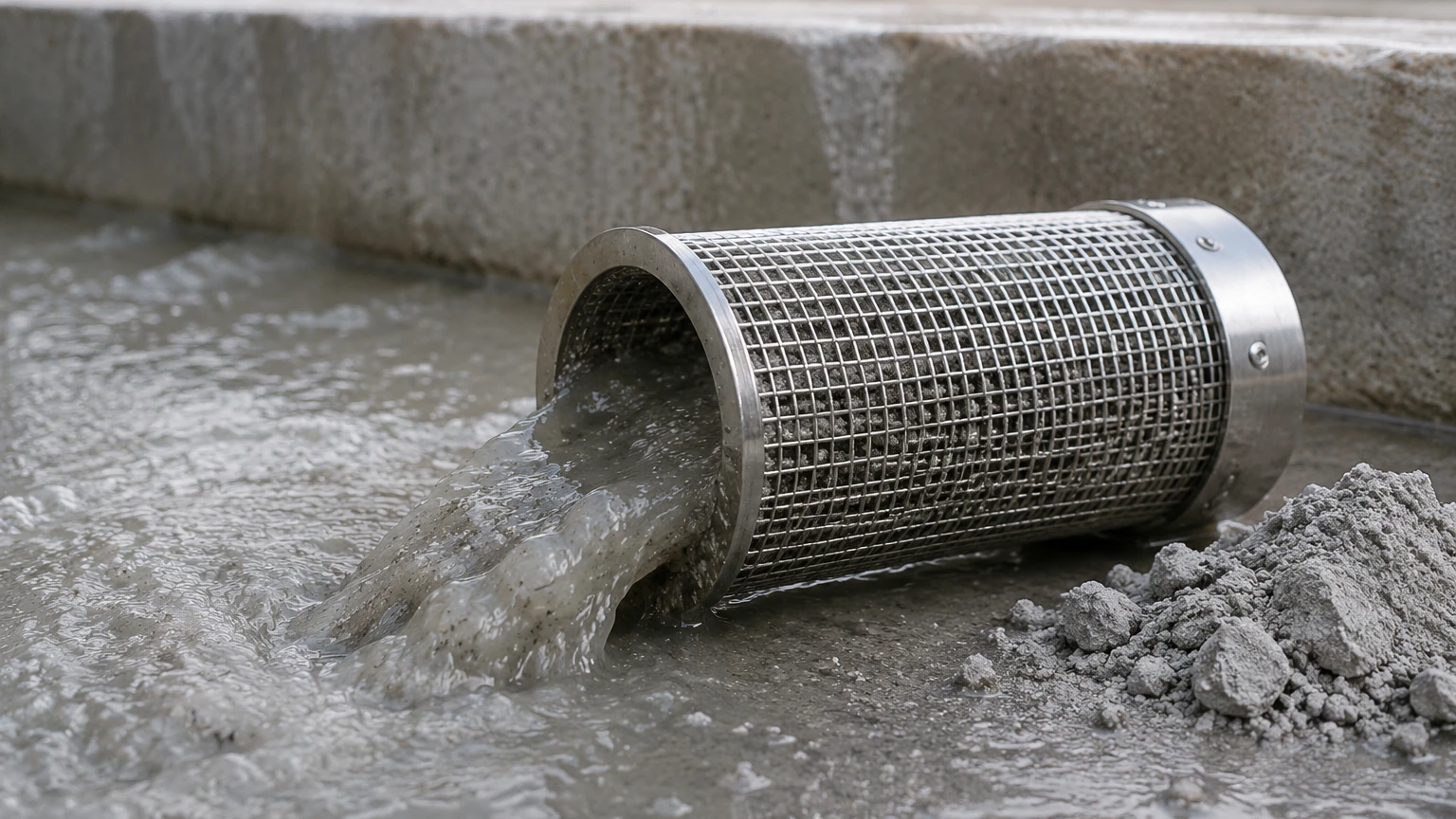
For high-pressure applications or where the filter must undergo frequent backwashing, sintered wire mesh is often employed. Sintering bonds multiple layers of stainless steel wire mesh together through a heat-treatment process, creating a filter medium that is incredibly rigid and durable. This prevents the mesh from deforming under the heavy load of cement solids and ensures the micron rating remains constant over the life of the filter.
Engineering Parameters: Micron Ratings and Flow Dynamics
Specifying a filter for cement wastewater requires a balance between filtration accuracy (micron rating) and flow capacity. If the filter is too fine, it will clog prematurely; if it is too coarse, it will fail to protect downstream equipment.
Determining the Correct Micron Rating
In cement applications, filtration is often divided into stages:
1. Primary Filtration (100–500 microns): Used to remove large grit and scale from raw effluent. This protects the finer secondary filters from being overwhelmed.
2. Secondary Filtration (20–100 microns): Targeted at removing the bulk of the suspended cement particles to allow for general reuse in dust suppression or wash water.
3. Fine Filtration (1–10 microns): Required for water being recycled into cooling systems or treated for heavy metal removal.
Managing Differential Pressure (ΔP)
As solids accumulate on the surface of a wire mesh filter, the differential pressure across the media increases. Engineers must design the system to handle the maximum expected ΔP before a cleaning cycle is triggered. In cement wastewater filtration, the "cake" formed by cement particles can sometimes be self-filtering, meaning it helps catch smaller particles, but it also increases resistance to flow. Monitoring this pressure drop is essential for maintaining the efficiency of the pumps and the overall system.
Maintenance Strategies for Industrial Filter Longevity
Because cement wastewater is prone to scaling and heavy loading, the maintenance protocol for filtration systems must be proactive. Stainless steel filters offer the advantage of being cleanable, which significantly reduces the total cost of ownership compared to disposable cartridges.
Backwashing and Ultrasonic Cleaning
Most industrial filtration systems in this sector utilize automated backwashing. When the differential pressure reaches a set point, the flow is reversed, or a cleaning arm is activated to dislodge the accumulated solids. For deep cleaning, especially when calcium carbonate scaling has occurred on the mesh, ultrasonic cleaning or chemical baths may be used during scheduled maintenance to restore the filter to its original flow characteristics.
Inspection for Media Fatigue
Despite the durability of stainless steel, the constant impact of abrasive particles can eventually lead to wire thinning or fatigue. Regular inspection of the filter elements for signs of "blinding" (permanent clogging) or mechanical wear is necessary. Choosing high-quality manufactured components ensures that the mesh is woven to precise tolerances, which helps distribute mechanical stress more evenly across the surface.
Customization and OEM Solutions for Cement Plants
No two cement plants are identical; variations in raw materials, water sources, and production volume mean that off-the-shelf filtration solutions often fall short. Custom-engineered filter cartridges and components allow for the optimization of the filtration surface area within existing housing footprints.
When evaluating a manufacturer for these components, engineers should confirm the following:
* Material Certification: Ensuring the stainless steel grade is as specified.
* Manufacturing Precision: Precise wire diameters and weave patterns to ensure consistent micron ratings.
* Structural Integrity: Robust end-cap welding and internal support cores to withstand high-pressure differentials.
For those seeking to optimize their plant's performance, reviewing the technical resources available on a manufacturer's Main Page can provide deeper insights into the available configurations for stainless steel filter cartridges and custom wire mesh solutions.
Evaluating Total Cost of Ownership in Industrial Filtration
When purchasing filtration equipment, the initial capital expenditure is only one part of the equation. For cement wastewater filtration, the Total Cost of Ownership (TCO) includes:
1. Replacement Frequency: Durable stainless steel filters may have a higher upfront cost but last years, whereas disposable filters require constant purchasing and disposal fees.
2. Energy Consumption: A well-designed filter with low initial pressure drop reduces the energy required by the system's pumps.
3. Downtime Costs: Reliable filtration prevents downstream failures that can stop production.
4. Water Savings: Efficient filtration enables higher water recovery rates, reducing the cost of purchasing raw water and the fees associated with wastewater discharge.
By focusing on high-quality, precision-engineered metal filtration components, cement plant operators can achieve a more sustainable and cost-effective water management strategy. The transition from reactive maintenance to a robust, engineered filtration solution is a hallmark of modern, efficient cement production.
In conclusion, the complexities of cement wastewater—ranging from its abrasive solids to its high alkalinity—demand a filtration solution that is as rugged as the industry itself. Through the careful selection of stainless steel media, precise engineering of micron ratings, and a focus on cleanable, long-lasting components, facilities can ensure environmental compliance and operational excellence. For further technical specifications and to review product options and application support, engineers are encouraged to consult with specialized manufacturers who understand the unique rigors of industrial filtration.
