


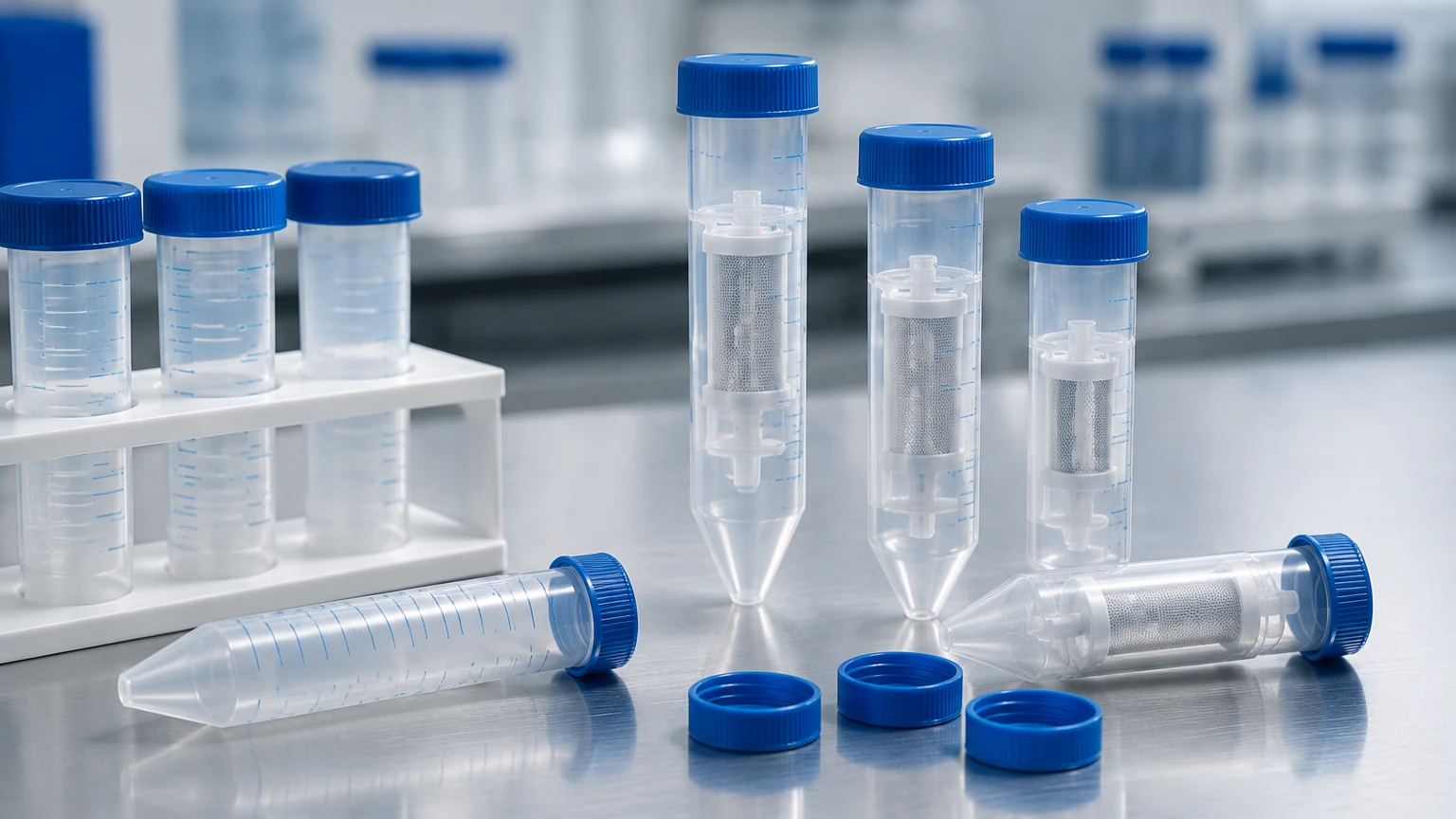
Centrifuge Filter Tube
In industrial separation processes, the centrifuge filter tube serves as a critical component for high-speed liquid-solid separation. Unlike standard laboratory consumables, industrial-grade centrifuge filter tubes are engineered to withstand extreme mechanical stress, corrosive chemical environments, and high thermal loads. These components are essential in sectors such as pharmaceutical manufacturing, chemical processing, and wastewater treatment, where precision and durability are non-negotiable.
Selecting the right filtration media and structural design for these tubes requires a deep understanding of centrifugal dynamics and material science. For engineers and procurement teams, the goal is to optimize throughput while ensuring the long-term integrity of the filtration system. For more information on customized industrial filtration components, you can visit the Main Page of our technical resource center.
The Engineering Principles of Centrifugal Filtration
Centrifugal filtration operates on the principle of density-driven separation enhanced by high-speed rotation. Within a centrifuge, the centrifuge filter tube acts as the primary barrier. As the assembly rotates, centrifugal force—often measured in multiples of gravity (G-force)—pushes the slurry against the inner walls of the filter tube.
The liquid phase (filtrate) is forced through the pores of the filter media, while the solid particles (cake) are retained on the surface. The efficiency of this process depends on several variables:
* Centrifugal Force: Higher RPMs increase the pressure exerted on the filter media, necessitating high structural rigidity.
* Permeability: The media must allow for rapid liquid evacuation to prevent "flooding" within the tube.
* Cake Formation: As solids accumulate, they form a secondary filter layer. The design of the tube must account for the resistance provided by this cake to maintain consistent flow rates.
In industrial applications, these tubes are often part of a larger basket or rotor assembly, requiring precise tolerances to ensure balance and minimize vibration during operation.
Material Selection: Why Stainless Steel Dominates Industrial Applications
While polymer-based tubes are common in low-volume laboratory settings, industrial centrifuge filter tubes are almost exclusively manufactured from high-performance metals, specifically stainless steel. The choice of material is dictated by the chemical composition of the filtrate and the mechanical demands of the process.
Stainless Steel 304 and 316L
Stainless steel 304 provides excellent strength and basic corrosion resistance for general industrial use. However, in pharmaceutical and chemical sectors, 316L is the standard. The addition of molybdenum in 316L enhances resistance to pitting and crevice corrosion, particularly in environments containing chlorides or acidic compounds.
Specialized Alloys
In cases involving highly aggressive chemicals or extreme temperatures, alloys like Duplex stainless steel or Hastelloy may be utilized. These materials offer superior yield strength and resistance to stress corrosion cracking, which is vital when the centrifuge filter tube is subjected to cyclic loading at high velocities.
Surface Finish and Cleanability
For food and beverage or pharmaceutical applications, the internal surface finish (measured in Ra) is critical. A smooth, polished surface prevents particle entrapment and facilitates effective Clean-in-Place (CIP) cycles, ensuring that no cross-contamination occurs between batches.
Comparing Filtration Media: Mesh vs. Perforated vs. Sintered
The "filter" aspect of the centrifuge filter tube can be constructed using various media types, each offering distinct advantages depending on the particle size and slurry density.
Woven Wire Mesh
Stainless steel woven wire mesh is the most versatile option. It offers precise pore sizes ranging from several millimeters down to a few microns. For centrifuge applications, multi-layered mesh designs are often used to provide a balance between fine filtration and mechanical support.
Perforated Metal
Perforated metal tubes are used primarily as support structures or for coarse filtration. They provide maximum structural integrity. In many high-pressure centrifuge systems, a perforated metal tube serves as the outer "skeleton," protecting a finer inner mesh layer from deforming under G-force.
Sintered Metal Mesh
Sintered mesh is created by diffusion-bonding multiple layers of wire mesh together under high heat and pressure. This results in a monolithic structure that is incredibly strong and resistant to delamination. Sintered centrifuge filter tubes are ideal for applications involving abrasive solids or where frequent backwashing is required, as the media does not shift or fray.
Critical Performance Metrics for High-Speed Separation
When evaluating a centrifuge filter tube for a specific industrial process, engineers must look beyond simple dimensions. Several performance metrics determine the total cost of ownership and operational efficiency.
1. Filtration Accuracy (Micron Rating): This defines the smallest particle size the tube can reliably retain. It is essential to distinguish between nominal and absolute ratings. In critical pharmaceutical processes, absolute ratings are required to ensure 100% retention of specific particle sizes.
2. Structural Integrity and G-Force Rating: The tube must be rated for the maximum centrifugal force of the equipment. Failure to account for this can lead to permanent deformation or catastrophic mechanical failure of the centrifuge.
3. Flow Velocity and Differential Pressure: The design must minimize resistance to flow. A high differential pressure across the filter media can lead to premature clogging or "blinding" of the mesh.
4. Concentricity and Balance: In high-speed rotation, even a minor imbalance can cause vibration that damages bearings and seals. Precision manufacturing ensures that the centrifuge filter tube is perfectly concentric.
Identifying and Mitigating Common Operational Risks
Operating industrial filtration equipment involves inherent risks that can lead to downtime or product loss. Understanding these risks allows for better preventative maintenance and selection.
Media Blinding and Clogging
Blinding occurs when particles become lodged within the pores of the mesh rather than forming a cake on the surface. This is often caused by selecting a micron rating that is too close to the average particle size. Using wedge wire or specialized Dutch weave mesh can help mitigate this by providing a sharper separation interface.
Mechanical Fatigue
Centrifuge filter tubes undergo constant cycles of acceleration and deceleration. Over time, this can lead to metal fatigue, particularly at weld points. High-quality TIG or plasma welding, followed by stress-relieving heat treatments, is essential to extend the service life of the component.
Chemical Incompatibility
Even stainless steel can fail if exposed to incompatible chemicals at elevated temperatures. Engineers should perform compatibility tests or consult material resistance charts before finalizing the material specification. For example, certain halogenated solvents can cause rapid degradation of standard 304 stainless steel.
Technical Specifications to Confirm Before Procurement
Before moving forward with a custom centrifuge filter tube order, purchasing teams and engineers should document the following technical requirements to ensure the product meets the application's needs:
* Dimensions: Precise inner and outer diameters, as well as total length, including any flanges or end caps.
* Media Type: Specify whether woven mesh, sintered metal, or perforated plate is required.
* Micron Rating: Define the absolute or nominal filtration level required for the process.
* Operating Conditions: Maximum RPM/G-force, operating temperature, and the chemical composition of the fluid.
* Connection Type: How the tube integrates with the centrifuge rotor (e.g., threaded, flanged, or friction fit).
* Certification Requirements: Does the component need to meet FDA, USP Class VI, or ISO standards?
By addressing these factors, facilities can ensure they receive a component that optimizes their separation process while minimizing the risk of failure. For a broader look at industrial filtration solutions and engineering support, you can explore the Main Page for detailed product catalogs and technical specifications.
Maintenance and Cleaning for Longevity
To maximize the lifespan of a stainless steel centrifuge filter tube, a robust maintenance schedule is necessary. Unlike disposable filters, metal tubes are designed for reuse, provided they are cleaned correctly.
* Ultrasonic Cleaning: For tubes with fine mesh or sintered media, ultrasonic cleaning is highly effective at removing sub-micron particles trapped deep within the pores.
* Chemical Cleaning: Using approved detergents or solvents can dissolve organic or inorganic scaling. It is vital to ensure the cleaning agents do not compromise the passivated layer of the stainless steel.
* Visual Inspection: Regular inspection for mesh displacement, broken wires, or weld cracks can prevent minor issues from turning into major equipment failures.
In conclusion, the centrifuge filter tube is a precision-engineered tool that sits at the heart of many industrial separation processes. By focusing on material quality, structural design, and specific application requirements, engineers can achieve reliable and efficient filtration performance in even the most demanding environments.
