


Chemical Reactor
In the landscape of industrial processing, the chemical reactor serves as the primary vessel where controlled chemical transformations occur. Whether the objective is synthesis, polymerization, or catalytic cracking, the efficiency of the reaction is heavily dependent on the precision of the environment within the vessel. For engineers and plant managers, the integrity of these processes relies not only on the reactor’s design and thermodynamics but also on the auxiliary components that manage fluid purity, catalyst retention, and byproduct separation.
Filtration is a critical subset of chemical reactor engineering. Without robust filtration solutions, reactors face risks ranging from catalyst loss and downstream equipment damage to compromised product quality. This guide explores the technical requirements of filtration within chemical reactor systems, focusing on the engineering considerations necessary for selecting high-performance metal filter components.
The Essential Role of Filtration in Chemical Reactor Systems
Filtration in a chemical reactor environment is rarely a secondary concern; it is often integral to the reaction's success. The primary functions of filtration in these systems include:
1. Catalyst Recovery and Retention: Many chemical reactions utilize expensive catalysts (such as platinum, palladium, or specialized zeolites). Filters must be engineered to retain these particles within the reactor or recover them from the effluent stream to minimize operational costs and prevent catalyst migration into downstream processes.
2. Impurity Removal: Feedstocks entering a chemical reactor often contain particulate matter that can interfere with the reaction or foul the reactor’s internal surfaces. Precision wire mesh filters ensure that only clean reactants enter the vessel.
3. Product Purification: After the reaction is complete, the resulting mixture often requires the separation of solid byproducts or unreacted solids. High-durability stainless steel filter cartridges are frequently employed here to withstand the harsh chemical environment.
4. Protection of Downstream Equipment: Pumps, heat exchangers, and analytical instruments located after the reactor are sensitive to particulate contamination. Effective filtration acts as a safeguard for the entire production line.
For comprehensive technical data on how these components integrate into industrial systems, engineers can visit the Main Page of specialized manufacturers to review material compatibility and pressure ratings.
Technical Challenges in Reactor Filtration Environments
Designing a filtration solution for a chemical reactor requires a deep understanding of the extreme conditions present during operation. Unlike standard water treatment, reactor filtration must account for several aggressive variables.
High Temperature and Pressure
Chemical reactions often require elevated temperatures to overcome activation energy barriers and high pressures to shift equilibrium or maintain phase stability. Standard polymer-based filters often fail under these conditions. Stainless steel and specialized alloys are the materials of choice because they maintain structural integrity and filtration accuracy at temperatures exceeding 300°C and under significant differential pressures.
Chemical Compatibility and Corrosion
The presence of acids, bases, solvents, and highly reactive intermediates necessitates the use of corrosion-resistant materials. While 304 stainless steel is suitable for many applications, 316L stainless steel is often the baseline for chemical reactor components due to its superior resistance to pitting and crevice corrosion in chloride-rich or acidic environments. For even more aggressive media, specialized alloys like Hastelloy or Monel may be required.
Mechanical Stress and Fatigue
Reactors often involve agitation or high-velocity fluid flow. Filter elements must be designed to resist the mechanical stresses of turbulent flow and the potential for fatigue caused by pressure pulsations. This requires precision engineering in the support structures of the filter, such as perforated inner cores or reinforced outer shrouds.
Key Evaluation Criteria for Reactor Filter Components
When selecting a filter for a chemical reactor application, engineers must evaluate several performance metrics to ensure long-term reliability and process efficiency.
Filtration Accuracy (Micron Rating)
The micron rating determines the size of particles the filter will capture. In reactor systems, this is critical for catalyst retention. Engineers must distinguish between "nominal" and "absolute" ratings. An absolute rating ensures that 99.9% of particles at the specified micron size are captured, which is essential when protecting high-value catalysts or sensitive downstream equipment.
Flow Rate and Pressure Drop (Delta P)
A filter must allow for the required process flow without creating an excessive pressure drop. A high initial pressure drop can indicate that the filter surface area is insufficient for the application, leading to premature clogging and increased energy consumption by pumps. Calculating the effective filtration area (EFA) is a vital step in the design phase.
Cleanability and Maintenance Cycles
In continuous chemical processing, downtime is costly. Stainless steel filters offer the advantage of being cleanable. Whether through backpulsing, ultrasonic cleaning, or chemical solvent washing, the ability to restore the filter to its original flow characteristics extends the service life and reduces the total cost of ownership compared to disposable elements.
Comparison of Filter Media for Industrial Reactors
Different reactor designs require different filtration structures. The choice of media impacts both the filtration efficiency and the physical durability of the component.
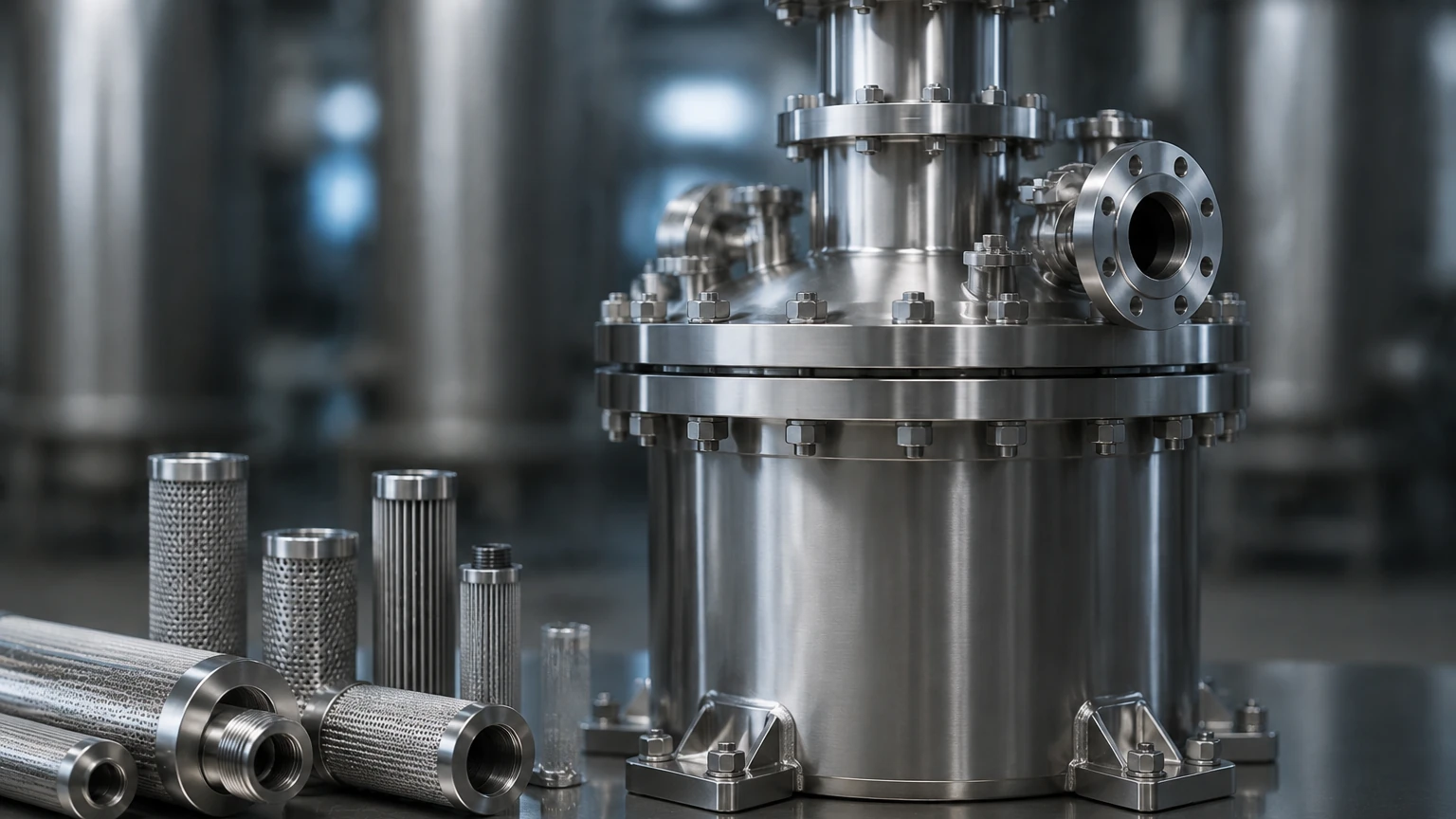
* Stainless Steel Wire Mesh: This is the most versatile media. It offers precise pore sizes and is available in various weaves (such as plain, twill, or dutch weave). Wire mesh is ideal for surface filtration where easy cake discharge or cleaning is required.
* Sintered Metal Felt: Created by sintering non-woven stainless steel fibers, this media provides high porosity and excellent dirt-holding capacity. It is often used in applications where deep filtration is necessary to capture fine particulates.
* Sintered Wire Mesh: By bonding multiple layers of wire mesh together through a sintering process, engineers create a media that combines the precision of fine mesh with the mechanical strength of heavy-duty support layers. This is often the preferred choice for high-pressure reactor environments.
Managing Risks: Common Failure Modes and Prevention
Understanding why filtration systems fail in a chemical reactor context allows for better preventative design.
1. Clogging and Fouling: This occurs when particles bridge the pores of the filter. If the reactor involves polymerization, "gel" particles can be particularly difficult to manage. Selecting a pleated filter design can increase the surface area, significantly extending the time between cleaning cycles.
2. Bypass and Seal Failure: Even the best filter element is useless if the fluid can bypass it. In high-temperature reactors, standard O-rings may degrade. Engineering the filter housing with metal-to-metal seals or specialized high-temperature gaskets is essential.
3. Media Migration: In low-quality filters, the filter media itself can break down and enter the process stream. Using high-quality, vacuum-sintered components ensures that no fibers or wires detach from the filter element during operation.
Engineering the Solution: Customization and OEM Support
Because every chemical reactor is unique—varying in volume, agitation method, and chemical profile—off-the-shelf filtration products often fall short. Customization is the standard in the industry.
When working with a manufacturer like Kaifil, engineers should be prepared to confirm the following details to ensure an optimized design:
* Fluid Properties: Viscosity, density, and chemical composition at operating temperature.
* Operating Parameters: Maximum operating temperature, normal and maximum pressure, and allowable pressure drop.
* Contaminant Characteristics: Particle size distribution, concentration, and the nature of the solids (e.g., crystalline, slimy, or abrasive).
* Mechanical Interface: Connection types (flanged, threaded, or NPT) and dimensional constraints within the reactor vessel or piping.
Customized OEM solutions allow for the integration of filtration directly into the reactor's internal architecture, such as dip tubes with integrated strainers or bottom-discharge filter plates.
Total Cost of Ownership and Maintenance Cycles
While the initial investment in a high-grade stainless steel filter for a chemical reactor is higher than that of disposable alternatives, the long-term economics usually favor the durable solution. The total cost of ownership (TCO) includes the purchase price, installation labor, the cost of downtime for replacements, and disposal costs of contaminated filter media.
In many chemical processes, the ability to clean and reuse a filter element dozens of times results in a payback period of less than a year. Furthermore, the reliability of metal filtration reduces the risk of catastrophic process failure, which can cost a facility thousands of dollars per hour in lost production.
Conclusion
The efficiency of a chemical reactor is inextricably linked to the quality of its filtration components. By selecting materials and structures that can withstand the rigors of high-temperature, corrosive, and high-pressure environments, engineers can ensure process stability and product purity. For those seeking to optimize their filtration performance, reviewing technical specifications and consulting with manufacturing experts is the recommended next step. Detailed product information and engineering support for these specialized components can be found on the Main Page of the manufacturer’s technical resource center.
