


Chemical Reactor-
In the landscape of industrial processing, the chemical reactor- remains the central hub where raw materials undergo transformation into valuable products. Whether dealing with polymerization, oxidation, or complex organic synthesis, the efficiency of these reactions is inextricably linked to the quality of the filtration systems integrated into the process flow. For engineers and technical procurement teams, selecting the right filtration components is not merely a matter of maintenance but a critical decision that impacts product purity, catalyst longevity, and overall system safety.
Industrial filtration in chemical reactor environments requires a sophisticated understanding of material science and fluid dynamics. Because these reactors often operate under extreme conditions—including high pressures, elevated temperatures, and exposure to corrosive reagents—the filtration media must be engineered to withstand rigorous mechanical and chemical stress without compromising performance.
The Role of Filtration in Chemical Reactor Processes
Filtration within a chemical reactor- setup serves several vital functions. Primarily, it is used for the separation of solids from liquids or gases. This may involve removing impurities from feedstock before it enters the reactor or capturing the final product as it exits. However, one of the most critical applications is catalyst recovery. Many chemical reactions rely on expensive metal catalysts; failing to recover these particles represents a significant financial loss and can contaminate the downstream product.
Furthermore, filtration components protect sensitive downstream equipment. Pumps, heat exchangers, and instrumentation can be easily damaged or fouled by particulate matter carried over from the reactor. By implementing high-precision stainless steel filters, facilities can ensure that the entire process chain remains operational with minimal unplanned downtime.
Material Compatibility and Engineering Standards
When designing filtration for a chemical reactor-, material selection is the first and most crucial engineering hurdle. Standard polymers or low-grade metals often fail when exposed to the aggressive solvents and high thermal loads typical of industrial chemistry.
Stainless steel, particularly grades 304 and 316L, is the industry standard for these applications. 316L stainless steel, with its addition of molybdenum, offers superior resistance to pitting and crevice corrosion in chloride-rich environments. For even more demanding applications involving highly acidic or alkaline media, specialized alloys such as Hastelloy or Monel may be utilized in the construction of wire mesh and sintered components.
Engineering standards also dictate the structural integrity of the filter. In a pressurized chemical reactor-, the filter element must resist collapsing or deforming under high differential pressure (ΔP). This is achieved through reinforced internal cores and robust outer shrouds, ensuring that the filtration media maintains its specified micron rating even during surges in flow or pressure.
High-Performance Filter Media: Sintered vs. Wire Mesh
There are two primary types of stainless steel filtration media used in chemical reactor- applications: woven wire mesh and sintered metal fiber or powder. Each has distinct advantages depending on the specific requirements of the process.
Woven Wire Mesh Filters
Woven wire mesh is characterized by its precise pore size and high open area, which allows for excellent flow rates. In reactor applications, it is often used as a surface filter, where particles are trapped on the exterior of the mesh. This makes wire mesh filters relatively easy to clean via backwashing or ultrasonic methods. For engineers looking for reliable, repeatable performance in liquid-solid separation, multi-layer wire mesh laminates offer a balance of strength and filtration accuracy.
Sintered Metal Cartridges
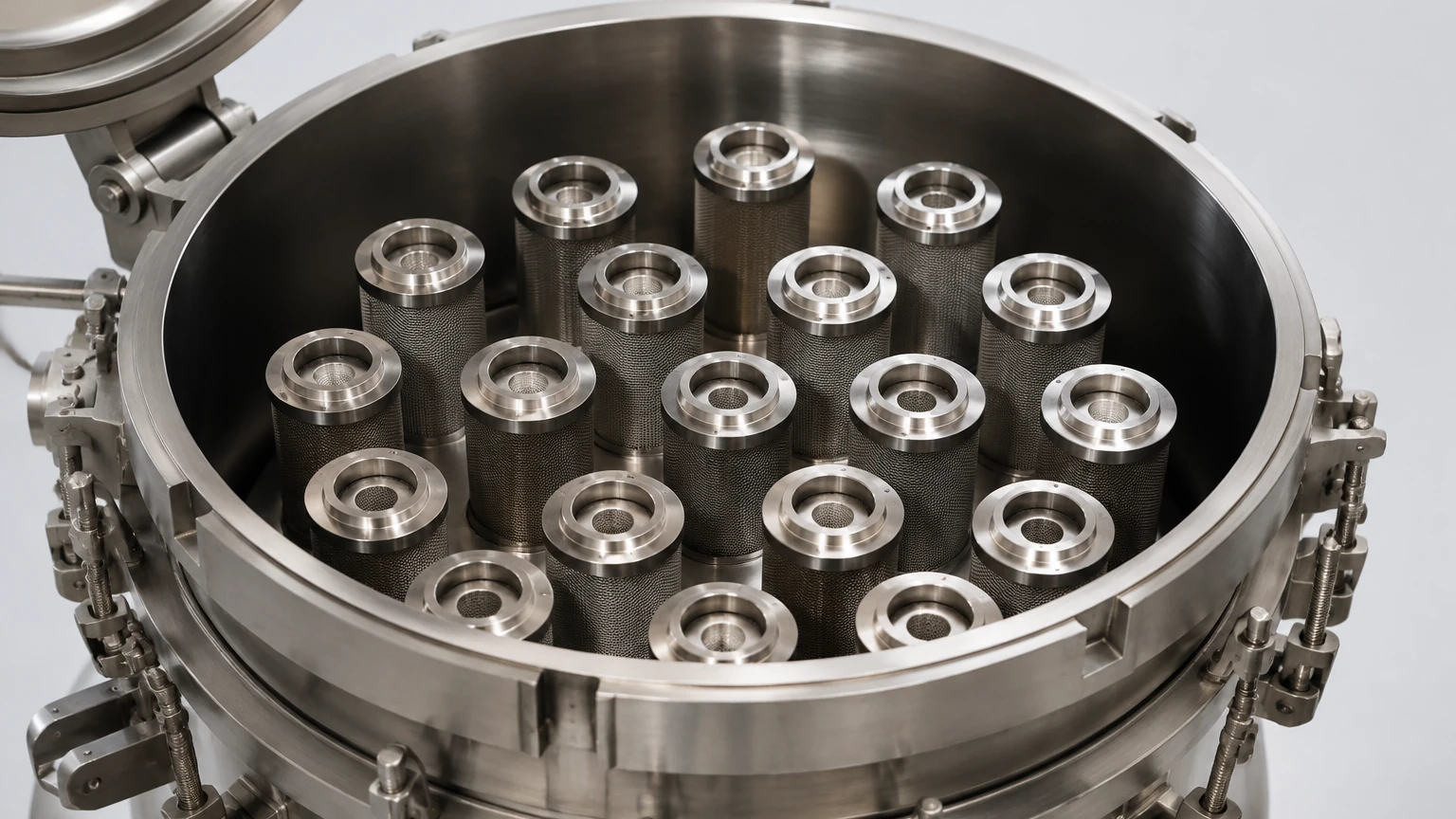
Sintered metal filters are created by fusing layers of wire mesh or metal powders together under high heat and pressure without melting the material. This creates a porous, rigid structure with exceptional mechanical strength. Sintered cartridges are ideal for deep filtration in chemical reactor- systems where fine particulate must be captured within the media's complex tortuous path. They are particularly effective in high-temperature gas filtration and for recovering very fine catalyst particles that might bypass standard woven mesh.
Catalyst Recovery and Downstream Protection
In many modern chemical processes, catalysts are suspended in the reaction medium (slurry reactors). As the reaction concludes, the slurry must be filtered to separate the catalyst from the product. The cost of catalysts—often containing precious metals like platinum, palladium, or rhodium—necessitates a filtration efficiency of 99.9% or higher.
Using precision-engineered stainless steel filter cartridges allows for the continuous or batch-wise recovery of these materials. The filters must be designed to allow for "cake" buildup, which can actually assist in the filtration process, followed by a clean discharge of the catalyst for regeneration or reuse. If the filtration system fails, the catalyst "leakage" not only represents a loss of capital but can also lead to unwanted side reactions in downstream storage tanks or further processing units.
Optimizing Flow Rates and Pressure Management
An often-overlooked aspect of chemical reactor- filtration is the impact on system hydraulics. Every filter introduces a degree of resistance to the flow, known as pressure drop. In a B2B industrial context, optimizing this balance is essential for energy efficiency. A filter with a pore size that is too small for the application will clog prematurely, leading to frequent cleaning cycles and increased pump energy consumption.
Engineers must calculate the "clean pressure drop" and the "terminal pressure drop" (the point at which the filter must be cleaned or replaced). Factors influencing these calculations include:
* Fluid Viscosity: Higher viscosity fluids require larger surface areas or coarser mesh to maintain flow.
* Particle Loading: The concentration of solids in the reactor effluent dictates how quickly the filter will reach its capacity.
* Flux Rate: The volume of fluid passing through a unit area of filter media over time.
By consulting with a manufacturer that provides customized filtration solutions, engineering teams can specify the exact surface area and media structure needed to maintain optimal flow within their specific chemical reactor- parameters.
Maintenance Protocols and Total Cost of Ownership
While the initial purchase price of a stainless steel filter is higher than disposable plastic or paper alternatives, the total cost of ownership (TCO) is significantly lower in industrial chemical environments. Stainless steel filters are cleanable and reusable, often lasting for years if maintained correctly.
Cleaning Methods
1. Backwashing: Reversing the flow of fluid through the filter to dislodge accumulated solids.
2. Ultrasonic Cleaning: Using high-frequency sound waves in a cleaning solvent to remove fine particulates from deep within sintered pores.
3. Chemical Cleaning: Using specific solvents or acids to dissolve organic or inorganic fouling without damaging the stainless steel substrate.
Replacement Cycles
Determining the replacement cycle for a filter in a chemical reactor- involves monitoring the pressure differential across the element. When backwashing no longer returns the pressure drop to near-original levels, it indicates that the media has become permanently fouled or "blinded," and a replacement is necessary. Regular inspection for mechanical wear, such as wire fraying or seam failure, is also essential for maintaining process safety.
Selecting a Custom Filtration Partner
Every chemical reactor- is unique, often requiring bespoke filtration components that fit specific vessel geometries or piping configurations. Standard off-the-shelf filters rarely meet the exacting demands of specialized chemical processing.
Working with a professional manufacturer like Kaifil allows engineers to customize every aspect of the filtration component. This includes selecting the specific alloy, determining the optimal micron rating, and designing custom end-fittings (such as NPT, flange, or DOE) to ensure a leak-proof fit within the reactor system. For those seeking to optimize their industrial processes, it is advisable to Review product options and application support on the Kaifil Main Page to understand how custom-engineered metal filters can improve operational efficiency.
Conclusion
Filtration is a cornerstone of successful chemical reactor- operations. By choosing high-quality stainless steel wire mesh and sintered filter cartridges, industrial facilities can ensure high product purity, protect expensive catalysts, and maintain the integrity of their downstream equipment. The transition from disposable to permanent, cleanable metal filtration solutions represents a strategic investment in durability and process control. As chemical processes become more complex and environmental regulations more stringent, the role of precision filtration will only continue to grow in importance for the global chemical industry.
