


Cip Cleaning Process
In modern industrial manufacturing, maintaining the highest standards of hygiene and operational efficiency is a non-negotiable requirement. Clean-In-Place (CIP) technology has revolutionized how processing plants manage sanitation, particularly in the food and beverage, pharmaceutical, and chemical industries. A robust cip cleaning process allows for the thorough cleaning of internal surfaces of pipes, vessels, and filtration systems without the need for time-consuming disassembly. For engineers and facility managers, understanding the technical nuances of this process is essential for ensuring product safety, extending the lifespan of filtration components, and minimizing downtime.
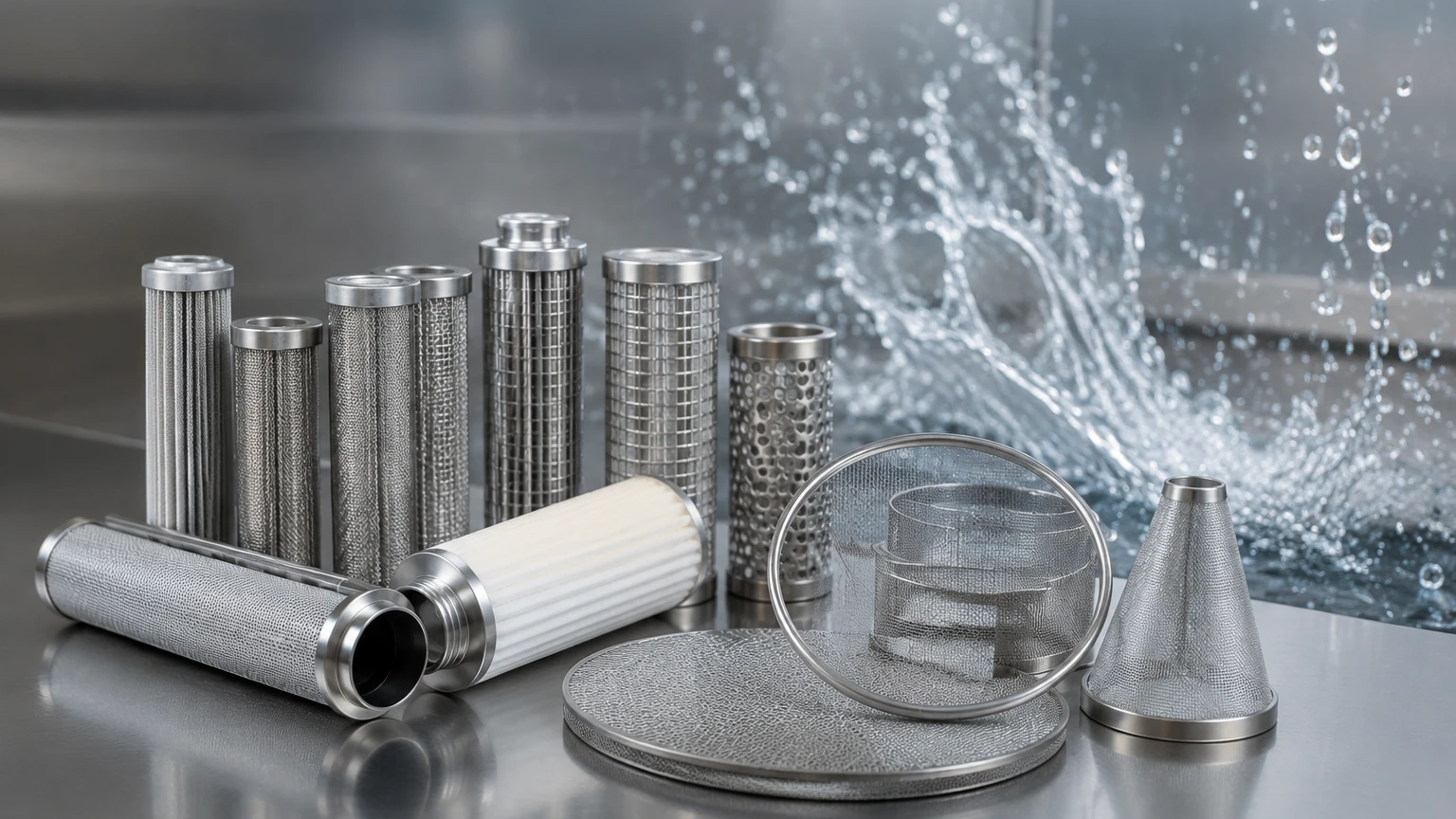
At the heart of any effective CIP system is the filtration hardware. Because these components are subjected to high temperatures, aggressive chemicals, and varying pressure loads, the choice of materials and design is critical. Stainless steel filtration solutions, such as those found on our Main Page, are specifically engineered to withstand the rigors of repeated cleaning cycles while maintaining precise filtration accuracy.
The Fundamental Stages of the CIP Cleaning Process
A standard cip cleaning process is not a single action but a sequenced series of steps designed to remove specific types of residues. While the exact protocol varies depending on the product being processed, most industrial cycles follow a structured progression:
1. Pre-Rinse: The cycle begins with a water rinse, typically using recovered water from a previous final rinse. This stage aims to remove the majority of loose soil, residual product, and large particles. Effective pre-rinsing can remove up to 90% of the soil load, significantly reducing the chemical demand for subsequent steps.
2. Caustic Wash (Alkaline Cleaning): This is the primary cleaning stage designed to break down organic soils such as proteins and fats. Sodium hydroxide (caustic soda) is the most common agent used. The alkalinity saponifies fats and dissolves proteins, making them water-soluble. For filtration elements, this stage is crucial for clearing organic blinding of the mesh.
3. Intermediate Rinse: Fresh water is used to flush out the spent caustic solution and the loosened organic matter, preventing neutralization of the acid wash that follows.
4. Acid Wash: This stage targets inorganic deposits, such as mineral scales (milk stone in dairy, or calcium carbonate in water treatment). Nitric or phosphoric acids are frequently used. This step is vital for maintaining the surface integrity of stainless steel components, as it helps remove mineral buildup that could otherwise lead to localized corrosion or "pitting."
5. Final Rinse: High-quality water (often deionized or RO water in pharmaceutical applications) is used to remove all traces of cleaning chemicals.
6. Sanitization: Depending on the industry, a final sanitizing step using thermal (hot water/steam) or chemical (peracetic acid or chlorine-based) agents is performed to eliminate any remaining microorganisms.
Material Selection and Chemical Compatibility
The success of a cip cleaning process depends heavily on the chemical compatibility of the system’s components. In industrial filtration, stainless steel is the gold standard due to its mechanical strength and resistance to corrosion. However, not all grades of stainless steel are equal.
* Type 304 Stainless Steel: Suitable for basic applications with mild cleaning agents, but may be susceptible to chloride-induced stress corrosion cracking if exposed to high concentrations of chlorine-based sanitizers at elevated temperatures.
* Type 316L Stainless Steel: The preferred choice for most CIP-intensive environments. The addition of molybdenum and a lower carbon content provides superior resistance to organic and inorganic acids, as well as chloride pitting. This material is standard for high-performance filter cartridges used in pharmaceutical and chemical processing.
When selecting filters, engineers must confirm that the gaskets and seals (typically EPDM, PTFE, or Viton) are also compatible with the specific chemicals used in the cip cleaning process. Failure to do so can lead to seal degradation, resulting in bypass or contamination.
The Role of TACT Parameters in Effective Filter Cleaning
To optimize the cip cleaning process, engineers utilize the TACT principle, which stands for Time, Action, Chemical, and Temperature. These four variables must be balanced to achieve a "clean" state efficiently.
Time
The duration of each wash cycle must be sufficient for the chemicals to penetrate the soil. In filtration, if the soil has deeply embedded into the wire mesh, longer contact times may be required compared to smooth pipe surfaces.
Action (Turbulence)
Mechanical action is provided by the flow velocity of the cleaning solution. For effective cleaning, the flow must be turbulent (typically requiring a Reynolds number greater than 3,000). In a filtration context, the velocity must be high enough to create shear stress across the surface of the mesh to dislodge particles, but controlled enough to avoid damaging delicate pleated structures.
Chemical Concentration
The concentration of caustic and acid solutions must be precisely monitored. Too low a concentration will result in incomplete cleaning, while too high a concentration can lead to chemical waste, increased neutralization costs, and potential damage to the passive layer of the stainless steel.
Temperature
Heat increases the kinetic energy of the cleaning molecules, accelerating the breakdown of soils. Most caustic washes are performed between 65°C and 85°C. However, engineers must ensure that the filter elements are rated for these thermal loads to prevent warping or structural fatigue.
Engineering Design for CIP-Capable Stainless Steel Filters
Standard filters often fail in CIP environments because they contain "dead zones"—areas where the cleaning fluid cannot reach or where turbulence is insufficient. Professional filtration manufacturers focus on specific design elements to ensure compatibility with the cip cleaning process:
* All-Welded Construction: Unlike bonded filters that use adhesives, all-welded stainless steel cartridges eliminate the risk of adhesive failure during high-temperature caustic washes. This also removes crevices where bacteria could proliferate.
* Surface Finish: The roughness of the filter media and support structure (measured in Ra) impacts cleanability. Electropolished surfaces are often used in high-purity applications to reduce the surface energy, making it harder for soils to adhere and easier for the CIP fluid to remove them.
* Structural Integrity: During the cip cleaning process, filters may experience back-pressure or high differential pressures. The filter must have a robust inner core and outer cage to prevent collapse or bursting during these transient hydraulic events.
For those seeking specific configurations, a wide range of custom wire mesh and cartridge options are available on the Main Page, tailored to meet these exact engineering requirements.
Monitoring and Validating CIP Performance
In a B2B industrial setting, "clean" must be a measurable metric rather than a visual observation. Validation of the cip cleaning process is critical for regulatory compliance and operational safety. Common methods include:
* Conductivity Monitoring: Measuring the conductivity of the return flow helps determine if the cleaning chemicals have been fully rinsed from the system.
* pH Testing: Ensures that the system has returned to a neutral state after acid or alkaline cycles.
* Total Organic Carbon (TOC): Used primarily in the pharmaceutical industry to detect trace amounts of residual product or cleaning agents.
* Differential Pressure (ΔP) Analysis: For filtration systems, the most practical indicator of CIP success is the return to "clean" differential pressure. If the ΔP remains high after a CIP cycle, it indicates that the filter media is permanently fouled or that the CIP parameters (TACT) need adjustment.
Common Risks and Total Cost Considerations
While the cip cleaning process is designed to protect the system, improper implementation can lead to significant risks. One major risk is the formation of biofilms. If the cleaning temperature or chemical concentration is inadequate, bacteria can form a protective matrix that is highly resistant to subsequent cleaning. This is particularly dangerous in filtration, as the complex geometry of wire mesh provides ample surface area for biofilm attachment.
Another consideration is mechanical fatigue. Frequent thermal cycling (moving from cold rinses to hot caustic washes) can cause expansion and contraction of the metal. Over hundreds of cycles, this can lead to stress cracks in non-specialized filters.
When evaluating the total cost of ownership, purchasing teams should look beyond the initial price of the filter cartridge. A high-quality stainless steel filter that is fully compatible with the cip cleaning process may have a higher upfront cost but will offer a significantly lower cost per liter processed due to its ability to be cleaned and reused hundreds of times, compared to disposable polymer filters that must be replaced after every few batches.
Conclusion
The cip cleaning process is a cornerstone of modern industrial efficiency, enabling continuous production and rigorous hygiene. For the process to be effective, every component—especially the filtration media—must be engineered to survive and perform within the cleaning environment. By focusing on material grade, structural design, and the TACT parameters, engineers can ensure their filtration systems provide reliable, long-term service. For more technical information on selecting the right stainless steel filtration components for your specific application, please visit our Main Page.
