


Cip Method of Cleaning
In modern industrial processing, maintaining the hygiene and efficiency of filtration systems without dismantling complex equipment is a critical operational requirement. The Clean-in-Place (CIP) method of cleaning has become the standard for industries where sanitary conditions and high-volume production are paramount, such as in food and beverage, pharmaceutical, and chemical processing. For engineers managing stainless steel filtration systems, understanding the technical nuances of the cip method of cleaning is essential for maximizing filter lifespan, ensuring product purity, and optimizing the total cost of ownership.
Industrial filtration components, particularly those manufactured from stainless steel wire mesh or sintered metal, are designed for durability and reuse. Unlike disposable polymer filters, these metal components can withstand the aggressive thermal and chemical environments required for effective in-situ cleaning. By implementing a robust CIP protocol, facilities can reduce downtime, minimize manual labor, and maintain consistent flow rates across their filtration stages.
Understanding the CIP Method of Cleaning in Industrial Filtration
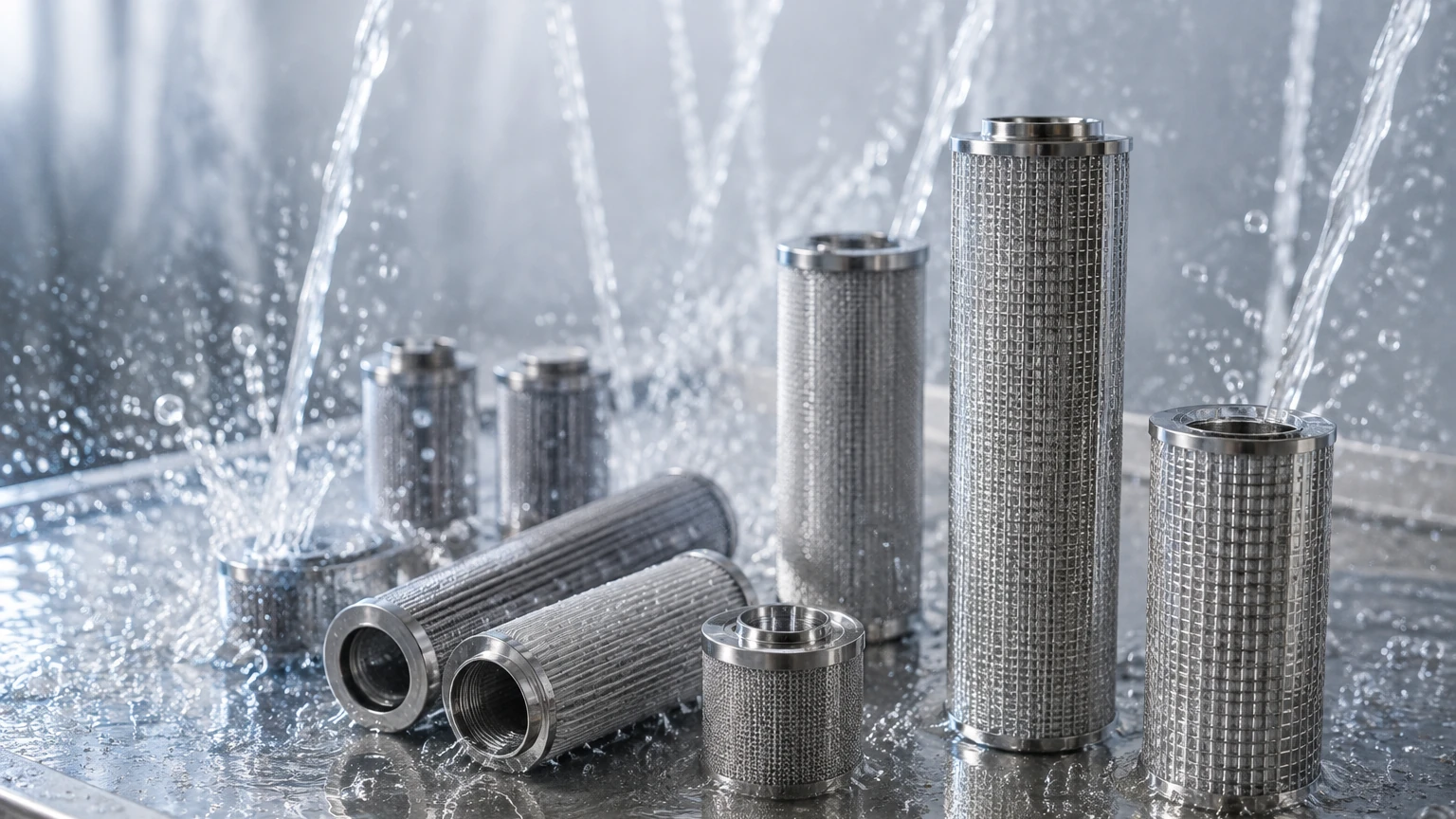
The cip method of cleaning refers to the practice of cleaning the interior surfaces of pipes, vessels, process equipment, and filters without disassembly. In the context of filtration, this involves circulating cleaning solutions through the filter housing and the filter media itself—such as stainless steel cartridges or wedge wire screens—at specific velocities, temperatures, and chemical concentrations.
For filtration systems, the primary goal of CIP is to remove "fouling"—the accumulation of particles, proteins, fats, or mineral scales that block the pores of the filter media. As fouling increases, the differential pressure across the filter rises, which can lead to reduced flow rates or even structural failure of the filter element if not addressed. A well-designed CIP system restores the permeability of the filter media, ensuring that the system returns to its baseline performance after each cycle.
The Four Pillars of Effective CIP: TACT Parameters
The success of the cip method of cleaning relies on the precise balance of four interdependent variables, often referred to by the acronym TACT: Time, Action, Concentration, and Temperature. Engineering a filtration system requires a deep understanding of how these parameters interact with the specific contaminants being filtered.
Time
The duration of each cleaning phase is critical. The cleaning solution must remain in contact with the filter media long enough to chemically break down or physically dislodge the contaminants. For stainless steel filters, time is often adjusted based on the thickness of the filter cake or the depth of the filtration media.
Action (Mechanical Force)
In CIP, mechanical action is primarily provided by the fluid velocity. To ensure thorough cleaning of wire mesh or sintered metal, the flow must be turbulent. Engineers typically aim for a Reynolds number greater than 3,000 to ensure that the fluid creates enough shear stress to scrub the surfaces of the filter wires and internal pores. In some applications, backwashing—reversing the flow of the cleaning fluid—is employed to push contaminants out of the filter structure.
Concentration
Chemical cleaning agents, such as caustic soda (sodium hydroxide) for organic matter or nitric acid for mineral scale, must be used at the correct concentration. Higher concentrations may speed up cleaning but increase the risk of corrosion or seal degradation. Stainless steel 316L is favored in these applications precisely because it can withstand the concentrations required for high-level sanitization.
Temperature
Increasing the temperature of the cleaning solution generally improves the solubility of contaminants and accelerates chemical reactions. Most CIP cycles operate between 60°C and 90°C. However, engineers must account for the thermal expansion of metal filter components and ensure that the housing seals can withstand these temperatures without leaking.
A Step-by-Step Breakdown of the CIP Cycle
While every industrial application has unique requirements, a standard cip method of cleaning for a stainless steel filtration system typically follows a structured sequence of steps to ensure complete soil removal and sanitization.
1. Pre-Rinse: The cycle begins with a water rinse to remove the bulk of the loose debris and residual product. This prevents the subsequent cleaning chemicals from being prematurely neutralized by heavy soil loads.
2. Caustic Wash: A circulating alkaline solution (typically 0.5% to 2.0% NaOH) is used to dissolve fats, proteins, and organic residues. This is the primary cleaning phase for most food and beverage applications.
3. Intermediate Rinse: Fresh water is circulated to flush out the caustic solution and the dissolved organic matter, preparing the system for the acid wash if necessary.
4. Acid Wash: If mineral scaling or milk stone is a concern, an acidic wash (using nitric or phosphoric acid) is performed. This step is also crucial for passivating the stainless steel surfaces, maintaining the protective chromium oxide layer that prevents corrosion.
5. Final Rinse: A final flush with high-quality water (often deionized or reverse osmosis water) ensures that no chemical residues remain in the filter housing or media.
6. Sanitization: The final step involves the use of thermal sanitization (hot water or steam) or chemical sanitizers (such as peracetic acid) to eliminate any remaining microorganisms. For high-purity applications, the Main Page of a filtration supplier often provides specifications on the steam-sterilizability of their filter cartridges.
Engineering Considerations for CIP-Compatible Filter Design
Not all industrial filters are equally suited for the cip method of cleaning. To ensure that a filter can be effectively cleaned in place, several engineering design factors must be considered during the procurement and system integration phases.
Surface Finish and Geometry
The internal surfaces of the filter housing and the filter media itself should be as smooth as possible. In sanitary applications, a surface roughness (Ra) of less than 0.8 μm is often required. This prevents bacteria and particles from becoming trapped in microscopic crevices. Kaifil specializes in precision-manufactured stainless steel components that meet these stringent surface finish requirements.
Elimination of Dead Legs
A "dead leg" is an area in the piping or housing where fluid can stagnate, preventing the cleaning solution from reaching the surface with sufficient velocity. CIP-compatible filter housings are designed with contoured interiors and optimized inlet/outlet configurations to ensure that every square millimeter of the filter media is exposed to turbulent flow.
Structural Integrity
During a CIP cycle, filters are often subjected to higher pressures and flow rates than during normal operation, especially during backwashing or pulse cleaning. The filter media must be robust enough to resist deformation or "media migration" (the shedding of filter fibers). Sintered metal mesh and wedge wire are preferred for CIP because they offer superior structural stability compared to thin wire cloth or non-woven materials.
Material Selection and Chemical Compatibility
The effectiveness of the cip method of cleaning is heavily dependent on the material of the filter and the chemicals used. Selecting the wrong material can lead to catastrophic failure through pitting corrosion, stress corrosion cracking, or general thinning of the metal.
* Stainless Steel 304: Suitable for mild cleaning agents and non-corrosive environments. It is often used in general industrial water treatment.
* Stainless Steel 316L: The industry standard for CIP. The addition of molybdenum and a lower carbon content provides excellent resistance to chlorides and the acidic solutions used in the pharmaceutical and food industries.
* Specialty Alloys: In highly aggressive environments involving high concentrations of hot chlorides, alloys like Hastelloy or Monel may be required to ensure the filter survives repeated CIP cycles.
Engineers must also verify the compatibility of the elastomers used for O-rings and gaskets. EPDM and Viton (FKM) are common choices, but their suitability depends on the specific temperatures and chemicals used in the CIP protocol.
Monitoring and Validating CIP Performance
To ensure that the cip method of cleaning is achieving the desired results, industrial systems must incorporate monitoring and validation protocols. This is particularly important in regulated industries like pharmaceuticals, where cleaning validation is a legal requirement.
Differential Pressure (DP) Monitoring
The most immediate indicator of cleaning success is the return of the differential pressure to its "clean" baseline. If the DP remains high after a CIP cycle, it indicates that the pores of the filter are still partially blocked, necessitating a longer cycle, higher chemical concentration, or manual intervention.
Conductivity Sensors
Conductivity sensors are used to monitor the concentration of cleaning chemicals and to ensure that the final rinse has successfully removed all chemical residues. By tracking conductivity, the system can automatically transition between phases of the CIP cycle, reducing water and chemical waste.
Analytical Testing
For high-stakes applications, validation may involve testing the final rinse water for Total Organic Carbon (TOC) or conducting microbial swabbing of the filter surfaces. These tests provide empirical proof that the cip method of cleaning has met the required hygiene standards.
Common Risks and Maintenance Strategies for CIP Systems
While the cip method of cleaning is highly efficient, it is not without risks. Improperly managed CIP can lead to equipment damage or product contamination. One common risk is thermal shock, which occurs when a cold rinse is immediately followed by a high-temperature wash. This can cause rapid expansion and contraction, leading to fatigue in the metal filter media or the cracking of welds.
Another risk is the buildup of "recalcitrant soils"—contaminants that are resistant to standard CIP chemicals. In these cases, periodic off-site ultrasonic cleaning or specialized chemical soaking may be required to supplement the in-place cleaning. Engineers should work closely with manufacturers like Kaifil to determine the optimal replacement cycle for filter elements, as even the best CIP protocol cannot indefinitely prevent the gradual degradation of filter media over years of service.
By focusing on high-quality stainless steel filtration solutions and adhering to scientifically sound CIP principles, industrial operators can achieve a balance between high throughput and uncompromising cleanliness. For more information on selecting the right filter media for your specific CIP requirements, you may review product options and application support on our Main Page. Understanding the intersection of material science and fluid dynamics is the key to mastering the cip method of cleaning in any industrial environment.
