


Cip Wash
In modern industrial processing, maintaining the hygiene and efficiency of filtration systems is a critical operational requirement. Clean-In-Place (CIP) technology has revolutionized how industries such as food and beverage, pharmaceuticals, and chemical processing manage their equipment maintenance. A cip wash refers to the method of cleaning the interior surfaces of pipes, vessels, and filtration components without the need for disassembly. For engineers and facility managers, understanding the technical nuances of CIP processes is essential for optimizing the lifespan and performance of stainless steel filtration media.
Industrial filters, particularly those manufactured from stainless steel wire mesh or sintered metal, are specifically designed to withstand the rigorous thermal and chemical demands of a CIP cycle. By integrating effective cleaning protocols, facilities can significantly reduce downtime, minimize manual labor, and ensure consistent product quality. This guide examines the engineering principles of CIP, the compatibility of filtration hardware, and the technical considerations required to implement a successful cleaning regime.
The Role of CIP Wash in Industrial Filtration Systems
The primary objective of a cip wash is to remove foulants—such as proteins, minerals, fats, or chemical residues—that accumulate on the filter surface during production. In a filtration context, fouling leads to an increase in differential pressure (DP), which can compromise flow rates and potentially damage the filter element if not addressed.
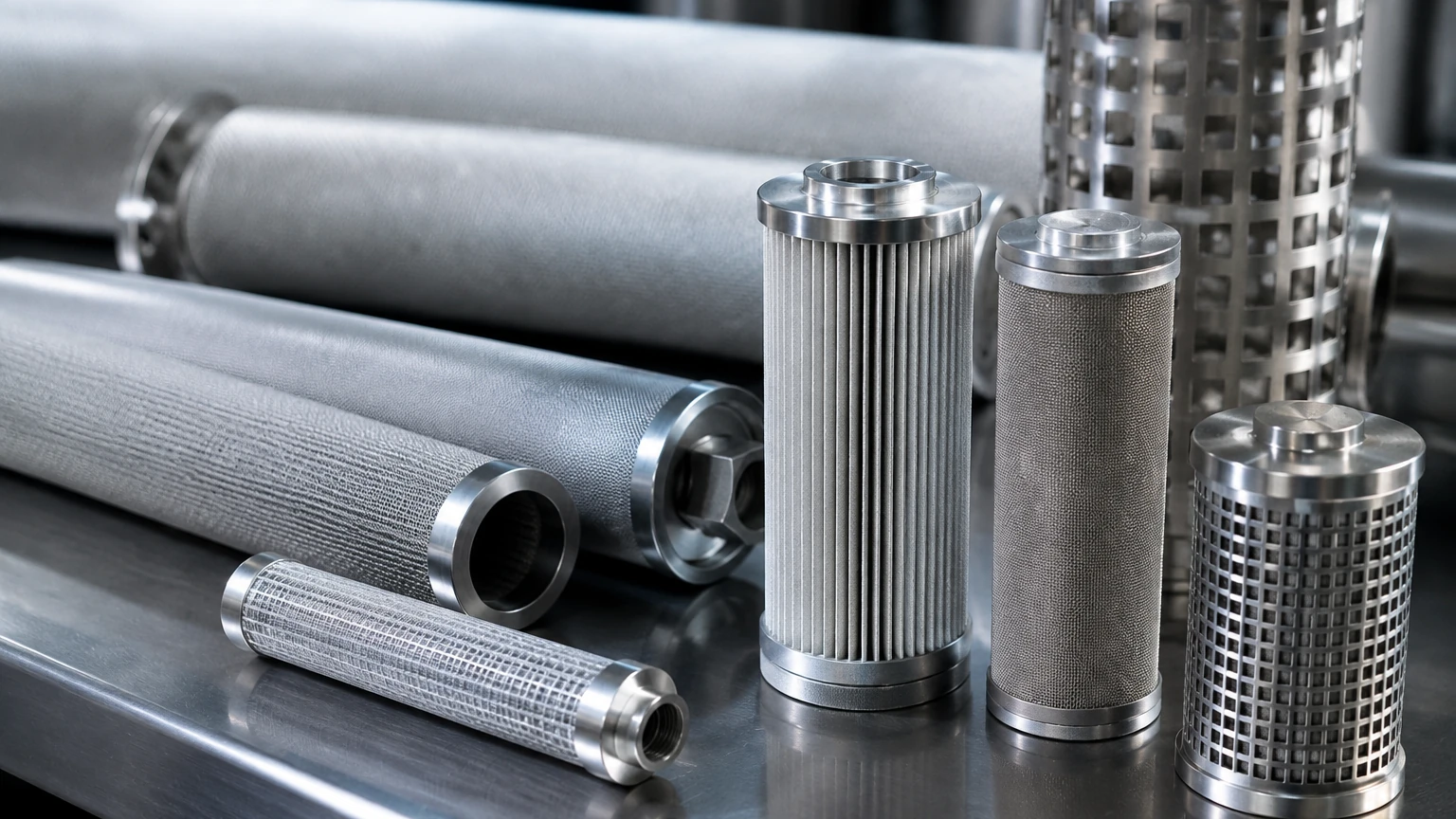
Unlike disposable filters, which must be replaced once they reach their terminal pressure drop, custom stainless steel filtration solutions are engineered for reuse. The ability to perform a CIP cycle directly within the process line is what makes these components cost-effective for high-volume industrial applications. For technical specifications on reusable filter elements, engineers can refer to the Main Page of the manufacturer to evaluate material grades and mesh configurations.
Effective CIP relies on a combination of mechanical and chemical energy. In filtration systems, this often involves reversing the flow (back-flushing) or circulating cleaning agents at high velocities to dislodge particles trapped within the wire mesh or sintered layers. The success of this process is governed by four interdependent variables: time, temperature, chemical concentration, and mechanical action (turbulence).
Engineering the CIP Cycle: Time, Temperature, and Turbulence
To achieve a repeatable and thorough cleaning result, the CIP cycle must be precisely engineered based on the nature of the contaminant and the geometry of the filter.
Mechanical Action and Flow Velocity
Mechanical energy in a cip wash is generated by the flow velocity of the cleaning fluid. For effective soil removal, the fluid must reach a state of turbulent flow. In engineering terms, this is typically defined by a Reynolds number (Re) greater than 3,000, although many industrial standards recommend Re > 10,000 for complex geometries like pleated wire mesh. High velocity creates the shear stress necessary to lift particles from the stainless steel surface.
Thermal Energy (Temperature)
Temperature plays a dual role: it reduces the viscosity of the cleaning solution, allowing it to penetrate the filter pores more effectively, and it increases the rate of chemical reactions. For instance, fats and oils are more easily emulsified at temperatures above their melting points. However, engineers must ensure that the filter seals, gaskets, and the metal itself are rated for the intended CIP temperature, which often ranges from 60°C to 90°C (140°F to 194°F).
Chemical Concentration and Contact Time
The choice of chemicals depends on the process media. Caustic solutions (typically Sodium Hydroxide) are used to break down organic soils, while acid washes (such as Nitric or Phosphoric acid) are employed to remove mineral scales and milk stone. The contact time must be sufficient for these chemicals to react with the foulants without causing corrosion to the filter media.
Structural Integrity: Why Stainless Steel Filters Excel in CIP Applications
Not all filter materials can survive the repetitive stress of a cip wash. Stainless steel, particularly grades 304 and 316L, is the industry standard for CIP-compatible filtration for several technical reasons:
1. Thermal Resistance: Stainless steel maintains its structural integrity across a wide temperature gradient, preventing the warping or softening that can occur with polymer-based filters during hot caustic washes.
2. Chemical Inertness: 316L stainless steel offers superior resistance to a broad range of cleaning agents, including the aggressive oxidizers and acids used in the pharmaceutical and food industries.
3. Mechanical Strength: During a back-wash or high-velocity CIP cycle, the filter element is subjected to significant pressure differentials in the reverse direction. Sintered wire mesh and reinforced filter cartridges are designed to resist collapsing or bursting under these loads.
4. Surface Finish: The cleanability of a filter is heavily influenced by its surface roughness (Ra). Precision-manufactured stainless steel filters can be electropolished to achieve an Ra of less than 0.8 ¼m, reducing the ability of bacteria and particles to adhere to the surface.
When selecting a filter for a CIP-enabled system, it is vital to confirm that the mesh layers are securely bonded. Sintered mesh is often preferred because the individual wires are fused at their contact points, ensuring that the pore size remains constant even after hundreds of cleaning cycles.
Optimizing Filtration Performance through Effective Back-Flushing
In many automated systems, the cip wash is preceded or accompanied by a back-flush. This process involves reversing the flow of the process fluid or a dedicated cleaning fluid through the filter media.
For a back-flush to be effective, the reverse pressure must be high enough to overcome the capillary forces holding particles within the mesh. However, engineers must carefully calculate the maximum allowable reverse differential pressure. If the back-flush pressure exceeds the structural limits of the filter support core, the media may deform.
Custom filtration solutions often incorporate perforated inner cores or outer cages to provide the necessary support during these high-pressure reversals. By optimizing the back-flush frequency—often triggered by a differential pressure sensor—operators can maintain a "clean" baseline pressure drop and extend the interval between full CIP chemical washes.
Material Compatibility and Chemical Selection for CIP Wash
A common failure point in CIP systems is not the metal filter itself, but the associated seals and gaskets. When designing a filtration system for cip wash compatibility, engineers must evaluate the entire assembly.
* EPDM (Ethylene Propylene Diene Monomer): Excellent for hot water and steam, and resistant to many polar chemicals and diluted acids. However, it is not compatible with petroleum-based oils.
* PTFE (Polytetrafluoroethylene): Offers near-universal chemical resistance and can withstand high CIP temperatures, though it is less resilient (more prone to cold flow) than elastomers.
* FKM (Viton): Highly resistant to chemicals and oils but can degrade when exposed to certain caustic cleaning agents at high temperatures.
Failure to match the gasket material to the CIP chemistry can lead to leaks, bypass of unfiltered fluid, or contamination of the process stream. It is standard practice to perform a compatibility audit before introducing new cleaning protocols to an existing filtration setup.
Validation and Monitoring of CIP Effectiveness
In regulated industries like pharmaceuticals and food production, a cip wash must be validated to prove that it consistently achieves the required level of cleanliness. This is handled through several monitoring techniques:
Differential Pressure (DP) Monitoring
The most immediate indicator of a successful CIP cycle is the return of the filter's differential pressure to its "clean" state. If the DP remains high after a wash, it suggests that deep-seated fouling or "blinding" of the mesh has occurred, requiring a more aggressive cleaning strategy or ultrasonic cleaning.
Conductivity Sensors
Conductivity sensors are used to monitor the concentration of cleaning chemicals and to ensure that the final rinse has successfully removed all chemical residues. A return to the baseline conductivity of the rinse water indicates that the system is safe to return to production.
Analytical Testing
For high-purity applications, rinse water samples may be analyzed for Total Organic Carbon (TOC) or subjected to microbial swabbing. These tests confirm that the CIP cycle has eliminated biofilms and chemical traces to the parts-per-million (ppm) level.
Economic Impact: TCO of CIP-Compatible Filtration Solutions
While the initial capital expenditure for a stainless steel, CIP-compatible filtration system is higher than that of a disposable plastic housing, the Total Cost of Ownership (TCO) is significantly lower in the long term.
* Reduced Consumable Costs: Reusable filters eliminate the recurring expense of purchasing, stocking, and disposing of filter cartridges.
* Waste Reduction: CIP-compatible systems align with sustainability goals by reducing the volume of solid waste generated by the facility.
* Labor Efficiency: Automated CIP cycles reduce the man-hours required for equipment teardown and manual cleaning.
* Process Consistency: Automated cleaning ensures that the filter is cleaned to the same standard every time, reducing the risk of human error and subsequent product batches being out of specification.
By investing in high-quality filtration components that are designed for the rigors of a cip wash, companies can achieve a faster return on investment (ROI) through improved uptime and reduced operational overhead.
Technical Checklist for Purchasing CIP-Compatible Filters
Before selecting a filtration solution for a process that requires a cip wash, engineering teams should confirm the following technical details with their manufacturer:
1. Maximum Operating Temperature: Does the filter assembly (including seals) support the intended CIP temperature?
2. Pressure Ratings: What is the maximum forward and reverse differential pressure the element can withstand?
3. Chemical Compatibility: Is the stainless steel grade (304 vs 316L) and the gasket material compatible with the specific caustic and acid concentrations used in the facility?
4. Filtration Rating and Geometry: Will the mesh structure allow for effective soil release during a back-flush, or is the contaminant likely to become permanently lodged (depth-loaded)?
5. Surface Finish Requirements: Does the application require a specific Ra value or electropolishing to prevent bacterial adhesion?
For more detailed specifications on custom filter designs and engineering support for your specific application, visit the Main Page to explore the full range of industrial filtration solutions. Understanding these parameters ensures that the filtration system remains a reliable asset rather than a bottleneck in the production process.
