


Coalescer
In the landscape of industrial fluid processing, the separation of immiscible phases—whether liquid-from-liquid or liquid-from-gas—represents a critical engineering challenge. A coalescer is a specialized filtration and separation device designed to merge small droplets of a dispersed phase into larger droplets, which can then be easily separated from a continuous phase based on density differences. For engineers and technical procurement teams, understanding the mechanics, material requirements, and selection criteria of coalescers is essential for maintaining process integrity and protecting downstream equipment.
Industrial coalescers are not merely filters; they are sophisticated mechanical separators that rely on the principles of fluid dynamics and surface chemistry. Unlike standard particulate filters that trap solids, a coalescer facilitates the physical transformation of a dispersed fluid to enhance its removal. This process is vital in sectors ranging from petrochemical refining and hydraulic power systems to food processing and pharmaceutical manufacturing.
The Engineering Principles of Coalescence
The operation of a coalescer is governed by three distinct stages: capture, coalescence, and drainage. Each stage requires specific mechanical properties within the filter media to ensure high separation efficiency.
1. Droplet Capture
As the contaminated fluid passes through the coalescing media—often a high-surface-area matrix like stainless steel wire mesh or specialized fiber glass—the dispersed droplets come into contact with the media fibers. This capture occurs through three primary mechanisms:
- Inertial Impaction: Larger droplets, unable to follow the fluid streamlines around a fiber, strike the fiber directly.
- Interception: Droplets that follow the streamline but come within one droplet radius of the fiber surface are captured.
- Brownian Diffusion: Extremely small sub-micron droplets move erratically due to molecular collisions, eventually contacting the fiber surface.
2. Coalescence (Merging)
Once captured, the droplets adhere to the fibers. As more droplets are intercepted, they move along the fiber length and accumulate at the intersections of the media matrix. The surface tension of the liquid causes these small droplets to merge, or "coalesce," into larger globules. This stage is highly dependent on the "wettability" of the media. For effective liquid-liquid separation, the media must often be preferentially wetted by the dispersed phase.
3. Drainage and Separation
When the coalesced droplets reach a sufficient size, the drag force exerted by the continuous phase fluid overcomes the adhesive force holding the droplet to the fiber. The large droplets are then released and "drain" through the media. Because these droplets are now significantly larger and have a different density than the continuous phase, they either settle to the bottom of the housing (in the case of water in oil) or rise to the top (in the case of oil in water or liquid in gas), where they can be mechanically discharged.
Types of Coalescers and Their Applications
Coalescers are generally categorized by the phases they are intended to separate. Selecting the correct type is the first step in engineering an effective filtration solution.
Liquid-Liquid Coalescers
These are most commonly used to remove water from hydrocarbons, such as diesel, jet fuel, or lubricating oils. In industrial hydraulic systems, water contamination can lead to corrosion, reduced lubricity, and component failure. A liquid-liquid coalescer utilizes a primary coalescing stage to grow water droplets and a secondary separator stage—often using a hydrophobic material like Teflon-coated stainless steel mesh—to block the enlarged water droplets while allowing the dehydrated oil to pass through.
Gas-Liquid Coalescers
Also known as mist eliminators or moisture separators, these devices remove liquid aerosols from gas streams. Common applications include removing oil mist from compressed air or protecting gas turbines from salt-water spray in marine environments. High-performance gas-liquid coalescers are capable of reducing liquid content to levels as low as 0.01 ppm (parts per million).
Material Selection: The Role of Stainless Steel
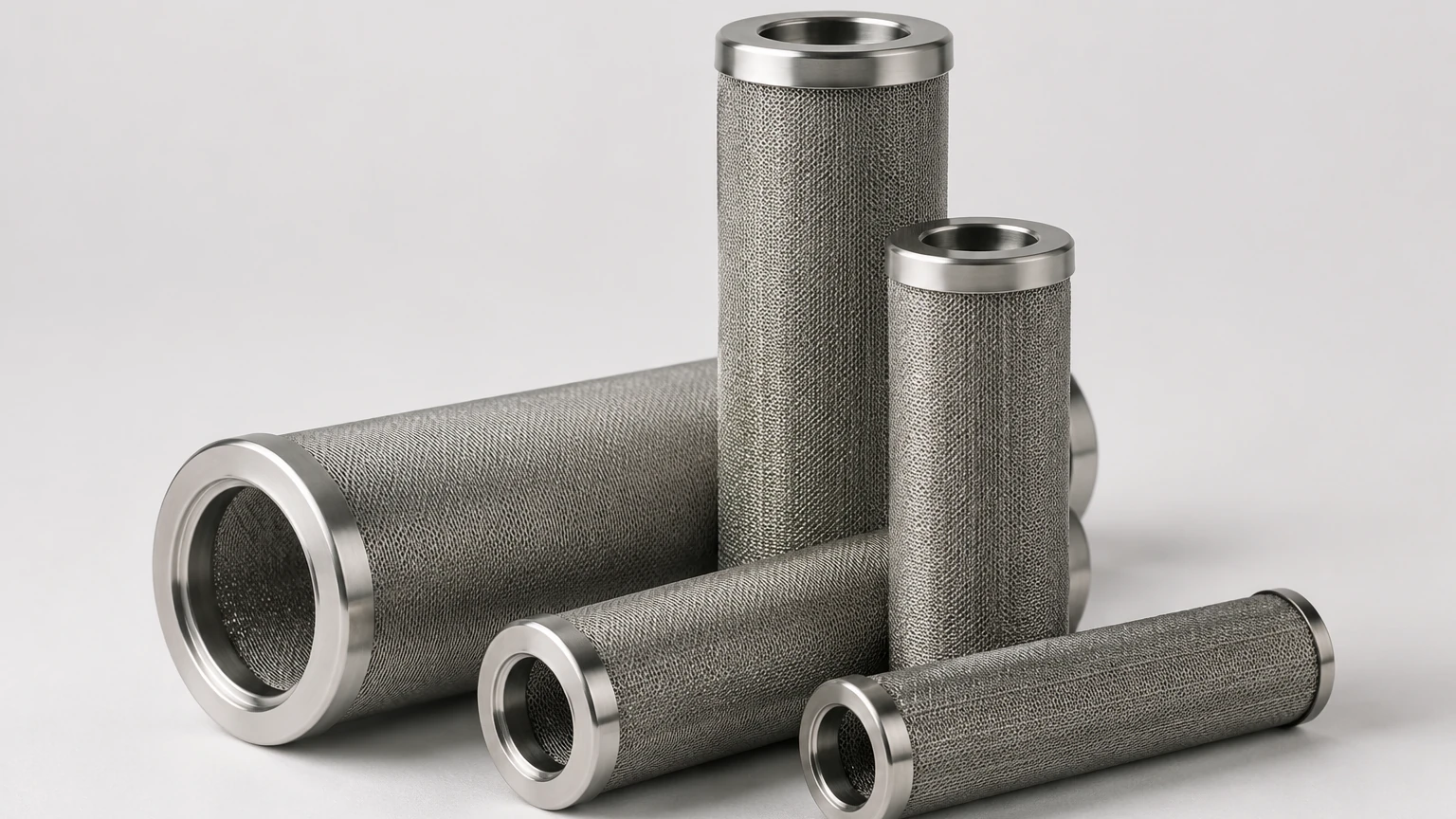
In demanding industrial environments, the choice of material for the coalescer internal components and media is paramount. While synthetic fibers are used in some disposable applications, stainless steel remains the industry standard for high-temperature, high-pressure, and chemically aggressive environments. As a professional manufacturer, Kaifil emphasizes the use of precision-engineered metal components to ensure long-term reliability.
Durability and Chemical Compatibility
Stainless steel (typically Grades 304, 316, or 316L) offers exceptional resistance to corrosion, which is critical when dealing with acidic gas streams or water-contaminated fuels. Unlike polymer-based media, stainless steel does not swell or degrade when exposed to many industrial solvents or high-velocity flows.
Structural Integrity
In high-pressure hydraulic or process lines, the coalescer media must withstand significant differential pressures. Sintered wire mesh and multi-layer stainless steel structures provide the necessary mechanical strength to prevent media migration—a common failure mode where fragments of the filter media enter the clean fluid stream.
Cleanability and Reusability
One of the primary advantages of metal-based coalescing elements is their ability to be cleaned and reused. Through ultrasonic cleaning or backwashing, accumulated solid particulates can be removed, restoring the pressure drop and extending the service life of the element. This significantly reduces the total cost of ownership compared to disposable glass fiber cartridges.
Key Evaluation Criteria for Engineers
When specifying a coalescer for a new project or as a replacement component, engineers should evaluate the following technical parameters:
1. Filtration Rating (Micron Level): What is the smallest droplet size the coalescer needs to capture? Standard industrial coalescers often target droplets in the 0.3 to 10-micron range.
2. Flow Velocity: Coalescence is a velocity-sensitive process. If the flow rate is too high, the drag forces will strip droplets from the fibers before they have grown large enough to separate, leading to "carryover."
3. Interfacial Tension (IFT): This is a measure of how easily two liquids can be separated. Fluids with low IFT (often caused by the presence of surfactants) are much harder to coalesce and may require specialized media treatments.
4. Pressure Drop (Delta P): Both the clean pressure drop and the maximum allowable saturated pressure drop must be considered. A high pressure drop indicates that the media is fouled or that the flow rate exceeds the design capacity.
5. Housing Configuration: Vertical housings are typically preferred for gas-liquid separation to allow gravity to assist in drainage, while horizontal housings are often used for high-volume liquid-liquid separation.
Addressing Common Operational Risks
Even a well-designed coalescer can face operational challenges. One of the most frequent issues is "disarming." This occurs when surfactants (surface-active agents) in the fluid coat the coalescing media, changing its surface energy and preventing droplets from adhering and merging. Engineers must confirm if the process fluid contains additives or detergents that might interfere with standard media.
Another risk is solid particulate fouling. Coalescers are designed to separate liquids, not to act as primary trash filters. If the fluid contains high levels of solid contaminants, a pre-filter should be installed upstream of the coalescer to prevent the media from plugging, which would otherwise lead to frequent maintenance cycles and premature failure.
Customization and OEM Solutions
Every industrial process has unique variables, from fluid viscosity to installation space constraints. Standard off-the-shelf coalescers often fail to meet the specific efficiency or durability requirements of specialized chemical or pharmaceutical lines. This is where customized engineering becomes essential.
Customization options often include:
- Variable Mesh Density: Tailoring the pore size and surface area of the stainless steel mesh to match specific droplet size distributions.
- Multi-Stage Designs: Integrating particulate filtration and coalescence into a single cartridge to save space.
- Custom End Fittings: Ensuring compatibility with existing vessel hardware for seamless retrofitting.
By working with a manufacturer that understands the nuances of metal filtration, engineering teams can develop solutions that balance initial capital expenditure with long-term operational efficiency.
Conclusion
The coalescer is a fundamental component in ensuring the purity of industrial fluids and the longevity of downstream machinery. By leveraging the principles of droplet physics and the durability of stainless steel media, facilities can achieve high-efficiency separation even in the most demanding environments. When selecting a filtration partner, it is vital to prioritize technical expertise, material quality, and the ability to provide tailored solutions that address specific process challenges.
For more information on high-performance filtration components and custom stainless steel solutions, visit our Main Page to explore our full range of industrial capabilities. Understanding the total cost of ownership—including replacement cycles, energy consumption due to pressure drop, and the value of protecting critical assets—will lead to more informed and effective purchasing decisions for any industrial filtration project.
