


Coalescing Filter Element Manufacturers
In industrial fluid processing, the separation of immiscible liquids or the removal of liquid aerosols from gas streams is a critical technical requirement. Coalescing filter elements are engineered to perform this specific task by merging small droplets into larger ones that can be easily drained or separated by gravity. For procurement officers and systems engineers, identifying reliable coalescing filter element manufacturers is not merely a matter of sourcing a commodity; it is about finding a technical partner capable of meeting stringent performance tolerances and material compatibility requirements.
Industrial filtration demands vary significantly across sectors such as chemical processing, oil and gas, and pharmaceutical manufacturing. A standard filter might remove solid particulates, but a coalescing element must manage phase separation under varying pressures, temperatures, and flow rates. This article examines the engineering considerations, material science, and manufacturer evaluation criteria essential for selecting high-performance coalescing solutions.
The Engineering Principles of Coalescence
To effectively evaluate coalescing filter element manufacturers, one must first understand the physics governing the filtration process. Coalescence is a multi-stage mechanical process rather than a simple sieving action. It generally involves three distinct phases: capture, coalescence, and release.
1. Capture: Microscopic droplets suspended in the carrier fluid (gas or liquid) are intercepted by the filter media. This occurs through Brownian motion, inertial impaction, or direct interception. In high-velocity gas streams, inertial impaction is the primary mechanism, where droplets strike the fibers of the media and adhere.
2. Coalescence: Once captured, these tiny droplets travel along the fibers of the filter media, colliding with other droplets. Due to the surface tension properties of the media, these droplets merge (coalesce) into larger drops. The choice of media—whether hydrophilic or hydrophobic—is critical here to ensure the droplets move toward the outer surface of the element rather than remaining trapped within the matrix.
3. Release: As the droplets grow, they reach a size where the force of the fluid flow or gravity overcomes the surface tension holding them to the media. In gas-liquid coalescers, these larger drops fall into a collection sump. In liquid-liquid coalescers, the larger droplets form a distinct layer that can be separated via a settling tank or a secondary separator stage.
Manufacturers must calibrate the density and fiber diameter of the media to balance filtration efficiency with pressure drop. A higher density may capture smaller droplets but will increase the energy required to push fluid through the system, leading to higher operational costs.
Material Selection and Structural Integrity
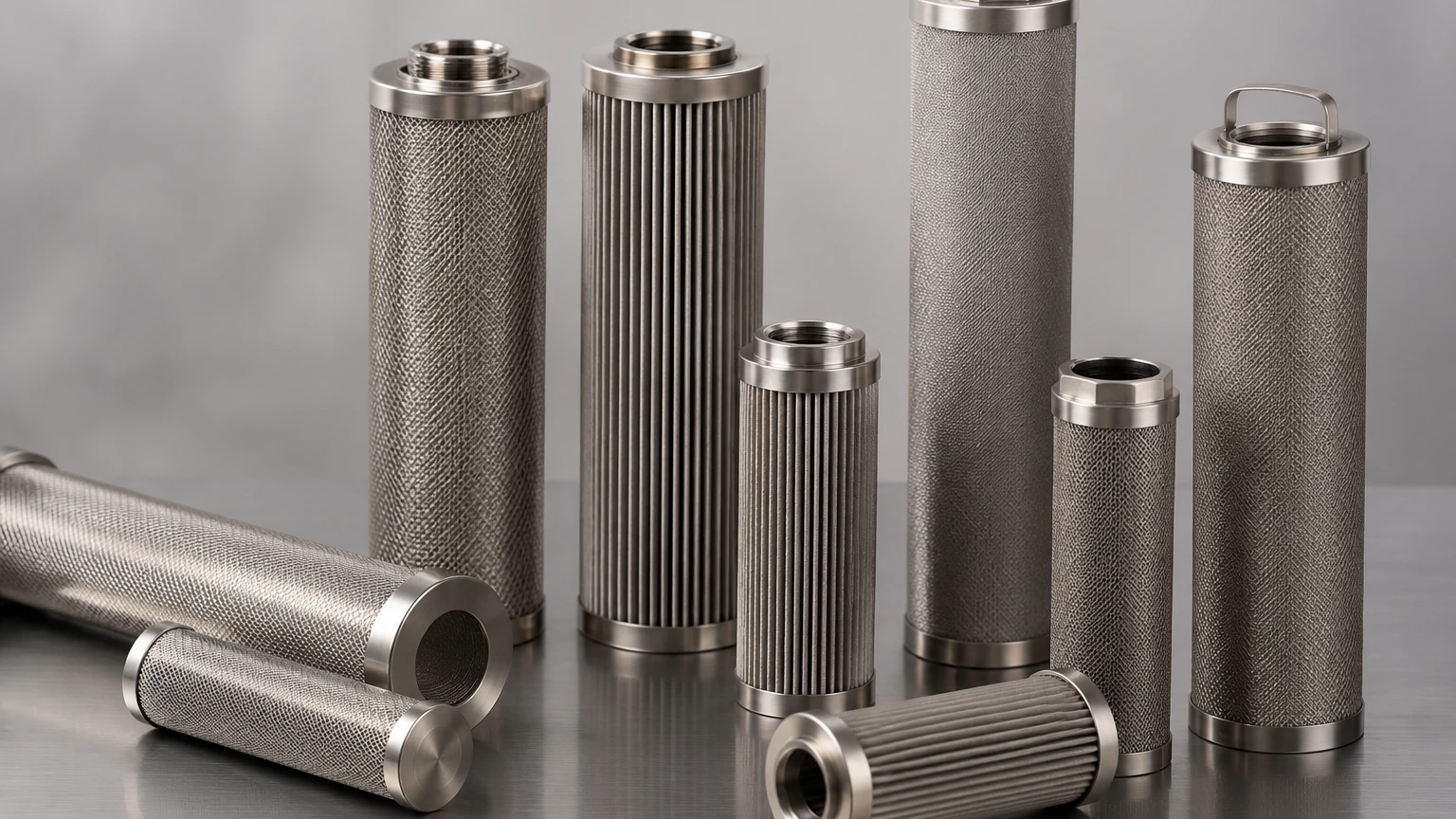
While many coalescing filters utilize borosilicate glass microfibers or synthetic polymers, industrial environments often necessitate more robust materials. Stainless steel filtration solutions are increasingly preferred in applications involving high temperatures, corrosive chemicals, or high-pressure differentials.
Professional manufacturers like Kaifil specialize in the use of stainless steel wire mesh and sintered metal components. Stainless steel (typically 304 or 316L) offers several advantages:
* Thermal Stability: Unlike polymer-based filters, stainless steel elements can operate in environments exceeding 250°C without losing structural integrity or off-gassing contaminants.
* Chemical Compatibility: In chemical processing and pharmaceutical applications, the filter media must resist degradation from solvents, acids, and bases. Stainless steel provides a broad range of chemical resistance.
* Cleanability and Reusability: One of the most significant cost considerations is the lifespan of the filter. Stainless steel elements can often be cleaned via ultrasonic baths or back-flushing, significantly reducing the total cost of ownership compared to disposable cartridges.
* Mechanical Strength: Coalescing elements are often subject to high differential pressures. The use of reinforced inner cores and outer cages made of precision-engineered metal ensures the element does not collapse under stress.
For engineers looking to review specific material grades and structural designs, the Main Page of the Kaifil website provides comprehensive data on the technical specifications of custom stainless steel filtration components.
Critical Evaluation Criteria for Coalescing Filter Element Manufacturers
When vetting potential coalescing filter element manufacturers, technical teams should look beyond the price per unit. The following criteria are essential for ensuring long-term system reliability:
Customization and Engineering Support
Standard off-the-shelf filters rarely meet the specific needs of complex industrial systems. A manufacturer should offer OEM and customized design services. This includes the ability to adjust the micron rating, dimensions, and end-cap configurations to fit existing housings. Engineering support should include flow rate calculations and pressure drop predictions based on the specific viscosity and density of the fluids being processed.
Quality Control and Testing Standards
Reliable manufacturers adhere to international standards such as ISO 2941 (Collapse/Burst Pressure Testing), ISO 2942 (Fabrication Integrity), and ISO 3968 (Differential Pressure vs. Flow Characteristics). Ask for documentation regarding bubble point tests, which verify the integrity of the filter media and the quality of the welds or seals.
Manufacturing Capabilities
In-house manufacturing capabilities, such as advanced welding (TIG, laser, or plasma), pleating, and sintering, are indicators of a manufacturer's control over the final product. For coalescing elements, the precision of the pleating process is vital; uneven pleat spacing can lead to flow channeling, which reduces the effective surface area and shortens the filter's life.
Common Risks in Coalescing Filter Procurement
Selecting the wrong manufacturer or a sub-standard element can lead to significant operational failures. One common risk is "media migration," where fibers from the filter element break off and contaminate the downstream fluid. This is particularly prevalent in low-quality fiberglass filters. Using high-quality stainless steel wire mesh filters virtually eliminates this risk, as the media is mechanically stable.
Another risk is inadequate phase separation. If the manufacturer does not correctly account for the surface tension of the liquids involved, the droplets may not coalesce effectively, leading to "carryover." Carryover can damage downstream equipment like turbines, compressors, or high-precision valves, leading to expensive repairs and unscheduled downtime.
Furthermore, engineers must be wary of manufacturers who do not provide clear data on "dirty" pressure drop. While a filter may perform well when clean, its performance as it accumulates particulates or as droplets saturate the media is what determines the actual replacement cycle. Manufacturers should provide a performance curve that helps engineers plan maintenance intervals.
Application-Specific Considerations
The requirements for coalescing filter element manufacturers vary by industry. Understanding these nuances is key to a successful partnership.
* Hydraulic Systems: In hydraulic applications, water contamination is a primary cause of component wear and fluid degradation. Coalescing filters are used to remove free and emulsified water from hydraulic oils. The manufacturer must ensure the media can handle high-viscosity fluids without excessive pressure build-up.
* Food and Beverage: Filtration components must meet FDA or equivalent food-safety standards. Stainless steel is the material of choice here due to its non-leaching properties and ability to withstand Clean-in-Place (CIP) sterilization processes.
* Chemical Processing: Here, the focus is often on separating organic phases from aqueous phases. The manufacturer must provide material compatibility charts to ensure that the gaskets, adhesives (if any), and the media itself will not react with the process chemicals.
Total Cost of Ownership (TCO) in Filtration
While the initial purchase price of a stainless steel coalescing element from specialized coalescing filter element manufacturers may be higher than a disposable synthetic alternative, the Total Cost of Ownership (TCO) is often much lower.
When calculating TCO, engineers should consider:
1. Replacement Frequency: How often does the element need to be changed?
2. Disposal Costs: Synthetic filters often require special disposal procedures if they have captured hazardous materials. Permanent stainless steel filters reduce the volume of waste.
3. Energy Consumption: A well-designed filter with a lower stable pressure drop reduces the load on pumps and compressors.
4. Downtime: The time required to change filters and the associated loss of production must be factored into the cost.
By choosing a manufacturer that focuses on durability and precision, such as Kaifil, industrial facilities can optimize their filtration processes for both performance and cost-efficiency. For those in the procurement phase, it is advisable to consult with technical experts to ensure the selected filter geometry and media grade are perfectly aligned with the operational environment.
Conclusion and Next Steps for Engineers
Selecting a coalescing filter element manufacturer is a strategic decision that impacts the efficiency and longevity of industrial machinery. Engineers should prioritize manufacturers who demonstrate deep technical knowledge of fluid dynamics, offer robust material options like stainless steel, and provide transparent testing data.
Before finalizing a supplier, confirm their ability to handle custom specifications and their track record in your specific industry. For a detailed look at high-performance filtration components and to discuss custom engineering requirements, visiting the Main Page of a professional manufacturer is the most effective way to begin the technical consultation process. By focusing on engineering integrity and material quality, organizations can ensure their filtration systems provide reliable, long-term service in even the most demanding industrial applications.
