


Coalescing Filter Separator
In industrial fluid processing, the presence of entrained liquids or aerosols in gas streams, or immiscible liquids in hydrocarbon fluids, can lead to significant operational inefficiencies, equipment damage, and product contamination. A coalescing filter separator is a critical engineered component designed to address these challenges by merging small droplets into larger ones that can be easily separated from the continuous phase. For engineers and procurement teams, understanding the technical nuances of these systems is essential for optimizing process reliability and minimizing the total cost of ownership.
As a professional manufacturer of custom stainless steel filtration solutions, Kaifil provides high-precision components that serve as the foundation for durable separation systems. By focusing on material integrity and filtration accuracy, industrial operators can achieve superior performance in demanding environments such as chemical processing, hydraulic systems, and water treatment. For more information on our complete range of industrial filtration components, visit our Main Page.
Understanding the Mechanics of Coalescence and Separation
The operation of a coalescing filter separator relies on the physical principles of interception, diffusion, and impingement. Unlike standard particulate filters that simply trap solids, a coalescer must manage the behavior of fluid droplets within a porous medium.
The Coalescence Process
In the first stage of the system, the fluid passes through a coalescing element, typically constructed from specialized media such as pleated stainless steel wire mesh or synthetic fibers. As the dispersed phase (e.g., water droplets in oil or oil aerosols in gas) moves through the tortuous path of the media, the droplets collide and adhere to the fibers. Through surface tension and molecular attraction, these micro-droplets merge to form larger, heavier drops.
Gravitational and Mechanical Separation
Once the droplets reach a sufficient size, they are either pulled down by gravity to a collection sump or blocked by a secondary separation stage. In gas-liquid applications, the velocity of the gas is reduced to allow the heavy droplets to fall out of the stream. In liquid-liquid applications, the secondary stage often utilizes a separator element with hydrophobic properties that allows the continuous hydrocarbon phase to pass while repelling the enlarged water droplets.
Key Components of a Coalescing Filter Separator System
A robust coalescing filter separator is more than just a housing; it is a multi-stage assembly designed to handle specific flow dynamics and contaminant loads.
1. The Pre-filtration Stage: Often, a particulate filter is placed upstream of the coalescer to remove solid contaminants. This prevents the coalescing media from becoming blinded by solids, which would significantly reduce its effective lifespan.
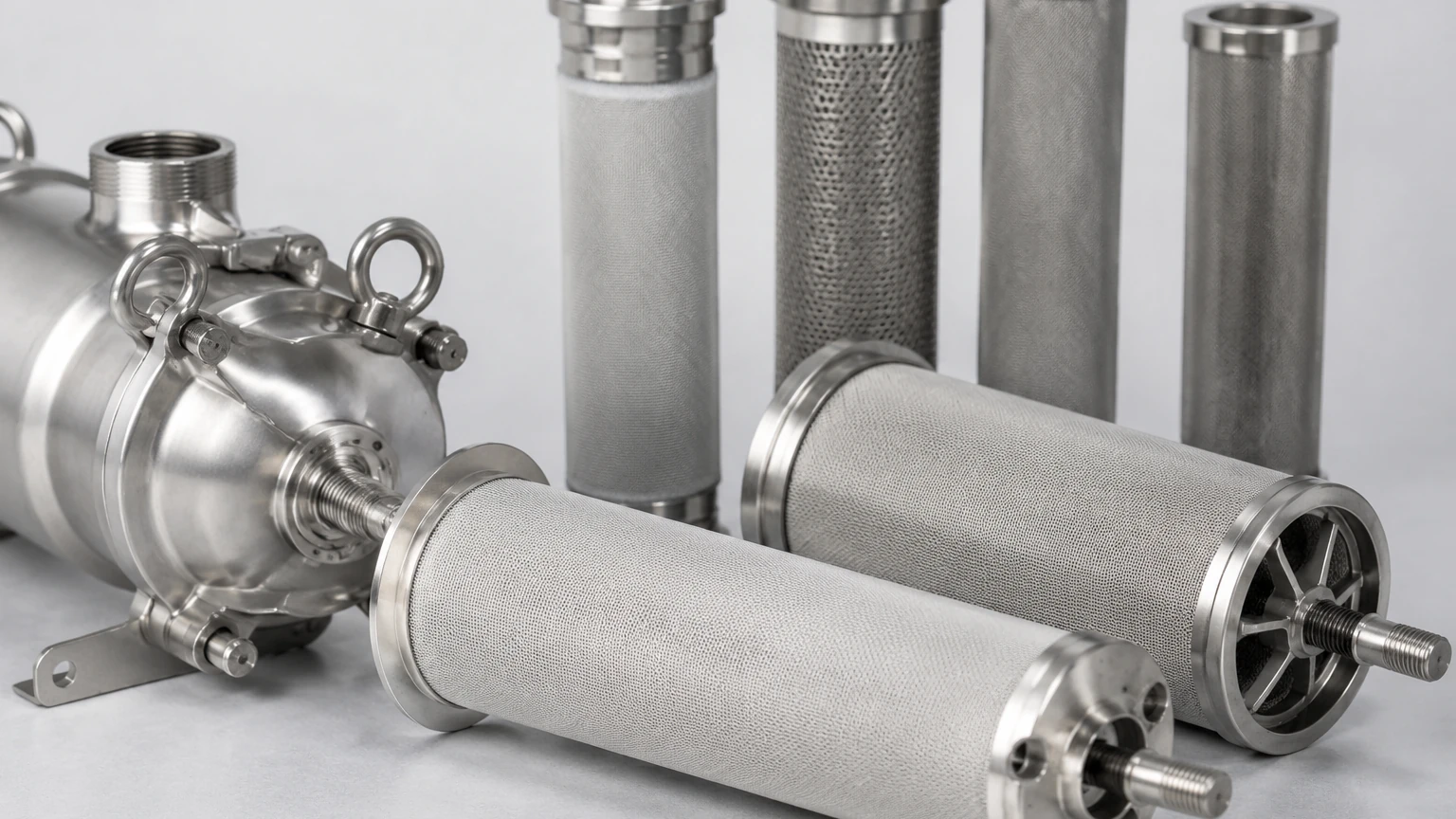
2. The Coalescing Element: This is the heart of the system. In high-temperature or corrosive environments, stainless steel wire mesh or sintered metal cartridges are preferred due to their structural integrity and chemical resistance.
3. The Separator Element: In two-stage systems, the separator element (often made of Teflon-coated screen or specialized synthetic mesh) acts as a final barrier to ensure no enlarged droplets are re-entrained into the clean fluid stream.
4. The Housing and Sump: The vessel must be designed to withstand system pressures and provide adequate volume for the collected liquid to settle without interfering with the main flow.
Engineering Criteria for Material Selection and Compatibility
When specifying a coalescing filter separator, material selection is the most critical factor in ensuring long-term performance. Engineers must evaluate the chemical compatibility of the filter media, seals, and housing with both the continuous and dispersed phases.
Stainless Steel vs. Synthetic Media
While synthetic fibers are common in standard compressed air applications, industrial chemical and hydraulic processes often require the durability of metal. Stainless steel (304, 316, or 316L) is the gold standard for many B2B applications because it offers:
* Thermal Stability: Capable of operating in high-temperature processes where polymers would degrade.
* Corrosion Resistance: Essential for handling sour gas, acidic chemicals, or saline environments.
* Cleanability: Unlike disposable synthetic elements, stainless steel mesh can often be cleaned and reused, reducing long-term waste and replacement costs.
Interfacial Tension (IFT)
The effectiveness of a coalescing filter separator is heavily influenced by the interfacial tension between the two liquids. Low IFT (often caused by surfactants or additives) makes it difficult for droplets to coalesce. In such cases, the filter media must be engineered with specific surface energies or increased surface area to force the coalescence of stable emulsions.
Performance Metrics: Efficiency, Flow Rate, and Pressure Drop
To evaluate the suitability of a coalescing filter separator for a specific application, technical professionals must analyze three primary performance indicators.
Filtration Efficiency
Efficiency is typically measured by the percentage of the dispersed phase removed or the parts per million (PPM) remaining in the effluent. For example, a high-performance coalescer might be required to reduce water content in aviation fuel from 500 PPM down to less than 15 PPM. Engineers should confirm the micron rating of the media, as smaller pore sizes generally provide higher efficiency but at the cost of higher pressure drop.
Differential Pressure (DP)
Pressure drop is the difference in pressure between the inlet and outlet of the filter. A clean coalescing filter separator should operate with a low initial DP. As the filter accumulates solids or as the liquid loading increases, the DP will rise. Monitoring this metric is vital for preventing element collapse and determining optimal replacement cycles.
Flux and Velocity
The velocity of the fluid through the media must be carefully controlled. If the velocity is too high, the shear forces can break apart the coalescing droplets before they can grow large enough to separate, a phenomenon known as "re-entrainment." Proper sizing of the housing and internal elements is necessary to maintain a laminar flow profile.
Industrial Applications and Operational Challenges
Coalescing filter separators are utilized across a broad spectrum of industries, each with unique operational demands.
* Chemical and Petrochemical: Used to remove water from hydrocarbons or to recover valuable liquid catalysts from gas streams. These environments require high resistance to aggressive solvents.
* Hydraulic and Lubrication Systems: Water contamination in hydraulic oil leads to oxidation, component wear, and fluid breakdown. A coalescing system provides continuous dehydration to maintain oil health.
* Compressed Gas Systems: Removing oil aerosols and water vapor from compressed air or natural gas is essential to protect downstream pneumatic tools, turbines, and compressors.
* Food and Beverage: In these applications, the materials must be FDA-compliant. Stainless steel filtration components are preferred for their hygienic properties and ability to withstand Clean-in-Place (CIP) cycles.
Common Risks
One of the primary risks in operating a coalescing filter separator is "slugging"—a sudden surge of liquid that overwhelms the coalescing media. Systems must be designed with adequate sump capacity or high-level alarms to manage these events. Additionally, the presence of surfactants can "poison" the media, preventing coalescence and requiring specialized media treatments.
Maintenance Strategies and Total Cost of Ownership
While the initial purchase price of a coalescing filter separator is a factor, the total cost of ownership (TCO) is driven by maintenance frequency, element cost, and energy consumption related to pressure drop.
Monitoring and Replacement Cycles
Engineers should implement a maintenance schedule based on differential pressure readings rather than time intervals alone. Replacing elements too early leads to unnecessary costs, while replacing them too late risks bypass or system contamination. For stainless steel elements, a regular cleaning protocol can extend service life significantly compared to disposable alternatives.
Cost Considerations
* Energy Costs: Higher DP requires more pump or compressor energy. Selecting a filter with a larger surface area can lower the operating DP and save energy over the life of the system.
* Waste Disposal: Disposable elements contribute to hazardous waste streams if they are saturated with oils or chemicals. Permanent stainless steel solutions can mitigate this environmental and financial burden.
Customization and OEM Solutions for Specialized Filtration
Standard off-the-shelf coalescing filter separators often fail to meet the precise requirements of complex industrial processes. Customization allows engineers to tailor the filtration system to specific flow rates, temperatures, and contaminant types.
Kaifil specializes in the engineering and manufacturing of custom metal filter components. By collaborating closely with technical teams, we develop solutions that integrate seamlessly into existing infrastructure. Whether you require a specific wire mesh weave for high-viscosity fluids or a reinforced cartridge design for high-pressure hydraulic systems, customization ensures that the filtration performance matches the application's rigor.
When preparing to purchase or specify a coalescing filter separator, engineers should confirm the following data points with their manufacturer:
* Exact fluid composition (continuous and dispersed phases).
* Operating temperature and pressure ranges.
* Maximum allowable downstream contaminant levels (PPM or micron size).
* Available footprint and connection requirements.
By focusing on these technical details and choosing high-quality stainless steel components, industrial facilities can ensure efficient, durable, and cost-effective filtration performance across their most demanding operations.
