


Column Condenser
In the landscape of industrial thermal management and chemical processing, the column condenser stands as a critical component for phase change operations. Primarily utilized in distillation, fractionation, and evaporation systems, the column condenser is responsible for converting vapor back into a liquid state by removing latent heat. For engineers and procurement professionals, understanding the technical nuances of these units—and the filtration systems that protect them—is essential for maintaining system integrity and operational efficiency.
Efficient condensation is not merely a matter of cooling; it is a complex balance of thermodynamics, fluid dynamics, and material science. Whether integrated into a refinery, a pharmaceutical laboratory, or a food processing plant, the performance of a column condenser dictates the purity of the final product and the energy consumption of the entire facility. This guide explores the engineering principles behind column condensers, the risks associated with their operation, and the vital role that precision filtration components play in extending their service life.
Understanding the Role of the Column Condenser in Industrial Processing
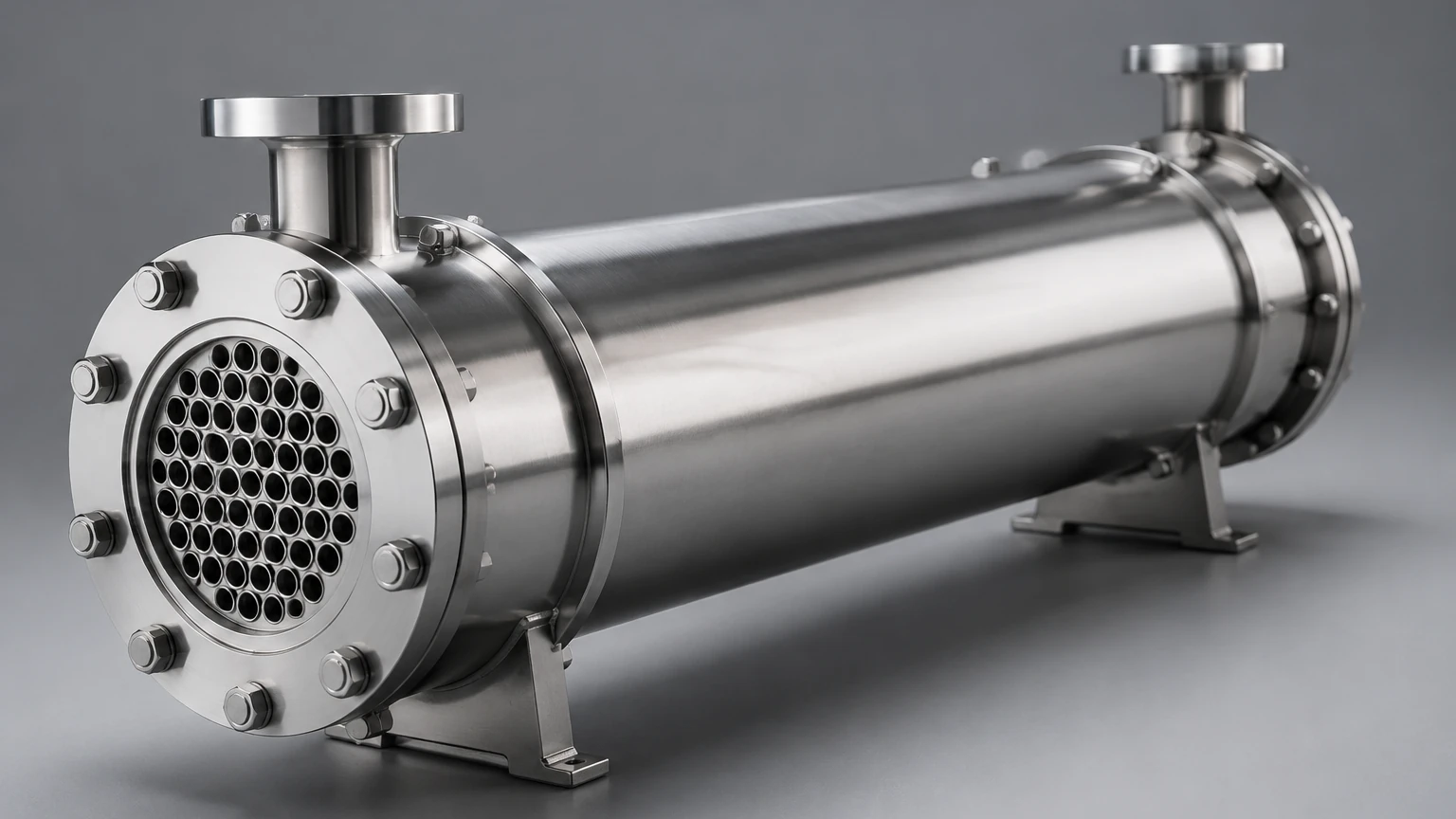
A column condenser is typically situated at the top of a distillation column (as a reflux condenser) or as a standalone unit in a process loop. Its primary function is to facilitate the transfer of heat from a process vapor to a cooling medium, such as water, glycol, or air. As the vapor loses heat, it undergoes a phase change, returning to a liquid form which can then be collected as distillate or returned to the column as reflux.
In a distillation environment, the condenser's efficiency directly impacts the "reflux ratio." This ratio is a key parameter in determining the separation efficiency of the column. If the condenser fails to remove heat effectively, the vapor-liquid equilibrium is disrupted, leading to off-specification products and increased energy costs. Furthermore, the column condenser must handle varying thermal loads, especially during startup or when process feedstocks change. This requires a robust design that can withstand thermal cycling and potential pressure fluctuations.
Thermal Dynamics and Efficiency Factors
The performance of a column condenser is governed by the Heat Transfer Equation: *Q = U × A × ΔT_lm*. Here, *Q* represents the heat load, *U* is the overall heat transfer coefficient, *A* is the surface area, and *ΔT_lm* is the Logarithmic Mean Temperature Difference.
To optimize a column condenser, engineers focus on maximizing the heat transfer coefficient (*U*). This coefficient is influenced by the thermal conductivity of the materials, the flow velocities of the fluids, and, perhaps most importantly, the presence of any fouling layers. Fouling acts as an insulating barrier, significantly reducing the efficiency of the heat exchange. In many industrial settings, even a thin layer of scale or particulate buildup can drop the efficiency of a column condenser by 20% or more, forcing the system to consume more cooling water or operate at higher pressures to compensate.
Surface area (*A*) is another critical design factor. In shell-and-tube condensers, this is achieved through a large number of small-diameter tubes. In plate condensers, corrugated plates provide the necessary area. Regardless of the configuration, maintaining the cleanliness of these surfaces is the primary challenge in long-term operation.
The Critical Role of Filtration in Condenser Protection
Filtration is often the unsung hero of thermal management. To ensure a column condenser operates at peak performance, both the process vapor and the cooling medium must be managed to prevent the introduction of contaminants. This is where high-quality stainless steel filtration solutions become indispensable.
Protecting the Cooling Loop
If the cooling medium is sourced from a cooling tower or a natural water body, it likely contains suspended solids, biological growth, or minerals that can lead to scaling. Utilizing stainless steel filter cartridges at the inlet of the cooling loop ensures that these particulates are captured before they enter the narrow passages of the condenser. Unlike disposable filters, stainless steel cartridges offer the durability required for high-pressure industrial environments and can be cleaned and reused, lowering the total cost of ownership.
Vapor Stream Integrity and Demisting
On the process side, the vapor entering the column condenser may carry entrained liquid droplets—a phenomenon known as carryover. If these droplets contain non-volatile impurities or corrosive compounds, they can deposit on the condenser surfaces. Wire mesh demisters or mist eliminators are often installed before the vapor reaches the condenser. These precision-engineered mesh structures force the vapor to change direction rapidly, causing droplets to coalesce and fall back into the column. This ensures that only pure vapor reaches the condenser, protecting the heat exchange surfaces from localized corrosion and fouling.
For more detailed technical specifications on how these components integrate into industrial systems, you can review product options and application support on our Main Page.
Material Selection and Engineering Considerations for Longevity
Material compatibility is a non-negotiable factor when specifying components for a column condenser system. The choice of material must account for the chemical composition of the process fluids, the temperature ranges, and the potential for galvanic corrosion.
Stainless steel is the industry standard for high-performance filtration and internal components within condenser systems. Specifically:
* Grade 304/304L: Suitable for general-purpose applications where moisture is present but corrosive chemical exposure is limited.
* Grade 316/316L: The preferred choice for chemical processing and pharmaceutical applications due to the addition of molybdenum, which provides superior resistance to chlorides and pitting.
* High-Nickel Alloys: For extreme environments involving high temperatures or highly acidic vapors, specialized alloys may be required to prevent stress corrosion cracking.
Beyond the base material, the structural design of the filtration media—such as the weave pattern of a wire mesh or the pleating of a filter cartridge—must be engineered to balance filtration accuracy with pressure drop. A high pressure drop across a filter can starve the column condenser of flow, leading to overheating and system trips. Therefore, selecting a manufacturer that provides custom-engineered solutions is vital for achieving the precise micron rating needed without sacrificing flow rate.
Addressing Common Operational Risks: Fouling and Corrosion
The most significant risks to a column condenser are fouling and corrosion. These issues do not just reduce efficiency; they can lead to catastrophic mechanical failure and unplanned downtime.
Types of Fouling
1. Particulate Fouling: Accumulation of dust, rust, or debris from the piping system.
2. Scaling: Precipitation of minerals (like calcium carbonate) from the cooling water onto hot surfaces.
3. Biological Fouling: Growth of algae or bacteria, common in open-loop cooling systems.
4. Chemical Fouling: Coking or polymer formation from the process vapors.
Effective filtration acts as the first line of defense against particulate and biological fouling. By removing the seeds of these deposits, the rate of accumulation is drastically slowed. Furthermore, precision-manufactured stainless steel components are easier to clean using chemical CIP (Clean-in-Place) or mechanical methods, as they can withstand the harsh chemicals and high pressures required for thorough decontamination.
Corrosion Management
Corrosion in a column condenser often occurs in stagnant zones or under deposits (under-deposit corrosion). By maintaining high-velocity, clean flow through the use of proper filtration, these stagnant zones are minimized. Additionally, using high-quality stainless steel for all internal components ensures that the "passive layer" of the metal remains intact, preventing the oxidation that leads to leaks.
Customization and Integration of Filtration Components
No two industrial processes are identical, and a "one-size-fits-all" approach rarely works for complex systems like a column condenser. Customization is often required to meet specific spatial constraints or unique fluid properties.
When sourcing components for a column condenser, engineers should confirm several key factors with their manufacturer:
* Micron Rating Requirements: What is the smallest particle size that must be removed to protect the condenser tubes?
* Flow Velocity: What is the maximum allowable pressure drop across the filter or demister?
* Temperature Extremes: Will the components be subject to cryogenic temperatures or high-heat sterilization cycles?
* Housing Compatibility: Does the filter need to fit into an existing vessel, or is a custom housing required?
Working with a manufacturer that understands the nuances of wire mesh and sintered metal technology allows for the development of bespoke solutions. For instance, a multi-layer sintered mesh can provide the structural strength of a heavy plate with the fine filtration capabilities of a thin cloth, making it ideal for high-pressure vapor streams entering a condenser.
Conclusion: Optimizing Performance Through Precision Components
The column condenser is a workhorse of the industrial world, but its reliability is only as good as the protection it receives. By focusing on high-quality materials, understanding the thermal dynamics at play, and implementing robust filtration strategies, facilities can ensure their condensation processes remain efficient and cost-effective.
Investing in precision-engineered stainless steel filter cartridges and wire mesh components is not just a maintenance task—it is a strategic decision to protect one of the most expensive assets in the process loop. By preventing fouling and corrosion, these components reduce energy consumption, minimize downtime, and ensure that the final product meets the highest standards of purity.
For technical professionals seeking to optimize their filtration and condensation systems, the path forward involves rigorous material selection and a commitment to engineering excellence. Exploring the full range of custom solutions available on the Main Page is an excellent starting point for any project aimed at improving the longevity and performance of a column condenser.
