


Compressed Air Filter Elements
In industrial environments, compressed air is often referred to as the "fourth utility." It powers pneumatic tools, facilitates material handling, and supports critical processes in chemical, pharmaceutical, and food production. However, atmospheric air is naturally contaminated with dust, water vapor, and hydrocarbons. When compressed, these contaminants concentrate, posing a significant risk to downstream equipment and product integrity. Compressed air filter elements serve as the essential barrier, removing solid particles, oil aerosols, and moisture to ensure the air meets specific purity standards.
For engineers and procurement professionals, selecting the right filter element is not merely a matter of fitting a housing; it is a technical decision that impacts energy efficiency, maintenance costs, and system reliability. High-performance filtration solutions, such as those found on the Main Page of specialized manufacturers, provide the necessary durability and precision required for demanding industrial applications.
The Role of Compressed Air Filter Elements in Industrial Systems
The primary function of a filter element in a compressed air system is to intercept contaminants before they reach sensitive components. These contaminants typically fall into three categories: solid particulates (such as rust and pipe scale), liquid aerosols (oil and water), and vapors.
Without effective filtration, these substances can cause abrasive wear on pneumatic cylinders, clog precision orifices, and contaminate end products. In the food and pharmaceutical sectors, even trace amounts of oil or bacteria can lead to entire batches being discarded. Therefore, the filter element is the most critical component in maintaining the ISO 8573-1 air quality classes required for specific industrial processes.
Understanding Contamination and ISO 8573-1 Standards
To select the appropriate compressed air filter elements, engineers must first define the required air quality. The International Organization for Standardization (ISO) provides a framework under ISO 8573-1, which classifies air purity based on the concentration of particles, water, and oil.
1. Solid Particles: Classified by size (microns) and mass concentration.
2. Water: Classified by pressure dew point.
3. Oil: Classified by the total concentration of liquid oil, aerosols, and vapors.
By understanding these classes, a facility can implement a multi-stage filtration strategy. This typically involves a coarse pre-filter to remove large solids, followed by high-efficiency coalescing filters for oil aerosols, and potentially an activated carbon element for vapor removal. Using stainless steel components in these stages ensures that the filter media itself does not become a source of contamination through corrosion or degradation.
Material Science: The Advantages of Stainless Steel Filtration
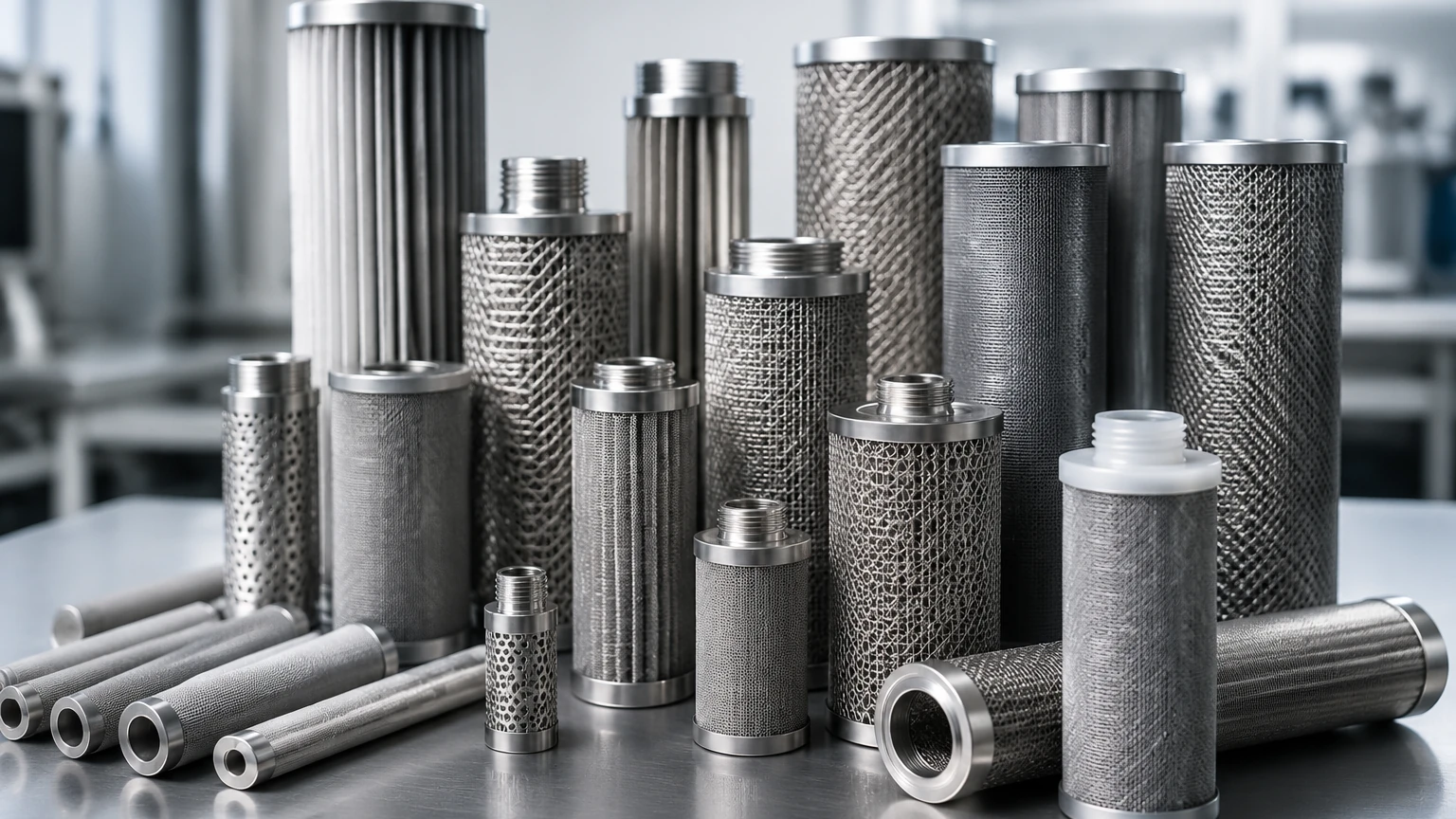
While many standard compressed air filters utilize synthetic fibers or paper media, heavy-duty industrial applications often require the robustness of metal. Stainless steel filter elements, particularly those utilizing wire mesh or sintered metal technology, offer several distinct advantages:
Corrosion Resistance
Compressed air systems are inherently moist environments. Carbon steel or inferior alloys can succumb to oxidation, which releases rust particles into the air stream. Stainless steel (typically 304 or 316L grades) remains inert, ensuring that the filtration process remains clean over long operational periods.
High Temperature and Pressure Stability
In certain chemical processing or heat-recovery applications, compressed air can reach elevated temperatures that would degrade polymer-based media. Stainless steel elements maintain their structural integrity and filtration accuracy under extreme thermal and mechanical stress.
Cleanability and Reusability
Unlike disposable fiberglass elements, many stainless steel wire mesh filters can be cleaned and returned to service. This is particularly valuable in systems with high particulate loading, where the cost of frequent replacements would be prohibitive. Cleaning methods such as ultrasonic baths or backwashing allow for a lower total cost of ownership (TCO) over the life of the system.
Engineering Considerations for Filter Element Selection
When specifying compressed air filter elements for a new or existing system, several technical parameters must be evaluated to ensure optimal performance.
Flow Rate and Velocity
Every filter element creates a degree of resistance. If the air velocity is too high, it can lead to "carryover," where contaminants are pushed through the media rather than trapped. Engineers must size the element based on the maximum cubic feet per minute (CFM) at the lowest expected operating pressure to prevent turbulence and efficiency loss.
Filtration Accuracy (Micron Rating)
The micron rating determines the size of particles the element can intercept. It is important to distinguish between nominal and absolute ratings. An absolute rating ensures that 99.9% of particles at the specified size are captured, which is critical for high-purity applications in the pharmaceutical and electronics industries.
Differential Pressure (Delta P)
Differential pressure is the difference in air pressure between the inlet and the outlet of the filter. A high Delta P indicates that the filter is restricted or undersized. Since air compressors must work harder to overcome this resistance, high differential pressure directly translates to increased energy consumption. Selecting elements with a high void volume and low initial pressure drop is essential for energy-efficient operation.
Coalescing vs. Particulate Filtration
It is vital to understand the mechanism by which different compressed air filter elements operate.
* Particulate Filters: These use mechanical sieving to trap solid particles within the depths of the media or on the surface of a wire mesh. They are usually installed as pre-filters to protect more sensitive downstream components.
* Coalescing Filters: These are designed to remove liquid aerosols. As air passes through the media, tiny droplets collide and merge (coalesce) into larger drops, which then gravitate to the bottom of the filter housing for drainage. These elements are essential for removing oil mist generated by lubricated compressors.
In many high-demand environments, a combination of these technologies is used. For example, a stainless steel mesh pre-filter might protect a high-efficiency coalescing element from being prematurely blinded by large scale or rust.
Maintenance and the Total Cost of Ownership
The purchase price of a filter element is only a small fraction of its total cost. The majority of the expense associated with filtration comes from energy loss due to pressure drop and the labor required for replacement.
Monitoring Performance
Industrial filters should be equipped with differential pressure gauges. A common industry standard is to replace or clean the element when the pressure drop reaches 5-7 psi (0.35-0.5 bar). Operating beyond this point significantly increases the energy cost of the compressor, often exceeding the cost of a new filter element within a few weeks.
Integrity Checks
In critical applications, regular integrity testing of the filter elements ensures that no bypass or media rupture has occurred. This is especially important in the food and beverage industry, where a compromised filter can lead to microbial contamination.
Customization and OEM Solutions in Filtration
Standard off-the-shelf filter elements do not always meet the unique requirements of specialized industrial machinery. Factors such as non-standard housing dimensions, extreme chemical compatibility requirements, or specific flow characteristics may necessitate a custom-engineered solution.
Manufacturers like Kaifil specialize in developing custom stainless steel filtration components that integrate seamlessly into OEM equipment. By working closely with engineering teams, manufacturers can optimize the weave pattern, pleat density, and end-cap configuration of the filter element to provide the exact balance of filtration efficiency and structural strength required for a specific application.
Conclusion
Compressed air filter elements are a fundamental component of any efficient and reliable industrial air system. By selecting elements based on rigorous technical criteria—including material compatibility, ISO purity standards, and differential pressure limits—engineers can protect their equipment and ensure the quality of their end products.
Whether the application involves standard industrial pneumatic power or high-purity pharmaceutical processing, the transition to durable, high-performance filtration solutions is a critical step toward operational excellence. For those seeking detailed specifications on stainless steel filtration components and custom OEM capabilities, visiting the Main Page provides access to professional resources and engineering support tailored to demanding industrial environments.
